Adhyaya 118
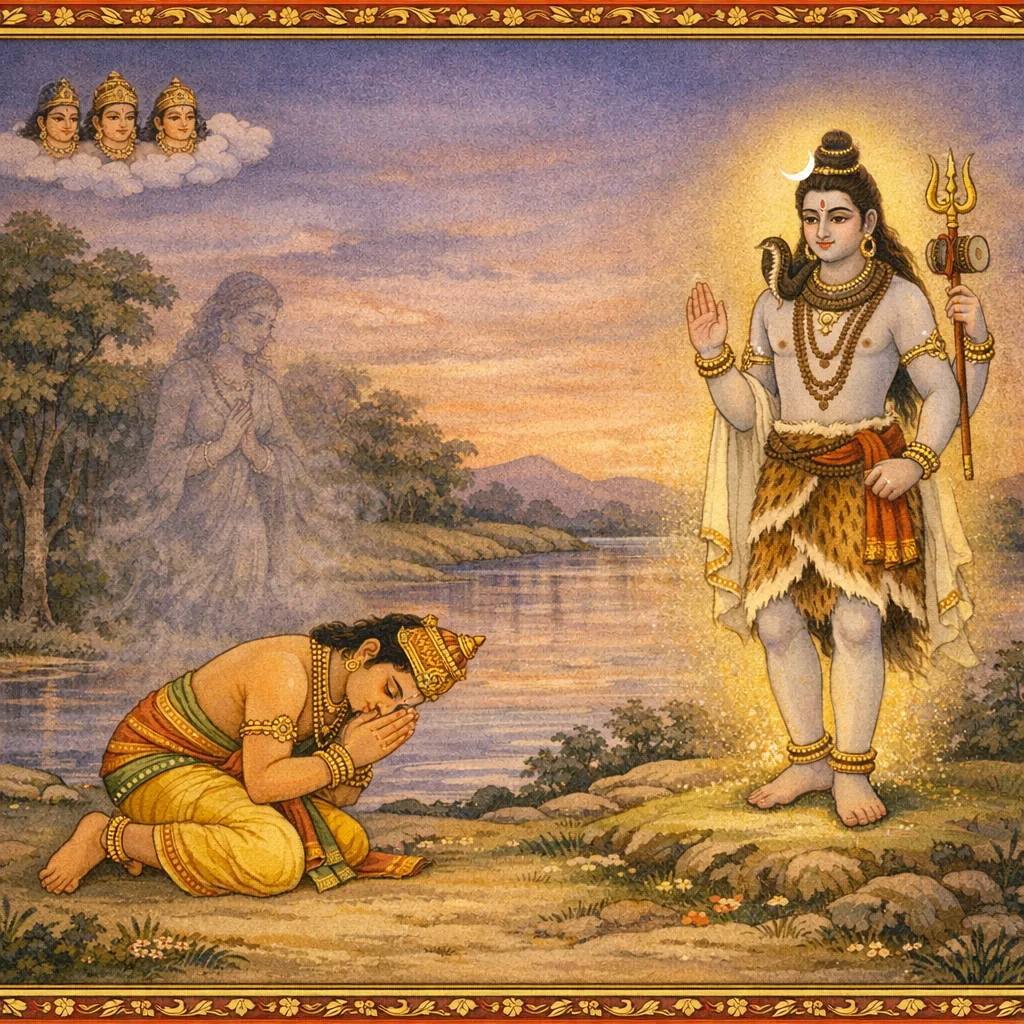
This adhyāya unfolds as a theological dialogue: Yudhiṣṭhira asks how Indratīrtha arose on the southern bank of the Narmadā, and the sage Mārkaṇḍeya answers by recounting an ancient itihāsa. After Indra slays Vṛtra, the torment of brahmahatyā—a most grievous sin—pursues him relentlessly through sacred waters and pilgrimage places, revealing that ordinary tīrtha-circulation cannot easily cleanse a profound moral breach. Indra performs severe tapas—fasting, austerities, and long discipline—yet relief comes only when the gods assemble and Brahmā apportions the sin into four shares, distributing them among classes of beings and social functions (including water, earth, women, and occupational domains), offering an etiological account of certain ritual and social restrictions. At the Narmadā site Indra worships Mahādeva; Śiva, pleased, grants a boon. Indra asks for perpetual divine presence there, establishing Indratīrtha as a place where bathing, tarpaṇa, and worship of Parameśvara bestow purification and great sacrificial merit. The chapter ends with an explicit phalaśruti: even grave sinners are freed by bathing and worship at Indratīrtha, and hearing this māhātmya itself is declared purificatory.
Shlokas
Verse 1
। श्रीमार्कण्डेय उवाच । ततो गच्छेत्तु राजेन्द्र तीर्थं परमशोभनम् । इन्द्रतीर्थेतिविख्यातं नर्मदादक्षिणे तटे
Śrī Mārkaṇḍeya said: “Then, O king of kings, one should go to a supremely splendid tīrtha, famed as Indratīrtha, on the southern bank of the Narmadā.”
Verse 2
युधिष्ठिर उवाच । नर्मदादक्षिणे कूले इन्द्रतीर्थं कथं भवेत् । श्रोतुमिच्छामि विप्रेन्द्र ह्यादिमध्यान्तविस्तरैः
Yudhiṣṭhira said: “How did Indratīrtha come to be on the southern bank of the Narmadā? O best of brahmins, I wish to hear it in full detail—from beginning, through the middle, to the end.”
Verse 3
एतच्छ्रुत्वा तु वचनं धर्मपुत्रस्य धीमतः । कथयामास तद्वत्तमितिहासं पुरातनम्
Having heard these words of the wise son of Dharma, he then narrated, exactly as it happened, an ancient traditional account (itihāsa).
Verse 4
श्रीमार्कण्डेय उवाच । विश्वासयित्वा सुचिरं धर्मशत्रुं महाबलम् । वृत्रं जित्वाथ हत्वा तु गच्छमानं शचीपतिम्
Śrī Mārkaṇḍeya said: Having for a long time won the trust of Vṛtra, the mighty enemy of the gods—then conquering and slaying him—Indra, the lord of Śacī, set forth on his way.
Verse 5
निष्क्राममाणं मार्गेण ब्रह्महत्या दुरासदा । अहोरात्रमविश्रान्ता जगाम भुवनत्रयम्
As he departed along the road, the dread and inescapable sin of Brahmin-slaying (Brahmahatyā) pursued him—day and night without rest—through the three worlds.
Verse 6
यतोयतो ब्रह्महणं याति यानेन शोभनम् । दिशो भागं सुरैः सार्द्धं ततो हत्या न मुञ्चति
Wherever the brahmahaṇ, the slayer of a Brahmin, went in his splendid chariot—together with the gods to the quarters of space—Brahmahatyā would not leave him there.
Verse 7
ब्रह्महत्या सुरापानं स्तेयं गुर्वगनागमः । पातकानां गतिर्दृष्टा न तु विश्वासघातिनाम्
For Brahmahatyā, for drinking liquor, for theft, and for violating the teacher’s bed, paths of expiation are known; but for those who betray trust, no such course is seen.
Verse 8
पापकर्ममुखं दृष्ट्वा स्नानदानैर्विशुध्यति । नारी वा पुरुषो वापि नैव विश्वासघातिनः
Seeing the manifest ‘face’ of sinful action, one is purified by bathing and by charitable giving; but whether woman or man, the betrayer of trust is not purified thereby.
Verse 9
एवमादीनि चान्यानि श्रुत्वा वाक्यानि देवराट् । वचनं तद्विधैरुक्तं विषादमगमत्परम्
Hearing many other statements of this kind, the king of the gods—upon being addressed by those who spoke in that manner—fell into deep dejection.
Verse 10
त्यक्त्वा राज्यं सुरैः सार्धं जगाम तप उत्तमम् । पुत्रदारगृहं राज्यं वसूनि विविधानि च
Abandoning his kingdom—along with the gods—he went to undertake supreme austerity (tapas), leaving behind sons, wife, home, sovereignty, and many kinds of riches.
Verse 11
फलान्येतानि धर्मस्य शोभयन्ति जनेश्वरम् । फलं धर्मस्य भुञ्जेति सुहृत्स्वजनबान्धवाः
These are the visible fruits of dharma that adorn a ruler among men; and people say, “He enjoys the fruit of dharma”—thus his friends, kinsmen, and relatives praise him.
Verse 12
पश्यतां सर्वमेतेषां पापमेकेन भुज्यते । परं हि सुखमुत्सृज्य कर्शयन्वै कलेवरम्
Even as all look on, the sin is borne by one alone; for, abandoning supreme happiness, he truly wastes away his body under the burden of suffering.
Verse 13
देवराजो जगामासौ तीर्थान्यायतनानि च । गङ्गातीर्थेषु सर्वेषु यामुनेषु तथैव च
That lord of the gods, Indra, went forth to tīrthas and holy shrines—visiting all the tīrthas of the Gaṅgā, and likewise those of the Yamunā.
Verse 14
सारस्वतेषु सर्वेषु सामुद्रेषु पृथक्पृथक् । नदीषु देवखातेषु तडागेषु सरःसु च
He went to all the Sarasvatī-tīrthas, and to the oceanic holy places one by one; to rivers, to divinely made channels and reservoirs, to ponds and lakes as well.
Verse 15
पापं न मुञ्चते सर्वे पश्चाद्देवसमागमे । रेवाप्रभवतीर्थेषु कूलयोरुभयोरपि
Yet none of those tīrthas released him from sin thereafter, even after the gathering of the gods—until he came to the tīrthas arising from the Revā, on both of her banks.
Verse 16
पूजयन्वै महादेवं स्कन्दतीर्थं समासदत् । तव स्थित्वोपवासैश्च कृच्छ्रचान्द्रायणादिभिः
Worshipping Mahādeva, he approached Skanda-tīrtha; and staying there, he undertook fasts and austere observances such as the Kṛcchra and the Cāndrāyaṇa.
Verse 17
कर्शयन्वै स्वकं देहं न लेभे शर्म वै क्वचित् । ग्रीष्मे पञ्चाग्निमध्यस्थो वर्षासु स्थण्डिलेशयः
Mortifying his own body, he found no comfort at any time: in summer he remained amid the five fires, and in the rains he lay upon the bare ground.
Verse 18
आर्द्रवासास्तु हेमन्ते चचार विपुलं तपः । एवं तु तपतस्तस्य इन्द्रस्य विदितात्मनः
And in winter, wearing damp garments, he practiced abundant austerity. Thus, as Indra—master of self-knowledge—continued his penance,
Verse 19
वत्सराणां सहस्राणि गतानि दश भारत । ततस्त्वेकादशे प्राप्ते वर्षे तु नृपसत्तम
O Bhārata, ten thousand years passed. Then, when the eleventh year arrived, O best of kings,
Verse 20
सहसा भगवान्देवस्तु तुतोष परमेश्वरः । तथा ब्रह्मर्षयः सिद्धा ब्रह्मविष्णुपुरोगमाः
Suddenly the Blessed Lord, the Supreme God, was pleased; and so too the Brahmarṣis and the Siddhas—led by Brahmā and Viṣṇu.
Verse 21
तत्राजग्मुः सुराः सर्वे यत्र देवः शतक्रतुः । दृष्ट्वा समागतान् देवानृषींश्चैव महामतिः
There all the gods came to where the god Śatakratu (Indra) was. Seeing the assembled gods and the sages as well, that great-minded one (Indra)
Verse 22
उवाच प्रणतो भूत्वा सर्वदेवपुरोहितः । विदितं सर्वमेतेषां यथा वृत्रवधः कृतः
Then the priest of all the gods spoke, bowing in reverence: “All this is known to these assembled ones—how the slaying of Vṛtra was done.”
Verse 23
युष्माकं चाज्ञया पूर्वं ब्रह्मविष्णुमहेश्वराः । तथाप्येवं ब्रह्महणं मत्वा पापस्य कारिणम्
“Even though it was formerly done under your command, O Brahmā, Viṣṇu, and Maheśvara, still the world regards him as a slayer of a brāhmaṇa—one who has committed sin.”
Verse 24
भ्रमन्तं सर्वतीर्थेषु ब्रह्महत्या न मुञ्चति । न नन्दति जगत्सर्वं त्रैलोक्यं सचराचरम्
“Though he may wander through every sacred ford (tīrtha), the sin of brahmahatyā does not release him; and all the world—indeed the three realms with all that moves and does not move—finds no joy (in him).”
Verse 25
यथा विहीनचन्द्रार्कं तथा राज्यमनायकम् । तस्मात्सर्वे सुरश्रेष्ठा विज्ञाप्यं मम सम्प्रति
“As the world would be without moon and sun, so is a kingdom without a leader. Therefore, O best of gods, you all must now heed my urgent petition.”
Verse 26
कुर्वन्तु शक्रं निर्दोषं तथा सर्वे महर्षयः । बृहस्पतिमुखोद्गीर्णं श्रुत्वा तद्वचनं शुभम्
Having heard those auspicious words spoken from Bṛhaspati’s mouth, all the great sages resolved: “Let Śakra be made free of blame.”
Verse 27
ततः प्रोवाच भगवान्ब्रह्मा लोकपितामहः । एतत्पापं महाघोरं ब्रह्महत्यासमुद्भवम्
Then the Blessed Brahmā, the grandsire of the worlds, spoke: “This sin is exceedingly dreadful, born of brahmahatyā.”
Verse 28
दैवतेभ्योऽथ भूतेभ्यश्चतुर्भागं क्षिपाम्यहम् । एवं मुक्त्वा क्षिपच्चैनो जलोपरि महामतिः
“I shall cast one-fourth (of this burden) upon the gods and upon living beings.” Having thus declared, that great-minded one cast the sin upon the waters.
Verse 29
अवगाह्य ततः पेया आपो वै नान्यथा बुधैः । धरायामक्षिपद्भागं द्वितीयं पद्मसंभवः
Therefore, the wise declare that waters are indeed to be bathed in and drunk—never otherwise. Then the Lotus-born cast the second portion upon the earth.
Verse 30
अभक्ष्या तेन संजाता सदाकालं वसुंधरा । तदार्धमर्द्धं नारीणां द्वितीयेऽह्नि युधिष्ठिर
By that portion, the Earth became, for all time, not wholly fit to be eaten (in its produce). And half of that share fell upon women on the second day, O Yudhiṣṭhira.
Verse 31
निक्षिप्य भगवान्देवः पुनरन्यज्जगाद ह । असंग्राह्या त्वसंग्राह्या तेन जाता रजस्वला
Having cast it aside, the Blessed Deity spoke again: “Therefore she became not to be touched or accepted—indeed not to be approached—having become rajasvalā, in the state of menses.”
Verse 32
चतुर्दिनानि सा प्राज्ञैः पापस्य महतो महात् । चतुर्थं तु ततो भागं विभज्य परमेश्वरः
For four days, the wise declare, she bears that great portion of the great sin. Then the Supreme Lord divided it and assigned the fourth share as well.
Verse 33
कृषिगोरक्ष्यवाणिज्यैः शूद्रसेवाकरे द्विजे । ततोऽभिनन्दयामासुः सर्वे देवा महर्षयः
When a twice-born man took up agriculture, cattle-protection, and trade, along with service rendered to Śūdras, then all the gods and the great seers expressed their approval.
Verse 34
देवेन्द्रं वाग्भिरिष्टाभिर्नर्मदाजलसंस्थितम् । वरेण छन्दयामास ततस्तुष्टो महेश्वरः
Indra, standing amid the waters of the Narmadā, was delighted by cherished words of praise; then Maheśvara, being pleased, granted him a boon.
Verse 35
वरं दास्यामि देवेश वरं वृणु यथेप्सितम्
“O Lord of the gods, I shall grant you a boon—choose the boon you desire.”
Verse 36
इन्द्र उवाच । यदि तुष्टोऽसि देवेश यदि देयो वरो मम । अत्र संस्थापयिष्यामि सदा संनिहितो भव
Indra said: “If you are pleased, O Lord of the gods, and if a boon is to be granted to me—then here I shall establish you; abide here forever in constant presence.”
Verse 37
एवमस्त्विति चोक्त्वा तं ब्रह्मविष्णुमहेश्वराः । जग्मुराकाशमाविश्य स्तूयमाना महर्षिभिः
Saying to him, “So be it,” Brahmā, Viṣṇu, and Maheśvara entered the sky and departed, while the great seers continued to praise them.
Verse 38
गतेषु देवदेवेषु देवराजः शतक्रतुः । स्थापयित्वा महादेवं जगाम त्रिदशालयम्
After the divine gods had departed, Indra—the king of the gods, performer of a hundred sacrifices—having established Mahādeva there, went to the abode of the Thirty (the gods).
Verse 39
इन्द्रतीर्थे तु यः स्नात्वा तर्पयेत्पितृदेवताः । महापातकयुक्तोऽपि मुच्यते सर्वपातकैः
Whoever bathes at Indratīrtha and offers tarpaṇa to the Pitṛs and the deities—even if burdened with great sins—becomes freed from all sins.
Verse 40
इन्द्रतीर्थे तु यः स्नात्वा पूजयेत्परमेश्वरम् । सोऽश्वमेधस्य यज्ञस्य पुष्कलं फलमश्नुते
Whoever bathes at Indratīrtha and worships Parameśvara attains abundant merit—the full fruit of the Aśvamedha sacrifice.
Verse 41
एतत्ते कथितं सर्वं तीर्थमाहात्म्यमुत्तमम् । श्रुतमात्रेण येनैव मुच्यन्ते पातकैर्नराः
Thus have I told you in full the supreme glory of this tīrtha; by merely hearing it, people are released from sins.