Adhyaya 116
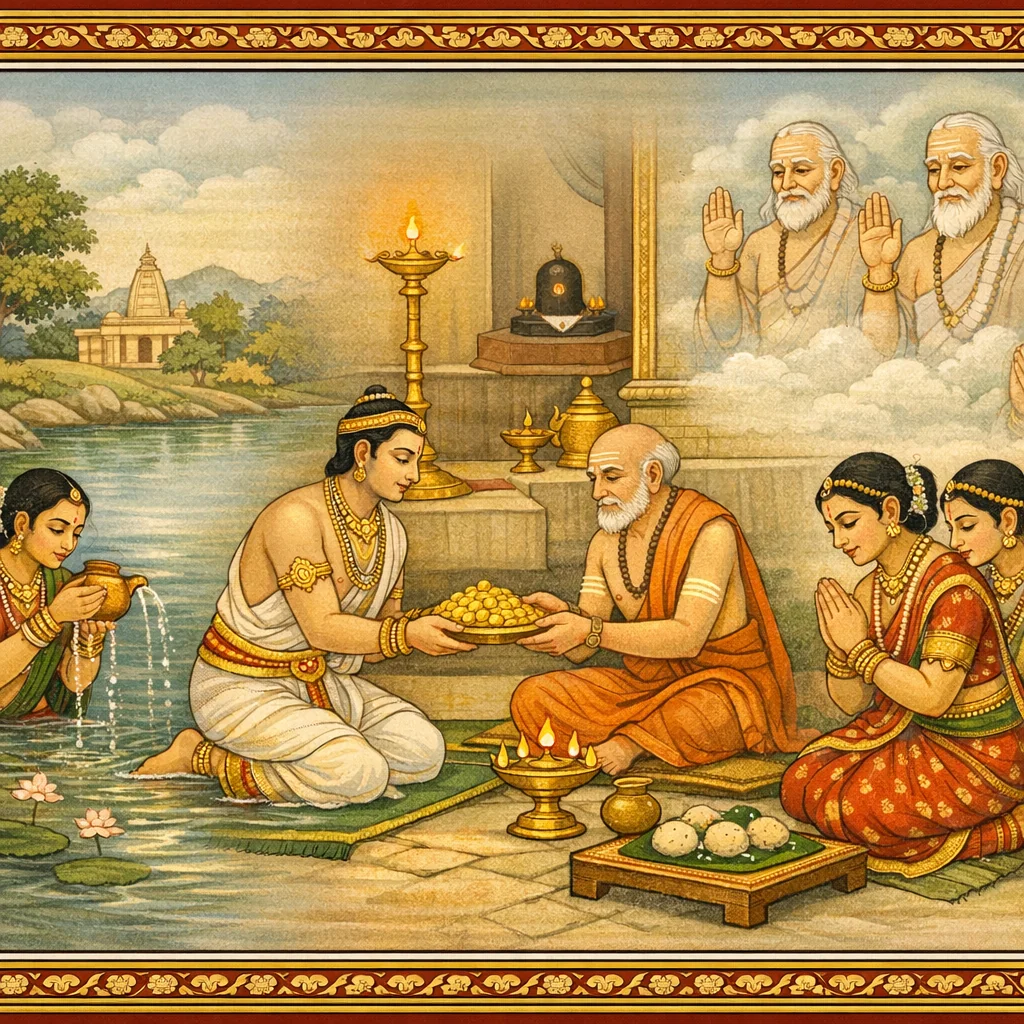
In this chapter, the sage Mārkaṇḍeya addresses a royal listener and gives a concise tīrtha-māhātmya of Pāṇḍu-tīrtha. The teaching is framed as clear prescriptions that link specific acts with definite ritual fruits. First, one is enjoined to go to Pāṇḍu-tīrtha, praised as universally purifying; bathing there frees a person from “all impurities and offenses” (sarva-kilbiṣa). Next, an ethical-ritual condition is added: after bathing, the purified devotee should offer a gift of gold (kāñcana-dāna), with a strong assurance that even grievous sins, including those typified by bhrūṇa-hatyā, are destroyed. Finally, the chapter highlights ancestral benefit: by offering piṇḍa and water (piṇḍodaka-pradāna), one gains fruit equal to the Vājapeya sacrifice, and the pitṛs and pitāmahas are said to rejoice. Overall, it serves as an instructional unit that unites pilgrimage, charity, and rites for the ancestors into a single salvific path centered on the named sacred site.
Shlokas
Verse 1
मार्कण्डेय उवाच । पाण्डुतीर्थं ततो गच्छेत्सर्वपापविनाशनम् । तत्र स्नात्वा नरो राजन्मुच्यते सर्वकिल्बिषैः
Mārkaṇḍeya said: “Thereafter one should go to Pāṇḍutīrtha, the destroyer of all sins. O King, by bathing there a man is released from every stain of wrongdoing.”
Verse 2
तत्र तीर्थे तु यः स्नात्वा दापयेत्काञ्चनं शुचिः । भ्रूणहत्यादिपापानि नश्यन्ते नात्र संशयः
And at that tīrtha, whoever, being purified, bathes there and causes gold to be given in dāna (charity)—sins such as the killing of an embryo and the like are destroyed; of this there is no doubt.
Verse 3
पिण्डोदकप्रदानेन वाजपेयफलं लभेत् । पितरः पितामहाश्च नृत्यन्ते च प्रहर्षिताः
By offering piṇḍa and water-oblations, one attains the merit of the Vājapeya sacrifice; and the fathers and grandfathers rejoice—indeed, they dance in gladness.
Verse 116
। अध्याय
End of the adhyāya: the sacred chapter colophon marker.