Adhyaya 115
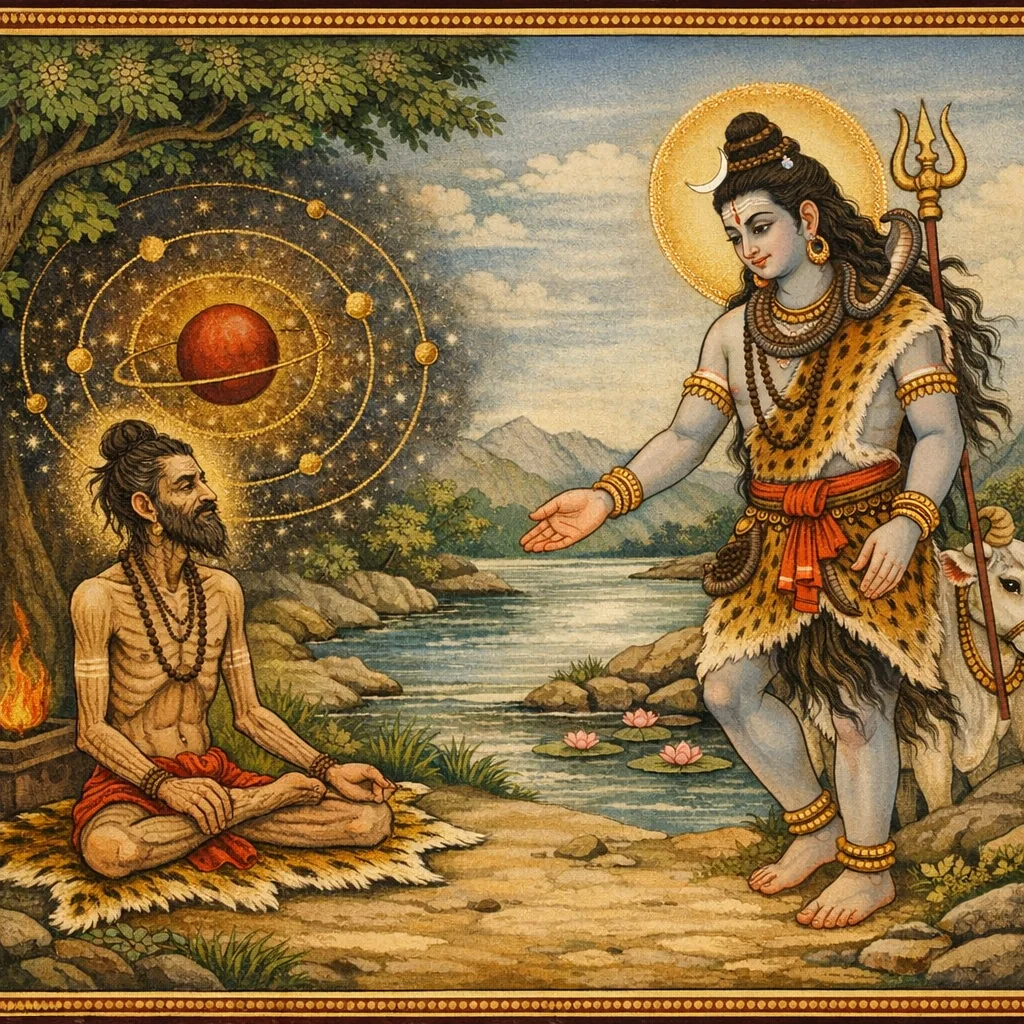
Mārkaṇḍeya instructs a king and points him to the supreme Aṅgāraka Tīrtha on the bank of the Narmadā, famed among people for granting beauty and form (rūpa). The chapter tells how Aṅgāraka—“earth-born,” associated with the graha Maṅgala (Mars)—performed prolonged austerities across immense spans of time. Pleased, Mahādeva (Śiva) appears directly and offers a boon, declaring it rare even among the gods. Aṅgāraka asks for an enduring, imperishable status: to move perpetually among the planets, and for the boon to last as long as mountains, sun and moon, rivers and oceans endure. Śiva grants it and departs, praised by gods and asuras. Aṅgāraka then installs Śaṅkara at that very site and afterward takes his place in the planetary order. The prescriptive teaching says that one who bathes at this tīrtha and worships Parameśvara—making offerings and fire-rites (homa) with anger conquered—attains the fruit of an Aśvamedha sacrifice. Further, on the fourth lunar day connected with Aṅgāraka, bathing and worshipping the graha according to rule yields auspicious results, spoken of as beauty and lasting benefit. Death at that place, whether intentional or not, is described as leading to companionship with Rudra and rejoicing in his presence.
Shlokas
Verse 1
श्रीमार्कण्डेय उवाच । ततो गच्छेन्महाराज तीर्थमङ्गारकं परम् । रूपदं सर्वलोकानां विश्रुतं नर्मदातटे
Śrī Mārkaṇḍeya said: “Then, O great king, one should go to the supreme Aṅgāraka Tīrtha, renowned on the bank of the Narmadā, bestowing beauty and excellence upon all beings.”
Verse 2
अङ्गारकेण राजेन्द्र पुरा तप्तं तपः किल । अर्बुदं च निखर्वं च प्रयुतं वर्षसंख्यया
O best of kings, it is said that long ago Aṅgāraka performed tapas there—indeed for immeasurably vast spans of years: an arbuda, a nikharva, and a prayuta in number.
Verse 3
ततस्तुष्टो महादेवः परया कृपया नृप । प्रत्यक्षदर्शी भगवानुवाच क्षितिनन्दनम्
Then Mahādeva, pleased and stirred by supreme compassion, O king, spoke directly—He, the Blessed Lord who is beheld face to face—to the son of the Earth.
Verse 4
वरदोऽस्मि महाभाग दुर्लभं त्रिदशैरपि । वरं दास्याम्यहं वत्स ब्रूहि यत्ते विवक्षितम्
“I am the granter of boons, O greatly fortunate one—a boon difficult to obtain even for the devas. Dear child, I shall grant you a boon; speak what you wish to ask.”
Verse 5
अङ्गारक उवाच । तव प्रसादाद्देवेश सर्वलोकमहेश्वर । ग्रहमध्यगतो नित्यं विचरामि नभस्तले
Aṅgāraka said: “By your grace, O Lord of the devas, O Great Lord of all worlds, I continually move through the expanse of the sky, stationed among the grahas (planets).”
Verse 6
यावद्धराधरो लोके यावच्चन्द्रदिवाकरौ । नद्यो नदाः समुद्राश्च वरो मे चाक्षयो भवेत्
So long as mountains stand in the world, so long as the Moon and the Sun endure, and so long as rivers, streams, and oceans remain—may this boon of mine be imperishable.
Verse 7
एवमस्त्विति देवेशो दत्त्वा वरमनुत्तमम् । जगामाकाशमाविश्य वन्द्यमानः सुरासुरैः
Saying, “So be it,” the Lord of the gods granted the unsurpassed boon and departed, entering the sky, being adored by gods and asuras alike.
Verse 8
भूमिपुत्रस्ततस्तस्मिन्स्थापयामास शङ्करम् । गतः सुरालये लोके ग्रहभावे निवेशितः
Then the son of the Earth established Śaṅkara at that very place. Thereafter he went to the celestial realm, being installed in the status of a planetary deity.
Verse 9
तत्र तीर्थे तु यः स्नात्वा पूजयेत्परमेश्वरम् । हुतहोमो जितक्रोधः सोऽश्वमेधफलं लभेत्
Whoever bathes at that sacred ford and then worships the Supreme Lord—offering oblations into the fire, performing homa, and conquering anger—attains the fruit of an Aśvamedha sacrifice.
Verse 10
चतुर्थ्यङ्गारके यस्तु स्नात्वा चाभ्यर्चयेद्ग्रहम् । अङ्गारकं विधानेन सप्तजन्मानि भारत
But, O Bhārata, whoever on the Caturthī that falls on an Aṅgāraka-day (Tuesday) bathes and duly worships the planetary deity Aṅgāraka—gains auspicious results across seven births.
Verse 11
दशयोजनविस्तीर्णे मण्डले रूपवान् भवेत् । तत्रैव ता मृतो जन्तुः कामतोऽकामतोऽपि वा । रुद्रस्यानुचरो भूत्वा तेनैव सह मोदते
Within a circuit extending ten yojanas, one becomes endowed with beauty. And any creature that dies right there—whether intentionally or unintentionally—becomes an attendant of Rudra and rejoices in the company of that very Lord.
Verse 115
। अध्याय
“Chapter” — a colophon or section marker, as transmitted in the source snippet.