Adhyaya 113
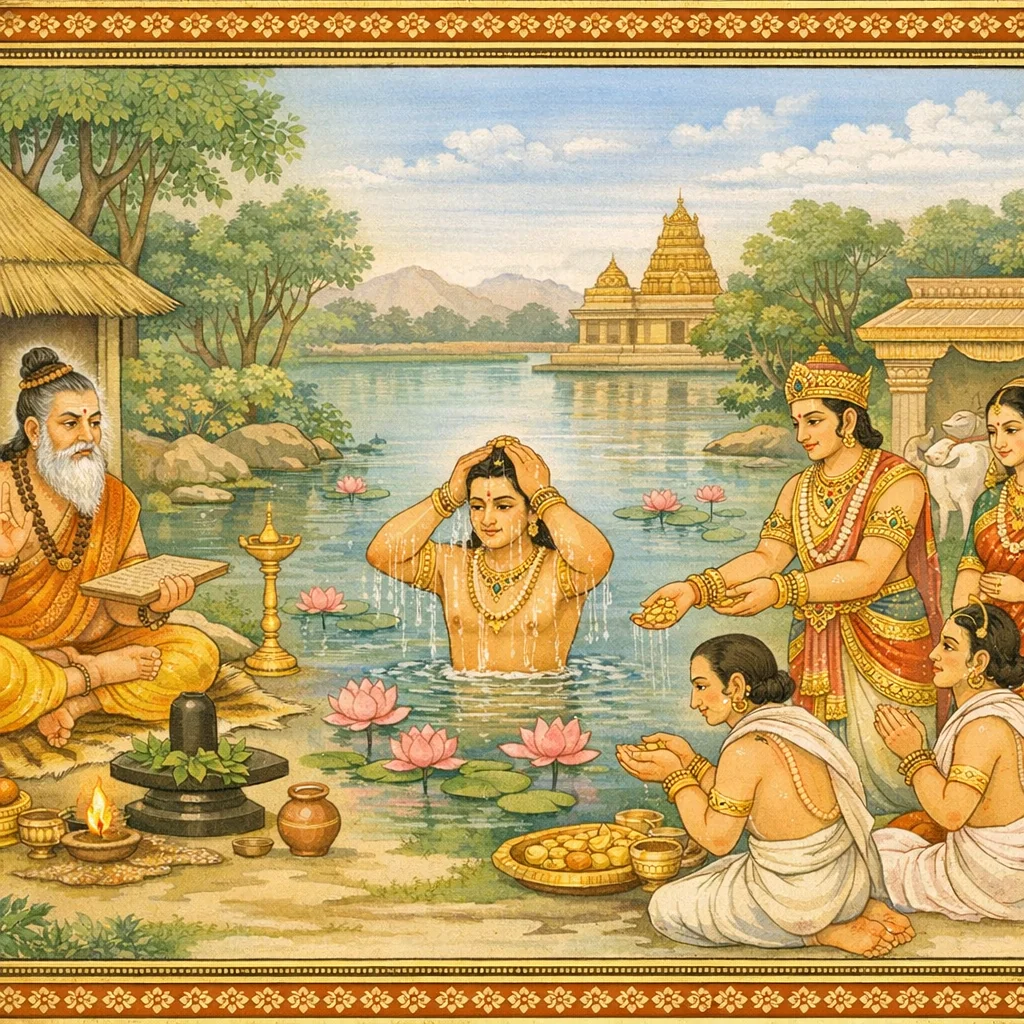
Spoken by Mārkaṇḍeya, this adhyāya guides a royal listener in itinerary-like fashion to Koṭitīrtha, praised as an unsurpassed sacred ford. The sanctity and authority of the place are affirmed by recalling the ṛṣis who attained supreme siddhi there, hence its fame as Ṛṣikoṭi. It then sets out three place-bound means of merit: (1) snāna at the tīrtha together with feeding Brahmins, where feeding even one Brahmin is extolled as equal to feeding a “koṭi” (ten million), signifying vast multiplication of merit; (2) snāna followed by honoring the pitṛ-devatās and forebears, bringing śrāddha-oriented duty into the pilgrimage; and (3) worship of Mahādeva at the site, promising the fruit of a Vājapeya sacrifice, thus equating localized devotion with the merit of exalted Vedic ritual. The chapter functions as a compact charter for Koṭitīrtha: place → prescribed acts → phalaśruti.
Shlokas
Verse 1
श्रीमार्कण्डेय उवाच । ततो गच्छेत्तु राजेन्द्र कोटितीर्थमनुत्तमम् । ऋषिकोटिर्गता तत्र परां सिद्धिमुपागता
Śrī Mārkaṇḍeya said: “Then, O king of kings, one should go to the unsurpassed sacred ford called Koṭitīrtha. There, a ‘crore of sages’ attained the supreme spiritual perfection.”
Verse 2
तत्र तीर्थे तु यः स्नात्वा भोजयेद्ब्राह्मणाञ्छुचिः । एकस्मिन्भोजिते विप्रे कोटिर्भवति भोजिता
At that tīrtha, whoever bathes and, being pure, feeds brāhmaṇas—when even one learned brāhmaṇa is fed there, it is as though a crore have been fed.
Verse 3
तत्र तीर्थे तु यः स्नात्वा पूजयेत्पितृदेवताः । पूजिते तु महादेवे वाजपेयफलं लभेत्
At that tīrtha, whoever bathes and worships the Pitṛs and the deities—when Mahādeva is worshipped there, one obtains the fruit of the Vājapeya sacrifice.
Verse 113
। अध्याय
End of the adhyāya: “Chapter”.