Adhyaya 110
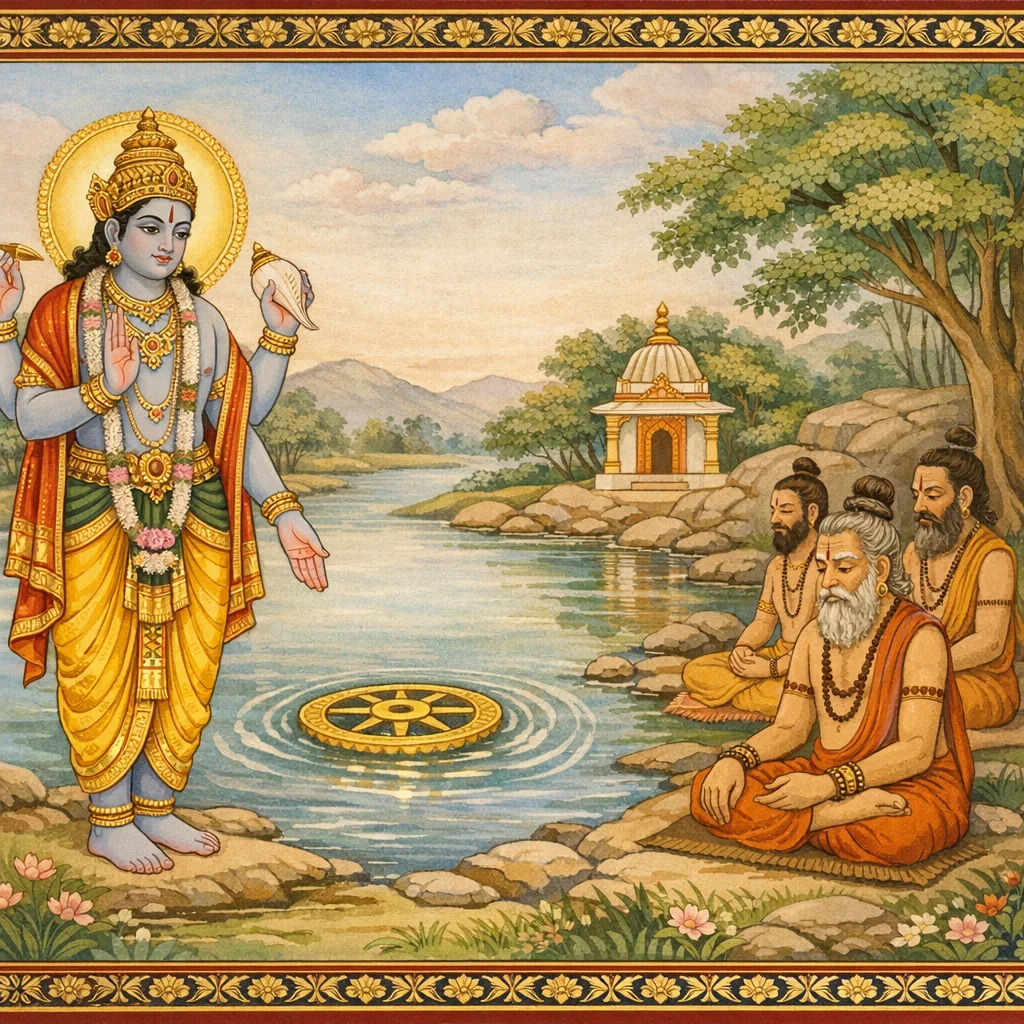
Mārkaṇḍeya outlines a purificatory pilgrimage sequence that culminates at a Vaiṣṇava tīrtha near Cakratīrtha, believed to have been founded in ancient times by Viṣṇu (Janārdana). The site’s power is explained through a mythic-historical cause: after slaying formidable Dānava foes, Viṣṇu established this tīrtha to neutralize lingering fault and the consequences arising from that Dānava-born conflict. The chapter praises the ascetic discipline practiced there—conquest of anger (jitakrodha), rigorous tapas, and the vow of silence (mauna)—as something even divine and anti-divine beings cannot readily imitate. It then gives a concise ritual-ethical rule: bathing (snāna), gifting to worthy recipients (dāna to dvijāti), and properly regulated recitation (japa according to procedure) are said to transform at once, freeing even grave wrongdoing and leading the practitioner to the Vaiṣṇava state (vaiṣṇava pada), with a phalaśruti-like assurance of purification.
Shlokas
Verse 1
श्रीमार्कण्डेय उवाच । धौतपापं ततो गच्छेन्महापातकनाशनम् । समीपे चक्रतीर्थस्य विष्णुना निर्मितं पुरा
Śrī Mārkaṇḍeya said: Then, having washed away sin, one should go to the destroyer of great sins—an ancient holy place established by Viṣṇu near Cakratīrtha.
Verse 2
निहतैर्दानवैर्घोरैर्देवदेवो जनार्दनः । तत्पापस्य विनाशार्थं दानवान्तोद्भवस्य च
After the dreadful Dānavas were slain, Janārdana, the God of gods, acted to destroy the sin arising from that deed and to quell the affliction born of the Dānavas as well.
Verse 3
तत्र तीर्थे जितक्रोधश्चचार विपुलं तपः । दुश्चरं मौनमास्थाय ह्यशक्यं देवदानवैः
At that tīrtha, having conquered anger, he undertook abundant austerity; adopting a rigorous vow of silence—an observance impossible even for gods and Dānavas.
Verse 4
स्नात्वा दत्त्वा द्विजातिभ्यो दानानि विविधानि च । तत्क्षणात्सुपापस्तु गतस्तद्वैष्णवं पदम्
Having bathed and given the twice-born various kinds of gifts, even a grievous sinner, in that very moment, attains the Vaiṣṇava state—the supreme abode of Viṣṇu.
Verse 5
एवं युक्तस्तु यस्तत्र पापं कृत्वा सुदारुणम् । स्नात्वा जप्त्वा विधानेन मुच्यते सर्वपातकैः
Thus, one who is rightly disciplined there—even if he has committed a most dreadful sin—by bathing and performing japa according to the prescribed rite is freed from all downfalls and sins.
Verse 110
। अध्याय
Adhyāya — “Chapter” (section marker).