Adhyaya 109
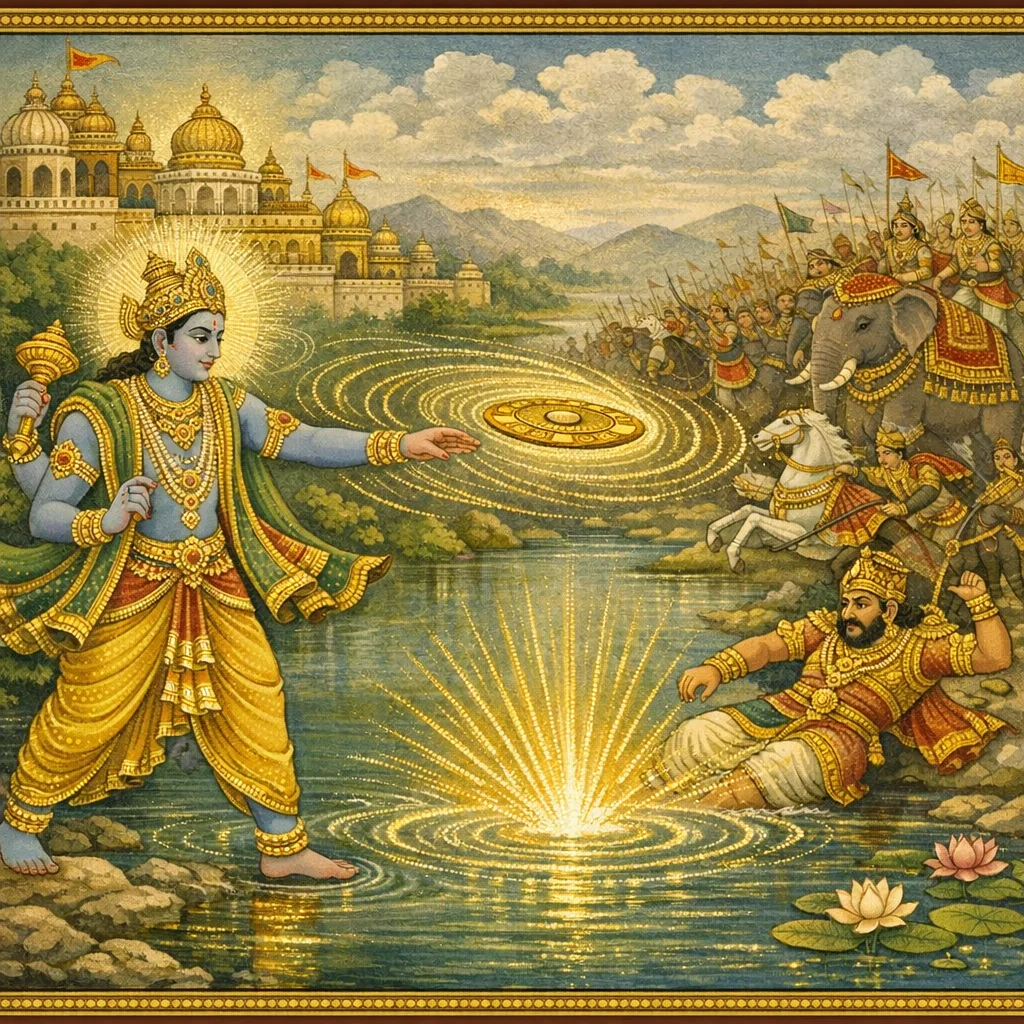
In this adhyāya, spoken by Mārkaṇḍeya, a teaching on pilgrimage is set within a martial and theological origin tale. The listener is directed to Cakratīrtha at Senāpura, praised as an unsurpassed purifier of wrongdoing and a sanctifying holy ford. The narrative recalls Mahāsena’s military consecration as commander (senāpatyābhiṣeka), attended by the devas led by Indra to secure victory over the dānavas. A dānava named Ruru disrupts the rite and a vast battle erupts, described in Purāṇic fashion through weapons and formations. The turning point comes when Viṣṇu unleashes the Sudarśana-cakra: it severs Ruru’s head, removes the obstacle to consecration, then—released—splits the dānava and falls into pure waters, thereby establishing the tīrtha’s name and sacred function. The latter portion prescribes merits: bathing and worship of Acyuta there yields the fruit of a Puṇḍarīka-yajña; bathing and honoring disciplined brāhmaṇas grants “koṭi-fold” results. One who relinquishes the body there in devotion attains Viṣṇuloka, enjoys auspicious bliss, and is later reborn in an eminent lineage. The chapter closes by declaring the tīrtha blessed, pain-destroying, and sin-removing, and signals further teachings to follow.
Shlokas
Verse 1
श्रीमार्कण्डेय उवाच । ततो गच्छेन्महीपाल चक्रतीर्थमनुत्तमम् । सेनापुरमितिख्यातं सर्वपापक्षयंकरम्
Śrī Mārkaṇḍeya said: Then, O protector of the earth, one should go to the unsurpassed Cakra-tīrtha, known as Senāpura, which brings about the destruction of all sins.
Verse 2
सैनापत्याभिषेकाय देवदेवेन चक्रिणा । आनीतश्च महासेनो देवैः सेन्द्रपुरोगमैः
For the consecration of the divine generalship, Mahāsena was brought by the Lord of gods, the discus-bearer, accompanied by the gods with Indra at their head.
Verse 3
दानवानां वधार्थाय जयाय च दिवौकसाम् । भूमिदानेन विप्रेन्द्रांस्तर्पयित्वा यथाविधि
For the slaying of the Dānavas and for the victory of the heavenly ones, the rite was undertaken after duly satisfying the foremost of brāhmaṇas with the gift of land, according to rule.
Verse 4
शङ्खभेरीनिनादैश्च पटहानां च निस्वनैः । वीणावेणुमृदङ्गैश्च झल्लरीस्वरमङ्गलैः
With the blare of conches and bheṛī kettledrums, with the resounding of paṭaha war-drums, and with auspicious music from vīṇā, flute, mṛdaṅga, and ringing cymbals—
Verse 5
ततः कृत्वा स्वनं घोरं दानवो बलदर्पितः । रुरुर्नाम विघातार्थमभिषेकस्य चागतः
Then, raising a dreadful roar, a Dānava—proud of his strength—named Ruru arrived, intent on obstructing the consecration (abhiṣeka).
Verse 6
हस्त्यश्वरथपत्त्योघैः पूरयन्वै दिशो दश । तत्र तेन महद्युद्धं प्रवृत्तं किल भारत
Filling the ten directions with masses of elephants, horses, chariots, and infantry, a great battle indeed began there because of him, O Bhārata.
Verse 7
शक्त्यृष्टिपाशमुशलैः खड्गैस्तोमरटङ्कनैः । भल्लैः कर्णिकनाराचैः कबन्धपटसंकुलैः
With spears, javelins, nooses, and clubs; with swords, tomaras and battle-axes; with bhallas and barbed arrows—crowded with headless trunks and severed limbs—
Verse 8
ततस्तु तां शत्रुबलस्य सेनां क्षणेन चापन्च्युतबाणघातैः । विध्वस्तहस्त्यश्वरथान्महात्मा जग्राह चक्रं रिपुसङ्घनाशनः
Then, in an instant, by the blows of unfailing arrows from his bow, he shattered the enemy host—its elephants, horses, and chariots destroyed; and that great-souled one, the destroyer of enemy multitudes, took up the discus.
Verse 9
ज्वलच्च चक्रं निशितं भयंकरं सुरासुराणां च सुदर्शनं रणे । चकर्त दैत्यस्य शिरस्तदानीं करात्प्रमुक्तं मधुघातिनश्च तत्
That blazing, sharp, and fearsome discus—Sudarśana, dreaded by gods and demons alike in battle—released from the hand of Madhusūdana, severed the Daitya’s head at that very moment.
Verse 10
तं दृष्ट्वा सहसा विघ्नमभिषेके षडाननः । त्यक्त्वा तु तत्र संस्थानं चचार विपुलं तपः
Seeing the sudden obstacle to the consecration, the Six-faced Lord (Ṣaḍānana) left that place and undertook vast austerity.
Verse 11
मुक्तं चक्रं विनाशाय हरिणा लोकधारिणा । द्विदलं दानवं कृत्वा पपात विमले जले
The discus, released for destruction by Hari, the supporter of the worlds, split the Dānava in two; and he fell into the pure waters.
Verse 12
तदा प्रभृति तत्तीर्थं चक्रतीर्थमिति श्रुतम् । सर्वपापविनाशाय निर्मितं विश्वमूर्तिना
From that time onward, that sacred ford became renowned as Cakratīrtha. It was established by the All-formed Lord for the destruction of every sin.
Verse 13
चक्रतीर्थे तु यः स्नात्वा पूजयेद्देवमच्युतम् । पुण्डरीकस्य यज्ञस्य फलमाप्नोति मानवः
But whoever bathes at Cakratīrtha and worships the unfailing Lord Acyuta attains the merit that comes from Puṇḍarīka’s sacrifice.
Verse 14
तत्र तीर्थे तु यः स्नात्वा पूजयेद्ब्राह्मणाञ्छुभान् । शान्तदान्तजितक्रोधान्स लभेत्कोटिजं फलम्
And whoever bathes at that tīrtha and honors auspicious brāhmaṇas—peaceful, self-restrained, and conquerors of anger—obtains merit multiplied a crore-fold.
Verse 15
तत्र तीर्थे तु यो भक्त्या त्यजते देहमात्मनः । विष्णुलोकं मृतो याति जयशब्दादिमङ्गलैः
Whoever, in devotion, relinquishes his body at that tīrtha, upon death goes to Viṣṇu’s world, welcomed by auspicious cries of “Jaya!” and benedictions.
Verse 16
क्रीडयित्वा यथाकामं देवगन्धर्वपूजितः । इहागत्य च भूयोऽपि जायते विपुले कुले
Having enjoyed as he wishes, honored by gods and Gandharvas, he returns here again and is born once more in a prosperous family.
Verse 17
एतत्पुण्यं पापहरं धन्यं दुःखप्रणाशनम् । कथितं ते महाभाग भूयश्चान्यच्छृणुष्व मे
This holy account—merit-giving, sin-destroying, blessed, and sorrow-dispelling—has been told to you, O fortunate one. Now hear yet more from me.
Verse 109
। अध्याय
Chapter—section marker (colophon).