Adhyaya 108
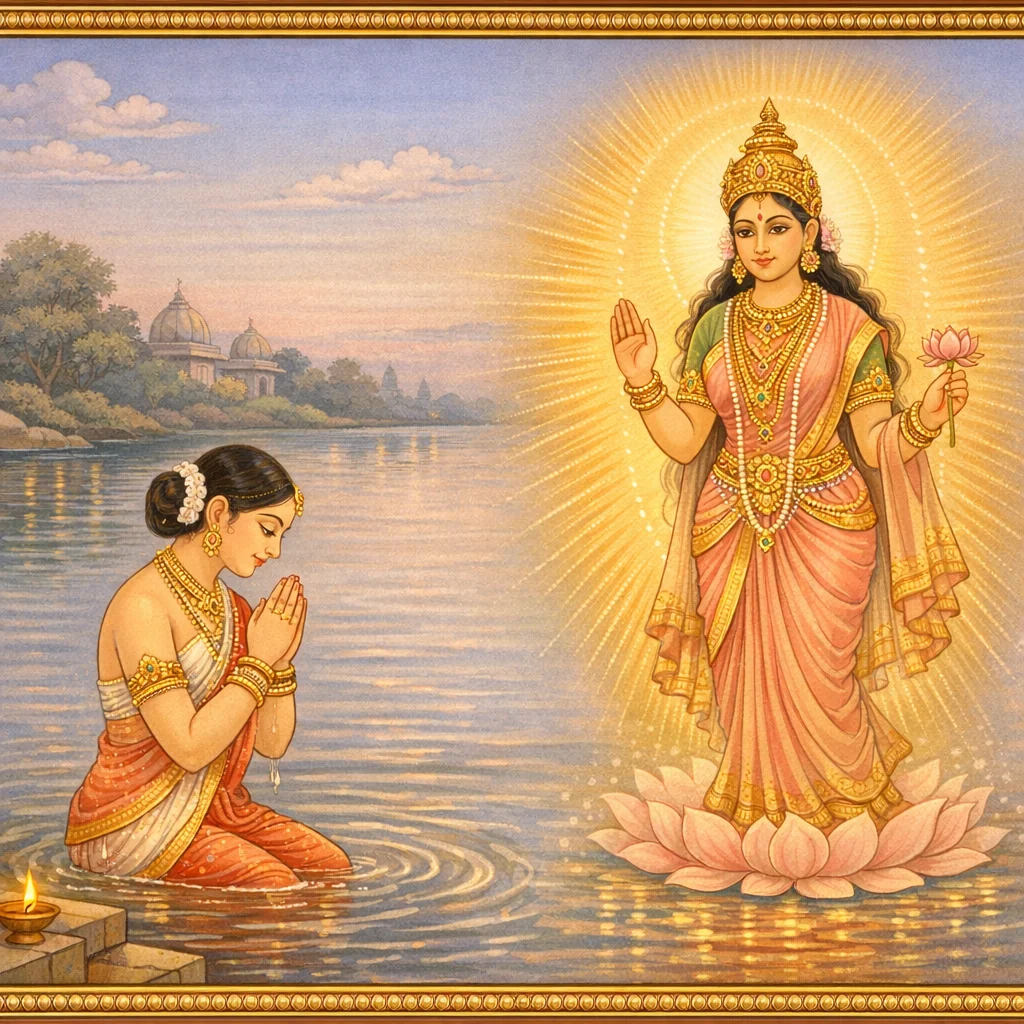
This chapter unfolds as an instructive dialogue: the sage Mārkaṇḍeya directs a kingly listener to Rohiṇī-tīrtha, famed in the three worlds and praised as a purifier of moral fault. When Yudhiṣṭhira asks for a precise account of its power, an origin narrative begins in the time of cosmic dissolution: Viṣṇu (Padmanābha/Cakrin) rests upon the waters; from His navel arises a radiant lotus, and from it Brahmā is born. Brahmā seeks guidance, Viṣṇu commissions creation, and the account proceeds through the rise of sages and the Dakṣa lineage, including Dakṣa’s daughters. Among the Moon’s wives, Rohiṇī is singled out as most beloved, yet a strain in relationship leads her to cultivate vairāgya (dispassion) and perform austerities on the bank of the Narmadā. She undertakes graded fasts, repeated ritual baths, and devoted worship of the Goddess Nārāyaṇī/Bhavānī, hailed as protector and remover of affliction. Pleased with her vow and restraint, the Goddess grants Rohiṇī’s request. Thereafter the place is named Rohiṇī-tīrtha and its phalaśruti is declared: those who bathe there become dear to their spouses like Rohiṇī, and one who dies there is promised freedom from conjugal separation for seven births. The chapter thus joins cosmological authority, exemplary asceticism, and a localized statement of results to authorize pilgrimage ethics at this Narmadā tīrtha.
Shlokas
Verse 1
श्रीमार्कण्डेय उवाच । ततो गच्छेन्महीपाल रोहिणीतीर्थमुत्तमम् । विख्यातं त्रिषु लोकेषु सर्वपापहरं परम्
Śrī Mārkaṇḍeya said: Then, O protector of the earth, one should go to the excellent Rohiṇī-tīrtha—renowned in the three worlds, supreme in removing all sins.
Verse 2
युधिष्ठिर उवाच । रोहिणीतीर्थमाहात्म्यं सर्वपापप्रणाशनम् । श्रोतुमिच्छामि तत्त्वेन तन्मे त्वं वक्तुमर्हसि
Yudhiṣṭhira said: I wish to hear, in truth and in full, the greatness of Rohiṇī-tīrtha which destroys all sins. Please tell it to me.
Verse 3
श्रीमार्कण्डेय उवाच । तस्मिन्नेकार्णवे घोरे नष्टे स्थावरजङ्गमे । उदधौ च शयानस्य देवदेवस्य चक्रिणः
Śrī Mārkaṇḍeya said: In that dreadful single ocean, when all that is stationary and moving had perished, the Lord of gods—the discus-bearer—lay upon the waters.
Verse 4
नाभौ समुत्थितं पद्मं रविमण्डलसन्निभम् । कर्णिकाकेसरोपेतं पत्रैश्च समलंकृतम्
From his navel arose a lotus, resembling the circle of the sun—endowed with pericarp and filaments, and beautifully adorned with petals.
Verse 5
तत्र ब्रह्मा समुत्पन्नश्चतुर्वदनपङ्कजः । किं करोमीति देवेश आज्ञा मे दीयतां प्रभो
There Brahmā arose—lotus-faced and four-mouthed—and said, “O Lord of the gods, what shall I do? O Master, grant me Your command.”
Verse 6
एवमुक्तस्तु देवेशः शङ्खचक्रगदाधरः । उवाच मधुरां वाणीं तदा देवं पितामहम्
Thus addressed, the Lord of the gods—bearing conch, discus, and mace—then spoke sweet words to the divine Grandsire (Brahmā).
Verse 7
सरस्वत्यां महाबाहो लोकं कुरु ममाज्ञया । भूतग्राममशेषस्य उत्पादनविधिक्षयम्
“O mighty-armed one, by My command, bring forth the worlds at Sarasvatī, and set in motion the complete method for producing all multitudes of beings.”
Verse 8
एतच्छ्रुतं तु वचनं पद्मनाभस्य भारत । चिन्तयामास भगवान्सप्तर्षीन्हितकाम्यया
O Bhārata, having heard these words of Padmanābha, the Blessed Lord reflected, desiring the welfare of the Seven Ṛṣis.
Verse 9
क्रमात्ते चिन्तिताः प्राज्ञाः पुलस्त्यः पुलहः क्रतुः । प्राचेतसो वसिष्ठश्च भृगुर्नारद एव च
In due order he brought to mind those wise ones: Pulastya, Pulaha, Kratu, Prācetasa, Vasiṣṭha, Bhṛgu, and Nārada.
Verse 10
यज्ञे प्राचेतसो दक्षो महातेजाः प्रजापतिः । दक्षस्यापि तथा जाताः पञ्चाशद्दुहितरोऽनघ
From the sacrifice arose Prācetasa Dakṣa, the radiant Prajāpati; and to Dakṣa likewise were born fifty daughters, O sinless one.
Verse 11
ददौ स दश धर्माय कश्यपाय त्रयोदश । तथैव स महाभागः सप्तविंशतिमिन्दवे
He gave ten (daughters) to Dharma, thirteen to Kaśyapa, and likewise that fortunate one gave twenty-seven to the Moon (Indu).
Verse 12
रोहिणीनाम या तासां मध्ये तस्य नराधिप । अनिष्टा सर्वनारीणां भर्तुश्चैव विशेषतः
O king, among them she who was named Rohiṇī became displeasing to all the women—especially to her husband.
Verse 13
ततः सा परमं कृत्वा वैराग्यं नृपसत्तम । आगत्य नर्मदातीरे चचार विपुलं तपः
Then she, having embraced supreme dispassion, O best of kings, came to the bank of the Narmadā and performed abundant austerity.
Verse 14
एकरात्रैस्त्रिरात्रैश्च षड्द्वादशभिरेव च । पक्षमासोपवासैश्च कर्शयन्ति कलेवरम्
By fasting for one night, for three nights, for six and for twelve, and also by half-month and month-long fasts, they emaciate the body as part of austerity.
Verse 15
आराधयन्ती सततं महिषासुरनाशिनीं । देवीं भगवतीं तात सर्वार्तिविनिवारणीम्
“O dear one, she continually worshipped the Blessed Goddess—the slayer of Mahiṣāsura—who removes every form of distress and affliction.”
Verse 16
स्नात्वा स्नात्वा जले नित्यं नर्मदायाः शुचिस्मिता । ततस्तुष्टा महाभागा देवी नारायणी नृप
“Having bathed again and again each day in the waters of the Narmadā—she of pure, gentle smile—thereupon the highly fortunate Goddess Nārāyaṇī became pleased, O King.”
Verse 17
प्रसन्ना ते महाभागे व्रतेन नियमेन च । एतच्छ्रुत्वा तु वचनं रोहिणी शशिनः प्रिया
“O most fortunate one, I am pleased with you—by your vow and your self-restraint.” Hearing these words, Rohiṇī, beloved of the Moon…
Verse 18
यथा भवामि न चिरात्तथा भवतु मानदे । एवमस्त्विति सा चोक्त्वा भवानी भक्तवत्सला
“As I am to become, and not after long—so let it be, O bestower of honor.” Saying, “So be it,” Bhavānī, tender to her devotees, granted the boon.
Verse 19
स्तूयमाना मुनिगणैस्तत्रैवान्तरधीयत । तदाप्रभृति तत्तीर्थं रोहिणी शशिनः प्रिया
While being praised by multitudes of sages, she vanished right there. From that time onward, that holy tīrtha became renowned in connection with Rohiṇī, beloved of the Moon.
Verse 20
संजाता सर्वकालं तु वल्लभा नृपसत्तम । तत्र तीर्थे तु या नारी नरो वा स्नानि भक्तितः
She became beloved for all time, O best of kings. And at that tīrtha, whatever woman—or man—bathes with devotion…
Verse 21
वल्लभा जायते सा तु भर्तुर्वै रोहिणी यथा । तत्र तीर्थे तु यः कश्चित्प्राणत्यागं करोति वै
She indeed becomes dear to her husband—just as Rohiṇī is dear. And whoever, at that tīrtha, gives up the body (dies)…
Verse 22
सप्तजन्मानि दाम्पत्यवियोगो न भवेत्क्वचित्
For seven births, there will never be any separation between the married pair.
Verse 108
। अध्याय
“(End of the) chapter.”