Adhyaya 107
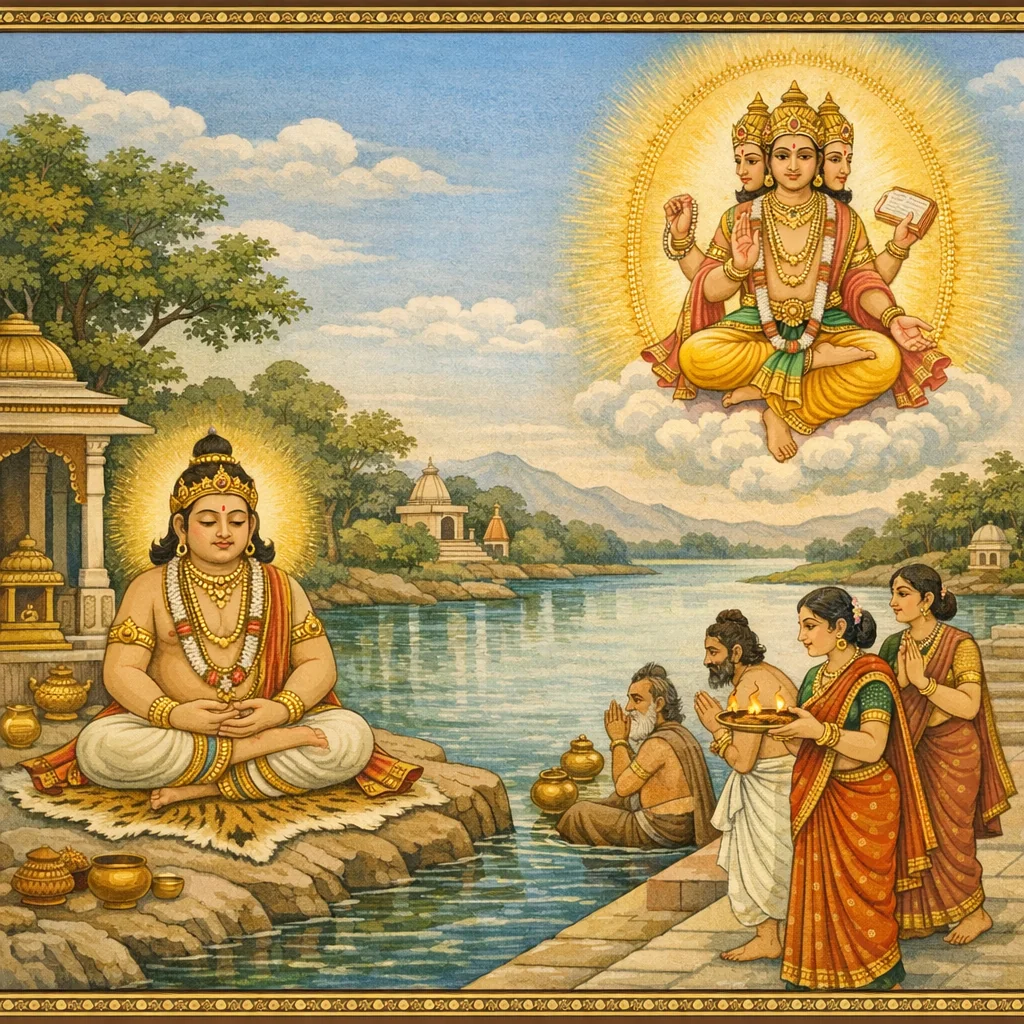
Chapter 107, within the Revākhaṇḍa, gives a brief tīrtha-instruction spoken by Śrī Mārkaṇḍeya to a royal listener. He directs the hearer to go to the eminent Bhaṇḍārī-tīrtha, praised as a place whose sacred efficacy includes “the cutting off of poverty” (daridra-ccheda) over a vast span of time, stated as nineteen yugas. The chapter then offers an origin-validation: Kubera (Dhanada) performed austerities there, and when Brahmā (Padmasambhava) was pleased, Kubera received the boon that even a small gift given at that very site becomes protection for wealth. Finally, a practical rule is set forth: one who goes with devotion, bathes, and gives wealth in dāna will not suffer depletion or interruption of fortune (vitta-pariccheda). The teaching emphasizes a ritual-ethical economy—prosperity is stabilized not by hoarding, but by disciplined pilgrimage, devotional intent, and measured generosity at an authorized sacred place.
Shlokas
Verse 1
श्रीमार्कण्डेय उवाच । ततो गच्छेत राजेन्द्र भण्डारीतीर्थमुत्तमम् । दरिद्रच्छेदकरणं युगान्येकोनविंशतिः
Śrī Mārkaṇḍeya said: Then, O king, one should go to the excellent Bhaṇḍārī-tīrtha. It is renowned as a cutter of poverty for nineteen yugas.
Verse 2
धनदेन तपस्तप्त्वा प्रसन्ने पद्मसम्भवे । तत्रैव स्वल्पदानेन प्राप्तं वित्तस्य रक्षणम्
Having performed austerities, Dhanada pleased Padmasambhava; and there itself, by even a small gift, he obtained protection of his wealth.
Verse 3
तत्र गत्वा तु यो भक्त्या स्नात्वा वित्तं प्रयच्छति । तस्य वित्तपरिच्छेदो न कदाचिद्भविष्यति
But whoever goes there in devotion, bathes, and gives wealth in charity—his wealth will never suffer diminution at any time.
Verse 107
। अध्याय
Chapter (colophon marker).