Adhyaya 105
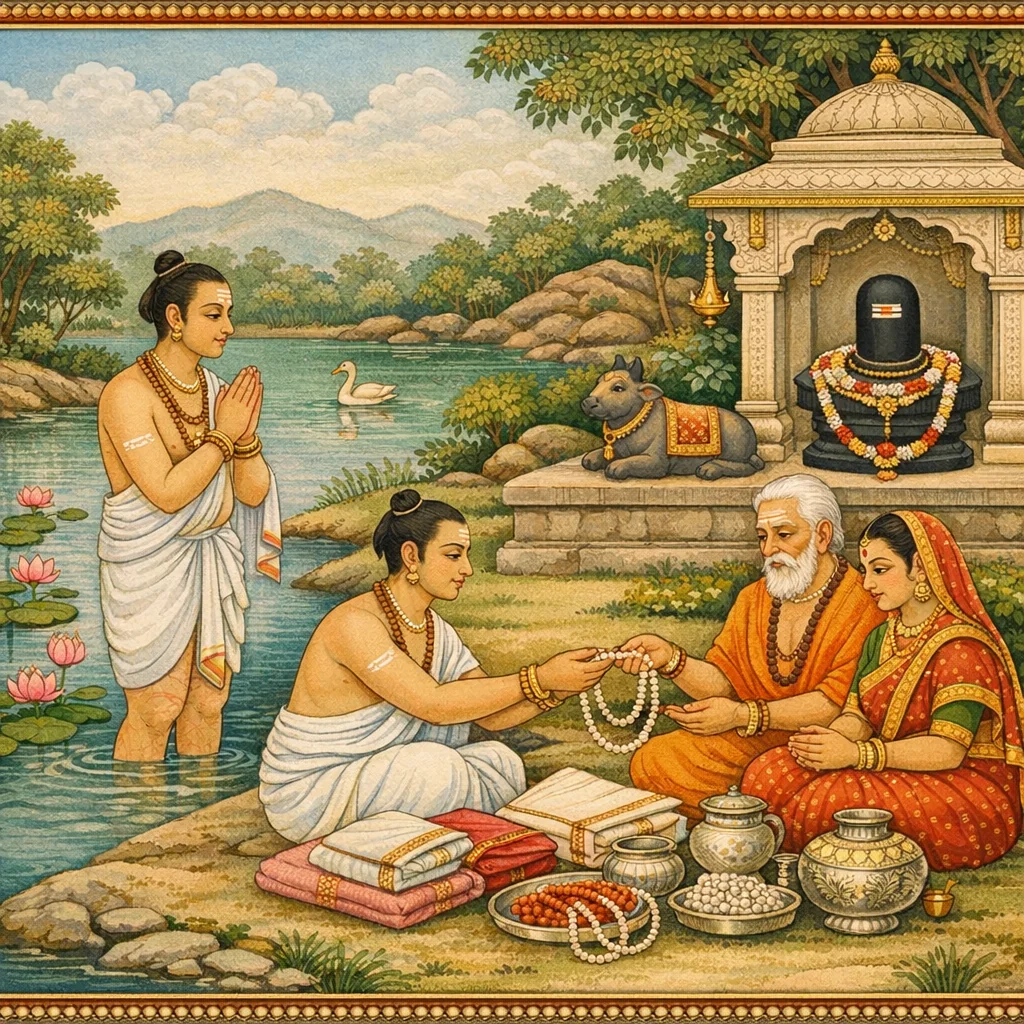
This chapter is a brief prescriptive teaching spoken by the sage Mārkaṇḍeya to a royal hearer (“rājendra”). He instructs the aspirant to go to the Karañjā Tīrtha while observing upavāsa (fasting) and jitendriyatā (restraint of the senses). After bathing at that sacred ford, the pilgrim is said to be freed from all pāpa (sin). One should then worship Mahādeva (Śiva) and give dāna with bhakti, with gifts listed in graded order—gold, silver, gems/pearls/coral, and also practical items such as footwear, an umbrella, a bed, and coverings. The phalāśruti declares the merit to be multiplied “koṭi-koṭi-guṇa,” uniting disciplined pilgrimage, Śaiva devotion, and charitable giving into a single path of spiritual fruition.
Shlokas
Verse 1
श्रीमार्कण्डेय उवाच । करञ्जाख्यं ततो गच्छेत्सोपवासो जितेन्द्रियः । तत्र स्नात्वा तु राजेन्द्र सर्वपापैः प्रमुच्यते
Śrī Mārkaṇḍeya said: Then one should go to the place called Karañjā, fasting and with the senses restrained. O best of kings, by bathing there one is freed from all sins.
Verse 2
अर्चयित्वा महादेवं दत्त्वा दानं तु भक्तितः । सुवर्णं रजतं वापि मणिमौक्तिकविद्रुमान्
Having worshipped Mahādeva, and having given charity with devotion—gold or silver, or gems such as pearls and corals—
Verse 3
पादुकोपानहौ छत्रं शय्यां प्रावरणानि च । कोटिकोटिगुणं सर्वं जायते नात्र संशयः
Sandals and shoes, an umbrella, a bed, and coverings—whatever such gifts are offered, all of it yields merit multiplied by crores upon crores; of this there is no doubt.
Verse 105
। अध्याय
“Chapter.” (A scribal/colophon marker indicating the chapter boundary.)