Adhyaya 100
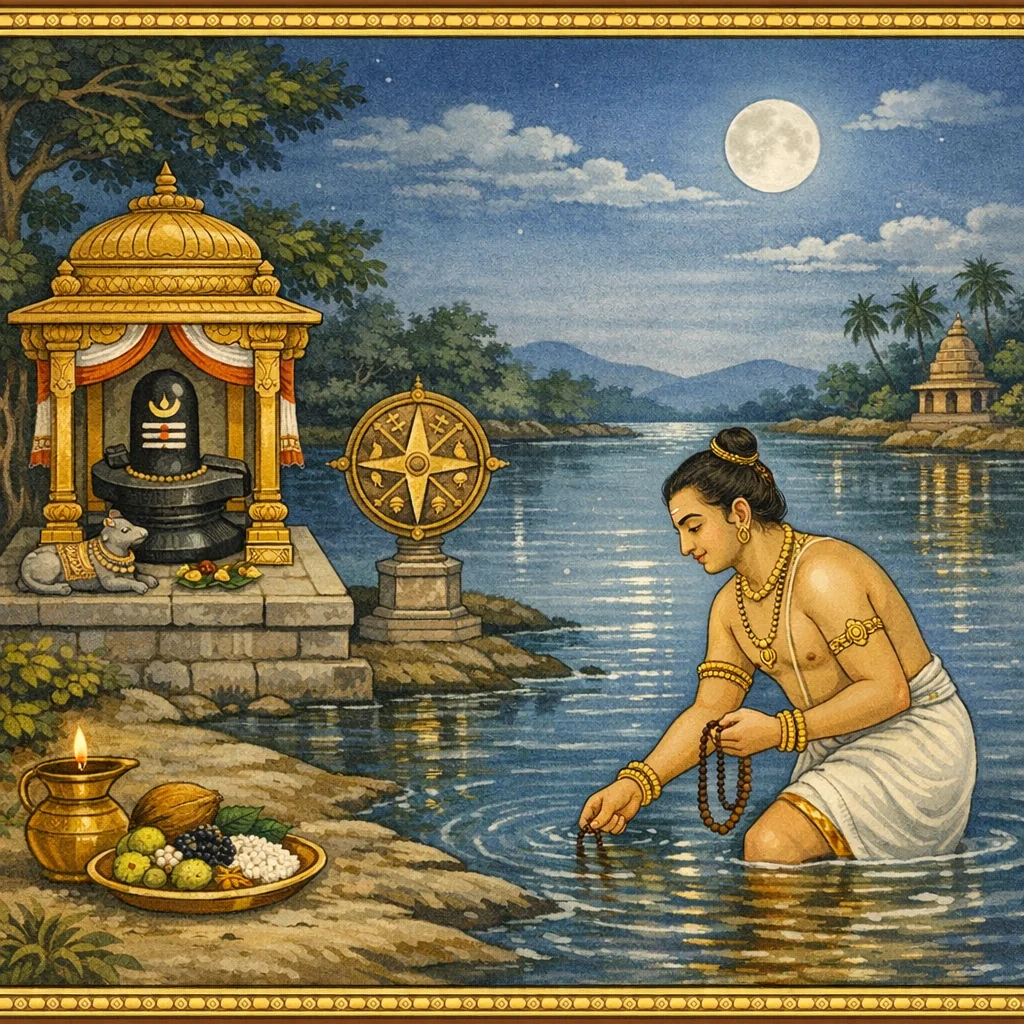
The chapter records Mārkaṇḍeya’s counsel to a king (addressed as “mahīpāla” and “Pāṇḍunandana”), urging pilgrimage to the greatly praised tīrtha called Mārkaṇḍeśa on the southern bank of the Narmadā. The place is extolled as supremely sacred—even revered by divine beings—and as a confidential seat of Śaiva worship. Mārkaṇḍeya adds a personal testimony: he had formerly established the sacred focus there, and through Śaṅkara’s grace liberating knowledge arose in him. The chapter then lays out observances and their fruits: japa performed while entering the water releases one from accumulated moral faults, purifying transgressions of mind, speech, and deed. A prescribed orientation and posture follows—standing facing south while holding a piṇḍikā—after which one should practice focused “yoga” or worship of Śūlin (Śiva) in his many forms, with the explicit promise of reaching Śiva at death. Further rites include lighting a ghee lamp at night on the eighth lunar day to attain heavenly worlds, performing śrāddha there to satisfy the ancestors until cosmic dissolution, and offering tarpaṇa with simple items (iṅguda, badara, bilva, akṣata, or water), said to bestow the “fruit of birth” upon one’s lineage.
Shlokas
Verse 1
श्रीमार्कण्डेय उवाच । ततो गच्छेन्महीपाल तीर्थं परमरोचनम् । मार्कण्डेशमिति ख्यातं नर्मदादक्षिणे तटे
Śrī Mārkaṇḍeya said: Then, O king, one should proceed to a supremely radiant tīrtha, famed as Mārkaṇḍeśa, on the southern bank of the Narmadā.
Verse 2
उत्तमं सर्वतीर्थानां गीर्वाणैर्वन्दितं शिवम् । गुह्याद्गुह्यतरं पुत्र नाख्यातं कस्यचिन्मया
O son, this is the supreme of all tīrthas—auspicious and filled with Śiva—revered even by the gods. It is a secret beyond secrets, and until now I had disclosed it to none.
Verse 3
स्थापितं तु मया पूर्वं स्वर्गसोपानसंनिभम् । ज्ञानं तत्रैव मे जातं प्रसादाच्छङ्करस्य च
Formerly I established it, like a stairway leading to heaven. There itself, knowledge arose in me, by the grace of Śaṅkara.
Verse 4
अन्यस्तत्रैव यो गत्वा द्रुपदामन्तर्जले जपेत् । स पातकैरशेषश्च मुच्यते पाण्डुनन्दन
O son of Pāṇḍu, whoever goes there and performs japa within the inner waters at Drupadā is completely released from all sins.
Verse 5
वाचिकैर्मानसैश्च वा कर्मजैरपि पातकैः । पिण्डिकां चाप्यवष्टभ्य याम्यामाशां च संस्थितः
Even if one is stained by sins born of speech, mind, or deeds—having taken refuge in the Piṇḍikā and standing facing the southern quarter—
Verse 6
योजयेच्छूलिनं भक्त्या द्वात्रिंशद्बहुरूपिणम् । देहपाते शिवं गच्छेदिति मे निश्चयो नृप
With devotion one should unite oneself (in worship and meditation) with the Trident-bearing Lord, who manifests in thirty-two forms. At the fall of the body, he attains Śiva—this is my firm conviction, O king.
Verse 7
आज्येन बोधयेद्दीपमष्टम्यां निशि भारत । स्वर्गलोकमवाप्नोति इत्येवं शङ्करोऽब्रवीत्
O Bhārata, on the night of the eighth lunar day (aṣṭamī) one should kindle a lamp with ghee. He attains the heavenly world—so declared Śaṅkara.
Verse 8
श्राद्धं तत्रैव यो भक्त्या कुर्वीत नृपनन्दन । पितरस्तस्य तृप्यन्ति यावदाभूतसम्प्लवम्
O prince, whoever performs śrāddha there with devotion—his ancestors remain satisfied until the end of the cosmic dissolution.
Verse 9
इङ्गुदैर्बदरैर्बिल्वैरक्षतेन जलेन वा । तर्पयेत्तत्र यो वंश्यानाप्नुयाज्जन्मनः फलम्
Whoever there offers tarpaṇa to his lineage with iṅguda fruits, badara (jujubes), bilva, or with unbroken rice and water—obtains the true fruit of his birth.
Verse 100
। अध्याय
End-of-chapter colophon: “Adhyāya” (Chapter).