Sarga 78
मकराक्षस्य निर्गमनम् — The Deployment of Makaraksha and Ravana’s Fury
युद्धकाण्ड
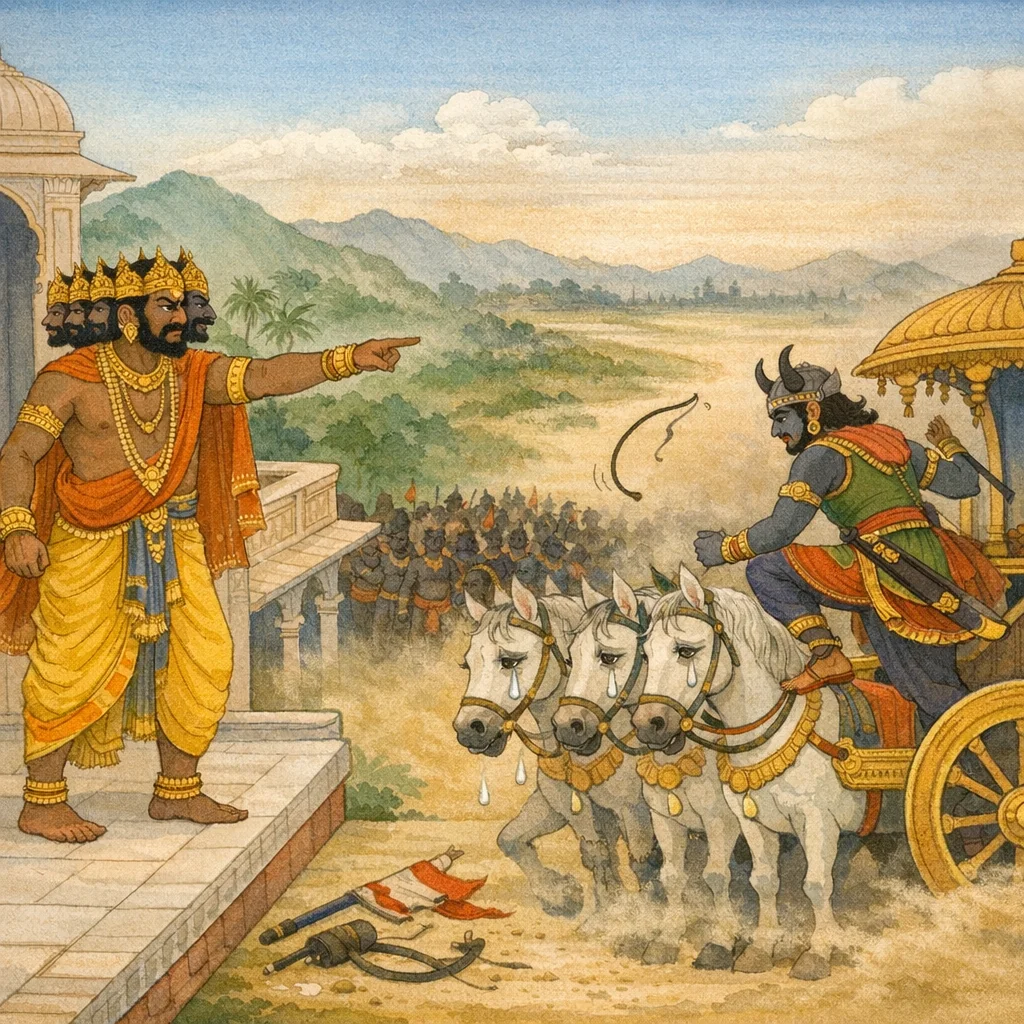
In Sarga 78, the war escalates after severe Rakshasa losses. Hearing of Nikumbha and Kumbha’s deaths, Ravana burns with rage and grief and summons Makarākṣa, the broad-eyed son of Khara, commanding him directly to slay Rama, Lakshmana, and the Vanara host. Makarākṣa accepts with martial confidence, offers formal obeisance and performs pradakṣiṇa, orders his chariot and troops readied, and mounts the chariot. He instructs the Rakshasas to advance before him and begin the fight. The host is portrayed as terrifying and shape-shifting, massed like elephants, surrounding their commander and shaking the earth, while drums, conches, and hand-clapping raise the din of war. As they depart, ominous nimitta appear: the charioteer’s whip falls, the standard collapses, the horses lose vigor and weep, and a harsh dust-laden wind blows. Yet the warriors disregard these signs and press on toward Rama and Lakshmana, as the chapter’s ritualized mobilization and portents foreshadow the defeat to come.
Shlokas
Verse 1
निकुम्भंनिहतंश्रुत्वाकुम्भं च विनिपातितम् ।रावणःपरमामर्षीप्रजज्वालानलोयथा ।।।।
Hearing that Nikumbha had been slain and that Kumbha too had fallen, Rāvaṇa—seized by fierce wrath—blazed like a fire kindled to a roar.
Verse 2
नैरृतःक्रोधशोकाभ्यांद्वाभ्यांतुपरिमूर्छितः ।खरपुत्रंविशालाक्षंमकराक्षमचोदयत् ।।।।
Rāvaṇa, overwhelmed and almost senseless with both anger and grief, summoned Makarākṣa, the broad-eyed son of Khara.
Verse 3
गच्छपुत्रऽमयाऽजाज्ञप्तोबलेनाभिसमवनितः ।राघवंलक्ष्मणंचैवजहितांश्चवनौकसः ।।।।
“Go, my son—by my command, and supported by an army. Slay Rāghava and Lakṣmaṇa, and those forest-dwelling Vānara hosts as well.”
Verse 4
रावणस्यवचश्श्रुत्वाशूरमानीखरात्मजः ।बाढमित्यब्रवीद्धृष्टोमकराक्षोनिशाचरम् ।।।।
Hearing Rāvaṇa’s words, Makarākṣa—Khara’s son, proud of his valor—boldly replied to the lord of the Rākṣasas, “Bāḍham—so be it.”
Verse 5
सोऽभिवाद्यदशग्रीवंकृत्वाचापिप्रदक्षिणम् ।निर्जगामगृहाच्छुभ्राद्रावणस्याज्ञयाबली ।।।।
Having saluted Daśagrīva (Rāvaṇa) and duly circumambulated him, the mighty warrior, acting on Rāvaṇa’s command, went forth from the radiant palace.
Verse 6
समीपस्थंबलाध्यक्षंखरपुत्रोऽब्रवीदिदम् ।रथश्चानीयतांशीघ्रंसैन्यंत्वानीयतांत्वरात् ।।।।
Khara’s son said to the commander of forces nearby: “Bring the chariot at once, and assemble the army without delay.”
Verse 7
तस्यतद्वचनंश्रुत्वाबलाध्यक्षोनिशाचरः ।स्यन्दनं च बलंचैवसमीपंप्रत्यपादयत् ।।।
Hearing his words, the rākṣasa commander of the host brought the chariot and the troops and stationed them close at hand.
Verse 8
प्रदक्षिणंरथंकृत्वाआरुरोहनिशाचरः ।सूतंसञ्चोदयामासशीघ्रंमेरथमावह ।।।।
Having reverently circumambulated the chariot, the rākṣasa mounted it and urged the charioteer: “Bring my chariot swiftly!”
Verse 9
अथतान्राक्षसान्सर्वान्मकराक्षोऽब्रवीदिदम् ।यूयंसर्वेप्रयुध्यध्वंपुरस्तान्ममराक्षसाः ।।।।
Then Makarākṣa said to all those rākṣasas: “All of you, my rākṣasas, fight on ahead of me!”
Verse 10
अहंराक्षसराजेनरावणेनमहात्मना ।आज्ञप्तःसमरेहन्तुंतावुभौरामलक्ष्मणौ ।।।।
I have been commanded by Rāvaṇa, the great king of the Rākṣasas, to slay in battle those two—Rāma and Lakṣmaṇa.
Verse 11
अद्यरामंवधिष्यामिलक्ष्मणं च निशाचराः ।शाखामृगं च सुग्रीवंवानरांश्चशरोत्तमैः ।।।।
Today I will kill Rāma and Lakṣmaṇa—and Sugrīva, that branch-roaming monkey—as well as the Vānara hosts, with my finest arrows.
Verse 12
अद्यशूलनिपातैश्चवानराणांमहाचमूम् ।प्रदहिष्यामिसम्प्राप्तांशुष्केन्धनमिवानलः ।।।।
Today, with volleys of pikes, I will burn down the great Vānara army as it approaches—just as fire consumes dry fuel.
Verse 13
मकराक्षस्यतच्छ्रुत्वावचनंतेनिशाचराः ।सर्वेनानायुधोपेताबलवन्तःसमाहिताः ।।।।
Having heard Makarākṣa’s words, those night-ranging Rākṣasas—all strong, focused, and equipped with many kinds of weapons—assembled and advanced.
Verse 14
तेकामरूपिणस्सरेदंष्ट्रिणःपिङ्गलेक्षणा ।मातङ्गाइवनर्दन्तोध्वस्तकेशाभयावहाः ।।।।परिवार्यमहाकायामहाकायंखरात्मजम् ।अभिजघ्नुस्ततोहृष्टाश्चालयन्तोवसुन्धराम् ।।।।
Those cruel Rākṣasas—shape-shifters with protruding fangs and tawny eyes, roaring like elephants, their hair dishevelled and their forms terrifying—surrounded the huge-bodied son of Khara. Then, exulting, they surged forth, shaking the earth beneath them.
Verse 15
तेकामरूपिणस्सरेदंष्ट्रिणःपिङ्गलेक्षणा ।मातङ्गाइवनर्दन्तोध्वस्तकेशाभयावहाः ।।6.78.14।।परिवार्यमहाकायामहाकायंखरात्मजम् ।अभिजघ्नुस्ततोहृष्टाश्चालयन्तोवसुन्धराम् ।।6.78.15।।
Those cruel, shape-shifting Rākṣasas, fanged and yellow-eyed, with disheveled hair, roared like elephants, dreadful to behold. They surrounded the mighty Makarākṣa, Khara’s son, and, exulting, surged forward, making the earth tremble.
Verse 16
शङ्खभेरीसहस्राणामाहतानांसमन्ततः ।क्ष्येळितास्फोटितानां च तत्रशब्दोमहानभूत् ।।।।
Then on every side a tremendous din arose: conches and war-drums by the thousand were sounded, along with warriors’ whoops and the sharp cracking-claps of their arms.
Verse 17
प्रभ्रष्टोऽथकरात्तस्यप्रतोदस्सारथेस्तदा ।पपातसहसादैवाद्ध्वजस्तस्यतुरक्षसः ।।।।
Then the charioteer’s goad slipped from his hand and fell at once; and that rākṣasa’s banner, by a sudden turn of fate, toppled down—an ominous sign.
Verse 18
तस्यतेरथसंयुक्ताहयाविक्रमवर्जिताः ।चरणैराकुलैर्गत्वादीनाःसास्रमुखाययुः ।।।।
His horses, yoked to the chariot, lost their mettle; with faltering, unsteady steps they moved on, dejected, their faces wet with tears.
Verse 19
प्रवातिपवनस्तस्मिन् सपांसुःखरदारुणः ।निर्याणेतस्यरौद्रस्यमकराक्षस्यदुर्मतेः ।।।।
As the fierce and evil-minded Makarākṣa set forth, a harsh and dreadful wind arose, driving dust in every direction.
Verse 20
तानिदृष्टवानिमित्तानिराक्षसावीर्यवत्तमाः ।अचिन्त्यनिर्गतास्सर्वेयत्रतौरामलक्ष्मणौ ।।।।
Though they beheld those portents, the most valiant of the rākṣasas gave them no heed; and all marched forth to where Rāma and Lakṣmaṇa stood.
Verse 21
घनगजमहिषाङ्गतुल्यवर्णास्समरमखेष्वसकृद्गदासिभिन्नाः ।अहमहमितियुद्धकौशलास्तेरजनीचराःपरिबभ्रमुर्नदन्तः ।।।।
Those night-ranging warriors—dark-hued like storm-clouds, elephants, and buffaloes—skilled in battle and again and again gashed by maces and swords, roamed about roaring, crying, “I, I!”
Frequently Asked Questions
The pivotal action is Ravana’s retaliatory command to eliminate Rama, Lakshmana, and the Vanaras—an escalation driven by rage and grief rather than reflective counsel—showing how leadership decisions under passion can deepen adharma and hasten ruin.
The chapter juxtaposes martial confidence with warning signs: ignoring nimitta (dropped whip, fallen standard, distressed horses, violent wind) illustrates the epic’s moral causality—when intent is corrupted by arrogance and wrath, even power and numbers cannot secure auspicious outcomes.
No named landmark is foregrounded; instead, the sarga highlights cultural-martial conventions—pradakṣiṇa and formal salutation before departure, the soundscape of conches and drums, and the banner/standard as a symbolic marker of fortune and authority in war.