Sarga 41
मारीचस्य रावणं प्रति नीत्युपदेशः (Maricha’s Counsel on Kingship and Ruin to Ravana)
अरण्यकाण्ड
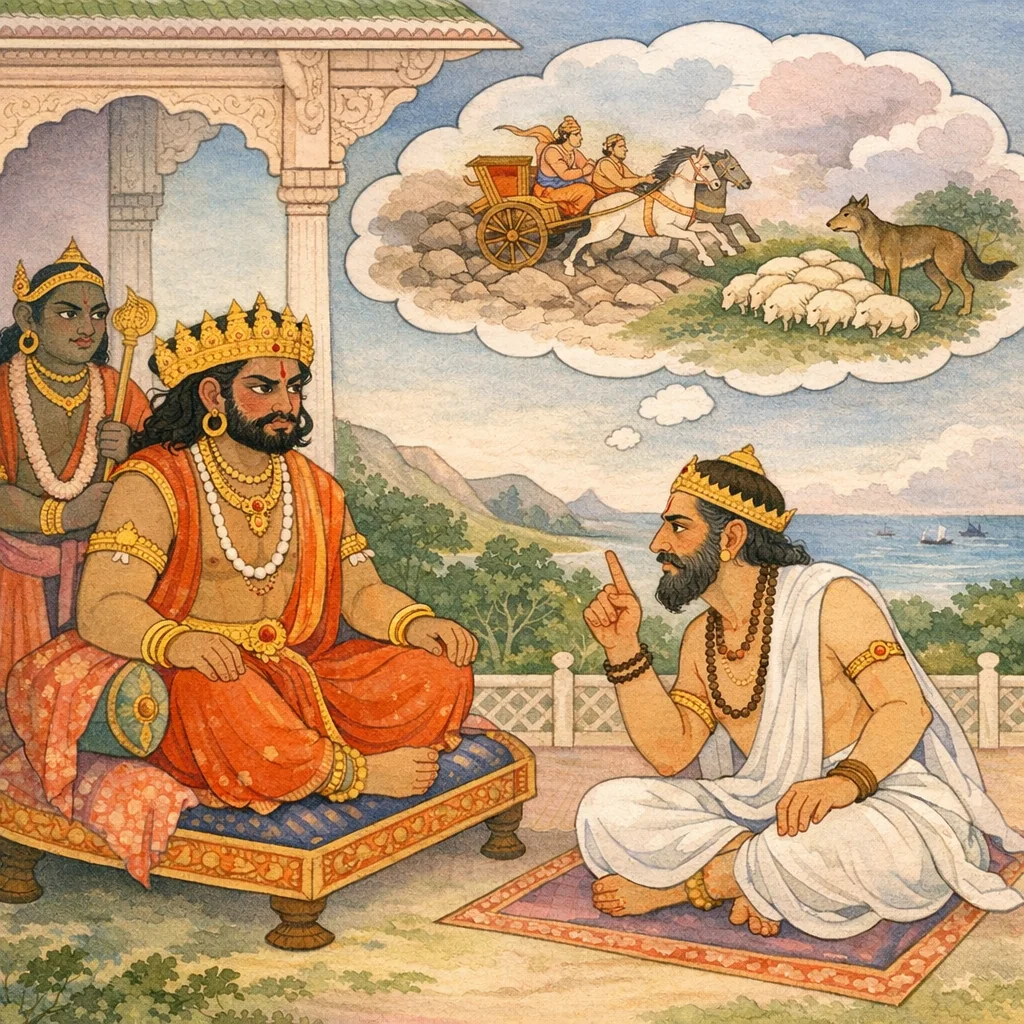
Sarga 41 offers an extended nīti-based admonition: Mārīca, compelled by a royal command harmful to his own welfare, speaks harshly to Rāvaṇa. He asks who has counseled Rāvaṇa onto a self-destructive path that will ruin his sons, kingdom, and ministers, and he rebukes those advisers who fail to restrain a lust-driven king from the way of adharma. Mārīca sets forth a rājadharma teaching: the king is the root of dharma and victory and therefore must be protected and rightly guided; yet a realm cannot be governed by one who is rude, hostile, and undisciplined. Through political similes and social consequences he shows that ministers fall with the king, like swift horses under a slow charioteer on rough ground; that the righteous may be destroyed by others’ faults; and that subjects do not prosper under a cruel ruler, like sheep guarded by a jackal. The discourse culminates in a prophetic warning: if Rāvaṇa proceeds to abduct Sītā with Mārīca’s aid, none will survive—Rāvaṇa, Mārīca, Laṅkā, or the rākṣasas—for Rāma will kill Mārīca and soon after slay Rāvaṇa. It closes with the maxim that those near death do not accept beneficial counsel even when offered by well-wishers.
Shlokas
Verse 1
आज्ञप्तो राजवद्वाक्यं प्रतिकूलं निशाचरः।अब्रवीत्परुषं वाक्यं मारीचो राक्षसाधिपम्।।।।
Compelled by a kingly command that ran against his own judgment, the night-roaming demon Mārīca spoke harsh words to the lord of the rākṣasas.
Verse 2
केनायमुपदिष्टस्ते विनाशः पापकर्मणा।सपुत्रस्य सराष्ट्रस्य सामात्यस्य निशाचर।।।।
O night-roaming demon, by what sinful-doer have you been counseled toward this ruin—ruin that will consume you along with your sons, your kingdom, and your ministers?
Verse 3
कस्त्वया सुखिना राजन्नाभिनन्दति पापकृत्।केनेदमुपदिष्टं ते मृत्युद्वारमुपायतः।।।।
O King, what sinner could rejoice at seeing you happy? Who has craftily advised you in this matter—showing you, as it were, the very gate of death?
Verse 4
शत्रवस्तव सुव्यक्तं हीनवीर्या निशाचराः।इच्छन्ति त्वां विनश्यन्तमुपरुद्धं बलीयसा।।।।
It is perfectly clear: your enemies among the night-rangers, now bereft of strength, desire to see you drawn into conflict with a mightier power—and thus destroyed.
Verse 5
केनेदमुपदिष्टं ते क्षुद्रेणाहितवादिना।यस्त्वामिच्छति नश्यन्तं स्वकृतेन निशाचर।।।।
O night-roamer, by whom—by what petty, ill-speaking adviser—have you been instructed thus? For he who wishes you to perish through your own deed is no friend to you.
Verse 6
वध्याः खलु न हन्यन्ते सचिवास्तव रावण।ये त्वामुत्पथमारूढं न निगृह्णन्ति सर्वशः।।।।
O Rāvaṇa, your ministers indeed deserve death—yet they are not slain—those who do not restrain you by every means when you have mounted the wrong path.
Verse 7
अमात्यैः कामवृत्तो हि राजा कापथमाश्रितः।निग्राह्यस्सर्वथा सदभिर्न निग्राह्यो निगृह्यसे।।।।
For when a king is driven by desire and has taken to an evil course, he must be checked in every way by good ministers. Yet you—though fit to be restrained—are not restrained.
Verse 8
धर्ममर्थं च कामं च यशश्च जयतां वर।स्वामिप्रसादात्सचिवाः प्राप्नुवन्ति निशाचर।।।।
O night-roamer, best among the victorious: by the lord’s favor ministers attain dharma, prosperity, pleasure, and fame.
Verse 9
विपर्यये तु तत्सर्वं व्यर्थं भवति रावण।व्यसनं स्वामिवैगुण्यात्प्राप्नुवन्तीतरे जनाः।।।।
But if it turns otherwise, O Rāvaṇa, all that becomes fruitless; and because of the master’s faults, other people fall into calamity.
Verse 10
राजमूलो हि धर्मश्च जयश्च जयतां वर।तस्मात्सर्वास्ववस्थासु रक्षितव्या नराधिपाः।।।।
O best among conquerors, dharma and victory are rooted in the king; therefore, in every condition and at every stage, kings must be protected.
Verse 11
राज्यं पालयितुं शक्यं न तीक्ष्णेन निशाचर।न चापि प्रतिकूलेन नाविनीतेन राक्षस।।।।
O night-walker, a kingdom cannot be governed by one who is harsh; nor by one who is hostile; nor by one untrained in civility and restraint, O rākṣasa.
Verse 12
ये तीक्ष्णमन्त्रास्सचिवा भज्यन्ते सह तेन वै।विषमे तुरगा श्शीघ्रा मन्दसारथयो यथा।।।।
Ministers who follow harsh and improper strategies are ruined along with that ruler—like swift horses that come to grief on rough ground when driven by a sluggish charioteer.
Verse 13
बहवस्साधवो लोके युक्ता धर्ममनुष्ठिताः।परेषामपराधेन विनष्टास्सपरिच्छदाः।।।।
In this world, many righteous people—steadfast in dharma and proper conduct—have been destroyed, along with all they possessed, because of the wrongdoing of others.
Verse 14
स्वामिना प्रतिकूलेन प्रजास्तीक्ष्णेन रावण।रक्ष्यमाणा न वर्धन्ते मेषा गोमायुना यथा।।।।
O Rāvaṇa, people protected by a master who is hostile and cruel do not prosper—like sheep ‘guarded’ by a jackal.
Verse 15
अवश्यं विनशिष्यन्ति सर्वे रावण राक्षसाः।येषां त्वं कर्कशो राजा दुर्बुद्धिरजितेन्द्रियः।।।।
Surely, O Rāvaṇa, all the rākṣasas will perish when you—harsh as king, evil-minded, and uncontrolled in the senses—rule over them.
Verse 16
तदिदं काकतालीयं घोरमासादितं मया।अत्र किं शोचनीयस्त्वं ससैन्यो विनशिष्यसि।।।।
This dreadful calamity has come upon me by sheer chance; yet what is there to grieve for here? You, together with your army, will be destroyed.
Verse 17
मां निहत्य तु रामश्च न चिरात्त्वां वधिष्यति।अनेन कृतकृत्योऽस्मि म्रियेयमरिणा हतः।।।।
After killing me, Rāma will before long kill you as well. By this I shall have fulfilled my purpose—even if I die, slain by an enemy.
Verse 18
दर्शनादेव रामस्य हतं मामवधारय।आत्मानं च हतं विद्धि हृत्वा सीतां सबान्धवम्।।।।
The very moment I come within Rāma’s sight, know me to be as good as dead; and know that you too will be slain—together with your kinsmen—if you abduct Sītā.
Verse 19
आनयिष्यसि चेत्सीतामाश्रमात्सहितो मया।नैवत्वमसि नाहं च नैव लङ्का न राक्षसाः।।।।
If, with my help, you bring Sītā from the hermitage, then know this: neither you will remain, nor I, nor Laṅkā—nor the rākṣasas.
Verse 20
निवार्यमाणस्तु मया हितैषिणा न मृष्यसे वाक्यमिदं निशाचर।परेतकल्पा हि गतायुषो नरा हितं न गृह्णन्ति सुहृद्भिरीरितम्।।।।
O night-roamer (Rāvaṇa), though I restrain you as one who seeks your welfare, you do not accept these words. For men whose life is spent—already as good as dead—do not take to heart the beneficial counsel spoken by friends.
Frequently Asked Questions
The dilemma is whether a subordinate (Mārīca) should comply with a sovereign’s command when that command is adharma and strategically suicidal. Mārīca frames the proposed action—abducting Sītā from the āśrama—as a “death-gate” policy that endangers ruler, polity, and allies.
The upadeśa is that rājadharma is the root-condition for collective flourishing: a king’s character shapes ministers, subjects, and outcomes. A rude, hostile, undisciplined ruler cannot sustain governance, and those nearing ruin typically reject well-intentioned counsel—making heedfulness to advice a moral and strategic necessity.
The key landmark is the āśrama (forest hermitage) as the protected cultural space whose violation (Sītā’s abduction) triggers civilizational conflict. Laṅkā functions as the political center whose survival is explicitly placed at risk by the proposed transgression.