Sarga 37
मारीचोपदेशः — Maricha’s Counsel to Ravana (On Rama’s Dharma and the Peril of Abduction)
अरण्यकाण्ड
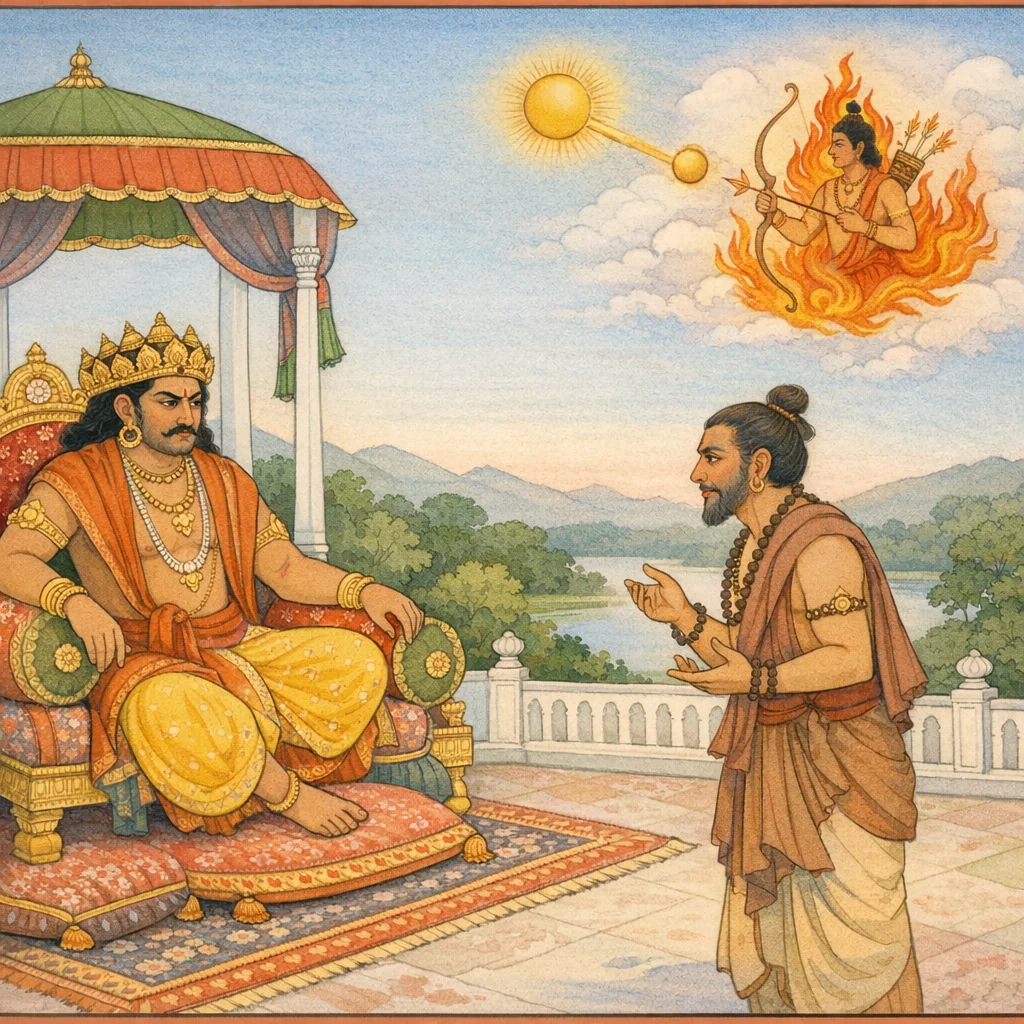
In Sarga 37, after hearing Rāvaṇa’s intention, Mārīca—praised as mahāprājña and vākyaviśārada—offers weighty counsel. He begins with a political-ethical maxim: pleasant speech is common, but salutary advice that may sound unpleasant is rare both to give and to receive. He then diagnoses Rāvaṇa’s failure in kingship—impulsiveness, lack of trustworthy intelligence, and slavery to desire—warning that such a ruler destroys himself, his kin, and his realm. The heart of the sarga is a sustained portrayal of Rāma as dharma embodied: neither harsh nor ignorant, self-controlled, truthful, and unwavering in maryādā. His forest exile is presented as voluntary fidelity to Daśaratha’s truth and to Kaikeyī’s demand, undertaken without greed for kingdom or pleasures. Mārīca heightens the warning with vivid metaphors: Sītā cannot be severed from Rāma like sunlight from the sun; Rāma is an unenterable fire whose flames are arrows and whose fuel is bow and sword. To be seen by Rāma in battle is as good as death; therefore Mārīca urges strategic deliberation with ministers—especially Vibhīṣaṇa—carefully weighing strengths, merits, and welfare before acting. Repetitions in the Southern Recension reinforce the didactic cadence of the counsel and the inevitability of ruin if it is ignored.
Shlokas
Verse 1
तच्छृत्वा राक्षसेन्द्रस्य वाक्यं वाक्यविशारदः।प्रत्युवाच महाप्राज्ञो मारीचो राक्षसेश्वरम्।।।।
Hearing the words of the lord of the rākṣasas, the very wise Mārīca—skilled in speech—replied to Rāvaṇa, ruler of the demons.
Verse 2
सुलभाः पुरुषा राजन्सततं प्रियवादिनः।अप्रियस्य तु पथ्यस्य वक्ता श्रोता च दुर्लभः।।।।
O King, men who always speak what is pleasing are easy to find; but rare is one who will speak what is unpleasant yet wholesome—and rare as well is one who will listen to it.
Verse 3
न नूनं बुध्यसे रामं महावीर्यं गुणोन्नतम्।अयुक्तचारश्चपलो महेन्द्रवरुणोपमम्।।।।
Surely you do not truly understand Rāma—mighty in valor and exalted in virtues, comparable to Indra and Varuṇa. Fickle and careless in gathering intelligence, you fail to grasp who he really is.
Verse 4
अपि स्वस्ति भवेत्तात सर्वेषां भुवि रक्षसाम्।अपि रामो नासङ्क्रुद्धः कुर्याल्लोकमराक्षसम्।।।।
Dear one, may well-being yet remain for all the rākṣasas upon the earth. For if Rāma becomes truly enraged, he could make the world bereft of rākṣasas.
Verse 5
अपि ते जीवितान्ताय नोत्पन्ना जनकात्मजा।अपि सीतानिमित्तं च न भवेद्व्यसनं मम।।।।
May the daughter of Janaka not have been born for the very ending of your life. And may no calamity come upon me on account of Sītā.
Verse 6
अपि त्वामीश्वरं प्राप्य कामवृत्तं निरङ्कुशम्।न विनश्येत्पुरी लङ्का त्वया सह सराक्षसा।।।।
Even if they have gained you as their lord—driven by desire and unrestrained—may Laṅkā not be destroyed, together with you and the rākṣasas.
Verse 7
त्वद्विधः कामवृत्तो हि दुश्शीलः पापमन्त्रितः।आत्मानं स्वजनं राष्ट्रं स राजा हन्ति दुर्मतिः।।।।
A king like you—ruled by passion, corrupt in conduct, and counselled toward evil—destroys himself, his own people, and his kingdom, for his mind is perverse.
Verse 8
न च पित्रा परित्यक्तो नामर्यादः कथञ्चन।न लुब्धो न च दुश्शीलो न च क्षत्रियपांसनः।।।।न च धर्मगुणैर्हीनः कौसल्यानन्दवर्धनः।न तीक्ष्णो न च भूतानां सर्वेषामहिते रतः।।।।
Rāma, who increases Kausalyā’s joy, has not been cast off by his father, nor has he ever transgressed the bounds of propriety. He is neither greedy nor of corrupt conduct, nor a disgrace to the kṣatriyas. He is not lacking in dharma and virtue; he is not cruel, nor devoted to the harm of any being.
Verse 9
न च पित्रा परित्यक्तो नामर्यादः कथञ्चन।न लुब्धो न च दुश्शीलो न च क्षत्रियपांसनः।।3.37.8।।न च धर्मगुणैर्हीनः कौसल्यानन्दवर्धनः।न तीक्ष्णो न च भूतानां सर्वेषामहिते रतः।।3.37.9।।
Rāma, who increases Kausalyā’s joy, has not been cast off by his father, nor has he ever transgressed the bounds of propriety. He is neither greedy nor of corrupt conduct, nor a disgrace to the kṣatriyas. He is not lacking in dharma and virtue; he is not cruel, nor devoted to the harm of any being.
Verse 10
वञ्चितं पितरं दृष्ट्वा कैकेय्या सत्यवादिनम्।करिष्यामीति धर्मात्मा तात प्रव्रजितो वनम्।।।।
O dear one, seeing his truth-speaking father deceived by Kaikeyī, the righteous-souled Rāma said, “I shall do it,” and departed to the forest.
Verse 11
कैकेय्याः प्रियकामार्थं पितुर्दशरथस्य च।हित्वा राज्यं च भोगांश्च प्रविष्टो दण्डकावनम्।।।।
To satisfy Kaikeyī’s wish and to honor his father Daśaratha’s word, he abandoned kingdom and pleasures and entered the Daṇḍaka forest.
Verse 12
न रामः कर्कशस्तात नाविद्वान्नाजितेन्द्रियः।अनृतं दुश्श्रुतं चैव नैव त्वं वक्तुमर्हसि।।।।
Rāma is not harsh, dear one; nor is he unlearned, nor uncontrolled in his senses. You ought not speak falsehood, nor repeat what is ill-heard and unfounded.
Verse 13
रामो विग्रहवान् धर्मस्साधुस्सत्यपराक्रमः।राजा सर्वस्य लोकस्य देवानां मघवानिव।।।।
Rāma is Dharma embodied—pious and noble—whose might is founded upon truth. He is king of all the worlds, as Maghavān (Indra) is among the gods.
Verse 14
कथं त्वं तस्य वैदेहीं रक्षितां स्वेन तेजसा।इच्छसि प्रसभं हर्तुं प्रभामिव विवस्वतः।।।।
How can you wish to seize Vaidehī by force, when she is protected by Rāma’s own splendor and power? Can anyone separate the sun’s radiance from the Sun himself?
Verse 15
शरार्चिषमाधृष्यं चापखङ्गेन्धनं रणे।रामाग्निं सहसा दीप्तं न प्रवेष्टुं त्वमर्हसि।।।।
You ought not rush into the fire that is Rāma—unassailable in battle—whose flames are arrows and whose fuel is bow and sword, suddenly blazing forth.
Verse 16
धनुर्व्यादितदीप्तास्यं शरार्चिषममर्षणम्।चापबाणधरं तीक्ष्णं शत्रुसैन्यप्रहारिणम्।।।।राज्यं सुखं च सन्त्यज्य जीवितं चेष्टमात्मनः।नात्यासादयितुं तात रामान्तकमिहार्हसि।।।।
Dear one, do not forsake your kingdom and happiness—nor even your cherished life—to draw near here to Rāma, like Death itself: his bow is as a blazing open mouth, his arrows are flames; fierce in wrath, keen in prowess, he is the destroyer of enemy armies.
Verse 17
धनुर्व्यादितदीप्तास्यं शरार्चिषममर्षणम्।चापबाणधरं तीक्ष्णं शत्रुसैन्यप्रहारिणम्।।3.37.16।।राज्यं सुखं च सन्त्यज्य जीवितं चेष्टमात्मनः।नात्यासादयितुं तात रामान्तकमिहार्हसि।।3.37.17।।
Dear one, do not forsake your kingdom and happiness—nor even your cherished life—to draw near here to Rāma, like Death itself: his bow is as a blazing open mouth, his arrows are flames; fierce in wrath, keen in prowess, he is the destroyer of enemy armies.
Verse 18
अप्रमेयं हि तत्तेजो यस्य सा जनकात्मजा।न त्वं समर्थस्तां हर्तुं रामचापाश्रयं वने।।।।
Immeasurable indeed is the might of him to whom Janaka’s daughter belongs; you are not able to abduct her, for in the forest she abides under the shelter of Rāma’s bow.
Verse 19
तस्य सा नरसिंहस्य सिंहोरस्कस्य भामिनी।प्राणेभ्योऽपि प्रियतरा भार्या नित्यमनुव्रता।।।।
She—radiant Sītā—is the wife of that lion among men, broad-chested like a lion; ever faithful, she is dearer to him even than his own life-breath.
Verse 20
न सा धर्षयितुं शक्या मैथिल्योजस्विनः प्रिया।दीप्तस्येव हुताशस्य शिखा सीता सुमध्यमा।।।।
That slender-waisted Sītā—beloved of the mighty one—cannot be violated; she is like the leaping flame of a blazing fire.
Verse 21
किमुद्यममिमं व्यर्थं कृत्वा ते राक्षसाधिप।दृष्टश्चेत्वं रणे तेन तदन्तं तव जीवितम्।।।।
O lord of the rākṣasas, why undertake this futile endeavor? If he beholds you on the battlefield, that very moment will be the end of your life.
Verse 22
जीवितं च सुखं चैव राज्यं चैव सुदुर्लभम्।यदीच्छसि चिरं भोक्तुं मा कृथा रामविप्रियम्।।।।
If you wish to enjoy for a long time your life, your happiness, and even your hard-won kingdom, do not do what brings Rāma’s displeasure.
Verse 23
स सर्वैस्सचिवैस्सार्धं विभीषणपुरोगमैः।मन्त्रयित्वा तु धर्मिष्ठैः कृत्वा निश्चयमात्मनः।।।।दोषाणां च गुणानां च सम्प्रधार्य बलाबलम्।आत्मनश्च बलं ज्ञात्वा राघवस्य च तत्वतः।।।।हिताहितं विनिश्चित्य क्षमं त्वं कर्तुमर्हसि।
Consult with all your ministers, with righteous counsellors led by Vibhīṣaṇa, and then settle your decision. Weigh faults and merits, and assess strength and weakness—both your own and Rāghava’s in truth. Having determined what is beneficial and what is harmful, do what is proper.
Verse 24
स सर्वैस्सचिवैस्सार्धं विभीषणपुरोगमैः।मन्त्रयित्वा तु धर्मिष्ठैः कृत्वा निश्चयमात्मनः।।3.37.23।।दोषाणां च गुणानां च सम्प्रधार्य बलाबलम्।आत्मनश्च बलं ज्ञात्वा राघवस्य च तत्वतः।।3.37.24।।हिताहितं विनिश्चित्य क्षमं त्वं कर्तुमर्हसि।
Consult with all your ministers, with righteous counsellors led by Vibhīṣaṇa, and then settle your decision. Weigh faults and merits, and assess strength and weakness—both your own and Rāghava’s in truth. Having determined what is beneficial and what is harmful, do what is proper.
Verse 25
अहं तु मन्ये तव न क्षमं रणे समागमं कोसलराजसूनुना।इदं हि भूयश्श़ृणु वाक्यमुत्तमं क्षमं च युक्तं च निशाचरेश्वर।।।।
For my part, I think it is not proper for you to meet the son of the king of Kosala in battle. Hear again these excellent words—both fitting and reasonable, O lord of the night-roamers.
Frequently Asked Questions
The pivotal action is Rāvaṇa’s contemplated forcible abduction of Sītā; the dharma-sankat is whether power and desire can justify transgressing maryādā, against Mārīca’s warning that such an act invites immediate ruin for ruler and realm.
The upadeśa is twofold: truthful, unpleasant counsel is rare and must be heeded; and dharma is not merely personal virtue but a force with consequences—Rāma’s self-restraint, truth, and protective duty make adharma self-destructive when it targets the innocent.
Daṇḍakāraṇya (Daṇḍaka forest) functions as the ethical stage of exile where Rāma’s vow is enacted; Laṅkā appears as the threatened polity; culturally, the sarga foregrounds rājanīti practices—ministerial consultation (with Vibhīṣaṇa), intelligence-gathering, and assessment of bala-abala before state action.