Sarga 16
हेमन्तवर्णनम् तथा भरतधर्मनिष्ठा-चिन्तनम् (Winter Description and Reflection on Bharata’s Devotion)
अरण्यकाण्ड
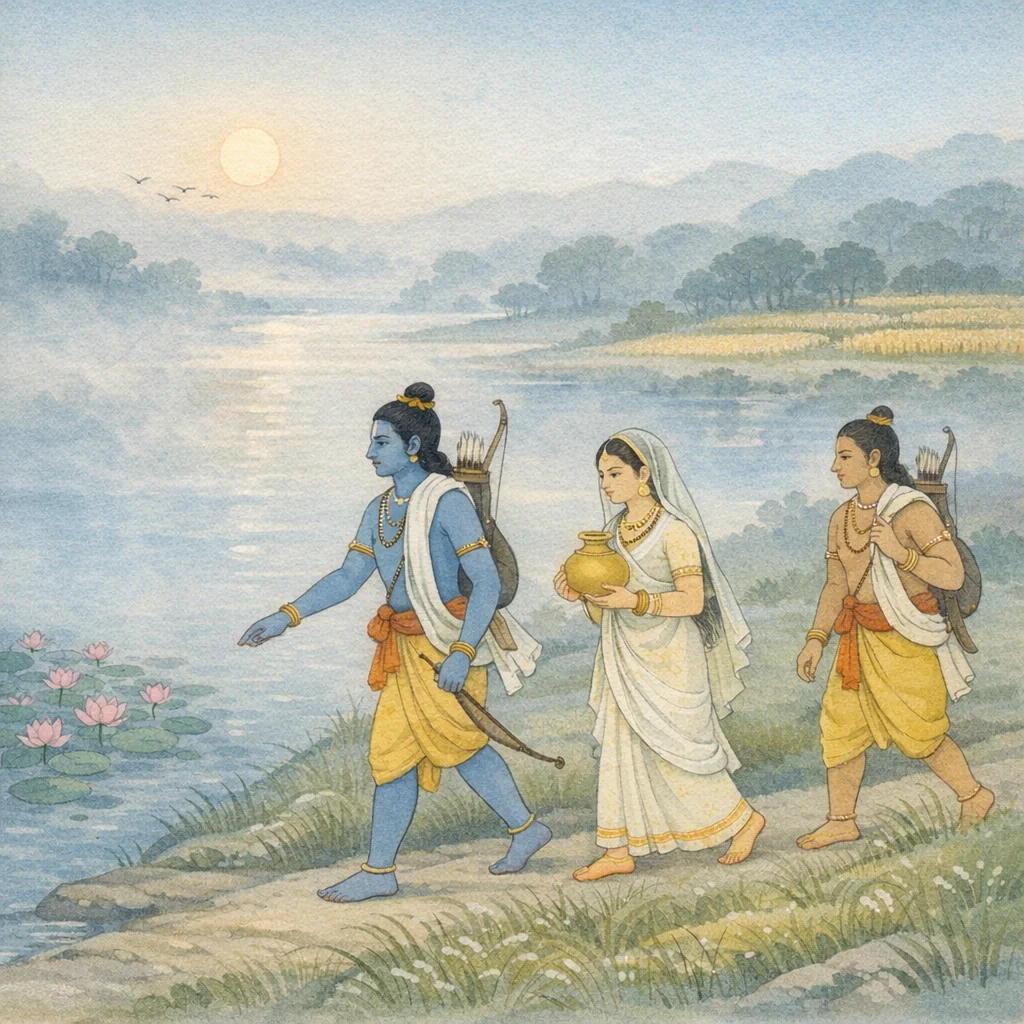
This sarga opens with the turning of the seasons: as Rama dwells at ease in the forest, śarad ends and the beloved hemanta arrives. At dawn Rama goes to the Godavari for ritual bathing; Lakshmana follows, and Sita carries a water-pitcher. Lakshmana then describes the marks of hemanta—fog and heavy dew, a gentle sun with biting cold winds, moonlight dimmed by frost, rivers veiled in vapor, lotus-ponds losing their splendor, and fields abundant with barley, wheat, and ripened rice—setting the natural scene as a moral backdrop for human conduct. The discourse turns to Bharata: Lakshmana imagines him, despite royal upbringing, practicing austerity, sleeping on cold ground, and bathing daily in the Sarayu. Bharata’s virtues—self-control, truthfulness, humility, sweetness of speech, and heroic restraint—are praised, and it is said he “wins heaven” by adopting Rama’s ascetic way. When Lakshmana censures Kaikeyi, Rama restrains him, forbidding criticism of the “second mother” and directing praise toward Bharata. Rama admits his vow is firm, yet affection makes his mind waver as he recalls Bharata’s ambrosial words and longs for reunion. The chapter ends with the three bathing in the Godavari, offering libations to forefathers and deities, praising the rising sun, and Rama shining like Rudra, with imagery of Nandi and Parvati.
Shlokas
Verse 1
वसतस्तस्य तु सुखं राघवस्य महात्मनः।शरद्व्यपाये हेमन्तऋतुरिष्टः प्रवर्तत।।।।
As the great-souled Rāghava dwelt there in comfort, autumn passed away and the beloved season of hemanta (early winter) began.
Verse 2
स कदाचित्प्रभातायां शर्वर्यां रघुनन्दनः।प्रययावभिषेकार्थं रम्यां गोदावरीं नदीम्।।।।
Once, as the night turned to dawn, Rāma—the joy of the Raghu line—set out to the lovely river Godāvarī to perform his morning ablutions.
Verse 3
प्रह्वः कलशहस्तस्तं सीतया सह वीर्यवान्।पृष्ठतोऽनुव्रजन्भ्राता सौमित्रिरिदमब्रवीत्।।।।
Lakṣmaṇa—the valiant brother—walking behind Rāma along with Sītā, who carried a water‑pitcher in her hand and moved slightly bent, spoke these words.
Verse 4
अयं स कालः सम्प्राप्तः प्रियो यस्ते प्रियंवद।अलङ्कृत इवाभाति येन संवत्सरः शुभः।।।।
O sweet-spoken one, the season you love has now arrived; through it the auspicious year appears as though newly adorned.
Verse 5
नीहारपरुषो लोकः पृथिवी सस्यशालिनी।जलान्यनुपभोग्यानि सुभगो हव्यवाहनः।।।।
People feel the bite of fog; the earth is rich with crops; the waters are no longer pleasant to use, while fire becomes especially agreeable.
Verse 6
नवाग्रयणपूजाभिरभ्यर्च्य पितृदेवताः।कृताग्रयणकाः काले सन्तो विगतकल्मषाः।।।।
By duly worshipping the ancestral and divine powers with the first-offering rites of the new harvest, the pious—having performed the āgrayaṇa at the proper time—become cleansed of fault.
Verse 7
प्राज्यकामा जनपदास्सम्पन्नतरगोरसाः।विचरन्ति महीपाला यात्रास्था विजिगीषवः।।।।
The countryside folk, their desires well fulfilled and their wealth of cattle and dairy abundant, flourish at this time; and kings, yearning for victory, move about on campaign.
Verse 8
सेवमाने दृढं सूर्ये दिशमन्तक सेविताम्।विहीनतिलकेव स्त्री नोत्तरा दिक्प्रकाशते।।।।
As the sun steadfastly keeps to the southern quarter—held to be the realm attended by Death—the northern direction, bereft of him, does not shine, like a woman without the tilaka upon her brow.
Verse 9
प्रकृत्या हिमकोशाढ्यो दूरसूर्यश्च साम्प्रतम्।यथार्थनामा सुव्यक्तं हिमवान्हिमवान्गिरिः।।।।
Now, with the sun seeming far away and the slopes naturally laden with thick stores of snow, the mountain Himavān stands manifestly true to his very name—“the Snowy One.”
Verse 10
अत्यन्तसुखसञ्चारा मध्याह्ने स्पर्शतस्सुखाः।दिवसास्सुभगादित्याश्चायासलिलदुर्भगाः।।।।
The days became exceedingly pleasant for moving about; even at midday the touch of the air was comfortable. The sun was agreeable, yet shade and water felt uninviting in the season’s chill.
Verse 11
मृदुसूर्यास्सनीहाराः पटुशीतास्समारुताः।शून्यारण्या हिमध्वस्ता दिवसा भान्तिसाम्प्रतम्।।।।
Now the days appear frost-struck: the sun is gentle, dew lies thick, the cold is sharp with a moving breeze, and the forests seem empty and still.
Verse 12
निवृत्ताकाशशयनाः पुष्यनीता हिमारुणाः।शीता वृद्धतरायामास्त्रियामा यान्ति साम्प्रतम्।।।।
Now people have stopped sleeping under the open sky; as the month of Puṣya draws near, the nights grow colder, take on a frost-reddened hue, and lengthen to three watches.
Verse 13
रविसङ्क्रान्तसौभाग्य स्तुषारारुणमण्डलः।निश्श्वासान्ध इवादर्शन्छन्द्रमा न प्रकाशते।।।।
With the sun’s splendor diminished and its orb reddened by frost, the moon does not shine clearly—like a mirror clouded by breath.
Verse 14
ज्योत्स्न तुषारमलिना पौर्णमास्यां न राजते।सीतेव चातपश्यामा लक्ष्यते न तु शोभते।।।।
Even on the full-moon night, the moonlight, dulled by frost, does not gleam; it is seen, yet does not shine—like Sītā, darkened by the heat’s harshness.
Verse 15
प्रकृत्या शीतलस्पर्शो हिमविद्धश्च साम्प्रतम्।प्रवाति पश्चिमो वायुः काले द्विगुणशीतलः।।।।
The west wind—cold to the touch by nature—now, struck with frost, blows in this season with double chill.
Verse 16
बाष्पच्छन्नान्यरण्यानि यवगोधूमवन्ति च।शोभन्तेऽभ्युदिते सूर्ये नद्भि क्रौञ्चसारसैः।।।।
The forests, veiled with dew, and the lands rich with barley and wheat become lovely when the sun rises, as krauñca birds and cranes call out melodiously.
Verse 17
खर्जूरपुष्पाकृतिभिश्शिरोभिः पूर्णतण्डुलैः।शोभन्ते किञ्चिदानम्राश्शालयः कनकप्रभाः।।।।
Golden-bright rice fields look splendid: their heads, shaped like date-palm blossoms and filled with ripened grain, bend slightly under the weight.
Verse 18
मयूखैरुपसर्पद्भिर्हिमनीहारसंवृतैः।दूरमभ्युदितस्सूर्यश्शशाङ्क इव लक्ष्यते।।।।
The sun, risen far upon the horizon, appears like the moon, for its lengthening rays are veiled in frost and dew.
Verse 19
अग्राह्यवीर्यः पूर्वाह्णे मध्याह्ने स्पर्शतस्सुखः।संरक्तः किञ्चिदापाण्डुरातपश्शोभते क्षितौ।।।।
In the forenoon the sun’s might is scarcely felt; by midday its warmth is pleasant to the touch, and the sunlight on the earth shines softly red, tinged with a little pale whiteness.
Verse 20
अवश्यायनिपातेन किञ्चित्प्रक्लिन्नशाद्वला।वनानां शोभते भूमिर्निविष्टतरुणातपा।।।।
With dew having fallen, the grassy ground is slightly damp; the forest-land looks beautiful, warmed only by a gentle, newly risen sunlight.
Verse 21
स्पृशंस्तु विमलं शीतमुदकं द्विरदस्सुखम्।अत्यन्ततृषितो वन्यः प्रतिसंहरते करम्।।।।
A wild tusker, though parched with thirst, joyfully touches the pure, cold water—yet at once draws back its trunk, unable to bear the chill.
Verse 22
एते हि समुपासीना विहगा जलचारिणः।नावगाहन्ति सलिलमप्रगल्भा इवाहवम्।।।।
These water-birds, though gathered close by, do not plunge into the water—like timid warriors who do not enter the battlefield.
Verse 23
अवश्यायतमोनद्धा नीहारतमसाऽवृताः।प्रसुप्ता इव लक्ष्यन्ते विपुष्पा वनराजयः।।।।
The forest-ranges, now flowerless, seem as though asleep—wrapped in the dimness of dew and veiled by the dark haze of mist.
Verse 24
बाष्पसञ्छन्नसलिला रुतविज्ञेयसारसाः।हिमार्द्रवालुकैस्तीरैस्सरितो भान्ति साम्प्रतम्।।।।
Now the rivers appear with their waters hidden by vapor; they are known only by the calls of the swans, and by banks whose sands are damp with frost.
Verse 25
तुषारपतनाच्चैव मृदुत्वाद्भास्करस्य च।शैत्यादगाग्रस्थमपि प्रायेण रसवज्जलम्।।।।
Because of falling frost, the sun’s gentleness, and the cold, even water coming from the mountain-top is, for the most part, lacking in pleasant taste.
Verse 26
जराजर्जरितैः पद्मैशशीर्णकेसरकर्णिकैः।नालषेर्हिमध्वस्सैर्न भन्ति कमलाकराः।।।।
The lotus-ponds no longer shine: the lotuses are worn with age, their filaments and pericarps withered, reduced to mere stalks, ruined by frost.
Verse 27
अस्मिंस्तु पुरुषव्याघ्रः काले दुःखसमन्वितः।तपश्चरति धर्मात्मा त्वद्भक्त्या भरतः पुरे।।।।
At such a time, Bharata—the righteous tiger among men—afflicted with sorrow, must be practicing austerity in the city, out of devotion to you.
Verse 28
त्यक्त्वा राज्यं च मानं च भोगांश्च विविधान्बहून्।तपस्स्वी नियताहारश्शेते शीते महीतले।।।।
Having renounced kingship, honor, and many kinds of pleasures, that ascetic—restrained in food—lies upon the bare earth in the cold.
Verse 29
सोऽपि वेलामिमां नूनमभिषेकार्थमुद्यतः।वृतः प्रकृतिभिर्नित्यं प्रयाति सरयूं नदीम्।।।।
At this very time, surely he too—intent on ritual bathing—goes daily to the river Sarayū, surrounded by the people of the realm.
Verse 30
अत्यन्तसुखसंवृद्धस्सुकुमारस्सुखोचितः।कथं न्वपररात्रेषु सरयूमवगाहते।।।।
How can Bharata—reared in utmost comfort, delicate, and fit for ease—go down to bathe in the Sarayū in the late hours of the night, in the cold pre‑dawn?
Verse 31
पद्मपत्रेक्षणो वीरश्श्यामो निरुदरो महान्।धर्मज्ञ स्सत्यवादी च ह्रीनिषेधो जितेन्द्रियः।।।।प्रियाभिभाषी मधुरो दीर्घबाहुररिन्दमः।सन्त्यज्य विविधान्भोगानार्यं सर्वात्मना श्रितः।।।।
Lotus‑petaled in his eyes, heroic, dark‑hued, slender‑waisted, and great; knowing dharma, truthful, modest in bearing, and self‑controlled—sweet‑spoken and gracious, long‑armed, a subduer of foes—he has abandoned diverse pleasures and has devoted himself to you wholly, O noble one.
Verse 32
पद्मपत्रेक्षणो वीरश्श्यामो निरुदरो महान्।धर्मज्ञ स्सत्यवादी च ह्रीनिषेधो जितेन्द्रियः।।3.16.31।।प्रियाभिभाषी मधुरो दीर्घबाहुररिन्दमः।सन्त्यज्य विविधान्भोगानार्यं सर्वात्मना श्रितः।।3.16.32।।
Bharata—heroic, lotus‑eyed, modest, self‑controlled, truthful and knowing dharma—has renounced manifold pleasures and taken refuge in you with his whole being.
Verse 33
जितस्स्वर्गस्तव भ्रात्रा भरतेन महात्मना।वनस्थमपि तापस्ये यस्त्वामनुविधीयते।।।।
Heaven has been won by your great‑souled brother Bharata; for though you dwell in the forest, he faithfully follows you in your ascetic way.
Verse 34
न पित्र्यमनुवर्तन्ते मातृकं द्विपदा इति।ख्यातो लोकप्रवादोऽयं भरतेनान्यथा कृतः।।।।
The well‑known worldly saying—“people follow the mother’s way, not the father’s”—has been overturned by Bharata, who upheld his father’s righteous course.
Verse 35
भर्ता दशरथो यस्यास्साधुश्च भरतस्सुतः।कथं नु साऽम्बा कैकेयी तादृशी क्रूरशीलिनी।।।।
How could mother Kaikeyī be so cruel‑natured—she whose husband is Daśaratha and whose son is the noble Bharata?
Verse 36
इत्येवं लक्ष्मणे वाक्यं स्नेहाद्ब्रुवति धार्मिके।परिवादं जनन्यास्तमसहन्राघवोऽब्रवीत्।।।।
Thus, as dharmic Lakṣmaṇa spoke out of affection, Rāghava (Rāma), unable to endure that censure of his mother, replied.
Verse 37
स तेऽम्बा मध्यमा तात गर्हितव्या कथञ्चन।तामेवेक्ष्वाकुनाथस्य भरतस्य कथां कुरु।।।।
Dear one, she is our second mother; she must never be reviled in any way. Speak instead of Bharata, lord of the Ikṣvāku line.
Verse 38
निश्चिताऽपि हि मे बुद्धिर्वनवासे दृढव्रता।भरतस्नेहसन्तप्ता बालिशीक्रियते पुनः।।।।
Though my resolve is fixed and my vow to dwell in the forest is firm, my affection for Bharata—burning within me—makes my mind falter again, like a child’s.
Verse 39
संस्मराम्यस्य वाक्यानि प्रियाणि मधुराणि च।हृद्यान्यमृतकल्पानि मनःप्रह्लादनानि च।।।।
I keep recalling his words—dear and sweet, soothing to the heart, like nectar itself, and gladdening to the mind.
Verse 40
कदान्वहं समेष्यामि भरतेन महात्मना।शत्रुघ्नेन च वीरेण त्वया च रघुनन्दन।।।।
When indeed shall I be reunited—with great-souled Bharata, with heroic Śatrughna, and with you as well, O delight of the Raghus?
Verse 41
इत्येवं विलपंस्तत्र प्राप्य गोदावरीं नदीम्।चक्रेऽभिषेकं काकुत्स्थस्सानुजस्सह सीतया।।।।
Thus lamenting, Kakutstha (Rāma) reached the river Godāvarī and performed the sacred bathing rites, together with his younger brother and with Sītā.
Verse 42
तर्पयित्वाऽथ सलिलैस्ते पितृ़न्दैवतानि च।स्तुवन्ति स्मोदितं सूर्यं देवताश्च समाहिताः।।।।
Then, having satisfied the forefathers and the gods with libations of water, they—composed in mind—praised the risen Sun; and the divine powers too stood attentive, in harmonious accord.
Verse 43
कृताभिषेकस्सरराज रामः सीताद्वितीयस्सह लक्ष्मणेन।कृताभिषेको गिरिराजपुत्र्या रुद्रस्सनन्दी भगवानिवेशः।।।।
When his ablutions were complete, Rāma—lord among men—stood radiant, with Sītā at his side and Lakṣmaṇa with him; he shone like the Blessed Rudra, attended by Nandī and the Mountain-King’s daughter (Pārvatī).
Frequently Asked Questions
The ethical pivot is speech-discipline regarding elders: Lakshmana’s affectionate frustration leads him to censure Kaikeyi, but Rama refuses to tolerate disparagement of a mother figure and redirects the conversation toward Bharata’s virtue (3.16.36–37). The action models dharmic restraint—critique must not violate familial reverence even under emotional stress.
The sarga teaches that devotion (bhakti) can be enacted as disciplined conduct: Bharata ‘follows’ Rama’s asceticism in spirit and practice, turning loyalty into tapas (3.16.27–33). It also presents a second lesson—vows may be firm, yet compassion and relational love can create inner oscillation without negating dharma (3.16.38).
Geographically, the Godavari is the immediate ritual setting for dawn ablution and offerings (3.16.2, 41–42), while the Sarayu is recalled as Bharata’s daily river-dip in Ayodhya’s sphere (3.16.29–30). Culturally, the chapter references agrarian markers (barley, wheat, ripe paddy), calendrical time (Pushya), and seasonal signs (dew, frost, fog) as a traditional Indian ecological calendar embedded in epic narration.