Adhyaya 36
The Glory of Vārāṇasī: Madhyameśvara and the Mandākinī Rite
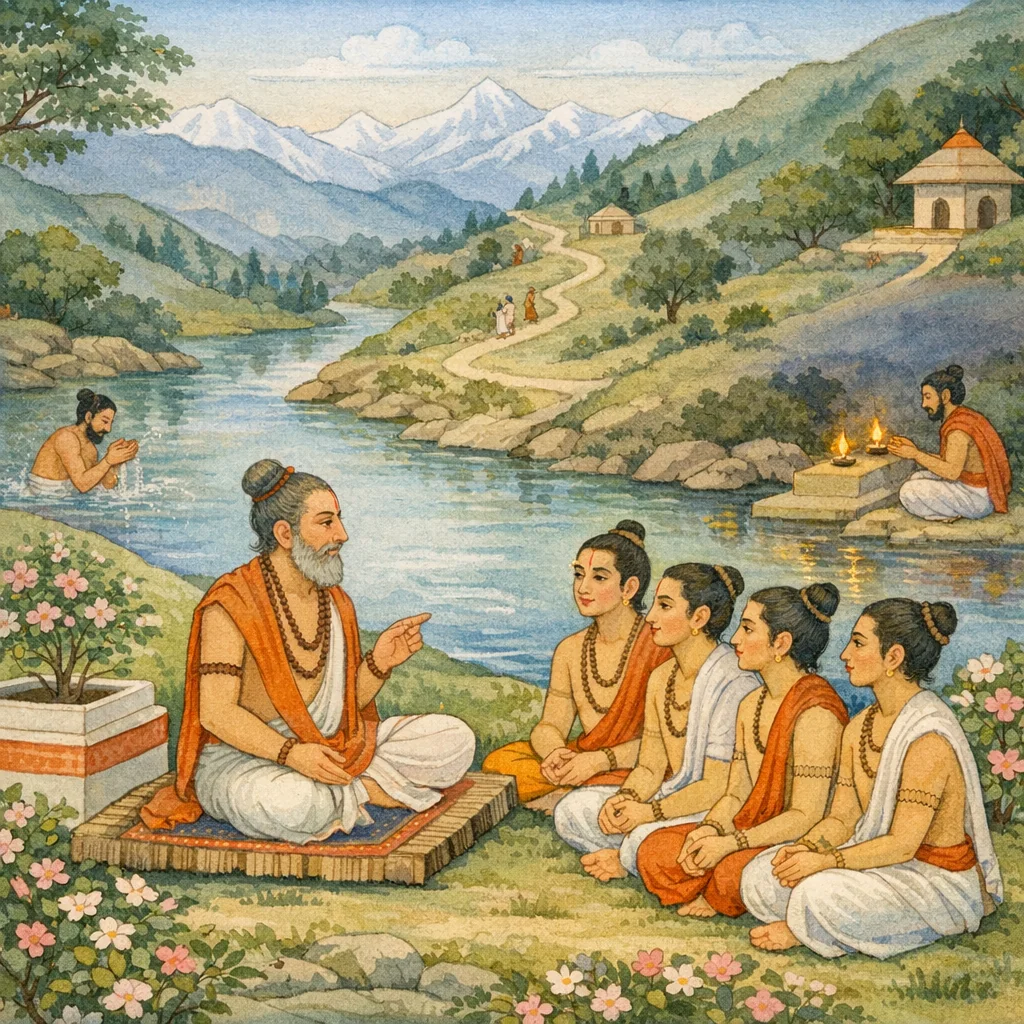
PP.3.36 extols Kāśī/Vārāṇasī through the liṅga Madhyameśa/Madhyameśvara, where Mahādeva dwells with the Goddess amid the Rudras. To magnify the site’s authority, it recounts that Hṛṣīkeśa/Kṛṣṇa lived there for a year, smeared with sacred ash, studying Rudra’s teaching and observing the Pāśupata vow with brahmacārī disciples. Śiva appears as Nīlalohita and grants a boon: those who worship Govinda by proper rites attain sovereign, all-pervading knowledge and unwavering devotion. The chapter then proclaims the tīrtha’s fruits—bathing and Śiva-darśana at this place (and in the Mandākinī) bring fulfillment, destroy even great sins such as brahmahatyā, and lead to the supreme abode. Worship of Madhyameśvara yields the merits of jñāna, dāna, tapas, śrāddha, and piṇḍa-offerings; deeds done here purify seven generations, especially when performed at a solar eclipse with ācamana. Merit is said to increase tenfold, and hearing this māhātmya with devotion bestows the highest state.
Shlokas
Verse 1
नारद उवाच । वाराणस्यां महाराज मध्यमेशं परात्परम् । तस्मिन्स्थाने महादेवो देव्या सह महेश्वरः
Nārada said: O great king, in Vārāṇasī there is the supreme (liṅga) called Madhyameśa. In that very place, Mahādeva—the great Lord—abides together with the Goddess.
Verse 2
रमते भगवान्नित्यं रुद्रैश्च परिवारितः । तत्र पूर्वं हृषीकेशो विश्वात्मा देवकीसुतः
There the Blessed Lord ever delights, surrounded by the Rudras. Formerly, in that very place, Hṛṣīkeśa—the Soul of the universe, the son of Devakī—also dwelt.
Verse 3
उवास वत्सरं कृष्णः सदा पाशुपतैर्युतः । भस्मोद्धूलितसर्वांगो रुद्राध्ययनतत्परः
Kṛṣṇa dwelt there for a full year, always accompanied by devotees of Paśupati (Śiva); his entire body was dusted with sacred ash, and he was devoted to the study of Rudra’s teachings.
Verse 4
आराधयन्हरिः शंभुं कृत्वा पाशुपतंव्रतम् । तस्य ते बहवः शिष्याः ब्रह्मचर्यपरायणाः
Worshipping Śambhu (Śiva), Hari (Viṣṇu) undertook the Pāśupata vow. And he had many disciples who were devoted to the observance of brahmacarya (celibate discipline).
Verse 5
लब्ध्वा तद्वदनाज्ज्ञानं दृष्टवंतो महेश्वरम् । तस्य देवो महादेवः प्रत्यक्षं नीललोहितः
Having gained knowledge from his very mouth and having beheld Maheśvara, the god Mahādeva appeared to him directly—Nīlalohita in visible form.
Verse 6
ददौ कृष्णस्य भगवान्वरदो वरमुत्तमम् । येऽर्चयंति च गोविंदं मद्भक्ता विधिपूर्वकम्
The Blessed Lord, the granter of boons, bestowed upon Kṛṣṇa the supreme boon: “Those who are My devotees and worship Govinda in accordance with the prescribed rites…”
Verse 7
तेषां तदैश्वरं ज्ञानमुत्पत्स्यति जगन्मयम् । नमस्योऽर्चयितव्यश्च ध्यातव्यो मत्परैर्जनैः
For them, that sovereign divine knowledge—pervading the entire universe—will arise. He is to be bowed to, worshipped, and meditated upon by those whose highest devotion is fixed on Me.
Verse 8
भविष्यंति न संदेहो मत्प्रसादाद्द्विजातयः । येऽत्र द्रक्ष्यंति देवेशं स्नात्वा देवं पिनाकिनम्
There is no doubt: by My grace, those twice-born who bathe here and behold the Lord of the gods—Pinākin (Śiva, bearer of the bow Pināka)—shall attain fulfillment.
Verse 9
ब्रह्महत्यादिकं पापं तेषामाशु विनश्यति । प्राणांस्त्यक्ष्यंति ये र्मत्याः पापकर्मरता अपि
Even the sin of Brahmin-slaying and other grave offenses quickly perish for those mortals who give up their lives—even if they had been devoted to sinful deeds.
Verse 10
ते यांति तत्परं स्थानं नात्र कार्या विचारणा । धन्यास्तु खलु ते विज्ञा मंदाकिन्यां कृतोदकाः
They go to that supreme abode—there is no cause for doubt here. Truly blessed are those wise ones who have performed the sacred water-rite, the holy bathing, in the Mandākinī.
Verse 11
अर्चयित्वा महादेवं मध्यमेश्वरमीश्वरम् । ज्ञानं दानं तपः श्राद्धं पिंडनिर्वपणं त्विह
Having worshipped Mahādeva—Īśvara, the Lord known as Madhyameśvara—here one attains the fruits of spiritual knowledge, charity, ascetic discipline, śrāddha rites, and the offering of piṇḍas to the ancestors.
Verse 12
एकैकशः कृतं कर्म पुनात्यासप्तमं कुलम् । सन्निहत्यामुपस्पृश्य राहुग्रस्ते दिवाकरे
Each act performed, even singly, purifies one’s lineage up to the seventh generation. Even at a solar eclipse—when the sun is said to be seized by Rāhu—one should do the prescribed act and take the purificatory sip (ācamana).
Verse 13
यत्फलं लभते मर्त्त्यस्तस्माद्दशगुणं त्विह । एवमुक्तं महाराज माहात्म्यं मध्यमेश्वरे । यः शृणोति परं भक्त्या स याति परमं पदम्
Whatever fruit a mortal obtains elsewhere, here he gains it tenfold. Thus, O great king, has the glory of Madhyameśvara been proclaimed. Whoever hears it with supreme devotion attains the highest state.
Verse 36
इति श्रीपाद्मे महापुराणे स्वर्गखंडे वाराणसीमाहात्म्ये षट्त्रिंशोऽध्यायः
Thus ends the thirty-sixth chapter, “The Glory of Vārāṇasī,” in the Svarga-khaṇḍa of the revered Padma Mahāpurāṇa.