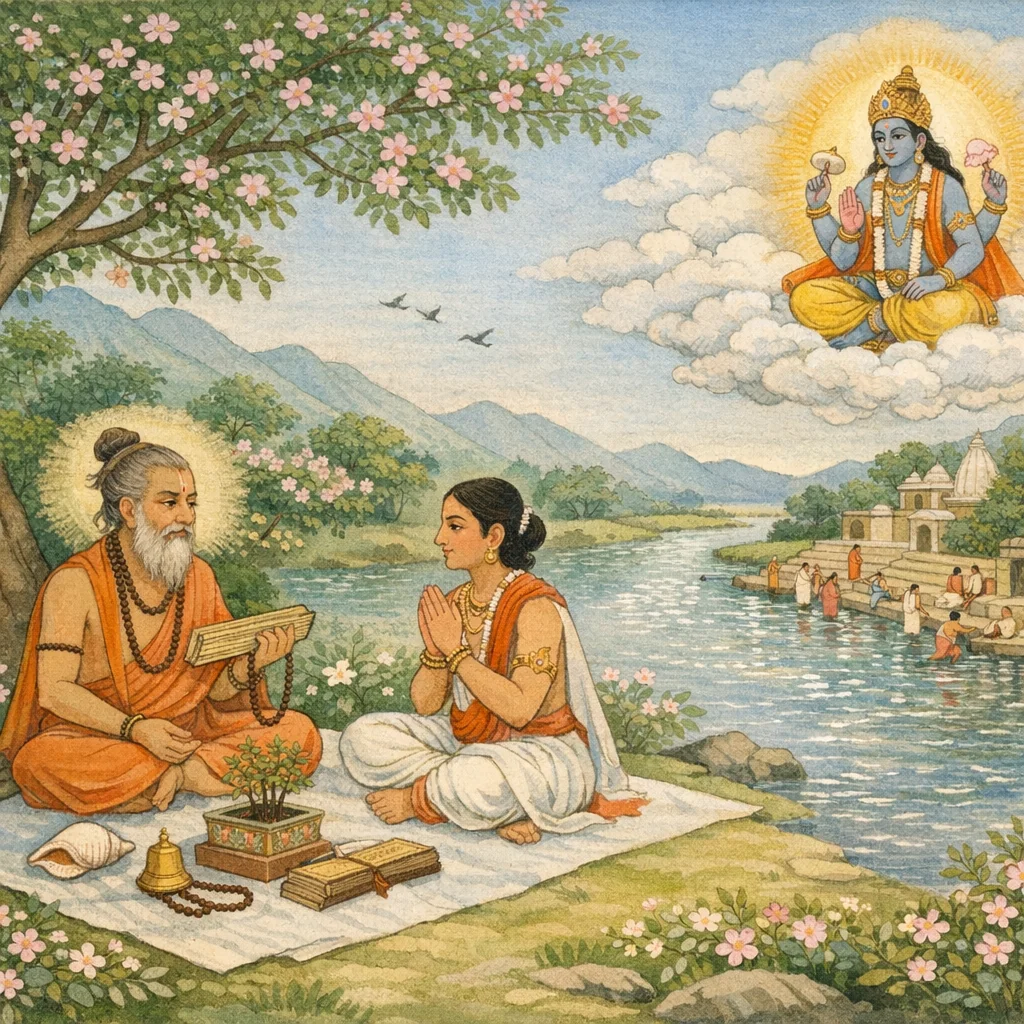
Adhyaya 6
Expansion of Creation through Dakṣa and Kaśyapa: Devas, Dānavas, Nāgas, Birds, and Cosmic Offices
Bhīṣma asks Pulastya for an ordered account of the origins of devas, dānavas, gandharvas, nāgas, and rākṣasas. Pulastya describes an early creation accomplished by intention, sight, and touch, and then—beginning with Dakṣa’s lineage—the rise of sexual generation. Dakṣa’s sons, the Haryaśvas and Śabalāśvās, are turned away by Nārada’s counsel and do not return, so Dakṣa produces daughters and gives them to Dharma, Kaśyapa, Soma, and others. The chapter lists Dharma’s wives and their progeny—Viśvedevas, Sādhyas, and Vasus—names the Vasus and their descendants, and also recounts the Rudras and their Gaṇas. It then enumerates Kaśyapa’s wives—Aditi, Diti, Danu, Vinatā, Kadrū, and more—and their offspring: the Ādityas, the daityas/dānavas, birds of the Garuḍa line, chief nāgas, and other beings, all set within the cyclical creation of each manvantara.
Shlokas
Verse 1
भीष्म उवाच । देवानां दानवानां च गंधर्वोरगरक्षसाम् । उत्पत्तिं विस्तरेणेमां गुरो ब्रूहि यथाविधि
Bhīṣma said: O revered teacher, please explain to me, in proper order and in detail, the origin of the Devas, the Dānavas, the Gandharvas, the Nāgas, and the Rākṣasas.
Verse 2
पुलस्त्य उवाच । संकल्पाद्दर्शनात्स्पर्शात्पूर्वेषां सृष्टिरुच्यते । दक्षात्प्राचेतसादूर्ध्वं सृष्टिर्मैथुनसंभवा
Pulastya said: The creation of the earlier beings is described as arising from mere intention, from sight, and from touch. But from Dakṣa, the son of Prācetas, onward, creation proceeds through sexual union.
Verse 3
यथा ससर्ज चैवासौ तथैव शृणु कौरव । यदा तु सृजतस्तस्य देवर्षिगणपन्नगान्
O Kaurava, hear likewise, in the same manner, how he indeed created. When he was engaged in creating the hosts of divine seers and the serpent-beings,
Verse 4
न वृद्धिमगमल्लोकस्तदा मैथुनयोगतः । दक्षः पुत्रसहस्राणि तदासिक्न्यामजीजनत्
But at that time the world did not increase through sexual union; therefore Dakṣa then begot thousands of sons upon Asiknī.
Verse 5
तांस्तु दृष्ट्वा महाभागान्सिसृक्षून्विविधाः प्रजाः । नारदः प्राह हर्यश्वान्दक्षपुत्रान्समागतान्
Seeing those noble Haryaśvas—the assembled sons of Dakṣa, eager to bring forth diverse beings—Nārada spoke to them.
Verse 6
भुवः प्रमाणं सर्वं तु ज्ञात्वोर्द्धमध एव वा । ततः सृष्टिं विशेषेण कुरुध्वमृषिसत्तमाः
Having fully understood the entire measure of the worlds—whether above or below—then undertake the work of creation in a distinct and orderly manner, O best of sages.
Verse 7
ते तु तद्वचनं श्रुत्वा प्रयाताः सर्वतोदिशम् । अद्यापि न निवर्त्तंते समुद्रादिव सिंधवः
But after hearing those words, they departed in every direction; and even now they do not return—like rivers that flow toward the ocean.
Verse 8
हर्यश्वेषु प्रणष्टेषु पुनर्दक्षः प्रजापतिः । वीरिण्यामेव पुत्राणां सहस्रमसृजत्प्रभुः
When the Haryaśvas had disappeared, Dakṣa, the lordly Prajāpati, once again begot a thousand sons upon Vīriṇī.
Verse 9
शबलाश्वा नाम ते च समेताः सृष्टिकर्मणि । नारदोनुगतान्प्राह पुनस्तान्पूर्ववन्मुनिः
Those named Śabalāśvā assembled for the work of creation; then the sage, as before, again addressed them—those who were following Nārada.
Verse 10
भुवः प्रमाणं सर्वं तु ज्ञात्वा भ्रातॄनथो पुनः । आगत्य च पुनः सृष्टिं करिष्यथ विशेषतः
Having fully ascertained the entire measure of the worlds, you shall then return again to your brothers; and, coming back once more, you will carry out creation anew—distinctly and in detail.
Verse 11
तेपि तेनैव मार्गेण जग्मुर्भ्रात्रनुगास्तदा । ततः प्रभृति न भ्रातुः कनीयान्मार्गमिच्छति
Then they too went by that very path, following their elder brother. From that time onward, the younger brother does not choose a path contrary to his brother’s.
Verse 12
अन्वेष्टा दुःखमाप्नोति तेन तत्परिवर्जयेत् । ततस्तेष्वपि नष्टेषु षष्टिं कन्याः प्रजापतिः
One who goes searching meets with sorrow; therefore one should avoid that. Then, when even they had perished, Prajāpati, the Lord of creatures, produced sixty maidens.
Verse 13
वीरिण्यां जनयामास दक्षः प्राचेतसस्तदा । प्रादात्स दश धर्माय कश्यपाय त्रयोदश
Then Dakṣa, the son of Prācetas, begot (daughters) from Vīriṇī; and he gave ten (of them) to Dharma and thirteen to Kaśyapa.
Verse 14
विंशतिसप्त सोमाय चतस्रोरिष्टनेमिने । द्वे चैव भृगुपुत्राय द्वे कृशाश्वाय धीमते
Twenty-seven were assigned to Soma; four to Riṣṭanemi; two indeed to Bhṛgu’s son; and two to the wise Kṛśāśva.
Verse 15
द्वे चैवांगिरसे प्रादात्तासां नामानि विस्तरात् । शृणु त्वं देवमातॄणां प्रजाविस्तारमादितः
And he gave two (daughters) to Aṅgiras; their names I shall recount in full. Hear now, from the very beginning, the unfolding of the progeny of the Divine Mothers.
Verse 16
अरुंधती वसुर्जामिर्लम्बा भानुर्मरुत्वती । संकल्पा च मुहूर्ता च साध्या विश्वा च भामिनी
Arundhatī, Vasū, Jāmī, Lambā, Bhānu, Marutvatī, Saṅkalpā, Muhūrtā, Sādhyā, Viśvā, and Bhāminī—these are the names as they are recited.
Verse 17
धर्मपत्न्यः समाख्यातास्तासां पुत्रान्निबोध मे । विश्वेदेवास्तु विश्वायाः साध्या साध्यानजीजनत्
The wives of Dharma have been declared; now learn from me of their sons. From Viśvā were born the Viśvedevas, and from Sādhyā the Sādhyas came forth.
Verse 18
मरुत्वत्यां मरुत्वंतो वसोस्तु वसवस्तथा । भानोस्तु भानवो जाता मूहूर्त्ताया मुहूर्तजाः
From Marutvatī were born the Marutvats; from Vasū, the Vasus; from Bhānu, the Bhānus; and from Muhūrtā, the Muhūrtajas, deities who preside over auspicious moments.
Verse 19
लंबायां घोषनामानो नागवीथी तु जामिजा । पृथिवीतलसंभूतमरुंधत्यामजायत
In Lambā was born a son named Ghoṣa, and from Jāmī was born Nāgavīthī. From Arundhatī was born one whose origin was upon the surface of the earth.
Verse 20
संकल्पायास्तु संकल्पा वसु सृष्टिं निधारय । ज्योतिष्मतंश्च ये देवा व्यापकाः सर्वतोदिशम्
O Vasu, by the power of sacred intention, establish the creation; and establish the radiant gods who pervade all directions everywhere.
Verse 21
वसवस्ते समाख्यातास्तेषां नामानि मे शृणु । आपो ध्रुवश्च सोमश्च धरश्चैवानिलोनलः
The Vasus have been described to you; now hear from me their names: Āpa, Dhruva, Soma, Dhara, and also Anila and Anala.
Verse 22
प्रत्यूषश्च प्रभासश्च वसवोष्टौ प्रकीर्तिताः । आपस्य पुत्राश्चत्वारः श्रांतो वैतण्ड एव च
Pratyūṣa and Prabhāsa are declared among the eight Vasus. And four sons of Āpa are also mentioned—Śrānta and Vaitaṇḍa as well.
Verse 23
अपि शांतो मुनिर्वभ्रुर्यज्ञरक्षाधिकारिणः । ध्रुवस्य कालः पुत्रस्तु वर्चाः सोमादजायत
Also, the sage Vabhru—peaceful in disposition—was appointed as the protector of sacrifices (yajña). And of Dhruva, the son Kāla was born; and from Soma, Varchā was born.
Verse 24
द्रविणो हव्यवाहश्च धर पुत्राविमौ स्मृतौ । कल्पांतस्थस्ततः प्राणो रमणः शिशिरोपि च
Draviṇa and Havyavāha are remembered as the two sons of Dhara. Thereafter are named Prāṇa, Ramaṇa, and also Śiśira—the one who abides until the end of the kalpa.
Verse 25
मनोहरो धवश्चाथ शिवो वाथ हरेः सुताः । शिवो मनोजवं पुत्रमविज्ञातगतिप्रदम्
Manohara and Dhava, and also Śiva—these were sons of Hari. And Śiva had a son, Manojava, who bestows a path and refuge beyond what is known.
Verse 26
अवाप चानलः पुत्रानग्निप्रायगुणांस्ततः । तत्र शाखो विशाखश्च निगमेषु स्वयंभुवः
Then Anala obtained sons endowed with qualities like fire. Among them, Śākha and Viśākha became Svayambhū—self-born authorities in the Vedic scriptures.
Verse 27
अपत्यं कृत्तिकानां च कार्तिकेयस्ततः स्मृतः । प्रत्यूषस्य ऋभुः पुत्रो मुनिर्नामाथ देवलः
Thus Kārtikeya is remembered as the offspring of the Kṛttikās. And Devala, a sage by name, was the son of Ṛbhu, who was born of Pratyūṣa.
Verse 28
विश्वकर्मा प्रभासस्य पुत्रः शिल्पी प्रजापतिः । प्रासादभवनोद्यान प्रतिमा भूषणादिषु
Viśvakarmā, the divine architect—son of Prabhāsa—is the craftsman among the Prajāpatis, skilled in making palaces, houses, gardens, sacred images, ornaments, and the like.
Verse 29
तटाकारामकूपेषु त्रिदशानां च वर्द्धकिः । अजैकपादहिर्बुध्न्यो विरूपाक्षोथ रैवतः
At the tanks, gardens, and wells stands Varddhaki of the gods, together with Ajaikapād, Ahirbudhnya, Virūpākṣa, and Raivata.
Verse 30
हरश्च बहुरूपश्च त्र्यंबकश्च सुरेश्वरः । सावित्त्रश्च जयंतश्च पिनाकी चापराजितः
He is Hara, the many-formed; Tryambaka, Lord of the gods; Savitṛ; Jayanta; the bearer of the bow Pināka; and the unconquered One.
Verse 31
एते रुद्रास्समाख्याता एकादश गणेश्वराः । एतेषां मानसानां तु त्रिशूलवरधारिणाम्
These are declared to be the eleven Rudras, the lords of Śiva’s hosts; and of these mind-born ones—bearers of the trident and bestowers of boons—I shall speak further.
Verse 32
कोट्यश्चतुरशीतिस्तु तत्पुत्राश्चाक्षया मताः । दिक्षु सर्वासु ये रक्षां प्रकुर्वन्ति गणेश्वराः
They are indeed eighty-four crores, and their progeny too is held to be inexhaustible—those Gaṇeśvaras who grant protection in all directions.
Verse 33
एते वै पुत्रपौत्राश्च सुरभीगर्भसंभवाः । कश्यपस्य प्रवक्ष्यामि पुत्रपौत्रादि पत्निषु
These indeed are the sons and grandsons born from Surabhī’s womb. Now I shall describe the sons, grandsons, and the rest in relation to Kaśyapa’s wives.
Verse 34
अदितिर्दितिर्दनुश्चैव अरिष्टा सुरसा तथा । सुरभिर्विनता चैव ताम्रा क्रोधवशा इरा
Aditi, Diti, Danu, and also Ariṣṭā; likewise Surasā; Surabhī and Vinatā as well; and Tāmrā, Krodhavaśā, and Irā.
Verse 35
कद्रू खसा मुनिस्तद्वत्तासु पुत्रान्निबोध मे । तुषिता नाम ये देवाश्चाक्षुषस्यांतरे मनोः
Kadru, Khasā, and likewise the sage—hear from me of their sons. The gods called the Tuṣitas existed during the Manvantara of Cākṣuṣa Manu.
Verse 36
वैवस्वतेंतरे चैव आदित्या द्वादश स्मृताः । इन्द्रो धाता भगस्त्वष्टा मित्त्रोऽथ वरुणोऽर्यमा
And in the Vaivasvata Manvantara as well, the twelve Ādityas are remembered as: Indra, Dhātā, Bhaga, Tvaṣṭā, Mitra, Varuṇa, and Aryamā.
Verse 37
विवस्वान्सविता पूषा अंशुमान्विष्णुरेव च । एते सहस्रकिरणा आदित्या दाद्वश स्मृताः
Vivasvān, Savitā, Pūṣā, Aṁśumān, and also Viṣṇu—these are remembered among the twelve Ādityas, the thousand-rayed ones.
Verse 38
मारीचात्कश्यपाज्जाताः पुत्त्रास्तेऽदितिनंदनाः । कृशाश्वस्य ऋषेः पुत्रा देवप्रहरणाः स्मृताः
Born from Marīci and Kaśyapa, those sons—delighting Aditi—are remembered; and the sons of the sage Kṛśāśva are known as the divine weapons of the gods.
Verse 39
एते देवगणास्तात प्रतिमन्वंतरेषु च । उत्पद्यंते विलीयंते कल्पेकल्पे तथैव च
O dear one, these hosts of gods arise and dissolve in each Manvantara, and likewise in every Kalpa, again and again.
Verse 40
दितिः पुत्रद्वयं लेभे कश्यपादिति नः श्रुतम् । हिरण्यकशिपुं चैव हिरण्याक्षं तथैव च
We have heard that Diti bore two sons by Kaśyapa—Hiraṇyakaśipu and also Hiraṇyākṣa.
Verse 41
हिरण्यकशिपोस्तद्वज्जातं पुत्रचतुष्टयम् । प्रह्लादश्चानुह्लादश्च संह्लादोह्लाद एव च
Likewise, Hiraṇyakaśipu had four sons—Prahlāda, Anuhlāda, Saṃhlāda, and Hlāda.
Verse 42
प्रह्लादपुत्रा आयुष्मान्शिबिर्बाष्कलिरेव च । विरोचनश्चतुर्थस्तु स बलिं पुत्रमाप्तवान्
Prahlāda’s sons were Āyuṣmān, Śibi, and Bāṣkali; the fourth was Virocana, who in turn had a son named Bali.
Verse 43
बलेः पुत्रशतं त्वासीद्बाणज्येष्ठं ततो नृप । धृतराष्ट्रस्तथासूर्य्यो विवस्वानंशुतापनः
O king, Bali had a hundred sons, with Bāṇa as the eldest. Among them were Dhṛtarāṣṭra, as well as Sūrya, Vivasvān, and Aṁśutāpana.
Verse 44
निकुम्भनामा गुर्वक्षः कुक्षिर्भौमोथ भीषणः । एवमन्ये तु बहवो बाणोज्येष्ठो गुणाधिकः
There was one named Nikumbha; another, Gurvakṣa; then Kukṣi, Bhauma, and Bhīṣaṇa. Thus there were many others as well—Bāṇa was the eldest and pre-eminent in virtues.
Verse 45
बाणस्सहस्रबाहुस्तु सर्वास्त्रगुणसंयुतः । तपसा तोषितो यस्य पुरे वसति शूलधृत्
Bāṇa, the thousand-armed one, endowed with the excellences of every weapon—whose austerities pleased the Trident-bearer (Śiva)—dwells in his city.
Verse 46
महाकालत्वमगमत्सार्थ्यं यस्य पिनाकिनः । हिरण्याक्षस्य पुत्रोभूदंधको नामनामतः
He attained the state of Mahākāla, becoming the worthy companion of Pinākin (Śiva). Hiraṇyākṣa had a son, named Andhaka.
Verse 47
भूतसंतापनश्चैव महानागस्तथैव च । एतेभ्यः पुत्रपौत्राणां कोटयः सप्तसप्ततिः
And (there were) Bhūtasaṃtāpana as well, and likewise Mahānāga. From these, the sons and grandsons amounted to seventy-seven crores (in number).
Verse 48
महाबला महाकाया नानारूपा महौजसः । दनुः पुत्रशतं लेभे कश्यपाद्वरदर्पितम्
Danu—mighty, vast-bodied, of many forms, and of great splendor—obtained a hundred sons from Kaśyapa, empowered by the boon he had granted.
Verse 49
विप्रचित्तिः प्रधानोभूदेषां मध्ये महाबलः । द्विरष्टमूर्द्धा शकुनिस्तथा शंकुशिरोधरः
Among them, the mighty Vipracitti became the chief; and (there were also) Dviraṣṭamūrdhā, Śakunī, and Śaṅkuśirodhara.
Verse 50
अयोमुखः शंबरश्च कपिलो वामनस्तथा । मरीचिर्मागधश्चैव हरिर्गजशिरास्तथा
Ayomukha and Śambara; Kapila and Vāmana; Marīci and Māgadha; and also Hari and Gajaśiras—these names are being recited in enumeration.
Verse 51
निद्राधरश्च केतुश्च केतुवीर्यः शतक्रतुः । इन्द्रमित्रग्रहश्चैव वज्रनाभस्तथैव च
And there are Nidrādhara, Ketu, Ketuvīrya, Śatakratu; and also Indramitragraha, and likewise Vajranābha.
Verse 52
एकवस्त्रो महाबाहुर्वज्राक्षस्तारकस्तथा । असिलोमा पुलोमा च विकुर्वाणो महासुरः
There was Ekavastra, the mighty-armed one; Vajrākṣa and Tāraka as well; and also Asilomā and Pulomā—along with Vikurvāṇa, a great asura.
Verse 53
स्वर्भानुर्वृषपर्वा च एवमाद्या दनोस्सुताः । स्वर्भानोः सुप्रभा कन्या शची चैव पुलोमजा
Svarbhānu and Vṛṣaparvā, and others such as these, were the sons of Danu. From Svarbhānu was born the maiden Suprabhā, and Śacī was born of Pulomā.
Verse 54
उपदानवी मयस्यासीत्तथा मंदोदरी कुहूः । शर्मिष्ठा सुंदरी चैव चंडा च वृषपर्वणः
Upadānavī was the wife of Maya; likewise there were Mandodarī and Kuhū; and also Śarmiṣṭhā, Sundarī, and Caṇḍā—the (daughters) of Vṛṣaparvan.
Verse 55
पुलोमा कालका चैव वैश्वनरसुते उभे । बह्वपत्यो महासत्वो मारीचस्य परिग्रहः
Pulomā and Kālakā, both daughters of Vaiśvānara, became the wives of the great ṛṣi Mārīci, a mighty being, and were blessed with many offspring.
Verse 56
तयोः षष्टिसहस्राणि दानवानां पुराभवन् । पौलोमान्कालखंजांश्च मारीचोजनयत्पुरा
From those two, in ancient times, there arose sixty thousand Dānavas; and long ago Mārīci also begot the Paulomas and the Kālakhañjas.
Verse 57
अवध्या ये नराणां वै हिरण्यपुरवासिनः । चतुर्मुखाल्लब्धवरा ये हता विजयेन तु
Those inhabitants of Hiraṇyapura who were indeed invincible to men, and who had obtained boons from the four-faced Brahmā—those very ones were nevertheless slain by Vijaya.
Verse 58
विप्रचित्तिः सिंहिकायां नव पुत्रानजीजनत् । हिरण्यकशिपोर्येवै भागिनेयास्त्रयोदश
Vipracitti begot nine sons on Siṁhikā; these sons were thirteen nephews of Hiraṇyakaśipu.
Verse 59
कंसः शंखश्च राजेन्द्र नलो वातापिरेव च । इल्वलो नमुचिश्चैव खसृमश्चांजनस्तथा
O king, Kaṁsa and Śaṅkha, Nala and Vātāpi; Ilvala and Namuci, as well as Khasṛma and Añjana—these are the ones being listed.
Verse 60
नरकः कालनाभश्च परमाणुस्तथैव च । कल्पवीर्यश्च विख्यातो दनुवंशविवर्द्धनः
Naraka, Kālanābha, and likewise Paramāṇu; and the renowned Kalpavīrya—an increaser of the Danu lineage.
Verse 61
संह्लादस्य तु दैत्यस्य निवातकवचाः कुले । अवध्याः सर्वदेवानां गंधर्वोरगराक्षसाम्
In the lineage of the Daitya Saṁhlāda were born the Nivātakavacas—invulnerable to all the gods, as well as to Gandharvas, Nāgas, and Rākṣasas.
Verse 62
ये हता बलमाश्रित्य अर्जुनेन रणाजिरे । षट्कन्या जनयामास ताम्रा मारीचवीर्यतः
Those who were slain on the battlefield by Arjuna, relying on their strength—Tāmrā, by the virility of Marīci, gave birth to six daughters.
Verse 63
शुकीं श्येनीं च भासीं च सुगृध्रीं गृध्रिकां शुचिम् । शुकी शुकानुलूकांश्च जनयामास धर्मतः
Śukī, in accordance with dharma, gave birth to Śukī, Śyenī, Bhāsī, Sugṛdhrī, Gṛdhrikā, and the pure Śuci; and Śukī also bore parrots and owls.
Verse 64
श्येनी श्येनांश्च भासी च कुररानप्यजीजनत् । गृध्री गृध्रान्सुगृध्री च पारावतविहंगमान्
Śyenī gave birth to hawks; and Bhāsī also produced kuraras. Gṛdhrī bore vultures, and Sugṛdhrī gave rise to pigeons and other birds.
Verse 65
हंस सारस कारंड प्लवान्शुचिरजीजनत् । एते ताम्रासुताः प्रोक्ता विनताया निशामय
The haṁsa (swan), the sārasā (crane), the kāraṇḍa (waterfowl), the plava (floating water-bird), and the śuci-rajī bird—these are declared to be the sons of Tāmra. O Vinatā, listen.
Verse 66
गरुडः पतगश्रेष्ठोऽरुणश्चेशः पतत्रिणाम् । सौदामिनी तथा कन्या येयं नभसि विश्रुता
Garuḍa is the foremost of birds, and Aruṇa is the lord among winged creatures; likewise, Saudāminī is that renowned maiden who is famed in the sky.
Verse 67
संपातिश्च जटायुश्च अरुणस्य सुतावुभौ । संपातिपुत्रो बभ्रुश्च शीघ्रगश्चातिविश्रुतः
Sampāti and Jaṭāyu were both sons of Aruṇa. Sampāti’s son was Babhru, and Śīghraga—who is exceedingly renowned—is also mentioned.
Verse 68
जटायोः कर्णिकारश्च शतगामी च विश्रुतौ । तेषामसंख्यमभवत्पक्षिणां पुत्रपौत्रकम्
Jatāyu had (sons) Karṇikāra and the famed Śatagāmī; and from them arose an innumerable lineage of birds—sons and grandsons.
Verse 69
सुरसायां सहस्रं तु सर्पाणामभवत्पुरा । सहस्रशिरसां कद्रूः सहस्रं प्राप सुव्रता
Formerly, Surasā bore a thousand serpents; and the virtuous Kadrū, the mother of the many-hooded ones, likewise obtained a thousand.
Verse 70
प्रधानास्तेषु विख्याता ष्षड्विंशतिररिन्दम । शेषवासुकिकर्कोट शंखैरावतकंबलाः
Among them, O subduer of foes, twenty-six are renowned as the chief ones—Śeṣa, Vāsuki, Karkoṭa, Śaṅkha, Airāvata, and Kambala.
Verse 71
धनंजय महानील पद्माश्वतर तक्षकाः । एलापत्र महापद्म धृतराष्ट्र बलाहकाः
Dhanaṃjaya, Mahānīla, Padmāśvatara, and Takṣaka; Elāpatra, Mahāpadma, Dhṛtarāṣṭra, and Balāhaka—these are the serpents thus named.
Verse 72
शंखपाल महाशंख पुष्पदंष्ट्रं शुभाननाः । शंखरोमा च नहुषो रमणः पणिनस्तथा
Śaṅkhapāla, Mahāśaṅkha, Puṣpadaṃṣṭra, Śubhānana; Śaṅkharomā, Nahuṣa, Ramaṇa, and Paṇin—so also others.
Verse 73
कपिलो दुर्मुखश्चापि पतंजलिमुखास्तथा । एषामनंतमभवत्सर्वेषां पुत्रपौत्रकम्
Kapila, Durmukha, and those headed by Patañjali—of all these, Ananta became the source of their lineage, in the form of sons and grandsons.
Verse 74
प्रायशो यत्पुरादग्धं जनमेजयमंदिरे । रक्षोगणं क्रोधवशा सुनामानमजीजनत्
In the abode (or sacrificial hall) of Janamejaya, those that had formerly been burned—overwhelmed by anger—brought forth a host of Rākṣasas, creating one named Sunāman.
Verse 75
दंष्ट्रिणां नियुतं तेषां भीमसेनादगात्क्षयम् । दंष्ट्रि गोमायु काकादीन्महिषीर्गोवराङ्गनाः
A myriad of those tusked creatures met their destruction at the hands of Bhīmasena; and the tusked one also slew jackals, crows, and the like—along with buffalo-cows and the women of the cowherd community.
Verse 76
सुरभिर्जनयामास कश्यपात्त्त्रितयं पुरा । मुनिर्मुनीनां च गणं गणमप्सरसां तथा
Long ago Surabhī bore, by Kaśyapa, a triad; and she also produced a sage, a host of sages, and likewise a host of Apsarās.
Verse 77
तथा किन्नरगंधर्वानरिष्टा जनयद्बहून् । तृणवृक्षलता गुल्ममिरा सर्वमजीजनतत्
Likewise, Ariṣṭā gave birth to many Kinnaras and Gandharvas; and Irā brought forth all of it—grasses, trees, creepers, and shrubs.
Verse 78
खसा तु यक्षरक्षांसि जनयामास कोटिशः । एते कश्यपदायादाः शतशोथ सहस्रशः
Khasā, indeed, gave birth to Yakṣas and Rākṣasas in countless millions. They are descendants of Kaśyapa—by the hundreds and by the thousands.
Verse 79
एष मन्वंतरे भीष्म सर्गः स्वारोचिषे स्मृतः । ततस्त्वेकोनपंचाशन्मरुतः कश्यपाद्दितिः । जनयामास धर्मज्ञ सर्वानमरवल्लभान्
O Bhīṣma, this creation is remembered as belonging to the Svārociṣa Manvantara. Thereafter, Diti—by Kaśyapa—gave birth to the forty-nine Maruts, all beloved of the immortals, O knower of dharma.