Adhyaya 6
The Origin of Rāvaṇa
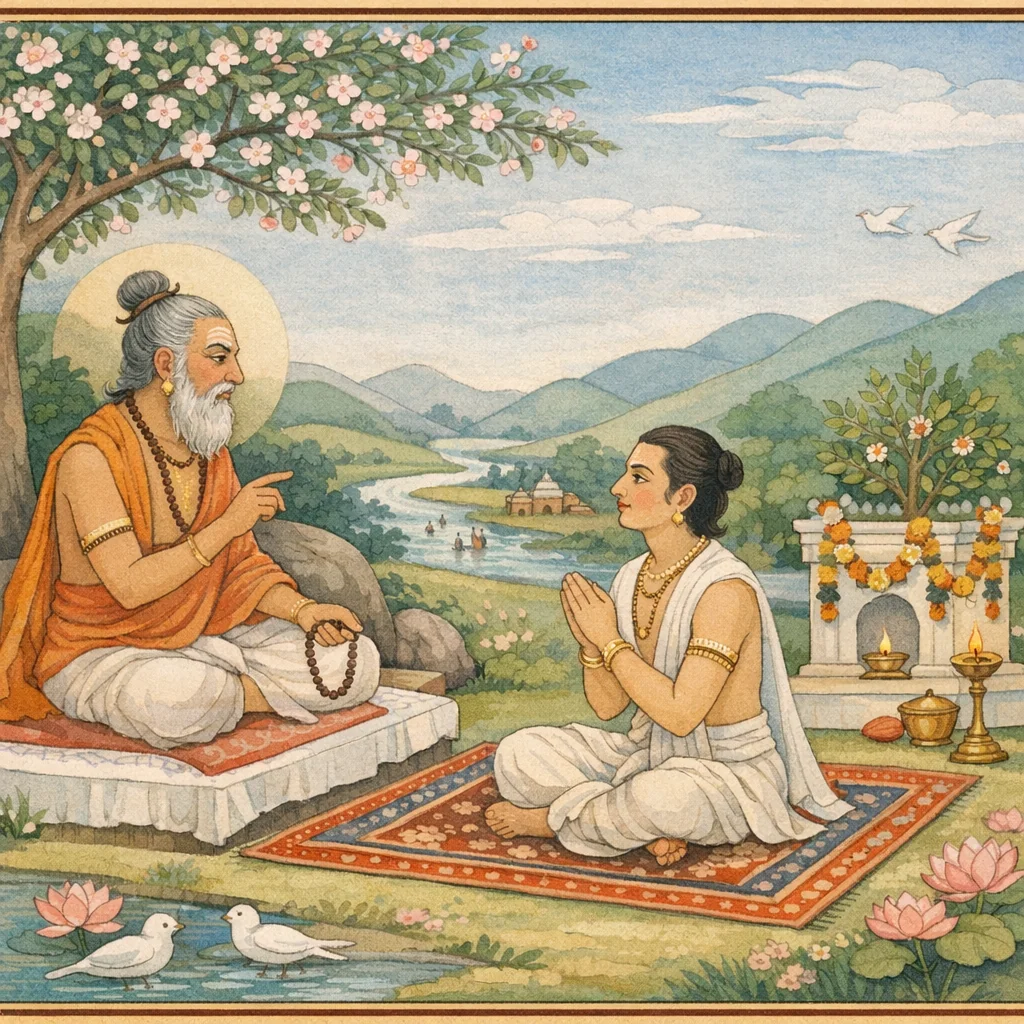
Within the Śeṣa–Vātsyāyana frame concerning Rāma’s Aśvamedha, a welcoming assembly honors the sage Agastya, praising his tapas and dharma, and extols Rāma as the purifier of the world and the slayer of Rāvaṇa. Rāma asks Agastya to reveal Rāvaṇa’s true identity and origin. Agastya recounts a Purāṇic lineage—Brahmā → Pulastya → Viśravā—telling of Viśravā’s two wives, Mandākinī and Kaikasī, and the births of Kubera (Dhanada) and the rākṣasa brothers Rāvaṇa, Kumbhakarṇa, and Vibhīṣaṇa. The account then turns to envy and household strife: Kaikasī’s angry speech and Rāvaṇa’s proud vow to undertake severe austerities to surpass Kubera. The chapter upholds tapas as the source of power, while warning that power severed from dharma becomes a torment to the world.
Shlokas
Verse 1
शेष उवाच । इत्थं स्वागतसंतुष्टं ब्रह्मचर्यतपोनिधिम् । उवाच मतिमान्वीरः सर्वलोकगुरुर्मुनिम्
Śeṣa said: Thus, pleased with the welcome, the wise hero addressed the sage—who was a treasury of brahmacarya and tapas, and a guru to all the worlds.
Verse 2
स्वागतं ते महाभाग कुंभयोने तपोनिधे । त्वद्दर्शनेन सर्वे वै पाविताः सकुटुंबकाः
Welcome to you, O greatly fortunate one—O Kumbhayoni, treasure-house of tapas. By the sight of you, indeed all of us, together with our families, have been purified.
Verse 3
कच्चिन्मतिस्ते वेदेषु शास्त्रेषु परिवर्तते । त्वत्तपोविघ्नकर्ता वै नास्ति भूमंडले क्वचित्
Is your understanding steadily engaged in the Vedas and the śāstras? Indeed, nowhere on the earth is there anyone who can obstruct your tapas.
Verse 4
लोपामुद्रा महाभाग या च ते धर्मचारिणी । यस्याः पतिव्रता धर्मात्सर्वं भवति शोभनम्
O great and fortunate one, Lopāmudrā—your wife who walks in Dharma—by her devoted pativratā fidelity to her husband, all becomes auspicious and beautiful.
Verse 5
अपि शंस महाभाग धर्ममूर्ते कृपानिधे । अलोलुपस्य किं कार्यं करवाणि मुनीश्वर
Pray tell me, O fortunate one—O embodiment of Dharma, treasure-house of compassion. What task remains for one who is free from greed? What should I do, O lord among sages?
Verse 6
इति श्रीपद्मपुराणे पातालखंडे शेषवात्स्यायनसंवादे रामाश्वमेधे । रावणोत्पत्तिर्नाम षष्ठोऽध्यायः
Thus, in the revered Padma Purāṇa—within the Pātāla-khaṇḍa, in the dialogue between Śeṣa and Vātsyāyana, in the section concerning Rāma’s Aśvamedha—ends the sixth chapter, entitled “The Origin of Rāvaṇa.”
Verse 7
शेष उवाच । इत्युक्तो लोकगुरुणा राजराजेन धीमता । उवाच रामं लोकेशं विनीततरभाषया
Śeṣa said: Thus addressed by the wise king of kings, the world’s teacher, he replied to Rāma, the Lord of the worlds, in words even more humble.
Verse 8
अगस्त्य उवाच । स्वामिंस्तव सुदुर्दर्शं दर्शनं दैवतैरपि । मत्वा समागतं विद्धि राजराज कृपानिधे
Agastya said: O Lord, even the gods can scarcely obtain the vision of you. Knowing this, understand that I have come here with that thought—O king of kings, treasure-house of compassion.
Verse 9
हतस्त्वया रावणाख्यस्त्वसुरो लोककंटकः । दिष्ट्याद्य देवाः सुखिनो दिष्ट्या राजा बिभीषणः
By you the asura named Rāvaṇa—the scourge of the worlds—has been slain. By good fortune, today the devas are at peace; by good fortune, Vibhīṣaṇa is king.
Verse 10
राम त्वद्दर्शनान्मेऽद्य गतं वै दुष्कृतं किल । संपूर्णो मे मनःकोश आनंदेन सुरोत्तम
O Rāma, by beholding you today, my sinful demerit has truly departed. The treasury of my heart is completely filled with bliss, O best among the devas.
Verse 11
इत्युक्त्वा स बभूवाशु तूष्णीं कुंभसमुद्भवः । रामसंदर्शनाह्लादविह्वलीकृतमानसः
Having spoken thus, the pot-born sage at once fell silent, his mind overwhelmed and unsteady with the joy of beholding Rāma.
Verse 12
रामः पप्रच्छ तं भूयो मुनिं ज्ञानविशारदम् । लोकातीतं भवद्भावि सर्वं जानासि सर्वतः
Rāma again questioned that sage, deeply skilled in knowledge: “You know everything in every way—what lies beyond the worlds, and what has been and what is to come.”
Verse 13
मुने कथय मे सर्वं पृच्छतो हि सुविस्तरम् । कोऽसौ मया हतो यो हि रावणो विबुधार्दनः
O sage, tell me everything in full detail, for I am asking. Who indeed was that Rāvaṇa—slayer of the devas—whom I have killed?
Verse 14
कुंभकर्णोऽपि कस्त्वेष का जातिर्वै दुरात्मनः । देवो दैत्यः पिशाचो वा राक्षसो वा महामुने
“And who is this Kumbhakarṇa? What, indeed, is the birth of that wicked-souled one—is he a deva, a daitya, a piśāca, or a rākṣasa, O great sage?”
Verse 15
सर्वमाख्याहि सर्वज्ञ सर्वं जानासि विस्तरात् । अतः कथय मे सर्वं कृपां कृत्वा ममोपरि
O Omniscient One, please explain everything. You know all things in full detail; therefore tell me all, showing compassion toward me.
Verse 16
इति श्रुत्वा ततो वाक्यं कुंभजन्मा तपोनिधिः । यत्पृष्टं रघुराजेन प्रवक्तुं तत्प्रचक्रमे
Having heard those words, the sage born from the pot—an ocean of austerity—began to explain what had been asked by the king of the Raghu dynasty.
Verse 17
राजन्सृष्टिकरो ब्रह्मा पुलस्त्यस्तत्सुतोऽभवत् । ततस्तु विश्रवा जज्ञे वेदविद्याविशारदः
O King, Brahmā—the creator of the world—had a son named Pulastya. From Pulastya, Viśravā was born, renowned for his mastery of Vedic knowledge and learning.
Verse 18
तस्य पत्नीद्वयं जातं पातिव्रत्यचरित्रभृत् । एका मंदाकिनी नाम्नी द्वितीया कैकसी स्मृता
He had two wives, both renowned as pativratās, devoted and virtuous in wifely fidelity. One was named Mandākinī, and the second was known as Kaikasī.
Verse 19
पूर्वस्यां धनदो जज्ञे लोकपालविलासभृत् । योऽसौ शिवप्रसादेन लंकावासमचीकरत्
In the eastern quarter Dhanada (Kubera) was born, bearing the splendor of a Lokapāla, a guardian of the world—he who, by Śiva’s grace, came to dwell in Laṅkā.
Verse 20
विद्युन्मालिसुतायां तु पुत्रत्रयमभून्महत् । रावणः कुंभकर्णश्च तथा पुण्यो बिभीषणः
From Vidyunmālī’s daughter were born three illustrious sons—Rāvaṇa, Kumbhakarṇa, and the virtuous Bibhīṣaṇa.
Verse 21
राक्षस्युदरजन्मत्वात्संध्यासमयसंभवात् । द्वयोरधर्मनिपुणा मतिरासीन्महामते
Because she was born from the womb of a rākṣasī, and because her birth occurred at the twilight hour (sandhyā), her disposition became adept in adharma—O great-minded one.
Verse 22
एकदा तु विमानेन पुष्पकेण सुशोभिना । कांचनीयोपकल्पेन किंकिणीजालमालिना
Once, in the splendid Puṣpaka vimāna, beautifully adorned with golden fittings and festooned with nets of tinkling bells—
Verse 23
आरुह्य पितरौ द्रष्टुं प्रायाच्छोभासमन्वितः । स्वगणैः संस्तुतो भूत्वा नानारत्नविभूषणैः
Ascending it, he set out to behold his parents, radiant with splendor—praised by his own attendants and adorned with ornaments of many kinds of jewels.
Verse 24
आगत्य पित्रोश्चरणे पतित्वा चिरमात्मजः । हर्षविह्वलितात्मा च रोमांचिततनूरुहः
Having come there, the long-absent son fell at his parents’ feet; his heart overwhelmed with joy, the hairs on his body stood on end.
Verse 25
उवाच मेऽद्य सुदिनं महाभाग्यफलोदयः । यन्मे युष्मत्पदौ दृष्टौ महापुण्यददर्शनौ
He said: “Today is a blessed day for me, the dawning of the fruit of great good fortune—because I have beheld your feet, the sight of which bestows immense merit.”
Verse 26
इत्यादिभिः स्तुतिपदैः स्तुत्वागान्मंदिरं स्वकम् । पितरावपि संहृष्टौ पुत्रस्नेहाद्बभूवतुः
Having praised him with such words of eulogy, he went to his own home; and his parents too became delighted, out of affection for their son.
Verse 27
तं दृष्ट्वा रावणो धीमाञ्जगाद निजमातरम् । कोऽयं पुमान्सुरो वाथ यक्षो वाथ नरोत्तमः
Seeing him, the intelligent Rāvaṇa said to his own mother: “Who is this man—perhaps a god, or else a Yakṣa, or an excellent human?”
Verse 28
योऽसौ मम पितुःपादौ सन्निषेव्य गतः पुनः । महाभाग्यनिधिः स्वीयैर्गणैः सुपरिवारितः
He who, having attended upon the feet of my father, has returned again—he is a treasure-house of great fortune, closely surrounded by his own attendant hosts.
Verse 29
केनेदं तपसा लब्धं विमानं वायुवेगधृक् । उद्यानारामलीलादि विलासस्थानमुत्तमम्
By whose austerity was this aerial chariot obtained—swift as the wind—this supreme resort of delight, with gardens, groves, and places for sportive pastimes?
Verse 30
शेष उवाच । इति वाक्यं समाकर्ण्य जननी रोषविक्लवा । उवाच पुत्रं विमनाः किंचिन्नेत्रविकारिणी
Śeṣa said: Hearing these words, the mother—overcome with anger—spoke to her son, downcast in mind, her eyes subtly changed, betraying her emotion.
Verse 31
रे पुत्र शृणु मद्वाक्यं बहुशिक्षासमन्वितम् । एतस्य जन्मकर्मादि विचारचतुराधिकम्
O son, listen to my words, filled with many teachings. They are especially skilled in discerning this one’s birth, deeds, and all that follows.
Verse 32
सपत्न्या मम कुक्षिस्थं विधानं समुपस्थितम् । येन स्वमातुर्विमलं कुलमुज्ज्वलितं महत्
By my co-wife, a scheme has been set in motion against the child in my womb—by which my own mother’s stainless and great lineage has been made to blaze forth in renown.
Verse 33
त्वं तु मत्कुक्षिजः कीटः पापः स्वोदरपूरकः । यथा खरः स्वकं भारं जानाति न च तद्गुणम्
But you are a sinful worm born from my own belly, living only to fill your stomach—like a donkey that knows only its load, and not its worth.
Verse 34
तथा त्वं लक्ष्यसेऽज्ञानी शयनासनभोगवान् । सुप्तो गतः क्वचिद्भ्रष्ट इत्येव तव संभवः
So too are you perceived, O ignorant one, as a person enjoying bed, seat, and pleasures; yet in truth your condition is only this: asleep, you have wandered somewhere, having lost your way.
Verse 35
अनेन तपसा लब्धं शिवसंतोषकारिणा । लंकावासो मनोवेगं विमानं राज्यसंपदः
By this austerity—which brought satisfaction to Śiva—were obtained: residence in Laṅkā, the mind-swift aerial chariot (Manovega), and the prosperities of kingship.
Verse 36
सुधन्या जननी त्वस्य सुभाग्या सुमहोदया । यस्याः पुत्रो निजगुणैर्लब्धवान्महतां पदम्
Blessed indeed is your mother—fortunate and greatly prosperous—since her son, by his own virtues, has attained the exalted station of the great.
Verse 37
इति क्रुधा भाषितमार्तया तया मात्रा स्वयाऽकर्ण्य दुरात्मसत्तमः । रोषं विधायात्मगतं पुनर्वचो जगाद तां निश्चयभृत्तपः प्रति
Thus, hearing with his own ears the angry words spoken by that distressed mother, the most wicked man, nurturing wrath within himself, spoke again—addressing her, the ascetic steadfast in his resolve.
Verse 38
रावण उवाच । जनन्याकर्णय वचो मम गर्वसमन्वितम् । रत्नगर्भा त्वमेवासि यस्याः पुत्रास्त्रयो वयम्
Rāvaṇa said: “Mother, listen to my words, spoken with pride. You alone are ‘treasure-wombed’—the one whose three sons are we.”
Verse 39
कोऽसौ कीटः स धनदः क्व तपः स्वल्पकं पुनः । कालं का किंतु तद्राज्यं स्वल्पसेवकसंयुतम्
Who is this mere insect, and who is that Dhanada (Kubera)? Where is his austerity—so small indeed! And for how long, truly, did that kingship endure—attended only by a few servants?
Verse 40
मातः शृणु ममोत्साहात्प्रतिज्ञां करुणान्विते । न केनापि कृतां कर्त्रा महाभाग्ये हि कैकसि
Mother, compassionate one—hear the vow I make in my zeal. O most fortunate Kaikasi, no one has ever made a vow like this before.
Verse 41
यद्यहं भुवनं सर्वं वशेन स्थापयामि वै । तपोभिर्दुष्कृतैः कृत्वा ब्रह्मसंतोषकारकैः
Even if I were to bring the entire world under my control—having performed harsh austerities, difficult and severe, that bring satisfaction to Brahmā—
Verse 42
अन्नोदके सदा त्यक्त्वा निद्रां क्रीडां तथा पुनः । चेत्तदा पितृलोकस्य घातात्पापं भवेन्मम
If, having always renounced food and water, and likewise forsaken sleep and play, I were to harm Pitṛloka, the world of the ancestors—then may that sin fall upon me.
Verse 43
कुंभकर्णोऽपि कृतवान्विभीषणसमन्वितः । रावणेन सहभ्रात्रेत्युक्त्वागाद्गिरिकाननम्
Kumbhakarṇa too—accompanied by Vibhīṣaṇa—said, “I will go together with my brother Rāvaṇa,” and, having spoken thus, departed for the forest upon the mountain.