Adhyaya 88
The Aśūnyaśayana Vow: Expiation, Viṣṇu’s Theophany, and Liberation for Divyā Devī
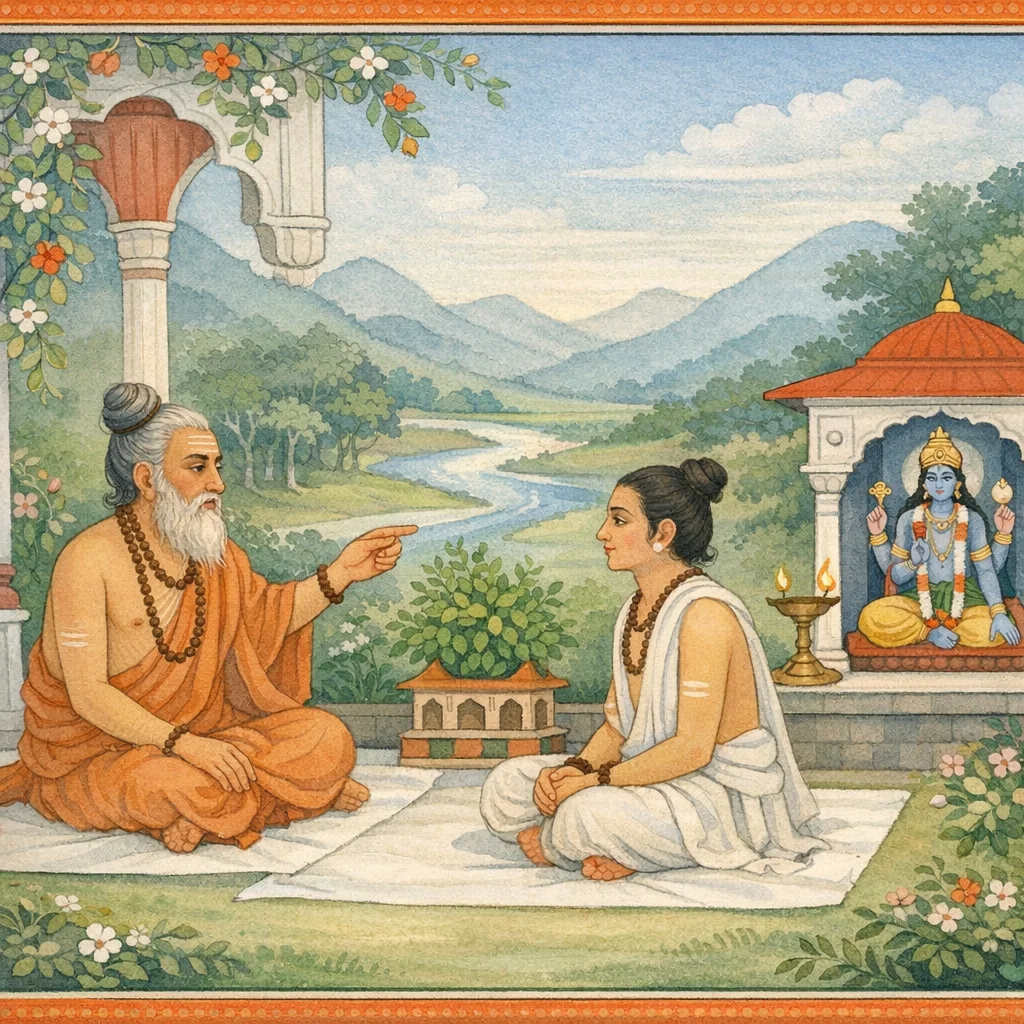
Kuṃjala instructs his son Ujjvala in a fourfold Vaiṣṇava discipline—vrata, stotra, jñāna, and dhyāna—centered on Viṣṇu and embodied in the vow called Aśūnyaśayana (“not sleeping alone”). He sends Ujjvala to rescue a princess burdened by grievous sin. Ujjvala journeys to a radiant mountain in Plakṣadvīpa, adorned with rivers, divine musicians, and celestial beings. There he finds Divyā Devī weeping in widowhood, which she understands as the ripening of past karma. In compassion, Ujjvala appears as the great bird Mahāpakṣī, draws out her story, and prescribes expiation: meditation on Hṛṣīkeśa and recitation of Viṣṇu’s hundred names, together with disciplined observance of the vow. After years of austerity, Viṣṇu manifests, affirms the essential unity of the Trimūrti, and grants Divyā Devī purified devotion and servanthood in Vaikuṇṭha; thus she ascends to the supreme Vaiṣṇava realm.
Shlokas
Verse 1
कुंजल उवाच । व्रतं स्तोत्रं महाज्ञानं ध्यानं चैव सुपुत्रक । मयाख्यातं तवाग्रे वै विष्णोः पापप्रणाशनम्
Kuṃjala said: “O good son, I have indeed explained to you earlier the vow, the hymn, the great spiritual knowledge, and the meditation—those of Viṣṇu which destroy sins.”
Verse 2
एवं चतुष्टयं सा हि यदा पुण्यं समाचरेत् । प्रयाति वैष्णवं लोकं देवानामपि दुर्लभम्
When she truly performs this virtuous fourfold observance, she attains the Vaiṣṇava world—rare even for the gods to obtain.
Verse 3
इतो गत्वा व्रतं वत्स दिव्यां देवीं प्रबोधय । अशून्यशयनं नाम व्रतराजं वदस्व ताम्
Go from here, dear child, and awaken the radiant Goddess to the observance. Tell her of the king of vows called ‘Aśūnyaśayana’—the vow of not sleeping alone.
Verse 4
समुद्धर महापापाद्राजकन्यां यशस्विनीम् । त्वया पृष्टं मया ख्यातं पुण्यदं पापनाशनम्
Rescue the illustrious princess from the great sin. What you asked, I have now explained—something that bestows merit and destroys sin.
Verse 5
गच्छ गच्छ महाभाग इत्युक्त्वा विरराम सः । श्रीविष्णुरुवाच । उज्ज्वलोप्येवमुक्तस्तु स पित्रा कुंजलेन हि
Saying, “Go, go, O fortunate one,” he fell silent. Śrī Viṣṇu said: Even Ujjvala—thus addressed by his father Kuñjala—indeed…
Verse 6
प्रणम्य पादौ धर्मात्मा मातापित्रोर्महामतिः । जगाम त्वरितो राजन्प्लक्षद्वीपं स उज्ज्वलः
Having bowed at the feet of his mother and father, that righteous and wise Ujjvala set out swiftly, O King, for Plakṣadvīpa, radiant in his splendor.
Verse 7
तं गिरिं सर्वतोभद्रं नानाधातुसमाकुलम् । नानारत्नमयैस्तुंगैः शिखरैरुपशोभितम्
That mountain—auspicious on every side—was filled with many kinds of minerals and adorned with lofty peaks made of various gems.
Verse 8
नानाप्रवाहसंपूर्णैरुदकैरुज्ज्वलैर्नृप । नद्यः संति स्वच्छनीरास्तस्मिन्गिरिवरोत्तमे
O King, on that most excellent mountain there are rivers filled with many currents; their waters shine brightly and are clear and pure.
Verse 9
किन्नरास्तत्र गायंति गंधर्वाः सुस्वरैर्नृप । अप्सरोभिः समाकीर्णं देववृंदैरुपावृतम्
There the Kinnaras sing, O King, and the Gandharvas chant with melodious voices. It is filled with Apsarases and surrounded by hosts of devas.
Verse 10
सिद्धचारणसंघुष्टं मुनिवृंदैरलंकृतम् । नानापक्षिनिनादैश्च सर्वत्र परिनादितम्
Resounding with the voices of the Siddhas and Cāraṇas, adorned by hosts of sages, and everywhere filled with the calls of many kinds of birds, it rang out on all sides.
Verse 11
एवं गिरिं समासाद्य उज्ज्वलो लघुविक्रमः । सुस्वरेणापि सा कन्या गिरौ तस्मिन्प्ररोदिति
Thus, having reached the mountain, Ujjvala of swift prowess came there; and that maiden, even in a gentle voice, began to weep aloud upon that mountain.
Verse 12
रोरूयमाणां स प्राज्ञो वचनं चेदमब्रवीत् । का त्वं भवसि कल्याणि कस्माद्रोदिषि सांप्रतम्
Seeing her weeping, that wise man spoke these words: “Who are you, auspicious lady? Why are you crying just now?”
Verse 13
कमाश्रिता महाभागे केन ते विप्रियं कृतम् । समाचक्ष्व ममाद्यैव सर्वदुःखस्य कारणम्
O noble lady, why have you become so distressed? Who has wronged you? Tell me this very day the cause of all your sorrow.
Verse 14
दिव्यादेव्युवाच । विपाको हि महाभाग कर्मणां मम सांप्रतम् । इह तिष्ठामि दुःखेन वैधव्येन समन्विता
Divyā Devī said: “O noble one, what I am experiencing now is indeed the ripening of my past actions. Here I remain in sorrow, burdened by widowhood.”
Verse 15
भवान्को हि महाभाग कृपया मम पीडितः । पक्षिरूपधरो वत्स सोत्सवं परिभाषते
O most fortunate one, who are you that, out of compassion, speak to me in my distress? Though you have assumed the form of a bird, dear child, you address me with gladness, as if in festival.
Verse 16
एवमाकर्ण्य तत्सर्वं भाषितं राजकन्यया । अहं पक्षी महाभागे कृपया तव पीडितः
Having heard all that the princess had spoken, he said: “O noble lady, I am a bird; through your compassion my suffering has been eased.”
Verse 17
पक्षिरूपधरो भद्रे नाहं सिद्धो न ज्ञानवान् । रुदमानां महालापैर्भवतीं दृष्टवानिह
O gentle lady, I am one who has taken the form of a bird; I am neither a siddha nor a knower of wisdom. I saw you here, weeping and wailing aloud.
Verse 18
ततः पृच्छाम्यहं देवि वद मे कारणं त्विह । पितुर्गेहे यथावृत्तमात्मवृत्तांतमेव हि
Therefore, O Devī, I ask you—tell me the reason for this here. Recount exactly what happened in your father’s house, and also the full account of your own story.
Verse 19
तया निवेदितं सर्वं यथासंख्येन दुःखदम् । समासेन समाकर्ण्य उज्ज्वलस्तु महमनाः
She reported everything in due order, each detail steeped in sorrow. Hearing the account in brief, the noble-minded Ujjvala became deeply distressed.
Verse 20
तामुवाच महापक्षी दिव्यादेवीं सुदुःखिताम् । यथा विवाहकाले ते भर्तारो मरणं गताः
The great bird spoke to that divine lady, overwhelmed with sorrow: “How was it that, at the very time of your wedding, your husbands met with death?”
Verse 21
स्वयंवरनिमित्तं ते क्षयं याताश्च क्षत्रियाः । एतत्ते चेष्टितं सर्वं मया पितरि भाषितम्
Because of your svayaṁvara, those kṣatriyas have met with destruction. All of this conduct of yours has been reported by me to my father.
Verse 22
अन्यजन्मकृतंकर्मतव पापं सुलोचने । मम पित्रा ममाग्रे तु कृपया परिभाषितम्
O fair-eyed one, the sinful karma you performed in another birth was compassionately explained to me beforehand by my father.
Verse 23
तेन दोषेण संपुष्टा लिप्ता जाता वरानने । एतावत्कारणं सर्वं तातेन परिभाषितम्
Nourished by that fault, and thereby tainted, you became so, O fair-faced one. This entire cause to this extent has been explained by your father.
Verse 24
पूर्वकर्मविपाकं तु भुंक्ष्व त्वं च समाश्वस । एवं सा भाषितं तस्य श्रुत्वा कन्योज्ज्वलस्य तत्
“You must indeed undergo the ripening of your former deeds; endure it and be at peace.” Having heard her speak thus, Kanyojjvala (the maiden of radiant beauty) …
Verse 25
प्रत्युवाच महात्मानं ब्रुवंतं पक्षिणं पुनः । प्रणता दीनया वाचा कुरु पक्षिन्कृपां मम
She bowed down and, in a humble and plaintive voice, replied again to the noble bird as it spoke: “O bird, have compassion on me.”
Verse 26
कथयस्व प्रसादेन तस्य पापस्य निष्कृतिम् । प्रायश्चित्तं सुपुण्यं च मम पातकशोधनम्
Out of compassion, please tell me the expiation for that sin—an atonement that is highly meritorious and that will cleanse my wrongdoing.
Verse 27
येन व्रजाम्यहं पुण्यं विशुद्धाधौतकल्मषा । प्रायश्चित्तं महाभाग वद मे त्वं प्रसादतः
By what means may I attain merit, my sins completely cleansed away? O greatly fortunate one, out of your grace, please tell me the expiation (prāyaścitta).
Verse 28
उज्ज्वल उवाच । तवार्थं तु महाभागे पितरं पृष्टवानहम् । समाख्यातमतः पित्रा प्रायश्चित्तमनुत्तमम्
Ujjvala said: “For your sake, O greatly fortunate one, I asked my father. Therefore my father has explained an unsurpassed expiation (prāyaścitta).”
Verse 29
तत्त्वं कुरु महाभागे सर्वपातकशोधनम् । ध्यायस्व हि हृषीकेशं शतनामजपस्व च
O noble lady, do what is true and essential—the practice that purifies all sins. Meditate indeed on Hṛṣīkeśa, and also recite His hundred names.
Verse 30
भव ज्ञानपरा नित्यं कुरु व्रतमनुत्तमम् । अशून्यशयनं पुण्यं व्रतं पापप्रणाशकम्
Be ever devoted to spiritual knowledge, and always undertake the unsurpassed vow. The holy vow called “not sleeping alone” is meritorious and destroys sins.
Verse 31
समाचष्ट स धर्मात्मा सर्वज्ञानप्रकाशकम् । ज्ञानं स्तोत्रं व्रतं ध्यानं विष्णोश्चैव महात्मनः
That righteous-souled one then taught what illuminates all knowledge—namely, true knowledge, hymns of praise, sacred observances, and meditation, all devoted to the great-souled Lord Viṣṇu.
Verse 32
विष्णुरुवाच । तस्मात्सा हि प्रजग्राह संस्थिता निर्जने वने । सर्वद्वंद्वविनिर्मुक्ता संजाता तपसि स्थिता
Viṣṇu said: Therefore she indeed accepted it, and, dwelling in a lonely forest, became free from all pairs of opposites; she then devoted herself and remained established in austerity.
Verse 33
व्रतं चक्रे जिताहारा निराधारा सुदुःखिता । कामक्रोधविहीना सा वर्गं संयम्य नित्यशः
She undertook a sacred vow, having conquered her appetite—without support and deeply afflicted. Free from desire and anger, she restrained her senses continually, day after day.
Verse 34
इंद्रियाणां महाराज महामोहं निरस्य सा । अब्दे चतुर्थके प्राप्ते सुप्रसन्नो जनार्दनः
O great king, having dispelled the great delusion born of the senses, she—when the fourth year arrived—found Janārdana (Viṣṇu) exceedingly pleased.
Verse 35
तस्यै वरं दातुकामश्चायातो वरनायकः । तस्यै संदर्शयामास स्वरूपं वरदः प्रभुः
Wishing to grant her a boon, the Bestower of boons came to her; and that gracious Lord revealed to her His own true form.
Verse 36
सूत उवाच । इंद्रनीलघनश्यामं शंखचक्रगदाधरम् । सर्वाभरणशोभाढ्यं पद्महस्तं महेश्वरम्
Sūta said: “(I saw) the great Lord—dark as a dense cloud like sapphire, bearing the conch, discus, and mace; resplendent with the beauty of every ornament, and holding a lotus in His hand.”
Verse 37
बद्धांजलिपुटा भूत्वा वेपमाना निराश्रया । उवाच गद्गदैर्वाक्यैः प्रणता मधुसूदनम्
With her hands folded in reverent salutation, trembling and without any refuge, she bowed down and spoke to Madhusūdana in a choking voice.
Verse 38
तेजसा तव दिव्येन स्थातुं शक्नोमि नैव हि । दिव्यरूपो भवेः कस्त्वं कृपया मम चाग्रतः
I truly cannot stand before Your divine radiance. O One of celestial form—who are You? Out of compassion, please reveal Yourself before me.
Verse 39
कथयस्व प्रसादेन किमत्र तव कारणम् । सर्वमेव प्रसादेन प्रब्रवीहि महामते
Tell me graciously—what is your reason in this matter? O great-minded one, kindly explain everything in full.
Verse 40
देवमेवं विजानामि तेजसा इंगितैस्तव । ज्ञानहीना जगन्नाथ न जाने रूपनामनी
O Lord, I know You only in this way—through Your radiance and Your subtle signs. Lacking true knowledge, O Jagannātha, I do not know Your form, nor even Your names.
Verse 41
किं ब्रह्मा वा भवान्विष्णुः किं वा शंकर एव हि । एवमुक्त्वा प्रणम्यैवं दंडवद्धरणीं गता
“Are You Brahmā, or are You Viṣṇu? Or are You indeed Śaṅkara?” Having spoken thus, she bowed in reverence and then fell upon the earth in full prostration.
Verse 42
तामुवाच जगन्नाथः प्रणतां राजनंदिनीम् । श्रीभगवानुवाच । त्रयाणामपि देवानामंतरं नास्ति शोभने
Jagannātha spoke to the king’s daughter as she bowed in reverence: “The Blessed Lord said: ‘O fair one, there is no difference at all among the three gods.’”
Verse 43
ब्रह्मा समर्चितो येन शंकरो वा वरानने । तेनाहमर्चितो नित्यं नात्र कार्या विचारणा
O fair-faced lady, whoever duly worships Brahmā—or likewise Śaṅkara (Śiva)—by that very act worships Me always; of this there is no need for deliberation.
Verse 44
एतौ ममाभिन्नतरौ नित्यं चापि त्रिरूपवान् । अहं हि पूजितो यैश्च तावेतौ तैः सुपूजितौ
These two are inseparable from Me, and I am ever of threefold form. Indeed, whoever worships Me also worships these two well.
Verse 45
अहं देवो हृषीकेशः कृपया तव चागतः । स्तवेनानेन पुण्येन व्रतेन नियमेन च
I am the Lord Hṛṣīkeśa; out of compassion I have come to you—moved by this meritorious hymn of praise, and by your vow and disciplined observances.
Verse 46
संजाता कल्मषैर्हीना वरं वरय शोभने । दिव्यादेव्युवाच । विजयस्व हृषीकेश कृष्णक्लेशापहारक
“Now you have become free from stains (sins). O beautiful one, choose a boon—choose the best.” The Divine Goddess said: “May you be victorious, O Hṛṣīkeśa—O Kṛṣṇa, remover of affliction.”
Verse 47
नमामि चरणद्वंद्वं मामुद्धर सुरेश्वर । वरं मे दातुकामोऽसि चक्रपाणे प्रसीद मे
I bow to your pair of feet; uplift me, O Lord of the gods. You are willing to grant me a boon—O Cakrapāṇi (Bearer of the discus), be gracious to me.
Verse 48
आत्मपादयुगस्यापि भक्तिं देहि ममानघ । दर्शयस्व जगन्नाथ मोक्षमार्गं निरामयम्
O sinless Lord, grant me devotion to Your own lotus feet as well. O Jagannātha, reveal to me the flawless, sorrow-free path to liberation.
Verse 49
दासत्वं देहि वैकुंठ यदि तुष्टो जनार्दन । श्रीभगवानुवाच । एवमस्तु महाभागे गच्छ निर्धूतकल्मषा
“Grant me the state of servanthood in Vaikuṇṭha, O Janārdana, if You are pleased.” The Blessed Lord said: “So be it, O fortunate one; go forth, your sins have been washed away.”
Verse 50
वैष्णवं परमं लोकं दुर्लभं योगिभिः सदा । गच्छ गच्छ परं लोकं प्रसादान्मम सांप्रतम्
The supreme Vaiṣṇava realm is ever hard to attain, even for yogins. Go, go now to that highest world—by my grace, at this very moment.
Verse 51
एवमुक्ते ततो वाक्ये माधवेन महात्मना । दिव्यादेवी अभूद्दिव्या सूर्यतेजः समप्रभा
When those words were thus spoken by the great-souled Mādhava, the goddess became radiant and divine, shining with a splendor equal to the sun’s brilliance.
Verse 52
पश्यतां सर्वलोकानां दिव्याभरणभूषिता । दिव्यमालान्विता सा च दिव्यहारविलंबिनी
As all the worlds looked on, she appeared adorned with celestial ornaments—garlanded with a divine wreath, and wearing a heavenly necklace that hung gracefully.
Verse 53
गता सा वैष्णवं लोकं दाहप्रलयवर्जितम् । पुनः पक्षी समायातः स्वगृहं हर्षसंयुतः
She went to the Vaiṣṇava world, free from the cataclysms of burning and dissolution. Then the bird returned again to its own home, filled with joy.
Verse 54
तत्सर्वं कथयामास पितरं प्रति सत्तमः
Then the most virtuous one narrated all of that to his father.
Verse 88
इति श्रीपद्मपुराणे भूमिखंडे वेनोपाख्याने गुरुतीर्थे च्यवनचरित्रेऽष्टाशीतितमोऽध्यायः
Thus, in the Śrī Padma Purāṇa, in the Bhūmi-khaṇḍa, the eighty-eighth chapter concludes—concerning the episode of Vena, the sacred ford called Guru-tīrtha, and the account of Cyavana.