Adhyaya 82
The Yayāti Episode: Succession and Royal Dharma Instructions to Pūru
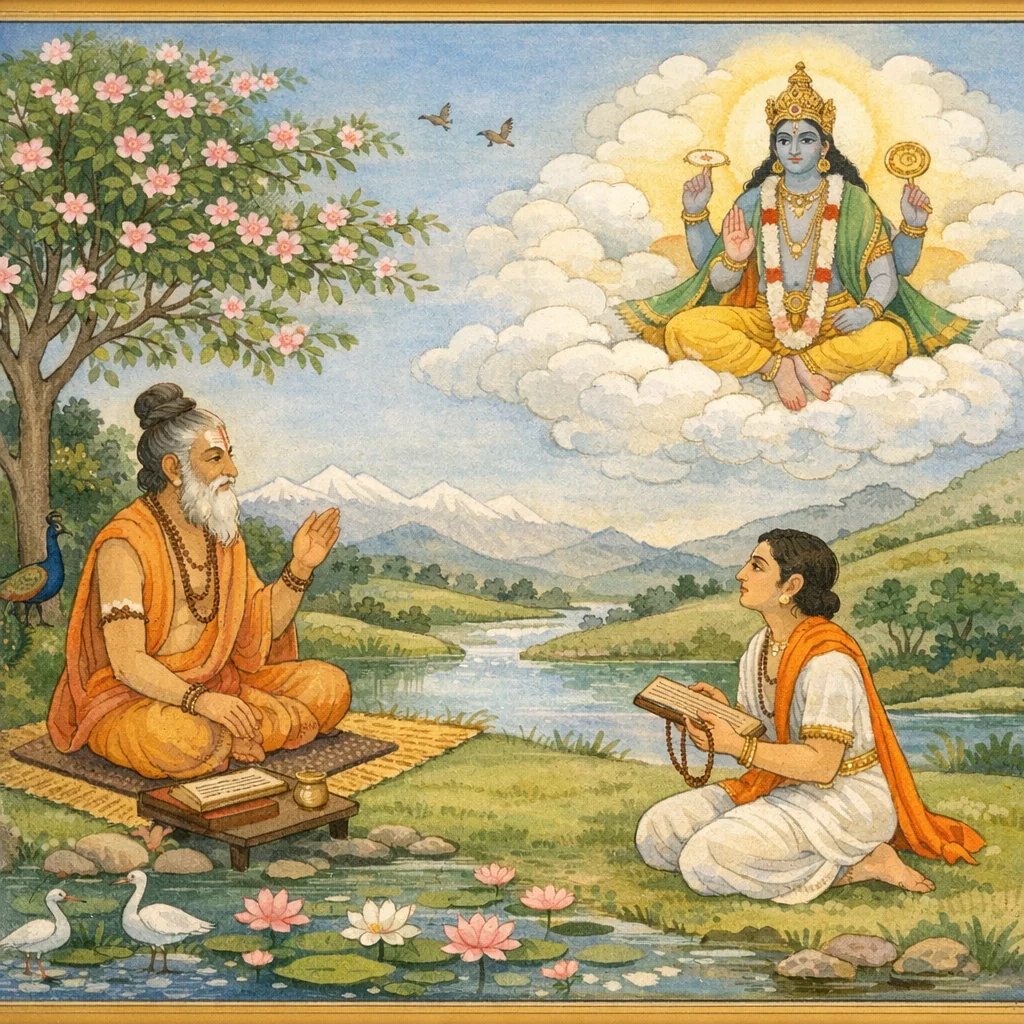
Within the Bhūmi-khaṇḍa’s account of Yayāti, a divine fair-faced lady consoles the righteous king, contrasting worldly fear and delusion with the promise of divine audience. Yayāti replies that leaving for heaven could bring social disorder: the people may suffer and dharma may decline. He summons his son Pūru, praised as a knower of dharma, and proposes an extraordinary succession: the father gives his old age to the son and regains youth, while also transferring the kingdom and its instruments of rule. A sustained teaching on rāja-dharma follows—protect the subjects, punish the wicked, honor brāhmaṇas, guard the treasury and mantra secrecy, avoid hunting and adultery, give in charity, worship Hṛṣīkeśa, remove oppressors, and preserve lineage and śāstric discipline. Yayāti then ascends to heaven, and the chapter closes within the Vena episode and a named tīrtha setting.
Shlokas
Verse 1
सुकर्मोवाच । एवं चिंतयते यावद्राजा परमधार्मिकः । तावत्प्रोवाच सा देवी रतिपुत्री वरानना
Sukarma said: As the supremely righteous king thus reflected, at that very moment the goddess—Rati’s daughter, the fair-faced one—spoke.
Verse 2
किमु चिंतयसे राजंस्त्वमिहैव महामते । प्रायेणापि स्त्रियः सर्वाश्चपलाः स्युर्न संशयः
O King, wise one, why do you worry here at all? For, in general, all women are fickle—of this there is no doubt.
Verse 3
नाहं चापल्यभावेन त्वामेवं प्रविचालये । नाहं हि कारयाम्यद्य भवत्पार्श्वं नृपोत्तम
I am not troubling you like this out of fickleness. Nor, O best of kings, am I making you remain by my side today.
Verse 4
अन्यस्त्रियो यथा लोके चपलत्वाद्वदंति च । अकार्यं राजराजेंद्र लोभान्मोहाच्च लंपटाः
“Just as other women in the world speak out of fickleness, so too do the lust-driven—O Rājarājendra—commit what ought not to be done, out of greed and delusion.”
Verse 5
लोकानां दर्शनायैव जाता श्रद्धा ममोरसि । देवानां दर्शनं पुण्यं दुर्लभं हि सुमानुषैः
In my heart, faith has arisen solely for the sake of beholding the worlds. For the vision of the gods is meritorious, yet it is indeed difficult for even the best of humans to attain.
Verse 6
तेषां च दर्शनं राजन्कारयामि वदस्व मे । दोषं पापकरं यत्तु मत्संगादिह चेद्भवेत्
O King, I shall arrange for you to receive their darśana. Tell me: what fault, productive of sin, might arise here from association with me?
Verse 7
एवं चिंतयसे दुःखं यथान्यः प्राकृतो जनः । महाभयाद्यथाभीतो मोहगर्ते गतो यथा
Thus you brood over sorrow like an ordinary worldly man—like one terrified by a great fear, as though fallen into the pit of delusion.
Verse 8
त्यज चिंतां महाराज न गंतव्यं त्वया दिवि । येन ते जायते दुःखं तन्न कार्यं मया कदा
Abandon your worry, O great king; you need not go to heaven. I will never do anything that would give rise to your sorrow.
Verse 9
एवमुक्तस्तथा राजा तामुवाच वराननाम् । चिंतितं यन्मया देवि तच्छृणुष्व हि सांप्रतम्
Thus addressed, the king then spoke to that fair-faced lady: “Goddess, listen now to what I have been pondering.”
Verse 10
मानभंगो मया दृष्टो नैव स्वस्य मनःप्रिये । मयि स्वर्गं गते कांते प्रजा दीना भविष्यति
Beloved of my heart, I have seen that this will bring about a breaking of honor—surely not my own. When I have gone to heaven, dear one, the people will become wretched.
Verse 11
त्रासयिष्यति दुष्टात्मा यमस्तु व्याधिभिः प्रजाः । त्वया सार्धं प्रयास्यामि स्वर्गलोकं वरानने
That wicked-souled Yama will afflict the people with diseases. Yet I shall depart with you to the heavenly world, O fair-faced one.
Verse 12
एवमाभाष्य तां राजा समाहूय सुतोत्तमम् । पूरुं तं सर्वधर्मज्ञं जरायुक्तं महामतिम्
Having thus spoken to her, the king summoned his excellent son Pūru—knower of all dharma, mature with age, and of great intellect.
Verse 13
एह्येहि सर्वधर्मज्ञ धर्मं जानासि निश्चितम् । ममाज्ञया हि धर्मात्मन्धर्मः संपालितस्त्वया
Come, come—O knower of all dharma. You certainly know dharma with firm conviction. Indeed, by my command, O righteous-souled one, dharma has been duly upheld by you.
Verse 14
जरा मे दीयतां तात तारुण्यं गृह्यतां पुनः । राज्यं कुरु ममेदं त्वं सकोशबलवाहनम्
“Dear son, let my old age be given to you, and let me take back your youth again. Take up my kingdom—together with its treasury, army, and vehicles.”
Verse 15
आसमुद्रां प्रभुंक्ष्व त्वं रत्नपूर्णां वसुंधराम् । मया दत्तां महाभाग सग्रामवनपत्तनाम्
O fortunate one, enjoy and rule this earth—bounded by the oceans and filled with treasures—granted by me, together with its villages, forests, and towns.
Verse 16
प्रजानां पालनं पुण्यं कर्तव्यं च सदानघ । दुष्टानां शासनं नित्यं साधूनां परिपालनम्
Protecting the people is sacred merit and must always be done, O sinless one. The wicked should be continually punished, and the virtuous safeguarded.
Verse 17
कर्तव्यं च त्वया वत्स धर्मशास्त्रप्रमाणतः । ब्राह्मणानां महाभाग विधिनापि स्वकर्मणा
And you, dear child, should act in accordance with the authority of the Dharmaśāstras, O noble one—serving and honoring the brāhmaṇas properly, following due rule and performing your own prescribed duties.
Verse 18
भक्त्या च पालनं कार्यं यस्मात्पूज्या जगत्त्रये । पंचमे सप्तमे घस्रे कोशं पश्य विपश्चितः
Maintain it with devotion, for it is worthy of worship in the three worlds. O wise one, on the fifth and the seventh day, examine the treasury.
Verse 19
बलं च नित्यं संपूज्यं प्रसादधनभोजनैः । चारचक्षुर्भवस्व त्वं नित्यं दानपरो भव
Also, always honor and worship Bala with offerings, gifts of wealth, and food. Be ever vigilant—like one with the eyes of a spy—and always be devoted to giving.
Verse 20
भव स्वनियतो मंत्रे सदा गोप्यः सुपंडितैः । नियतात्मा भव स्वत्वं मा गच्छ मृगयां सुत
Be self-restrained in the use of the mantra; it is always to be kept secret by the truly learned. Be disciplined in mind and self-controlled; do not go hunting, my son.
Verse 21
विश्वासः कस्य नो कार्यः स्त्रीषु कोशे महाबले । पात्राणां त्वं तु सर्वेषां कलानां कुरु संग्रहम्
In whom should one not place full trust—whether in women, in a treasury, or in great power? But you, for your part, gather together all arts and skills, suited to every worthy vessel (person).
Verse 22
यज यज्ञैर्हृषीकेशं पुण्यात्मा भव सर्वदा । प्रजानां कंटकान्सर्वान्मर्दयस्व दिने दिने
Worship Hṛṣīkeśa through sacrifices; be ever of pure and righteous spirit. And day by day, crush all the thorns of the people—the troublesome oppressors.
Verse 23
प्रजानां वांछितं सर्वमर्पयस्व दिने दिने । प्रजासौख्यं प्रकर्तव्यं प्रजाः पोषय पुत्रक
Day after day, grant your subjects everything they desire. You must ensure the happiness of the people; nourish and sustain your subjects, my son.
Verse 24
स्वको वंशः प्रकर्तव्यः परदारेषु मा कृथाः । मतिं दुष्टां परस्वेषु पूर्वानन्वेहि सर्वदा
Continue your own lineage in the rightful way; do not approach another’s spouse. Do not fix a wicked intent on what belongs to others; always follow the conduct of the virtuous of old.
Verse 25
वेदानां हि सदा चिंता शास्त्राणां हि च सर्वदा । कुरुष्वैवं सदा वत्स शस्त्राभ्यासरतो भव
Keep your mind always engaged in the Vedas and ever devoted to the śāstras. Thus, my child, do this continually, and become one who is devoted to the practice of arms.
Verse 26
संतुष्टः सर्वदा वत्स स्वशय्या निरतो भव । गजस्य वाजिनोभ्यासं स्यंदनस्य च सर्वदा
Be ever content, dear child, and remain devoted to your own simple resting-place. Do not continually pursue the keeping and training of elephants, horses, and chariots.
Verse 27
एवमादिश्य तं पुत्रमाशीर्भिरभिनंद्य च । स्वहस्तेन च संस्थाप्य करे दत्तं स्वमायुधम्
Thus instructing his son, and blessing and congratulating him, he himself positioned it with his own hand and placed his own weapon into his son’s hand.
Verse 28
स्वां जरां तु समागृह्य दत्त्वा तारुण्यमस्य च । गंतुकामस्ततः स्वर्गं ययातिः पृथिवीपतिः
Taking back his own old age and giving him in return his youth, King Yayāti—lord of the earth—then, desiring to depart, went to heaven.
Verse 82
इति श्रीपद्मपुराणे भूमिखंडे वेनोपाख्याने मातापितृतीर्थवर्णने ययातिचरित्रे द्व्यशीतितमोऽध्यायः
Thus, in the Śrī Padma Purāṇa, in the Bhūmi-khaṇḍa—within the episode of Vena, in the description of the sacred tīrtha of Mother and Father, and in the narrative of Yayāti—ends the eighty-second chapter.