Adhyaya 74
Yayāti’s Proclamation of Hari-Worship and the Ideal Vaiṣṇava Society (in the Mata–Pitri Tirtha Cycle)
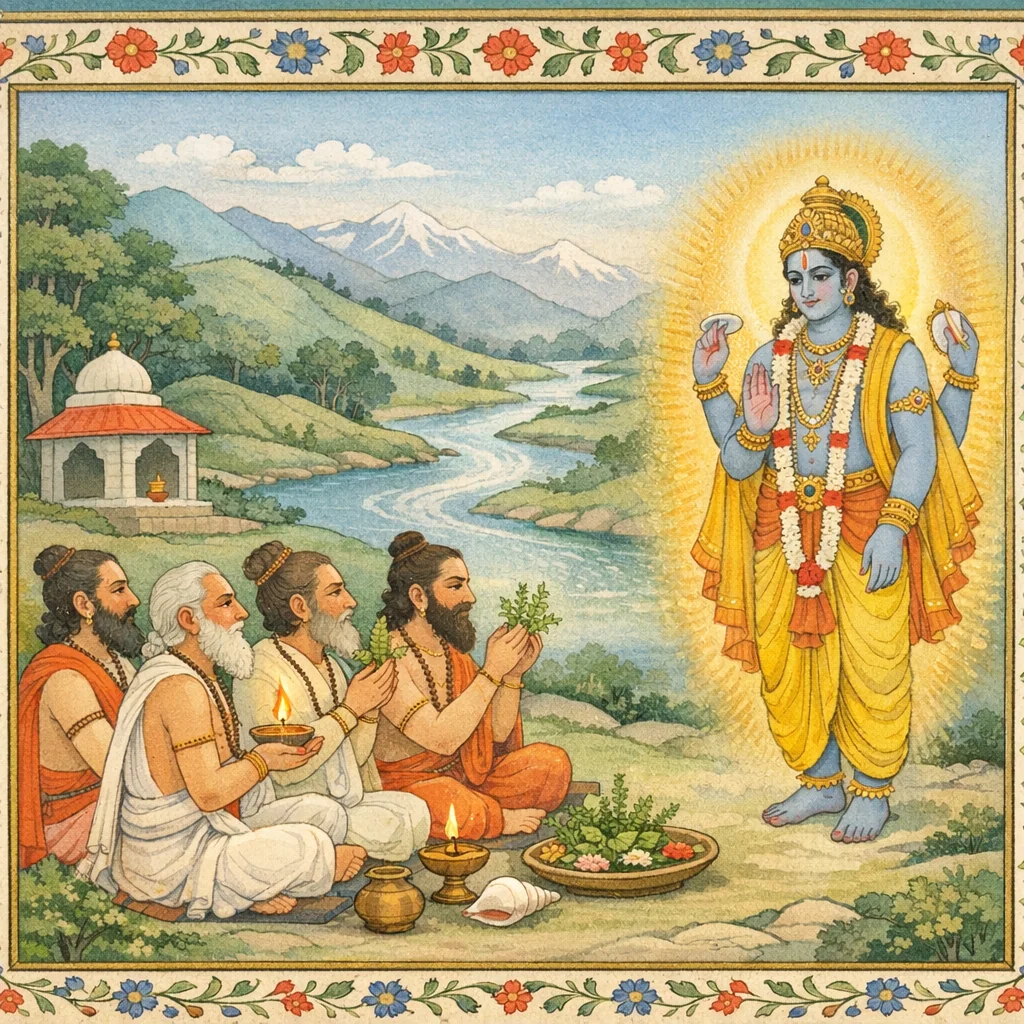
Chapter 74 portrays a dharmic model of kingship grounded in public devotion to Viṣṇu. Sukarma issues the royal proclamation that Hari is to be worshiped everywhere, by whatever means one can—through dāna (giving), yajña (sacrifice), tapas (austerity), pūjā, and focused bhakti. The narrative then describes the enduring civilizational results: universal Vaiṣṇava practice—japa, kīrtana, and stotra—together with purity of body, mind, and speech. Under a dharma-knowing king identified as Yayāti, society flourishes and people are freed from sorrow, disease, and anger. The vision extends into outward culture: auspicious door-signs (śaṅkha, svastika, padma), temples and tulasī in homes, music and devotional arts, and constant chanting of Viṣṇu’s names—Hari, Keśava, Mādhava, Govinda, Narasiṃha, Rāma, and Kṛṣṇa. The colophon links this ideal Vaiṣṇava order to the Mata–Pitri Tīrtha account within the Vena narrative stream.
Shlokas
Verse 1
सुकर्मोवाच । दूतास्तु ग्रामेषु वदंति सर्वे द्वीपेषु देशेष्वथ पत्तनेषु । लोकाः शृणुध्वं नृपतेस्तदाज्ञां सर्वप्रभावैर्हरिमर्चयंतु
Sukarma said: “Let the messengers proclaim everywhere—in villages, on islands, in all regions, and in cities: ‘People, hear the king’s command: worship Hari with all your resources and capacities.’”
Verse 2
दानैश्च यज्ञैर्बहुभिस्तपोभिर्धर्माभिलाषैर्यजनैर्मनोभिः । ध्यायंतु लोका मधुसूदनं तु आदेशमेवं नृपतेस्तु तस्य
“Let people, through gifts, through many yajñas, through austerities, through yearning for dharma, through acts of worship, and through devoted minds, meditate upon Madhusūdana. Such indeed was the command of that king.”
Verse 3
एवं सुघुष्टं सकलं तु पुण्यमाकर्ण्य तं भूमितलेषु लोकैः । तदाप्रभृत्येव यजंति विष्णुं ध्यायंति गायंति जपंति मर्त्याः
Thus, hearing that wholly sacred account, widely proclaimed among the people across the earth, mortals from that very time onward worship Viṣṇu—meditating on Him, singing His praise, and repeating His Name in japa.
Verse 4
वेदप्रणीतैश्च सुसूक्तमंत्रैः स्तोत्रैः सुपुण्यैरमृतोपमानैः । श्रीकेशवं तद्गतमानसास्ते व्रतोपवासैर्नियमैश्च दानैः
With well-spoken Vedic mantras and hymns—highly meritorious, like nectar—those whose minds are absorbed in Śrī Keśava worship Him through vows, fasts, disciplines, and acts of charity.
Verse 5
विहाय दोषान्निजकायचित्तवागुद्भवान्प्रेमरताः समस्ताः । लक्ष्मीनिवासं जगतां निवासं श्रीवासुदेवं परिपूजयंति
Casting off all faults that arise from one’s own body, mind, and speech, all who rejoice in divine love worship Śrī Vāsudeva—the abode of Lakṣmī and the refuge of all the worlds.
Verse 6
इत्याज्ञातस्य भूपस्य वर्तते क्षितिमंडले । वैष्णवेनापि भावेन जनाः सर्वे जयंति ते
Thus, under the rule of a king so instructed, order prevails across the whole earth; and through a Vaiṣṇava disposition, all those people live in victory, prospering and flourishing.
Verse 7
नामभिः कर्मभिर्विष्णुं यजंते ज्ञानकोविदाः । तद्ध्यानास्तद्व्यवसिता विष्णुपूजापरायणाः
Those skilled in true knowledge worship Viṣṇu through sacred names and prescribed rites; absorbed in meditation on Him, firmly resolved in Him, they are devoted to the worship of Viṣṇu alone.
Verse 8
यावद्भूमंडलं सर्वं यावत्तपति भास्करः । तावद्धि मानवा लोकाः सर्वे भागवता बभुः
As long as the entire earth-circle endures, and as long as the Sun shines, so long indeed will all the peoples of the human world remain devotees of the Lord.
Verse 9
विष्णोर्ध्यानप्रभावेण पूजास्तोत्रेण नामतः । आधिव्याधिविहीनास्ते संजाता मानवास्तदा
By the power of meditating on Viṣṇu, and by worship and hymns offered in His name, those people then became free from mental affliction and bodily disease.
Verse 10
वीतशोकाश्च पुण्याश्च सर्वे चैव तपोधनाः । संजाता वैष्णवा विप्र प्रसादात्तस्य चक्रिणः
All of them became free from sorrow, purified, and rich in austerity; and, O brāhmaṇa, by the grace of that discus-bearing Lord, they became Vaiṣṇavas.
Verse 11
आमयैश्च विहीनास्ते दोषैरोषैश्च वर्जिताः । सर्वैश्वर्यसमापन्नाः सर्वरोगविवर्जिताः
They are free from ailments, devoid of faults and anger; endowed with every prosperity, and completely free from all diseases.
Verse 12
प्रसादात्तस्य देवस्य संजाता मानवास्तदा । अमराः निर्जराः सर्वे धनधान्यसमन्विताः
By the grace of that deity, humans then came into being; all of them were deathless and unaging, endowed with wealth and abundant grain.
Verse 13
मर्त्या विष्णुप्रसादेन पुत्रपौत्रैरलंकृताः । तेषामेव महाभाग गृहद्वारेषु नित्यदा
By the grace of Viṣṇu, mortal people become adorned with sons and grandsons; and for them alone, O greatly fortunate one, auspicious benefit abides at the doorways of their homes every day.
Verse 14
कल्पद्रुमाः सुपुण्यास्ते सर्वकामफलप्रदाः । सर्वकामदुघा गावः सचिंतामणयस्तथा
Those wish-fulfilling trees, the kalpadrumas, are exceedingly meritorious and grant the fruits of every desire. Likewise are the cows that yield all wished-for things, and the wish-fulfilling jewels, the cintāmaṇis.
Verse 15
संति तेषां गृहे पुण्याः सर्वकामप्रदायकाः । अमरा मानवा जाताः पुत्रपौत्रैरलंकृताः
In their homes abide auspicious blessings that bestow every desired aim. Even the gods are born there as humans, and those households are adorned with sons and grandsons.
Verse 16
सर्वदोषविहीनास्ते विष्णोश्चैव प्रसादतः । सर्वसौभाग्यसंपन्नाः पुण्यमंगलसंयुताः
By the grace of Viṣṇu alone, they are free from every fault; endowed with all good fortune, they are united with holiness and auspiciousness.
Verse 17
सुपुण्या दानसंपन्ना ज्ञानध्यानपरायणाः । न दुर्भिक्षं न च व्याधिर्नाकालमरणं नृणाम्
They are exceedingly meritorious, rich in charitable giving, and devoted to knowledge and meditation. For such people there is neither famine nor disease, nor untimely death among men.
Verse 18
तस्मिञ्शासति धर्मज्ञे ययातौ नृपतौ तदा । वैष्णवा मानवाः सर्वे विष्णुव्रतपरायणाः
When that righteous, dharma-knowing king Yayāti was ruling then, all the people were Vaiṣṇavas, devoted to the sacred vows of Viṣṇu.
Verse 19
तद्ध्यानास्तद्गताः सर्वे संजाता भावतत्पराः । तेषां गृहाणि दिव्यानि पुण्यानि द्विजसत्तम
Absorbed in meditation on Him, all of them became wholly intent on that devotional feeling. Their homes became divine and meritorious, O best of the twice-born.
Verse 20
पताकाभिः सुशुक्लाभिः शंखयुक्तानि तानि वै । गदांकितध्वजाभिश्च नित्यं चक्रांकितानि च
Indeed they are furnished with very white banners bearing the conch; their flags are marked with the mace, and they are ever also marked with the discus.
Verse 21
पद्मांकितानि भासंते विमानप्रतिमानि च । गृहाणि भित्तिभागेषु चित्रितानि सुचित्रकैः
Lotus-marked designs shine forth, and there are also forms like aerial chariots; upon sections of the walls, houses are depicted, painted by excellent artists.
Verse 22
सर्वत्र गृहद्वारेषु पुण्यस्थानेषु सत्तमाः । वनानि संति दिव्यानि शाद्वलानि शुभानि च
O best of the virtuous, at every house-door and in sacred places there are divine groves—auspicious, with lovely green lawns.
Verse 23
तुलस्या च द्विजश्रेष्ठ तेषु केशवमंदिरैः । भासंते पुण्यदिव्यानि गृहाणि प्राणिनां सदा
O best of the twice-born, where Tulasi is present, those homes—adorned with temples of Keśava—ever shine as sacred and divine abodes for living beings.
Verse 24
सर्वत्र वैष्णवो भावो मंगलो बहु दृश्यते । शंखशब्दाश्च भूलोके मिथः स्फोटरवैः सखे
Everywhere a Vaiṣṇava spirit is seen—auspiciousness appears in many ways. And in this earthly realm, O friend, the sounds of conch-shells are heard, mingled with the crackling din of celebration.
Verse 25
श्रूयंते तत्र विप्रेंद्र दोषपापविनाशकाः । शंखस्वस्तिकपद्मानि गृहद्वारेषु भित्तिषु
There, O best of brāhmaṇas, are seen auspicious marks that destroy faults and sins—conch, svastika, and lotus—painted upon the doorways and walls of houses.
Verse 26
विष्णुभक्त्या च नारीभिर्लिखितानि द्विजोत्तम । गीतरागसुवर्णैश्च मूर्च्छना तानसुस्वरैः
O best of Brahmins, they were fashioned by women out of devotion to Viṣṇu, and set to songs and melodic modes (rāga), adorned with golden splendor and musical excellence—complete with mūrcchanās, tānas, and well-tuned notes.
Verse 27
गायंति केशवं लोका विष्णुध्यानपरायणाः
People sing of Keśava, wholly devoted to meditation upon Viṣṇu.
Verse 28
हरिं मुरारिं प्रवदंति केशवं प्रीत्या जितं माधवमेव चान्ये । श्रीनारसिंहं कमलेक्षणं तं गोविंदमेकं कमलापतिं च
Some lovingly proclaim Him as Hari, Murāri, and Keśava; others say He is Mādhava, conquered by devotion. That one Lord is also Śrī-Narasiṃha, lotus-eyed—Govinda alone, the consort of Kamalā (Lakṣmī).
Verse 29
कृष्णं शरण्यं शरणं जपंति रामं च जप्यैः परिपूजयंति । दंडप्रणामैः प्रणमंति विष्णुं तद्ध्यानयुक्ताः परवैष्णवास्ते
Those supreme Vaiṣṇavas, absorbed in meditation upon Him, continually chant Kṛṣṇa—the refuge and protector—reverently worship Rāma with sacred recitations, and bow to Viṣṇu with full prostrations.
Verse 74
इति श्रीपद्मपुराणे भूमिखंडे वेनोपाख्याने मातापितृतीर्थवर्णने ययाति । चरित्रे चतुःसप्ततितमोऽध्यायः
Thus ends the seventy-fourth chapter of the revered Padma Purāṇa, in the Bhūmi-khaṇḍa, within the narrative of Vena, describing the sacred Mātā–Pitṛ Tīrtha and the account of Yayāti.