Adhyaya 72
Yayāti and Mātali: Embodiment, Dharma as Rejuvenation, and the Medicine of Kṛṣṇa’s Name
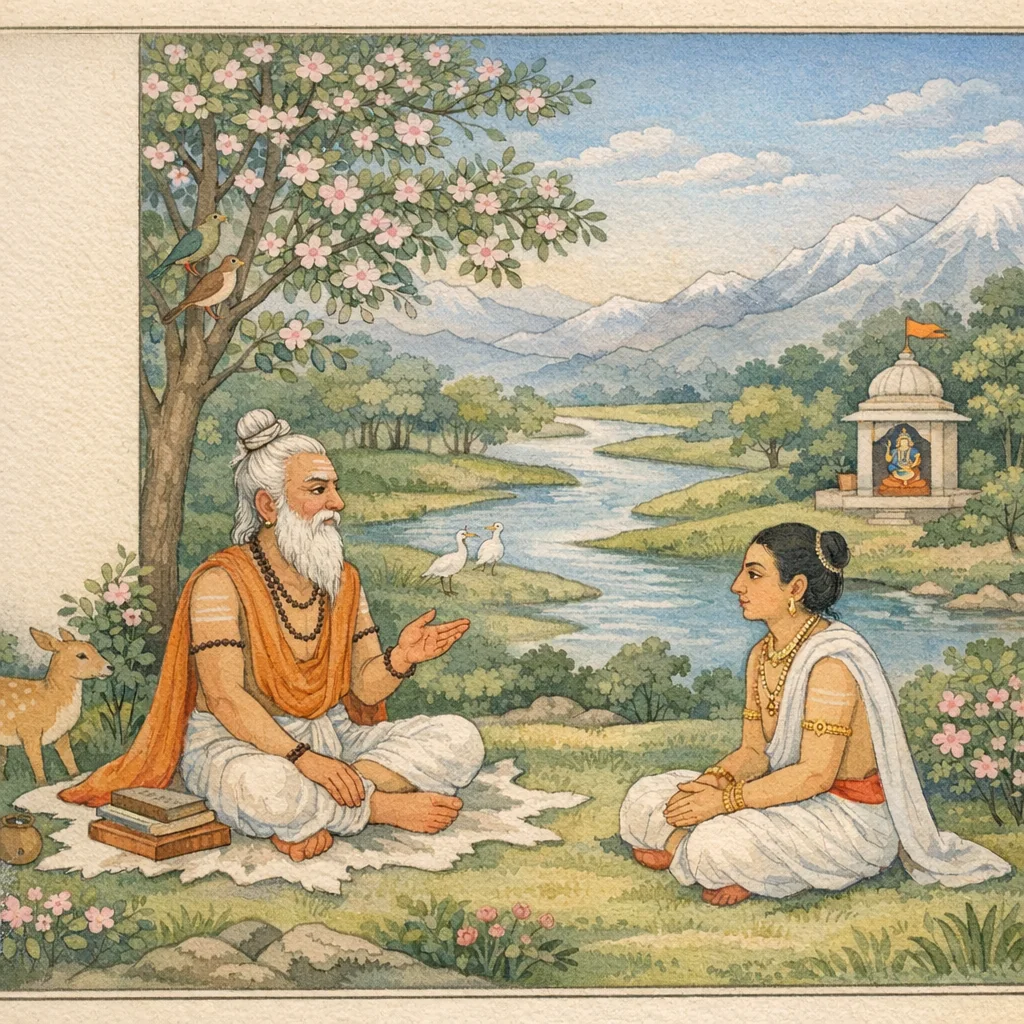
Prompted by Pippala’s question, Sūkarma recounts King Yayāti’s reply to Mātali, Indra’s charioteer and messenger. Yayāti refuses both to abandon his body and to return to heaven, insisting that embodied life and prāṇa sustain one another, and that true attainment is not won through isolation or by rejecting embodiment. He recasts the body as a field for dharma: sin gives rise to disease and old age, while truthfulness, charity, worship, and disciplined meditation—especially twilight remembrance of Hṛṣīkeśa and the utterance of Kṛṣṇa’s Name—serve as the supreme “medicine” that destroys faults and renews vitality. He declares that, though many years have passed, his youthful radiance endures. Therefore he resolves not to seek heaven elsewhere but to “create heaven here,” making the earth heaven-like through tapas, right intention, and Hari’s grace. Mātali departs to report this to Indra, who then reflects on how to bring Yayāti to heaven; later verses briefly invoke Sūta as a hearer, revealing the layered Purāṇic transmission.
Shlokas
Verse 1
। पिप्पल उवाच । मातलेश्च वचः श्रुत्वा स राजा नहुषात्मजः । किं चकार महाप्राज्ञस्तन्मे विस्तरतो वद
Pippala said: “After hearing Mātali’s words, what did that king—the son of Nahuṣa—do? O greatly wise one, tell me that in detail.”
Verse 2
सर्वपुण्यमयी पुण्या कथेयं पापनाशिनी । श्रोतुमिच्छाम्यहं प्राज्ञ नैव तृप्यामि सर्वदा
O wise one, this sacred narrative is filled with every kind of merit and destroys sin. I wish to hear it—for I am never fully satisfied, however often I listen.
Verse 3
सुकर्मोवाच । सर्वधर्मभृतां श्रेष्ठो ययातिर्नृपसत्तमः । तमुवाचागतं दूतं मातलिं शक्रसारथिम्
Sukarma said: King Yayāti, the finest among those who uphold all dharmas, the best of kings, spoke to the messenger who had arrived—Mātali, the charioteer of Śakra (Indra).
Verse 4
ययातिरुवाच । शरीरं नैव त्यक्ष्यामि गमिष्ये न दिवं पुनः । शरीरेण विना दूत पार्थिवेन न संशयः
Yayāti said: “I will not abandon this body, nor will I go again to heaven. Without a body—this earthly body, O messenger—there is no doubt (it cannot be done).”
Verse 5
यद्यप्येवं महादोषाः कायस्यैव प्रकीर्तिताः । पूर्वं चापि समाख्यातं त्वया सर्वं गुणागुणम्
Although these grave faults have been described as belonging to the body alone, you have previously also explained to me in full all its merits and demerits.
Verse 6
नाहं त्यक्ष्ये शरीरं वै नागमिष्ये दिवं पुनः । इत्याचक्ष्व इतो गत्वा देवदेवं पुरंदरम्
“I will not abandon this body, nor will I return to heaven again. Go from here and convey this message to Purandara, the God of gods.”
Verse 7
एकाकिना हि जीवेन कायेनापि महामते । नैव सिद्धिं प्रयात्येवं सांसारिकमिहैव हि
O great-minded one, a living being—even with a capable body—does not attain success while remaining alone; in this very worldly life, it is not achieved in that manner.
Verse 8
नैव प्राणं विना कायो जीवः कायं विना नहि । उभयोश्चापि मित्रत्वं नयिष्ये नाशमिंद्र न
A body cannot exist without vital breath, nor can the living being exist without a body. Therefore I will not lead their mutual friendship to destruction—no, O Indra.
Verse 9
यस्य प्रसादभावाद्वै सुखमश्नाति केवलम् । शरीरस्याप्ययं प्राणो भोगानन्यान्मनोनुगान्
By whose gracious favor alone one tastes happiness; and by that same favor, this very life-breath within the body enjoys other pleasures that follow the mind’s desires.
Verse 10
एवं ज्ञात्वा स्वर्गभोग्यं न भोज्यं देवदूतक । संभवंति महादुष्टा व्याधयो दुःखदायकाः
Knowing thus, O messenger of the gods, that what is meant for heavenly enjoyment is not to be consumed here, most dreadful diseases arise and bring suffering.
Verse 11
मातले किल्बिषाच्चैव जरादोषात्प्रजायते । पश्य मे पुण्यसंयुक्तं कायं षोडशवार्षिकम्
O Mātali, from sin indeed arises the defect of old age. Behold my body—endowed with merit—appearing sixteen years of age.
Verse 12
जन्मप्रभृति मे कायः शतार्धाब्दं प्रयाति च । तथापि नूतनो भावः कायस्यापि प्रजायते
From my very birth, this body of mine has passed through a hundred and fifty years; yet even so, a fresh new condition arises in the body again and again.
Verse 13
मम कालो गतो दूत अब्दा प्रनंत्यमनुत्तमम् । यथा षोडशवर्षस्य कायः पुंसः प्रशोभते
O messenger, my time has passed; the years have slipped away. Yet, in the highest sense, one’s body shines forth—just as the body of a sixteen-year-old man appears radiant.
Verse 14
तथा मे शोभते देहो बलवीर्यसमन्वितः । नैव ग्लानिर्न मे हानिर्न श्रमो व्याधयो जरा
Thus my body appears radiant, endowed with strength and vigor; there is neither languor for me nor any decline—no fatigue, no diseases, and no old age.
Verse 15
मातले मम कायेपि धर्मोत्साहेन वर्द्धते । सर्वामृतमयं दिव्यमौषधं परमौषधम्
O Mātali, even in my own body it increases through zeal for dharma—this divine medicine, made of universal nectar (amṛta), the supreme remedy.
Verse 16
पापव्याधिप्रणाशार्थं धर्माख्यं हि कृतम्पुरा । तेन मे शोधितः कायो गतदोषस्तु जायते
Formerly, to destroy sin and disease, I performed the rite called “Dharma.” By it my body was purified, and I became free from all defilement and fault.
Verse 17
हृषीकेशस्य संध्यानं नामोच्चारणमुत्तमम् । एतद्रसायनं दूत नित्यमेवं करोम्यहम्
Meditation at twilight upon Hṛṣīkeśa and the excellent utterance of His Name—this is my rejuvenating elixir, O messenger; thus I practice it every day.
Verse 18
तेन मे व्याधयो दोषाः पापाद्याः प्रलयं गताः । विद्यमाने हि संसारे कृष्णनाम्नि महौषधे
By that power, my diseases, defects, and sins have all met their end—since, indeed, within this world there exists the great medicine known as the Name of Kṛṣṇa.
Verse 19
मानवा मरणं यांति पापव्याधि प्रपीडिताः । न पिबंति महामूढाः कृष्ण नाम रसायनम्
Afflicted by the disease of sin, people go to death; those great fools do not drink the rejuvenating elixir of Kṛṣṇa’s Name.
Verse 20
तेन ध्यानेन ज्ञानेन पूजाभावेन मातले । सत्येन दानपुण्येन मम कायो निरामयः
By that meditation, that knowledge, and that attitude of worship, O Mātali—by truthfulness and by the merit of charitable giving—my body has become free from illness.
Verse 21
पापर्द्धेरामयाः पीडाः प्रभवंति शरीरिणः । पीडाभ्यो जायते मृत्युः प्राणिनां नात्र संशयः
From the accumulation of sin arise diseases and afflictions for embodied beings; from afflictions, death comes to living creatures—of this there is no doubt.
Verse 22
तस्माद्धर्मः प्रकर्तव्यः पुण्यसत्याश्रयैर्नरैः । पंचभूतात्मकः कायः शिरासंधिविजर्जरः
Therefore, men who take refuge in merit and truth should practice dharma; for the body is made of the five elements and is worn down—its veins and joints growing feeble.
Verse 23
एवं संधीकृतो मर्त्यो हेमकारीव टंकणैः । तत्र भाति महानग्निर्द्धातुरेव चरः सदा
Thus refined and well-prepared, a mortal—like a goldsmith treating metal with borax—shines there, for within him the great fire ever moves, just as it does within the ore.
Verse 24
शतखंडमये विप्र यः संधत्ते सबुद्धिमान् । हरेर्नाम्ना च दिव्येन सौभाग्येनापि पिप्पल
O brāhmaṇa, that wise person who joins the hundred-part offering and performs it with the divine Name of Hari—by good fortune as well—attains great merit and blessing. (The verse appears incomplete in the source provided.)
Verse 25
पंचात्मका हि ये खंडाः शतसंधिविजर्जराः । तेन संधारिताः सर्वे कायो धातुसमो भवेत्
For these bodily segments, constituted of the five elements, are worn out by hundreds of joints; when all of them are properly supported by that sustaining factor, the body becomes steady like metal.
Verse 26
हरेः पूजोपचारेण ध्यानेन नियमेन च । सत्यभावेन दानेन नूत्नः कायो विजायते
Through devotional worship of Hari—through meditation and disciplined observances—and through charity given in a spirit of truth, a renewed and purified body comes into being.
Verse 27
दोषा नश्यंति कायस्य व्याधयः शृणु मातले । बाह्याभ्यंतरशौचं हि दुर्गंधिर्नैव जायते
The faults and diseases of the body are destroyed—listen, O Mātali. Indeed, when there is both outer and inner purity, foul odor does not arise at all.
Verse 28
शुचिस्ततो भवेत्सूत प्रसादात्तस्य चक्रिणः । नाहं स्वर्गं गमिष्यामि स्वर्गमत्र करोम्यहम्
Then, O Sūta, by the grace of that discus-bearing Lord, one becomes purified. I will not go to heaven—I shall create heaven here itself.
Verse 29
तपसा चैव भावेन स्वधर्मेण महीतलम् । स्वर्गरूपं करिष्यामि प्रसादात्तस्य चक्रिणः
By austerity, by right intention, and by faithfully following my own dharma, I shall make this earth take on the nature of heaven—through the grace of that discus-bearing Lord.
Verse 30
एवं ज्ञात्वा प्रयाहि त्वं कथयस्व पुरंदरम् । सुकर्मोवाच । समाकर्ण्य ततः सूतो नृपतेः परिभाषितम्
“Knowing thus, depart and report it to Purandara (Indra),” said Sūkarma. Then Sūta, having heard what the king had spoken, continued the narration.
Verse 31
आशीर्भिरभिनंद्याथ आमंत्र्य नृपतिं गतः । सर्वं निवेदयामास इंद्राय च महात्मने
Then, having honored him with blessings and taken leave of the king, he departed; and he reported everything in full to Indra, the great-souled one.
Verse 32
समाकर्ण्य सहस्राक्षो ययातेस्तु महात्मनः । तस्याथ चिंतयामासानयनार्थं दिवं प्रति
Hearing about the great-souled Yayāti, the thousand-eyed one (Indra) then began to consider how to bring him up to heaven.
Verse 72
इति श्रीपद्मपुराणे भूमिखंडे वेनोपाख्याने मातापितृतीर्थवर्णने ययाति । चरिते द्विसप्ततितमोऽध्यायः
Thus, in the Śrī Padma Purāṇa, in the Bhūmi-khaṇḍa, within the episode of Vena—while describing the sacred tīrtha of Mother and Father, in the narrative concerning Yayāti—ends the seventy-second chapter.