Adhyaya 6
Diti’s Lament (On the Fall of the Daityas and the Futility of Grief)
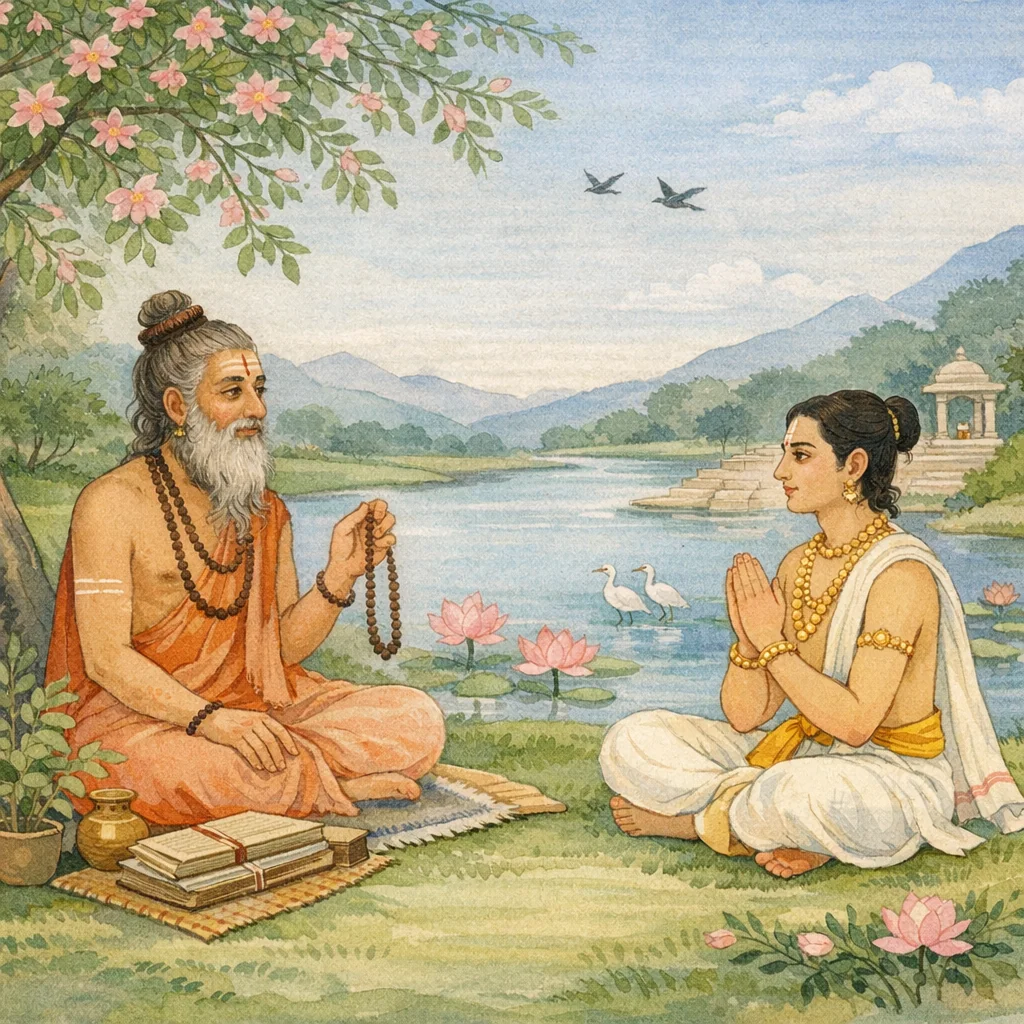
Danu approaches Diti, bowed down with grief, offers reverence, and asks why a mother of many sons laments so bitterly. Their dialogue turns to the Devas–Asuras conflict: Aditi’s boon is fulfilled, Indra’s sovereignty is secured for her son, and the splendor of the Daityas and Dānavas fades. A war account follows in which Viṣṇu, bearing discus and conch, destroys the demon hosts—like fire consuming dry grass, like moths perishing in flame. Diti collapses in sorrow, but a consoling, instructive voice reframes the loss as the fruit of adharma and one’s own fault, warning that grief diminishes merit and obstructs liberation, and urging her to return to composure and happiness.
Shlokas
Verse 1
सूत उवाच । कश्यपस्य च भार्यान्या दनुर्नाम तपस्विनी । पुत्रशोकेन संतप्ता संप्राप्ता दितिमंदिरम्
Sūta said: Danu, the ascetic wife of Kaśyapa, tormented by grief for her son, came to Diti’s dwelling.
Verse 2
रोदमाना प्रणम्यैव पादपद्मयुगं तदा । दुःखेन महता प्राप्ता दितिस्तां प्रत्यबोधयत्
Then, weeping, she bowed to that pair of lotus-feet. Having come in great sorrow, Diti consoled her and spoke to restore her composure.
Verse 3
दितिरुवाच । तवैव हि महाभागे किमिदं रोदकारणम् । पुत्रिण्यश्चैकपुत्रेण लोके नार्यो भवंति वै
Diti said: “O most fortunate lady, what is the cause of your weeping? In the world, women who have children—even if only a single son—are indeed deemed blessed.”
Verse 4
भवती शतपुत्राणां गुणिनामपि भामिनि । माता त्वमसि कल्याणि शुंभादीनां महात्मनाम्
O passionate lady, you are the mother of a hundred sons, all virtuous; O auspicious one, you are the mother of the great-souled ones, beginning with Śuṃbha.
Verse 5
कस्माद्दुःखं त्वया प्राप्तमेतन्मे कारणं वद । हिरण्यकशिपू राजा हिरण्याक्षो महाबलः
“From what cause have you come to grief? Tell me the reason for this. You speak of King Hiraṇyakaśipu, and the mighty Hiraṇyākṣa.”
Verse 6
इति श्रीपद्मपुराणे भूमिखंडे देवासुरे दितिविलापोनाम षष्ठोऽध्यायः
Thus ends the sixth chapter, called “Diti’s Lament,” in the Bhūmi-khaṇḍa of the Śrī Padma Purāṇa, within the Devas-and-Asuras section.
Verse 7
आख्याहि कारणं सर्वं यस्माद्रोदिषि सांप्रतम् । एवमाभाष्य तां देवीं विरराम मनस्विनी
“Tell me the entire reason why you are weeping just now.” Having thus addressed that goddess, the strong-minded lady fell silent.
Verse 8
दनुरुवाच । पश्य पश्य महाभागे सपत्न्याश्च मनोरथम् । परिपूर्णं कृतं तेन देवदेवेन चक्रिणा
Danu said: “Look, look, O fortunate one—your co-wife’s wish has been fulfilled completely by that Lord of lords, the discus-bearer.”
Verse 9
यथापूर्वं वरो दत्तो ह्यदित्यै देवि विष्णुना । तथेदानीं च पुत्राय तस्या दत्तो वरो महान्
O Goddess, just as Viṣṇu previously granted a boon to Aditi, so now a great boon has likewise been granted to her son.
Verse 10
कश्यपाद्विश्रुतो जातस्त्रैलोक्यपालकः सुतः । इंद्रत्वं तस्य वै दत्तं तव पुत्राद्विहृत्य च
From Kaśyapa was born the renowned son, the guardian of the three worlds; and to him indeed was granted Indra’s sovereignty—taken away from your son as well.
Verse 11
मनोरथैस्तु संपूर्णा अदितिः सुखवर्द्धिनी । कनीयान्वसुदत्तश्च तस्याः पुत्रश्च संप्रति
Aditi—who increases happiness—was fulfilled in her desires; and at present her younger son is Vasudatta.
Verse 12
ऐंद्रं पदं सुदुष्प्राप्यं देवैः सार्द्धं भुनक्ति च । दितिरुवाच । कस्मात्पदात्परिभ्रष्टो मम पुत्रो महामतिः
Having attained Indra’s exceedingly hard-to-obtain station, he enjoys it together with the gods. Diti said: “From what position has my great-minded son fallen away?”
Verse 13
अन्ये च दानवा दैत्यास्तेजोभ्रष्टाः कथं सखे । तस्य त्वं कारणं ब्रूहि विस्तरेण यशस्विनि
And how, O friend, did the other Dānavas and Daityas become deprived of their splendor? Do tell me the reason for that in detail, O illustrious one.
Verse 14
तामाभाष्य दितिर्वाक्यं विरराम सुदुःखिता । दनुरुवाच । देवाश्च दानवाः सर्वे सक्रोधाः संगरं गताः
Having spoken those words, Diti—overwhelmed with sorrow—fell silent. Danu said: “All the gods and all the Dānavas, inflamed with anger, have gone to the battlefield.”
Verse 15
तत्र युद्धं महज्जातं दैत्यसंक्षयकारकम् । देवैश्च विष्णुना युद्धे मम पुत्रा निपातिताः
There a great battle arose, bringing about the destruction of the Daityas; and in that war my sons were struck down by the gods and by Viṣṇu.
Verse 16
तथैव तव पुत्रास्ते देवदेवेन चक्रिणा । वने गतान्यथा सिंहो द्रावयेत्स्वेन तेजसा
Likewise your sons too: when the discus-bearing Lord of lords entered the forest, they were driven away—just as a lion, by its own splendor, makes other creatures flee.
Verse 17
तथा ते मामकाः पुत्रा निहताः शङ्खपाणिना । कालनेमिमुखं सैन्यं दुर्जयं ससुरासुरैः
So too my sons were slain by the Conch-bearing Lord; and the army led by Kālanemi—invincible even to the gods and demons—was destroyed.
Verse 18
नाशितं मर्दितं सर्वं द्रावितं विकलीकृतम् । स्वैरर्चिभिर्यथा वह्निस्तृणानि ज्वालयेद्वने
Everything was ruined, crushed, dissolved, and reduced to helplessness—just as fire, with its own blazing flames, sets dry grasses alight in a forest.
Verse 19
तथा दैत्यगणान्सर्वान्निर्दहत्येव केशवः । मम पुत्रा मृता देवि बहुशस्तव नंदनाः
“In that very way Keśava burns up all the hosts of the Dānavas. O goddess, my sons have been slain—again and again—by your son.”
Verse 20
वह्निं प्राप्य यथा सर्वे शलभा यांति संक्षयम् । तथा ते दानवाः सर्वे हरिं प्राप्य क्षयं गताः
Just as all moths, upon reaching the fire, go to destruction, so too all those Dānavas, on encountering Hari, met their end.
Verse 21
एवमेतं हि वृत्तांतं दितिः शुश्राव दारुणम् । दितिरुवाच । वज्रपातोपमं भद्रे वदस्येवं कथं मम
Having thus heard this dreadful account, Diti said: “O dear one, your words strike me like a thunderbolt—how can you say such a thing to me?”
Verse 22
एवमाभाष्य तां देवी मूर्च्छिता निपपात ह । हा हा कष्टमिदं जातं बहुदुःखं प्रतापकम्
Having spoken to her in this way, the goddess fainted and fell. “Alas, alas! A grievous thing has happened—an ordeal that brings immense sorrow.”
Verse 23
रुरोद करुणं साथ पुत्रशोकसुपीडिता । तां दृष्ट्वा स मुनिश्रेष्ठ उवाच वचनं शुभम्
Overwhelmed by grief for her son, she wept piteously. Seeing her, that foremost of sages spoke words of auspicious comfort.
Verse 24
मा रोदिषि च भद्रं ते नैवं शोचंति त्वद्विधाः । सत्ववंतो महाभागे लोभमोहेन वर्जिताः
“Do not weep—may auspiciousness be yours. Those like you do not grieve in this way, O greatly fortunate one; the noble-minded are free from greed and delusion.”
Verse 25
कस्य पुत्रा हि संसारे कस्य देवी सुबांधवाः । नास्तिकस्येह केनापि तत्सर्वं श्रूयतां प्रिये
Whose are the sons in this world, and whose is the wife with noble kin? For the unbeliever here, none of these truly belong to him—hear all this, my beloved.
Verse 26
दक्षस्यापि सुता यूयं सुन्दर्यश्चैव मामकाः । भवतीनामहं भर्ता कामनापूरकः शुभे
You are indeed daughters of Dakṣa, and you are beautiful—mine. O auspicious one, I am your husband, the fulfiller of desires.
Verse 27
योजकः पालकश्चैव रक्षकोस्मि वरानने । कस्माद्वैरं कृतं क्रूरैरसुरैरजितात्मभिः
O fair-faced one, I am the arranger, the sustainer, and the protector. Why has enmity been wrought by the cruel asuras whose minds are unconquered?
Verse 28
तव पुत्रा महाभागे सत्यधर्मविवर्जिताः । तेन दोषेण ते सर्वे तव दोषेण वै शुभे
O noble lady, your sons are bereft of truth and dharma. By that fault they all bear blame—indeed, O auspicious one, it is through your fault.
Verse 29
निहता वासुदेवेन दैवतैस्तु निपातिताः । तस्माच्छोको न कर्तव्यः सत्यमोक्षविनाशनः
They were slain by Vāsudeva, and indeed struck down by the gods. Therefore you should not grieve—grief truly destroys liberation.
Verse 30
शोको हि नाशयेत्पुण्यं क्षयात्पुण्यस्य नश्यति । तस्माच्छोकं परित्यज विघ्नरूपं वरानने
Grief indeed destroys merit; when merit is diminished, it perishes. Therefore abandon grief, O fair-faced one, for it takes the form of an obstacle.
Verse 31
आत्मदोषप्रभावेण दानवा मरणं गताः । देवा निमित्तभूताश्च नाशिताः स्वेन कर्मणा
Through the force of their own faults, the Dānavas met with death; and the Devas—though only instrumental causes—were themselves destroyed by their own actions.
Verse 32
एवं ज्ञात्वा महाभागे समागच्छ सुखं प्रति । एवमुक्त्वा महायोगी तां प्रियां दुःखभागिनीम्
“Knowing thus, O fortunate lady, come toward happiness.” Having spoken in this way, the great yogin addressed his beloved, who was a sharer in sorrow.
Verse 33
विषादाच्च निवृत्तोसौ विरराम महामतिः
And, turning back out of despondency, that great-minded one desisted and came to rest.