Adhyaya 57
The Tale of Sukalā: Illusion, Desire, and the Testing of a Chaste Wife (within the Vena Cycle)
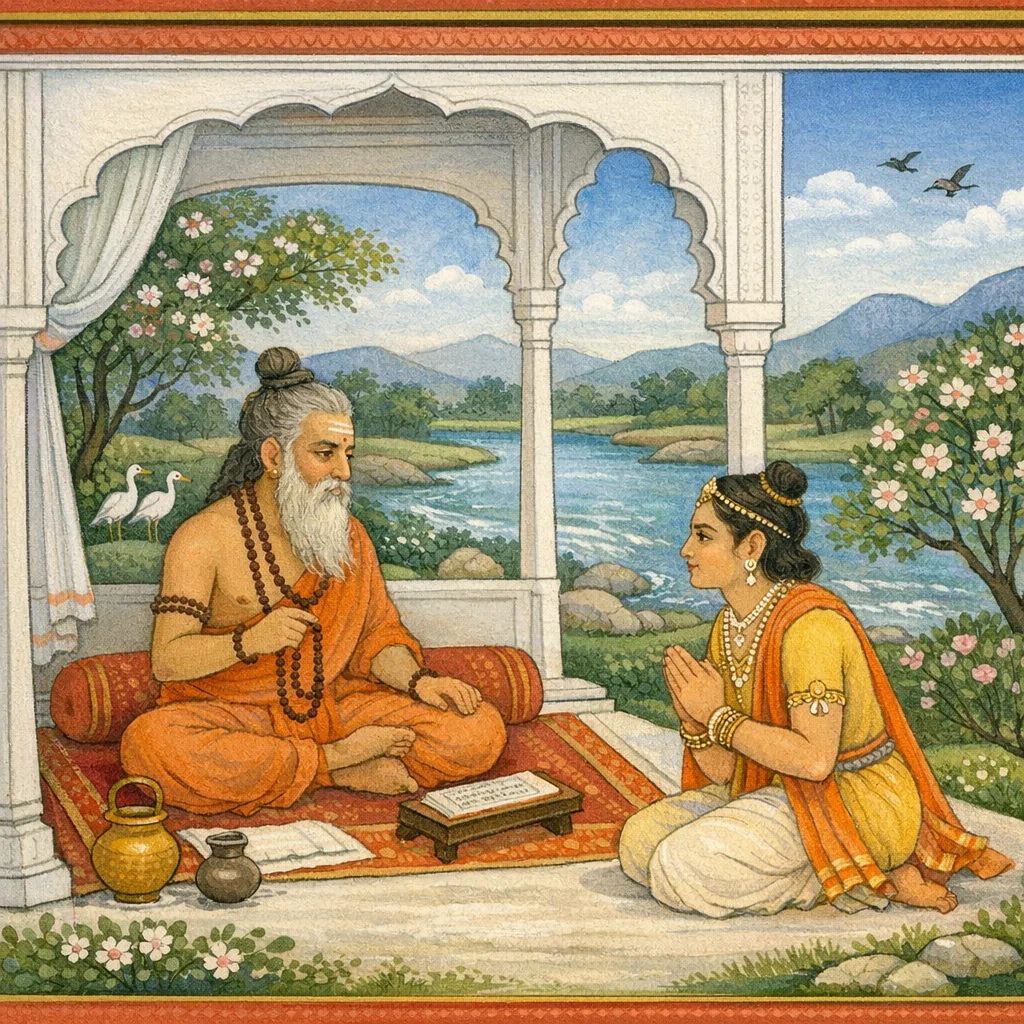
Within the Bhūmi-khaṇḍa’s Vena-linked narrative stream, this chapter presents a moral and psychological test focused on Sukalā’s chaste devotion and on the workings of māyā and desire. The Earth (Bhūmi), “in sport” (krīḍā), assumes a Satī-like form and approaches a virtuous wife; the truth-grounded reply declares the husband to be a woman’s foremost “fortune” (strī-bhāgya). Sukalā’s lament over abandonment is set beside a śāstric generalization that upholds the husband as the center of a wife’s auspicious destiny. The scene then shifts to a dazzling, Nandana-like forest and a sin-destroying tīrtha, where illusion draws Sukalā into a pleasure-saturated realm. Indra and Kāma enter; Kāma explains how desire operates through remembered forms and mental fixation, and how he may take on forms to bewilder. The chapter culminates with Kusumāyudha preparing to strike a chaste wife with his arrows, foregrounding the ethical stakes of kāma set against steadfast dharma.
Shlokas
Verse 1
विष्णुरुवाच । क्रीडा सतीरूप धरा प्रभूत्वा गेहं गता चारु पतिव्रतायाः । तामागतां सत्यस्वरूपयुक्ता सा सादरं वाक्यमुवाच धन्या
Viṣṇu said: Assuming the form of Satī in sport, the Earth—having exercised her power—went to the home of the lovely, devoted wife. When she arrived, that blessed woman, endowed with the nature of truth, respectfully spoke these words.
Verse 2
वाक्यैः सुपुण्यैः परिपूजिता सा उवाच क्रीडा सुकलां विहस्य । मायानुगं विश्वविमोहनं सती प्रत्युत्तरं सत्यप्रमेयुक्तम्
Honoured with exceedingly meritorious words, she spoke—smiling with a graceful playfulness. The virtuous lady then gave a reply grounded in truth, addressing that follower of illusion (māyā) who bewilders the world.
Verse 3
ममापि भर्ता प्रबलो गुणज्ञो धीरः सविद्यो महिमाप्रयुक्तः । त्यक्त्वा गतः पापतरांसुपुण्यो मामेव नाथः शृणु पुण्यकीर्तिः
My husband too was mighty, discerning of virtues, steadfast and learned, endowed with dignity and greatness. Yet, abandoning me, that meritorious man went among those more sinful. O Lord—hear me, O you of holy fame—he was my very protector.
Verse 4
वाक्यैस्तु पुण्यैरबलास्वभावादाकर्ण्य सर्वं सुकला समुक्तम् । संशुद्धभावां च विचिंत्य चाह कस्माद्गतः सुंदरि तेऽद्य नाथः
Hearing all that Sukalā had spoken—meritorious words uttered in a woman’s simple nature—she reflected upon her purified intent and then said: “O beautiful one, why has your lord gone away today?”
Verse 5
विहाय ते रूपमतीव सत्यमाचक्ष्व सर्वं भवती सुभर्तुः । ध्यानोपयुक्ता सकलं करोति सखीस्वरूपा गृहमागता मे
Setting aside your beauty, tell me everything truthfully about your good husband. When one is absorbed in contemplation, one can accomplish all things. You have come to my home in the form of a friend.
Verse 6
क्रीडा बभाषे शृणु सत्यमेतं चरित्रभावं मम भर्त्तुरस्य । अहं प्रिये यस्य सदैव युक्ता यमिच्छते तं प्रतिसांत्वयामि
Krīḍā said: “Listen—this is the truth: such is the conduct and disposition of my husband that, beloved, I am always devoted to whomever he is attached; and whomever he desires, I seek to appease and reconcile.”
Verse 7
कर्तुः सुपुण्यं वचनं सुभर्तुर्ध्यानोपयुक्ता सकलं करोमि । एकांतशीला सगुणानुरूपा शुश्रूषयैकस्तमिहैव देवि
O Goddess, absorbed in contemplation, I carry out in full the most meritorious command of my doer—my noble husband. Dwelling in seclusion, in accord with his virtues, I serve him alone, right here.
Verse 8
मम पूर्व विपाकोऽयं संप्रत्येव प्रवर्तते । यतस्त्यक्त्वा गतो भर्त्ता मामेवं मंदभागिनीम्
This is the ripening of my former karma, and it bears fruit even now—since my husband has abandoned me and gone away, leaving me thus, a woman of wretched fortune.
Verse 9
सखे न धारये जीवं स्वकीय कायमेव च । पत्याहीनाः कथं नार्यः सुजीवंति च निर्घृणाः
O friend, I can no longer sustain my life—nor even my own body. How can women, bereft of their husbands, live on? So pitiless is fate.
Verse 10
रूपशृंगारसौभाग्यं सुखं संपच्च नान्यथा । नारीणां हि महाभागो भर्ता शास्त्रेषु गीयते
Beauty, adornment, good fortune, happiness, and prosperity—these alone, and nothing else, are said to truly belong to women; for in the scriptures a husband is praised as a woman’s great good fortune.
Verse 11
तया सर्वं समाकर्ण्य यदुक्तं क्रीडया तदा । सत्यभावं विदित्वा सा मेने संभाषितं तदा
Having heard everything that was spoken then in play, she recognized its true intent and took it as genuine speech.
Verse 12
विश्वस्ता सा महाभागा सुकला पतिदेवता । तामुवाच पुनः सर्वमात्मचेष्टानुगं वचः
Trusting, fortunate Sukalā—who revered her husband as her very deity—was addressed again with words that fully accorded with his own intentions and actions.
Verse 13
समासेन समाख्यातं पूर्ववृत्तांतमात्मनः । यथा भर्ता गतो यात्रां पुण्यसाधनतत्परः
In brief, I have recounted the earlier account of my own past—how my husband set out on pilgrimage, intent on accomplishing meritorious deeds.
Verse 14
आत्मदुःखं सुसत्यं च तप एव मनस्विनि । बोधिता क्रीडया सा तु समाश्वास्य पतिव्रता
“One’s own sorrow, truthful speech, and austerity (tapas)—these indeed are the way, O strong-minded lady.” Thus instructed, even if playfully, that devoted wife comforted and reassured him.
Verse 15
सूत उवाच । एकदा तु तया प्रोक्तं क्रीडया सुकलां प्रति । सखे पश्य वनं सौम्यं दिव्यवृक्षैरलंकृतम्
Sūta said: Once, in play, she said to Sukalā, “Friend, look at this lovely forest, adorned with divine trees.”
Verse 16
तत्र तीर्थं परं पुण्यमस्ति पातकनाशनम् । नानावल्लीवितानैश्च सुपुष्पैः परिशोभितम्
There is a supremely sacred tīrtha there, a holy place that destroys sins, beautifully adorned with many vine-canopies and lovely blossoms.
Verse 17
आवाभ्यामपि गंतव्यं पुण्यहेतोर्वरानने । समाकर्ण्य तया सार्द्धं सुकला मायया तदा
“We too must go, O fair-faced one, for the sake of gaining merit.” Having heard this, Sukalā then, by her power of māyā, accompanied her.
Verse 18
प्रविवेश वनं दिव्यं नंदनोपममेव सा । सर्वर्तुकुसुमोपेतं कोकिलाशतनादितम्
She entered a wondrous, celestial forest, like Nandana itself—adorned with blossoms of every season and resounding with the calls of hundreds of cuckoos.
Verse 19
गीयमानं सुमधुरैर्नादैर्मधुकरैरपि । कूजद्भिः पक्षिभिः पुण्यैः पुण्यध्वनिसमाकुलम्
It resounded with exceedingly sweet sounds, sung even by bees; and it was filled with auspicious resonance from holy birds chirping all around.
Verse 20
चंदनादिकवृक्षैश्च सौरभैश्च विराजितम् । सर्वभोगैः सुसंपूर्णं माधव्या माधवेन वै
Adorned with sandalwood and other fragrant trees, and resplendent with sweet scents, it was fully furnished with every enjoyment—indeed, by Mādhavī together with Mādhava.
Verse 21
रचितं मोहनायैव सुकलायाश्च कारणात् । तया सार्धं प्रविष्टा सा तद्वनं सर्वभावनम्
It was fashioned solely to enchant, and also because of Sukalā; and with her, she entered that forest—an all-delighting, all-enchanting grove.
Verse 22
ददर्श सौख्यदं पुण्यं मायाभावं न विंदति । वीक्षमाणा वनं दिव्यं तया सह जनेश्वर
He beheld that holy, bliss-bestowing scene and did not perceive any illusory condition (māyā). Gazing upon the divine forest, the lord of men went together with her.
Verse 23
शक्रोपि चाभ्ययात्तत्र देवमूर्तिविराजितः । तया दूत्या समं प्राप्तः कामस्तत्र समागतः
There, even Śakra (Indra) arrived, resplendent in divine form; and Kāma, the god of desire, also came there, having reached that place together with the female messenger.
Verse 24
सर्वभोगपतिर्भूत्वा कामलीलासमाकुलः । काममाह समाभाष्य एषा सा सुकुला गता
Having become the lord of every enjoyment, and being wholly absorbed in amorous play, he addressed Kāma, saying: “That fair maiden Sukulā has gone.”
Verse 25
प्रहरस्व महाभाग क्रीडायाः पुरतः स्थिताम् । मायां कृत्वा समानीता क्रीडया तव संनिधौ
O noble one, strike her who stands before Krīḍā. By employing māyā—illusion—Krīḍā has brought her, in play, into your presence.
Verse 26
पौरुषं दर्शयाद्यैव यद्यस्ति कुरु निश्चितम् । काम उवाच । आत्मरूपं दर्शयस्व चतुरं लीलयान्वितम्
Show your manly prowess this very day—if it is in you, then act with resolve. Kāma said: “Reveal your own true form—clever, and endowed with playful sportive charm.”
Verse 27
येनाहं प्रहराम्येतां पंचबाणैः सहस्रदृक् । इंद्र उवाच । क्वास्ते ते पौरुषं मूढ येन लोकं विडंबसे
“With this I shall strike her, with the five arrows,” said the Thousand-Eyed One (Indra). Indra said: “Where is that manliness of yours, fool, by which you make a mockery of the world?”
Verse 28
ममाधारपरोभूत्वा योद्धुमिच्छसि सांप्रतम् । काम उवाच । तेनापि देवदेवेन महादेवेन शूलिना
“Having relied upon my support, you now wish to fight,” Kāma said. “Even by that God of gods—Mahādeva, the trident-bearer—”
Verse 29
पूर्वमेव हृतं रूपं ममकायो न विद्यते । इच्छाम्यहं यदा नारीं हंतुं शृणुष्व सांप्रतम्
My form has already been taken away; I no longer have a body of my own. Yet when I desire to kill a woman, listen now to what I do at that moment.
Verse 30
पुंसां कायं समाश्रित्य आत्मरूपं प्रदर्शये । पुमांसं वा सहस्राक्ष नार्याः कार्यं समाश्रये
Assuming a man’s body, I reveal my own form; or else, O Sahasrākṣa, assuming a man, I take up the task that pertains to a woman.
Verse 31
पूर्वदृष्टा यदा नारी तामेव परिचिंतयेत् । चिंत्यमानस्य पुंसस्तु नार्यारूपं पुनःपुनः
When a man has previously seen a woman, he keeps thinking of her alone; and for that man who is absorbed in such thoughts, the woman’s form arises again and again.
Verse 32
अदृष्टं तु समाश्रित्य पुंसमुन्मादयाम्यहम् । तथाप्युन्मादयाम्येवं नारीरूपं न संशयः
Taking refuge in the unseen, I drive the man to madness; and even so, in this very manner, I also drive him mad through a woman’s form—there is no doubt.
Verse 33
संस्मरणात्स्मरो नाम मम जातं सुरेश्वर । तां दृष्ट्वा तादृशोरंग वस्तुरूपं समाश्रये
O Lord of the gods, from mere remembrance there has arisen in me one named ‘Smara’ (desire). Seeing her, O serpent-bodied one, I take refuge in the true nature of the Real.
Verse 34
आत्मतेजः प्रकाशेन बाध्यबाधकतां व्रजेत् । नारीरूपं समाश्रित्य धीरं पुरुषं प्रमोहयेत्
By the radiance of one’s own inner power, one may pass into the state of being neither bound nor binding; yet, assuming a woman’s form, one can bewilder even a steadfast man.
Verse 35
पुरुषं तु समाश्रित्य भावयामि सुयोषितम् । रूपहीनोस्मि हे इंद्र अस्मद्रूपं समाश्रयेत्
Taking refuge in a man, I can become a virtuous woman. I am without beauty, O Indra—may she assume my form.
Verse 36
तवरूपं समाश्रित्य तां साधये यथेप्सिताम् । एवमुक्त्वा स देवेंद्रं कायं तस्य महात्मनः
“Taking on your form, I shall accomplish her purpose exactly as desired.” Having said this, he approached Devendra and entered the body of that great-souled one.
Verse 37
सखासौ माधवस्यापि समाश्रित्य सुमायुधः
That Sumāyudha, having taken refuge with Mādhava as his friend,
Verse 38
तामेव हंतुं कुसुमायुधोपि साध्वीं सुपुण्यां कृकलस्य भार्याम् । समुत्सुकस्तिष्ठति बाणलक्षं तस्याश्च कायं नयनैर्विलोक्य
Eager to slay her—Kṛkala’s wife, a chaste woman of surpassing merit—Kusumāyudha (Kāma), after gazing upon her body with his eyes, stood poised, taking aim at her as the mark for his arrow.
Verse 57
इति श्रीपद्मपुराणे भूमिखंडे वेनोपाख्याने सुकलाचरित्रे सप्तपंचाशत्तमोऽध्यायः
Thus ends the fifty-seventh chapter—the account of Sukalā—within the Vena narrative in the Bhūmi-khaṇḍa of the revered Padma Purāṇa.