Adhyaya 56
Kāma and Indra’s Attempt to Shatter Chastity; the ‘Abode of Satya’ and the Ethics of the Virtuous Home
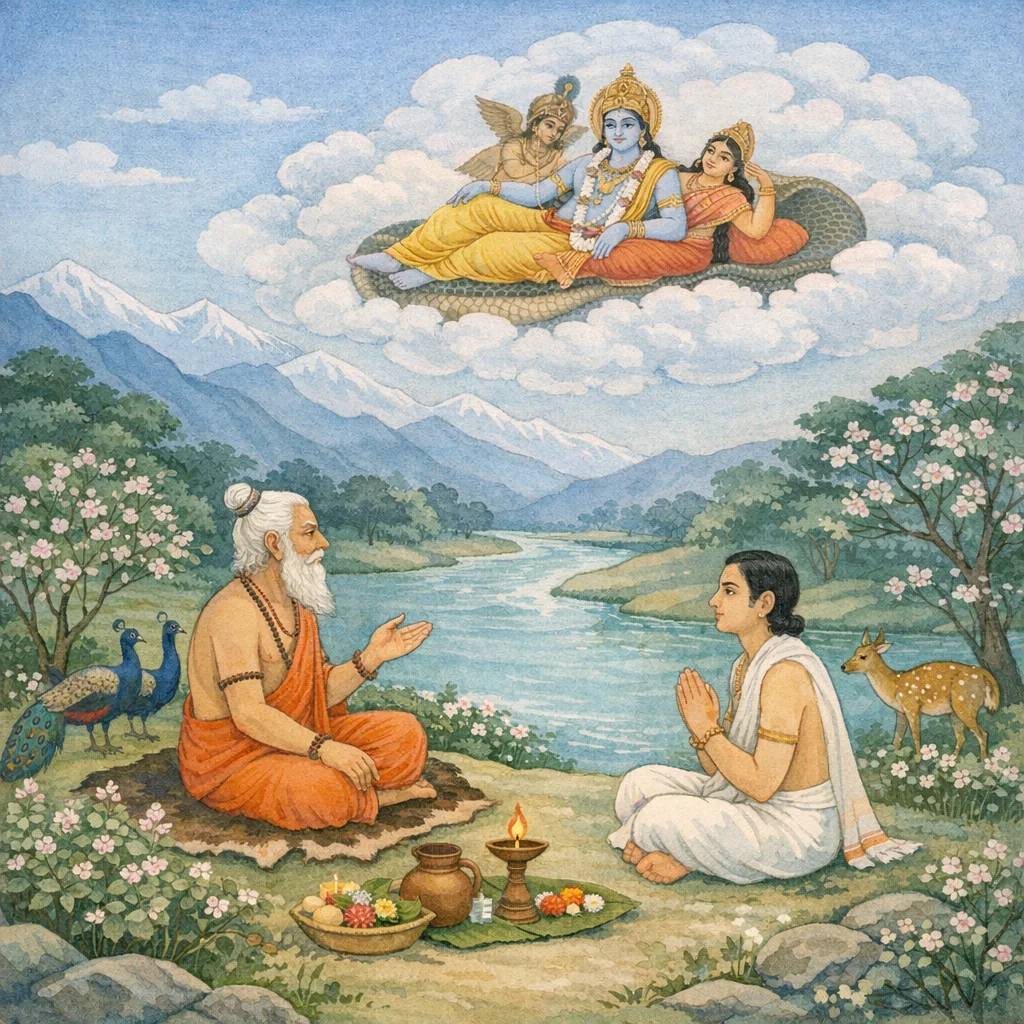
PP.2.56 portrays a moral crisis centered on the household as an abode of satya (truth) and puṇya (merit). Kāma (Manmatha), accompanied by Indra, seeks to shatter chastity and domestic order, and the narrative recalls earlier precedents where desire entered even exalted settings (Viśvāmitra–Menakā; Ahalyā). The chapter extols the virtuous home—marked by forgiveness, peace, self-restraint, compassion, service to the guru, and devotion—which draws Viṣṇu with Lakṣmī and even the devas. At the crucial moment, Prajñā, “Wisdom,” moving as a bird-omen, announces the husband’s return and steadies Sukalā’s resolve. Dharmarāja/Yama then determines to curb Kāma’s radiance and bring about his downfall, teaching that chastity and truth are guarded not by force alone, but by discernment, auspicious signs, and steadfast dharma within the gṛhastha sphere.
Shlokas
Verse 1
विष्णुरुवाच । तस्याः सत्यविनाशाय मन्मथः ससुराधिपः । प्रस्थितः सुकलां तर्हि सत्यो धर्ममथाब्रवीत्
Vishnu said: To bring about the destruction of her chastity, Manmatha, together with the Lord of the gods, set out. Then Satya spoke to Dharma, saying:
Verse 2
पश्य धर्म महाप्राज्ञ मन्मथस्य विचेष्टितम् । तवार्थमात्मनश्चैव पुण्यस्यापि महात्मनः
O Dharma, O greatly wise one, behold the actions of Manmatha. They are for your sake, for my sake, and also for the sake of the great-souled Punya.
Verse 3
विसृजामि महास्थानं वास्तुरूपं सुखोदयम् । सत्याख्यं च सुप्रियाख्यं सुदेवाख्यं गृहोत्तमम्
I bring forth the great abode, taking the form of a dwelling that gives rise to happiness: the excellent house called Satya, also named Supriya and Sudeva.
Verse 4
तमेव नाशयेद्गत्वा काम एष प्रमत्तधीः । रिपुरूपः सुदुष्टात्मा अस्माकं हि न संशयः
One should go and destroy him alone—this Kama, whose mind is reckless. He is an enemy in disguise, of utterly wicked nature; of this we have no doubt.
Verse 5
पतिस्तपोधनो विप्रः सुसती या पतिव्रता । सुसत्यो भूपतिर्धर्मममगेहानसंशयः
Her husband is an austere brāhmaṇa, devoted to tapas and spiritual discipline; she is a virtuous, faithful wife, steadfast in the vow of pativrata. The king is truthful and righteous, and his household is, without doubt, well governed.
Verse 6
यत्राहं वृद्धिसंपुष्टस्तत्र वासो हि ते भवेत् । तत्र पुण्यं समायाति श्रद्धया सह क्रीडते
Where I am nourished and made to flourish, there indeed shall be your dwelling. There puṇya gathers and arrives, and together with śraddhā it sports in sacred joy.
Verse 7
क्षमा शांत्या समायुक्ता आयाति मम मंदिरम् । यथा सत्यो दमश्चैव दया सौहृदमेव च
Forgiveness, joined with peace, comes to My temple—so too do truthfulness and self-restraint, and likewise compassion and goodwill.
Verse 8
प्रज्ञायुक्तः स निर्लोभो यत्राहं तत्र संस्थितः । शुचिः स्वभावस्तत्रैव अमी च मम बांधवाः
Endowed with discernment and free from greed, he dwells wherever I am. Pure by nature, he remains there—and these too are My kinsmen.
Verse 9
अस्तेयमप्यहिंसा च तितिक्षा वृद्धिरेव च । मम गेहे समायाता धन्यतां शृणु धर्मराट्
Non-stealing, ahiṃsā, forbearance, and true prosperity have come into my home. O king of dharma, hear of this blessedness.
Verse 10
गुरूणां चापि शुश्रूषा विष्णुर्लक्ष्म्या समावृतः । मद्गेहं तु समायांति देवाश्चाग्निपुरोगमाः
By service to the gurus as well, Viṣṇu—accompanied by Lakṣmī—comes to dwell there; indeed, the gods too come to my house, with Agni at their head.
Verse 11
मोक्षमार्गं प्रकाशेद्यो ज्ञानोदीप्त्या समन्वितः । एतैः सार्धं वसाम्येव सतीषु धर्मवत्सु च
Whoever illumines the path to liberation, endowed with the radiance of true knowledge—together with such people I indeed dwell, and also among virtuous, dharma-abiding women.
Verse 12
साधुष्वेतेषु सर्वेषु गृहरूपेषु मे सदा । उक्तेनापि कुटुंबेन वसाम्येव त्वया सह
In all these homes of the virtuous I am ever present. Even when a household invokes me with words, I surely dwell there—together with you.
Verse 13
ससत्वाः साधुरूपास्ते वेधसा मे गृहीकृताः । संचरामि महाभाग स्वच्छंदेन च लीलया
Those beings, endowed with good qualities and of virtuous form, were entrusted to my care by the Creator (Vedhas). O fortunate one, I roam freely, playfully, according to my own will.
Verse 14
ईश्वरश्च जगत्स्वामी त्रिनेत्रो वृषवाहनः । मम गेहे स्वरूपेण वर्तते शिवया युतः
Īśvara—the Lord of the universe, the Three-eyed One, the rider of the bull—abides in my house in his very own form, together with Śivā.
Verse 15
तदिदं संसृतेः सारं गृहरूपं महेश्वरम् । सदनं शंकरेत्याख्यं नाशितं मन्मथेन वै
This—embodying the very essence of worldly existence—was the great Lord Maheśvara in the form of a household; that dwelling, known as “Śaṅkara’s abode,” was indeed destroyed by Manmatha (Kāma).
Verse 16
विश्वामित्रं महात्मानं तपंतं तप उत्तमम् । मेनकां हि समाश्रित्य कामोयं जितवान्पुरा
Formerly, this very Kāma, taking refuge in (using) Menakā, overcame the great-souled Viśvāmitra while he was engaged in the highest austerities.
Verse 17
सती पतिव्रताहल्या गौतमस्य प्रिया शुभा । सुसत्याच्चालिता तेन मन्मथेन दुरात्मना
Ahalyā—chaste and devoted to her husband, the auspicious beloved of Gautama—though truly faithful, was nevertheless stirred (tempted) by that wicked Manmatha (the god of desire).
Verse 18
मुनयः सत्यधर्मज्ञा नानास्त्रियः पतिव्रताः । मद्गृहास्ता इमाः सर्वा दीपिताः कामवह्निना
“The sages—knowers of truth and righteousness—and the many women devoted to their husbands: all these in my household have been set ablaze by the fire of desire.”
Verse 19
दुर्धरो दुःसहो व्यापी योतिसत्येषु निष्ठुरः । मामेवं पश्यते नित्यं क्व सत्यः परितिष्ठति
Hard to restrain, unbearable, all-pervading, and harsh even toward those devoted to truth—if one constantly sees me in this way, where then can truth find a footing?
Verse 20
समां ज्ञात्वा समायाति बाणपाणिर्धनुर्धरः । नाशयेन्मद्गृहं पापो वीतिहोत्रैश्च नामकैः
Knowing the time to be equal and favourable, the bowman comes—an archer with arrows in hand. That sinful man would destroy my house, together with those called Vītihotra.
Verse 21
पापलेशाश्च ये क्रूरा अन्ये पाखंडसंश्रयाः । ते तु बुद्ध्याऽहिताः सर्वे सत्यगेहं विशंति हि
Those tainted by sin, the cruel, and others who take refuge in heretical hypocrisy—all of them, with intellect turned toward harm, indeed enter the abode of Satya (Truth).
Verse 22
सेनाध्यक्षैरसत्यैस्तु छद्मना तेन साधितः । पातयेदर्दयेद्गेहं पापः शस्त्रैर्दुरात्मभिः
Deceived by dishonest military officers through that very fraud, the sinner—together with wicked men bearing weapons—would bring houses down and crush them.
Verse 23
मामेवं ताडयेत्पापो महाबल मनोभवः । अस्य धाम्ना प्रदग्धोहं शून्यतां हि व्रजामि वै
“Thus does the sinful, immensely powerful Manobhava (Kāma) strike me. Burnt by the radiance of his presence, I indeed pass into emptiness.”
Verse 24
नूतनं गृहमिच्छामि स्त्रियाख्यं पतिभूपतिम् । कृकलस्यापि पुण्यस्य प्रियेयं शिवमंगला
“I desire a new home, and a husband who is a king among men. This beloved one is auspicious to Śiva and brings good fortune—grant it, even through the merit of a mere kṛkala.”
Verse 25
तद्गृहं सुकलाख्यं मे दग्धुं पापः समुद्यतः । अयमेष सहस्राक्षः कामेन सहितो बली
That sinful one has risen to burn my house called Sukalā. And here stands the mighty Thousand-Eyed one (Indra), accompanied by Kāma.
Verse 26
कामस्य कारणात्कस्मात्पूर्ववृत्तं न विंदति । अहल्यायाः प्रसंगेन मेषोपस्थो व्यजायत
Why, through the cause of desire, does one fail to recognize what happened before? In connection with Ahalyā, a ram’s organ of generation came into being.
Verse 27
पौरुषं हि मुनेर्दृष्ट्वा सत्याश्चैव प्रधषर्णात् । नष्टः कामस्य दोषेण सुरराट्तत्र संस्थितः
Seeing the sage’s steadfast manliness (self-mastery) and Satyā’s firm resistance, the king of the gods, brought low by the fault of desire, remained there.
Verse 28
भुक्तवान्दारुणं शापं दुःखेन महतान्वितः । कृकलस्य प्रियामेनां सुकलां पुण्यचारिणीम्
Enduring a dreadful curse, overwhelmed by great sorrow, he then approached Sukalā—Kṛkala’s beloved—who was devoted to righteous conduct.
Verse 29
एष हंतुं सहस्राक्ष उद्यतः कामसंयुतः । यथा चेंद्रेण नायाति काम एष तथा कुरु
O Sahasrākṣa (Indra), he stands ready to strike, driven by desire. Act so that this passion does not take hold of Indra (you).
Verse 30
धर्मराज महाप्राज्ञ भवान्मतिमतां वरः । धर्मराज उवाच । ऊनं तेजः करिष्यामि कामस्य मरणं तथा
O Dharmarāja, greatly wise one—you are indeed the foremost among the intelligent. Dharmarāja said: “I shall diminish his brilliance, and likewise bring about Kāma’s death.”
Verse 31
एकोपायो मया दृष्टस्तमिहैव प्रपश्यतु । प्रज्ञा चैषा महाप्राज्ञा शकुनीरूपचारिणी
I have seen one expedient; let him consider it right here. This very Wisdom—highly intelligent—moves about in the form of a bird.
Verse 32
भर्तुरागमनं पुण्यं शब्देनाख्यातु खे यतः । शकुनस्य प्रभावेण भर्तुश्चागमनेन च
Because the bird in the sky announced with its call the auspicious arrival of the husband—through the bird’s influence and through the husband’s coming as well.
Verse 33
दुष्टैर्नष्टा न भूयेत स्वस्थचित्ता न संशयः । प्रज्ञा संप्रेषिता तेन गता सा सुकलागृहम्
“She will not again be ruined by the wicked—of that there is no doubt; her mind is now steady.” Sent forth by him, Prajñā went to Sukalā’s house.
Verse 34
प्रकुर्वती महच्छब्दं दृष्टदेवेव सा बभौ । पूजिता मानिता प्रज्ञा धूपदीपादिभिस्तदा
Raising a great sound, she appeared as though she had beheld a deity. Then the wise lady Prajñā was honored and revered with offerings such as incense and lamps.
Verse 35
ब्राह्मणं सुकलापृच्छत्किमेषा च वदेन्मम । ब्राह्मण उवाच । भर्तुश्चागमनं ब्रूते तवैव सुभगे स्थिरा
Sukalā asked the brāhmaṇa, “What is it that she is telling me?” The brāhmaṇa replied, “She says your husband will return, O fortunate one—remain steadfast.”
Verse 36
दिनसप्तकमध्ये स आगमिष्यति नान्यथा
Within seven days, he will surely arrive—there is no other outcome.
Verse 37
इत्येवमाकर्ण्यसुमंगलं वचः प्रहर्षयुक्ता सहसा बभूव । धर्मज्ञमेकं सगुणं हि कांतं शकुनात्प्रदिष्टं हि समागतं तम्
Hearing those most auspicious words, she suddenly became filled with joy. Indeed, the beloved—one who knew dharma, singular in his worth and endowed with virtues—had arrived, as foretold by the omen-bird.