Adhyaya 40
Fruits of Occasional (Festival-Specific) Charity — The Vena Episode
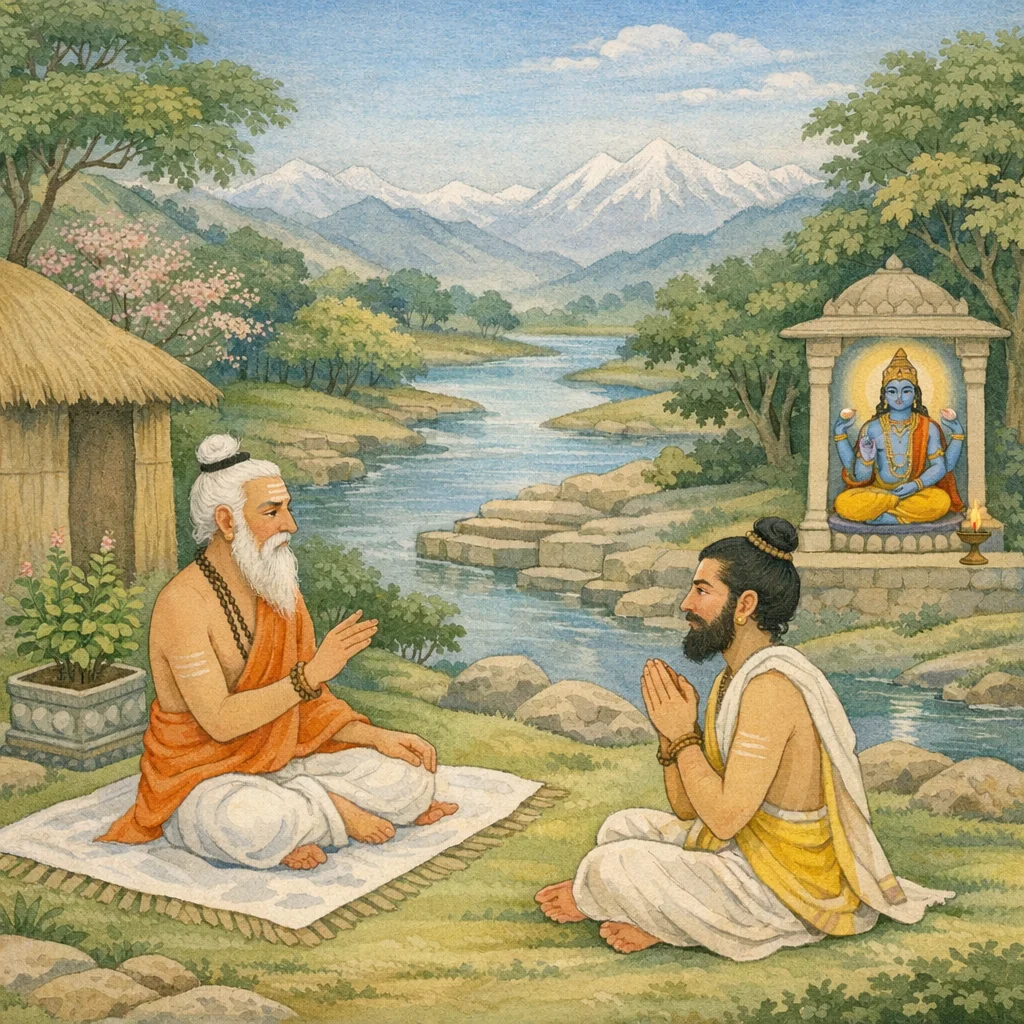
Chapter 40 turns from daily giving to naimittika-dāna—charity performed on great sacred occasions (mahā-parva) and at tīrthas. Viṣṇu answers King Vena by describing graded fruits for major gifts such as an elephant, chariot, or horse, as well as land and cows, garments with gold, ornaments, and ritual offerings like a ghee-filled golden pot worshipped with Vedic mantras and the sixteenfold service (ṣoḍaśopacāra). The chapter repeatedly emphasizes the worthy recipient (pātra, a fit brāhmaṇa), śraddhā, discreet giving without display, and the right time and place as multipliers of merit. Such gifts are said to yield kingship, prosperity, learning, and ultimately residence in Vaikuṇṭha. It closes with a warning: attachment, greed, and māyā cause heirs to forget charity, leading to misery on Yama’s path; therefore one should give freely while still alive.
Shlokas
Verse 1
वेन उवाच । नित्यदानफलं देव त्वत्तः पूर्वं मया श्रुतम् । नैमित्तिकस्य दानस्य दत्तस्यापि हि यत्फलम्
Vena said: “O Deva, I have previously heard from you about the fruit of regular (daily) charity. Now, what is the fruit of occasional charity—charity given on a particular occasion as well?”
Verse 2
तत्फलं मे समाचक्ष्व त्वत्प्रसादात्प्रयत्नतः । महातृप्तिं न गच्छामि श्रोतुं श्रद्धा प्रवर्तते
Tell me the fruit of that practice fully—by your grace and with earnest effort. I do not attain full satisfaction; my faith to hear more continues to grow.
Verse 3
विष्णुरुवाच । नैमित्तिकं प्रवक्ष्यामि दानमेव नृपोत्तम । महापर्वणि संप्राप्ते येन दानानि श्रद्धया
Viṣṇu said: O best of kings, I shall explain the occasional giving—namely, that charity by which, when a great sacred occasion arrives, gifts are offered with faith.
Verse 4
सत्पात्रेभ्यः प्रदत्तानि तस्य पुण्यफलं शृणु । गजं रथं प्रदत्ते यो ह्यश्वं चापि नृपोत्तम
Hear the meritorious fruit of gifts bestowed upon worthy recipients: O best of kings, he who gives an elephant, a chariot, and even a horse…
Verse 5
स च भृत्यैस्तु संयुक्तः पुण्यदेशे नृपोत्तमः । जायते हि महाराज मत्प्रसादान्न संशयः
And that best of kings, accompanied by his attendants, will indeed be born in a sacred land, O great king—through my grace; of this there is no doubt.
Verse 6
राजा भवति धर्मात्मा ज्ञानवान्बलवान्सुधीः । अजेयः सर्वभूतानां महातेजाः प्रजायते
He becomes a king who is righteous in spirit, learned, strong, and truly wise; unconquerable by all beings, he is born endowed with great splendor.
Verse 7
महापर्वणि संप्राप्ते भूमिदानं ददाति यः । गोदानं वा महाराज सर्वभोगपतिर्भवेत्
O great king, when a major sacred festival arrives, whoever gives the gift of land—or even the gift of a cow—becomes the lord of all enjoyments, attaining abundant prosperity.
Verse 8
ब्राह्मणाय सुपुण्याय दानं दद्यात्प्रयत्नतः । महादानानि यो दद्यात्तीर्थे पर्वणि पात्रवित्
With earnest effort one should give charity to a highly virtuous brāhmaṇa. He who, knowing the worthiness of the recipient, gives great gifts at a tīrtha and on festival days (parvans) gains great merit.
Verse 9
तेषां चिह्नं प्रवक्ष्यामि भूपतित्वं प्रजायते । तीर्थे पर्वणि संप्राप्ते गुप्तदानं ददाति यः
I shall declare their distinguishing mark, by which sovereignty is born: when one reaches a tīrtha at the time of a holy festival, whoever gives charity in secret—attains kingship.
Verse 10
निधीनामाशुसंप्राप्तिरक्षरा परिजायते । महापर्वणि संप्राप्ते तीर्थेषु ब्राह्मणाय च
Swift attainment of treasures arises unfailingly—especially when a great sacred occasion arrives—through acts performed at tīrthas and also through giving to or honoring a brāhmaṇa.
Verse 11
सुचैलं च महादानं कांचनेन समन्वितम् । पुण्यं फलं प्रवक्ष्यामि तस्य दानस्य भूपते
And now, O king, I shall declare the meritorious fruit of that great gift: fine garments accompanied by gold.
Verse 12
जायंते बहवः पुत्राः सुगुणा वेदपारगाः । आयुष्मंतः प्रजावंतो यशः पुण्यसमन्विताः
Many sons are born—virtuous, well-versed in the Vedas—long-lived, blessed with offspring, and endowed with fame and merit.
Verse 13
विपुलाश्चैव जायंते स्फीता लक्ष्मीर्महामते । सौख्यं च लभते पुण्यं धर्मवान्परिजायते
And indeed abundant benefits arise; prosperity and good fortune flourish, O wise one. One attains happiness and merit, and in such a lineage a righteous person is born.
Verse 14
महापर्वणि संप्राप्ते तीर्थे गत्वा प्रयत्नतः । कपिलां कांचनीं दद्याद्ब्राह्मणाय महात्मने
When the great sacred festival day arrives, one should strive to go to a holy tīrtha and offer a tawny kapilā cow, adorned with gold, to a noble brāhmaṇa.
Verse 15
तस्य पुण्यं प्रवक्ष्यामि दानस्य च महामते । कपिलादो महाराज सर्वसौख्यान्प्रभुंजति
O great-minded one, I shall declare the merit of that gift. By giving a tawny kapilā cow, O king, one enjoys every kind of happiness.
Verse 16
यावद्ब्रह्मा प्रजीवेत्स तावत्तिष्ठति तत्र सः । महापर्वणि संप्राप्ते अलंकृत्य च गां तदा
As long as Brahmā lives, so long does he remain there. And when the great festival day arrives, then the cow is adorned at that time.
Verse 17
कांचनेनापि संयुक्तां वस्त्रालंकारभूषणैः । तस्य दानस्य राजेंद्र फलभोगं वदाम्यहम्
Even when it is accompanied by gold, garments, ornaments, and jewelry—O king—I shall now describe the enjoyment of the fruits that arise from such a gift.
Verse 18
विपुला जायते लक्ष्मीर्दानभोगसमाकुला । सर्वविद्यापतिर्भूत्वा विष्णुभक्तो भवेत्किल
Abundant Lakṣmī arises, accompanied by the joy of giving and worthy enjoyment; becoming a master of all branches of knowledge, one indeed becomes a devotee of Viṣṇu.
Verse 19
विष्णुलोके वसेन्मर्त्यो यावत्तिष्ठति मेदिनी । तीर्थं गत्वा तु यो दद्याद्ब्राह्मणाय विभूषणम्
A mortal dwells in Viṣṇu’s realm as long as the earth endures, if, having gone to a sacred tīrtha, he gifts an ornament to a brāhmaṇa.
Verse 20
भुक्त्वा तु विपुलान्भोगानिन्द्रेण क्रीडते सह । महापर्वणि संप्राप्ते वस्त्रं च द्विजपुंगवे
Having enjoyed abundant pleasures, he sported together with Indra. When the great festival arrived, he offered a garment to the excellent brāhmaṇa.
Verse 21
दत्त्वान्नं भूमिसंयुक्तं पात्रे श्रद्धासमन्वितः । मोदते स तु वैकुंठे विष्णुतुल्यपराक्रमः
Having given food, together with a gift of land, to a worthy recipient in faith, one rejoices in Vaikuṇṭha, endowed with valor comparable to Viṣṇu.
Verse 22
सवस्त्रं कांचनं दत्त्वा द्विजाय परिशांतये । स्वेच्छया अग्निसदृशो वैकुंठे स वसेत्सुखी
Having given gold along with garments to a brāhmaṇa for complete appeasement, he—radiant like fire at will—dwells happily in Vaikuṇṭha.
Verse 23
सुवर्णस्य सुकुंभं च घृतेन परिपूरयेत् । पिधानं रौप्यं कर्तव्यं वस्त्रहारैरलंकृतम्
One should fill a fine golden pot with ghee. Its lid should be made of silver and adorned with garments and garlands.
Verse 24
पुष्पमालान्वितं कुर्याद्ब्रह्मसूत्रेण शोभितम् । प्रतिष्ठितं वेदमंत्रैस्तं संपूज्य महामते
One should prepare it adorned with a garland of flowers and beautified with the sacred Brahma-sūtra (sacred thread). Having installed it with Vedic mantras, one should then worship it fully, O great-minded one.
Verse 25
उपचारैः पवित्रैश्च षोडशैः परिपूजयेत् । स्वलंकृत्य ततो दद्याद्ब्राह्मणाय महात्मने
One should worship fully with the sixteen pure ritual offerings; then, having adorned it, one should give it to a noble, great-souled brāhmaṇa.
Verse 26
षोडशैव ततो गावः सवस्त्राः कांस्यदोहनाः । कुंभयुक्ताश्च चत्वारो दक्षिणां च सकांचनाम्
Then (one should give) sixteen cows, each accompanied by cloth, with bronze milking-vessels; and also four water-pots (kumbhas), together with a priestly fee (dakṣiṇā) that includes gold.
Verse 27
तथा द्वादशका गावो वस्त्रालंकारभूषणाः । पृथग्भूताय विप्राय दातव्या नात्र संशयः
Likewise, twelve cows—along with garments, ornaments, and jewelry—should be given to a brāhmaṇa who is set apart (as the designated recipient); of this there is no doubt.
Verse 28
एवमादीनि दानानि अन्यानि नृपनंदन । तीर्थकालं सुसंप्राप्य विप्रावसथमेव च
O prince, other gifts of this kind too should be given—having duly obtained the proper time at a sacred ford (tīrtha), and also at the lodging of a brāhmaṇa.
Verse 29
श्रद्धाभावेन दातव्यं बहुपुण्यकरं भवेत् । विष्णुरुवाच । विष्णुमुद्दिश्य यद्दानं कामनापरिकल्पितम्
A gift should be given with faith; it becomes a source of abundant merit. Viṣṇu said: that donation which is offered with Viṣṇu in mind, even when conceived with a desire for results…
Verse 30
तस्य दानस्य भावेन भावनापरिभावितः । तादृक्फलं समश्नाति मानुषो नात्र संशयः
A person, permeated by the intention of that gift and shaped by such contemplation, surely partakes of a corresponding result—of this there is no doubt.
Verse 31
अभ्युदयं प्रवक्ष्यामि यज्ञादिषु प्रवर्तते । तेन दानेन तस्यापि श्रद्धया च द्विजोत्तम
I shall explain the rite called Abhyudaya, which is undertaken in connection with sacrifices and similar sacred acts. By that gift—and by faith as well, O best of the twice-born—(the intended merit is attained).
Verse 32
प्रज्ञावृद्धिं समाप्नोति न च दुःखं प्रविंदति । भोगान्भुनक्ति धर्मात्मा जीवमानस्तु सांप्रतम्
He attains an increase of wisdom and does not encounter suffering. Even while living here and now, the righteous-souled person enjoys worthy pleasures.
Verse 33
ऐंद्रांस्तु भुंक्ते भोगान्स दाता दिव्यां गतिं गतः । स्वकुलं नयते स्वर्गं कल्पानां च सहस्रकम्
That generous giver enjoys Indra-like heavenly pleasures and attains a divine state; and he leads his own lineage to heaven for a thousand kalpas.
Verse 34
एवमाभ्युदयं प्रोक्तं प्राप्तं तेषु वदाम्यहम् । कायस्य च क्षयं ज्ञात्वा जरया परिपीडितः
Thus have I spoken of the rise of prosperity that came to them. Now I shall tell what followed: knowing the body’s decline, and oppressed by old age, he became distressed.
Verse 35
दानं तेन प्रदातव्यमाशां कस्य न कारयेत् । मृते च मयि मे पुत्रा अन्ये स्वजनबांधवाः
Therefore he should give in charity—who would not kindle hope in others? And when I am dead, my sons and other kinsmen and relatives will still remain.
Verse 36
कथमेते भविष्यंति मां विना सुहृदो मम । तेषां मोहात्प्रमुग्धो वै न ददाति स किंचन
“How will these dear friends of mine manage without me? Deluded by attachment to them, he truly gives them nothing at all.”
Verse 37
मृत्युं प्रयाति मोहात्मा रुदंति मित्रबांधवाः । दुःखेन पीडिताः सर्वे मायामोहेन पीडिताः
The deluded soul goes to death; friends and relatives weep. All are afflicted by sorrow, tormented by the delusion born of Māyā.
Verse 38
संकल्पयंति दानानि मोक्षं वै चिंतयंति च । तस्मिन्मृते महाराज मायामोहे गते सति
They resolve to make gifts of charity, and they also contemplate liberation (mokṣa). But when that one has died, O great king, and the delusion of Māyā comes upon them,
Verse 39
विस्मरंति च दानानि लोभात्मानो ददंति न । योऽसौ मृतो महाराज यमपंथं सुदुःखितः
Greed-bound people forget the duty of giving and do not donate. Such a one, O great king, after death travels Yama’s road in grievous misery.
Verse 40
इति श्रीपद्मपुराणे पंचपंचाशत्सहस्रसंहितायां भूमिखंडे । वेनोपाख्याने चत्वारिंशोऽध्यायः
Thus, in the Śrī Padma Purāṇa—within the Bhūmi-khaṇḍa of the compendium of fifty-five thousand verses—ends the fortieth chapter of the episode concerning Vena.
Verse 41
कस्य पुत्राश्च पौत्राश्च कस्य भार्या नृपोत्तम । संसारे नास्ति कः कस्य तस्माद्दानं प्रदीयते
Whose are the sons and grandsons, and whose is the wife, O best of kings? In this world of saṃsāra, none truly belongs to anyone; therefore one should give in charity.
Verse 42
ज्ञानवता प्रदातव्यं स्वयमेव न संशयः । अन्नं पानं च तांबूलमुदकं कांचनं तथा
Surely, one endowed with discernment should give of his own accord—there is no doubt. (He should offer) food and drink, tāmbūla (betel), water, and likewise gold.
Verse 43
युग्मं वस्त्रं च छत्रं च स्वयमेव न संशयः । जलपात्राण्यनेकानि सोदकानि नृपोत्तम
A pair of garments and an umbrella—indeed, by his own hand, without doubt—along with many water-vessels filled with water, O best of kings.
Verse 44
वाहनानि विचित्राणि यानान्येव महामते । नानागंधान्सकर्पूरं यमपंथ सुखप्रदे
O great-minded one, there are wondrous vehicles—indeed splendid conveyances—filled with many fragrances and camphor, making the path to Yama pleasant and comfort-giving.
Verse 45
उपानहौ प्रदातव्ये यदीच्छेद्विपुलं सुखम् । एतैर्दानैर्महाराज यमपंथं सुखेन वै
If one desires abundant happiness, one should donate footwear. By such gifts, O great king, one traverses the path of Yama with ease indeed.
Verse 46
प्रयाति मानवो राजन्यमदूतैरलंकृतम्
O king, the man departs, adorned and escorted by the messengers of Yama.