Adhyaya 38
Vena’s Fall into Adharma and the Prelude to Pṛthu’s Birth
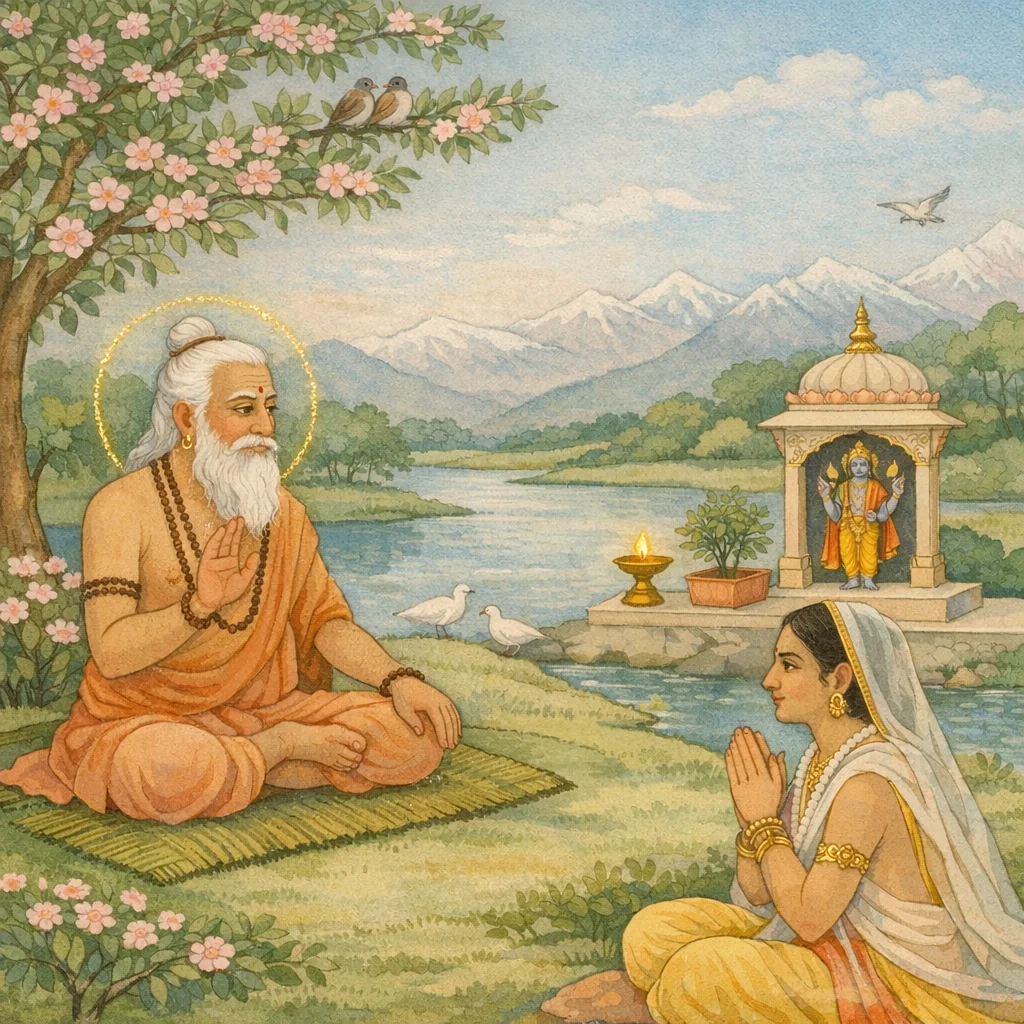
PP.2.38 recounts King Vena’s slide into adharma: rejecting the Veda, he causes sacrifice (yajña) and brāhmaṇical study to collapse, and in self-deification demands exclusive worship, so that sin spreads through his realm. The seven ṛṣis, sons of Brahmā, admonish him to protect the three worlds through dharma; Vena replies arrogantly that he himself is Dharma and must alone be adored. The sages, enraged, pursue him; though he hides in an anthill, they seize him and perform a mythic “churning” of his body. From his left hand arises a fearsome Niṣāda-chief (Barbara), and from his right hand later emerges Pṛthu, the restorer who “milks” the Earth to bring forth prosperity. The chapter closes by linking Vena’s eventual rehabilitation and ascent to a Vaiṣṇava abode to Pṛthu’s merit and to Viṣṇu’s overarching restorative power.
Shlokas
Verse 1
सूत उवाच । एवं संबोधितो वेनः पापभावं गतः किल । पुरुषेण तेन जैनेन महापापेन मोहितः
Sūta said: Thus addressed, King Vena indeed fell into a sinful disposition, deluded by that Jain man—himself a great sinner.
Verse 2
नमस्कृत्य ततः पादौ तस्यैव च दुरात्मनः । वेदधर्मं परित्यज्य सत्यधर्मादिकां क्रियाम्
Then, having bowed at the feet of that very wicked man, he forsook the Vedic dharma and the rites grounded in truth and righteousness.
Verse 3
सुयज्ञानां निवृत्तिः स्याद्वेदानां हितथैव च । पुण्यशास्त्रमयो धर्मस्तदा नैव प्रवर्तितः
There would be a cessation of well-performed sacrifices, and likewise of the welfare that arises from the Vedas; at that time dharma—made of sacred and meritorious śāstric injunctions—would not be set in motion at all.
Verse 4
सर्वपापमयो लोकः संजातस्तस्य शासनात् । नैव यागाश्च वेदाश्च धर्मशास्त्रार्थमुत्तमम्
Because of his rule, the world became wholly steeped in sin; neither sacrificial rites nor the Vedas remained in force, nor did the supreme purport of the Dharmaśāstras endure.
Verse 5
न दानाध्ययनं विप्रास्तस्मिञ्छासति पार्थिवे । एवं धर्मप्रलोपोभून्महत्पापं प्रवर्तितम्
When that king ruled, the brāhmaṇas engaged in neither dāna (charitable giving) nor adhyayana (Vedic study). Thus dharma declined, and great sin came to prevail.
Verse 6
अंगेन वार्यमाणस्तु अन्यथा कुरुते भृशम् । न ननाम पितुः पादौ मातुश्चैव दुरात्मवान्
Though restrained by force, he acted all the more perversely; the wicked-minded one did not bow at the feet of his father, nor at the feet of his mother.
Verse 7
सनकस्यापि विप्रस्य अहमेकः प्रतापवान् । पित्रा निवार्यमाणश्च मात्रा चैव दुरात्मवान्
Even among the kin of the brāhmaṇa Sanaka, I alone was mighty; and though restrained by my father and also by my mother, I remained of wicked disposition.
Verse 8
न करोति शुभं पुण्यं तीर्थदानादिकं कदा । आत्मभावानुरूपं च बहुकालं महायशाः
O highly renowned one, for a long time he performs no auspicious, meritorious deeds—such as pilgrimages to sacred tīrthas and charitable gifts—nor does he act in accord with true self-awareness.
Verse 9
पुनः सर्वैर्विचार्यैवं कस्मात्पापी व्यजायत । अंगप्रजापतेः पुत्रो वंशलाञ्छनमागतः
Then, after everyone had deliberated again in this way, they asked: “Why was this sinful one born? The son of Prajāpati Aṅga has brought a blemish upon the lineage.”
Verse 10
पुनः पप्रच्छ धर्मात्मा सुतां मृत्योर्महात्मनः । कस्य दोषात्समुत्पन्नो वद सत्यं मम प्रिये
Again the righteous one questioned the daughter of great-souled Death: “From whose fault did this affliction arise? Speak the truth, my beloved.”
Verse 11
सुनीथोवाच । पूर्वमेव स्ववृत्तांतमात्मपुण्यं च नंदिनी । समाचष्ट च अंगाय मम दोषान्महामते
Sunīthā said: Earlier, Nandinī had already related to Aṅga her own account and her personal merit; and, O great sage, she also told him of my faults.
Verse 12
बाल्ये कृतं मया पापं सुशंखस्य महात्मनः । तपसि संस्थितस्यापि नान्यत्किंचित्कृतं मया
In my childhood I committed a sin against the great-souled Suśaṅkha. Even while he was established in austerity (tapas), I did nothing else to make amends.
Verse 13
शप्ताहं कुप्यता तेन दुष्टा ते संततिर्भवेत् । इति जाने महाभाग तेनायं दुष्टतां गतः
“If he remains angry for a full seven days, your progeny will become wicked.” Thus I understand, O noble one; because of that, this one has fallen into depravity.
Verse 14
समाकर्ण्य महातेजास्तया सह वनं ययौ । गते तस्मिन्महाभागे सभार्ये च वने तदा
Hearing her words, the radiant one went with her into the forest. When that noble man had thus gone into the forest together with his wife, then…
Verse 15
सप्तैते ऋषयस्तत्र वेनपार्श्वं गतास्तथा । समाहूय ततः प्रोचुरंगस्य तनयं प्रति
There, those seven ṛṣis likewise went to Vena’s side; then, having summoned him, they spoke to the son of Aṅga.
Verse 16
ऋषय ऊचुः । मा वेन साहसं कार्षीःप्रजापालो भवानिह । त्वया सर्वमिदं लोकं त्रैलोक्यं सचराचरम्
The sages said: “O Vena, do not act rashly. Here you are the protector of the people. By you this entire world—indeed the three worlds, with all that moves and all that does not—must be safeguarded.”
Verse 17
धर्मे चैव महाभाग सकलं हि प्रतिष्ठितम् । पापकर्मपरित्यज्य पुण्यं कर्म समाचर
O noble one, all is indeed established in Dharma. Therefore, abandoning sinful deeds, practice actions that are meritorious.
Verse 18
एवमुक्तेषु तेष्वेव प्रहसन्वाक्यमब्रवीत् । वेन उवाच । अहमेव परो धर्मोऽहमेवार्हः सनातनः
When they had spoken thus, he laughed and replied. Vena said: “I alone am the supreme Dharma; I alone am the Eternal, worthy of worship.”
Verse 19
अहं धाता अहं गोप्ता अहं वेदार्थ एव च । अहं धर्मो महापुण्यो जैनधर्मः सनातनः
I am the Creator; I am the Protector; I am indeed the very meaning of the Vedas. I am Dharma, supremely meritorious—the eternal Jain Dharma.
Verse 20
मामेव कर्मणा विप्रा भजध्वं धर्मरूपिणम् । ऋषय उचुः । ब्राह्मणाः क्षत्त्रिया वैश्यास्त्रयोवर्णा द्विजातयः
“O Brahmins, worship Me alone through your prescribed duties, for I am Dharma embodied.” The sages said: “Brahmins, Kṣatriyas, and Vaiśyas—these three social orders are the twice-born.”
Verse 21
सर्वेषामेव वर्णानां श्रुतिरेषा सनातनी । वेदाचारेण वर्तंते तेन जीवंति जंतवः
For all the social orders, this is the eternal teaching of the Śruti: beings live by conducting themselves according to Vedic discipline.
Verse 22
ब्रह्मवंशात्समुद्भूतो भवान्ब्राह्मण एव च । पश्चाद्राजा पृथिव्याश्च संजातः कृतविक्रमः
Born from the lineage of Brahmā, you are indeed a brāhmaṇa; and later you were born as a king of the earth, whose valor has been proven by deeds.
Verse 23
राजपुण्येन राजेंद्र सुखं जीवंति वै द्विजाः । राज्ञः पापेन नश्यंति तस्मात्पुण्यं समाचर
O lord of kings, by the king’s merit the twice-born live in happiness; by the king’s sin they perish. Therefore, practice puṇya—righteous merit.
Verse 24
समादृतस्त्वया धर्मः कृतश्चापि नराधिप । त्रेतायुगस्य कर्मापि द्वापरस्य तथा नहि
O lord of men, you have duly honored and practiced dharma; you have also performed the rites proper to the Tretā age—yet not in the same manner as in the Dvāpara age.
Verse 25
कलेश्चैव प्रवेशं तु वर्त्तयिष्यंति मानवाः । जैनधर्मं समाश्रित्य सर्वे पापप्रमोहिताः
And indeed, men will usher in the entry of the Kali age; taking refuge in the Jaina religion, all will be deluded by sin.
Verse 26
वेदाचारं परित्यज्य पापं यास्यंति मानवाः । पापस्य मूलमेवं वै जैनधर्मं न संशयः
Abandoning the Vedic code of conduct, people will fall into sin. Thus it is said that the Jaina religion is the root of sin—of this there is no doubt.
Verse 27
अनेन मुग्धा राजेंद्र महामोहेन पातिताः । मानवाः पापसंघातास्तेषां नाशाय नान्यथा
By this, O king, people—deluded and cast down by great infatuation—become masses of sin; for their destruction there is no other way.
Verse 28
भविष्यत्येव गोविंदः सर्वपापापहारकः । स्वेच्छारूपं समासाद्य संहरिष्यति पातकात्
Govinda will indeed manifest—the remover of all sins; assuming a form of His own free will, He will destroy (beings) because of their wrongdoing.
Verse 29
पापेषु संगतेष्वेवं म्लेच्छनाशाय वै पुनः । कल्किरेव स्वयं देवो भविष्यति न संशयः
When sins have thus accumulated, then again—surely for the destruction of the mlecchas—the Lord Himself will become Kalki; of this there is no doubt.
Verse 30
व्यवहारं कलेश्चैव त्यज पुण्यं समाश्रय । वर्तयस्व हि सत्येन प्रजापालो भवस्व हि
Abandon worldly dealings born of the Kali age and take refuge in merit. Conduct yourself in truth, and indeed become a protector of the people.
Verse 31
वेन उवाच । अहं ज्ञानवतां श्रेष्ठः सर्वं ज्ञातं मया इह । योऽन्यथा वर्तते चैव स दंड्यो भवति ध्रुवम्
Vena said: “I am the foremost among the wise; everything here is known by me. Whoever acts otherwise is certainly fit to be punished.”
Verse 32
अत्यर्थं भाषमाणं तं राजानं पापचेतनम् । कुपितास्ते महात्मानः सर्वे वै ब्रह्मणः सुताः
Seeing that sinful-minded king speaking with excessive arrogance, all those great-souled sons of Brahmā were inflamed with wrath.
Verse 33
कुपितेष्वेव विप्रेषु वेनो राजा महात्मसु । ब्रह्मशापभयात्तेषां वल्मीकं प्रविवेश ह
When the great-souled brāhmaṇas became enraged, King Vena—afraid of their Brahminical curse—entered into an anthill.
Verse 34
अथ ते मुनयः क्रुद्धा वेनं पश्यंति सर्वतः । ज्ञात्वा प्रनष्टं भूपं तं वल्मीकस्थं सुसांप्रतम्
Then those sages, enraged, searched for Vena on every side; and learning that the king had vanished, they found him now lodged within an anthill.
Verse 35
बलादानिन्युस्तं विप्राः क्रूरं तं पापचेतनम् । दृष्ट्वा च पापकर्माणं मुनयः सुसमाहिताः
The brāhmaṇas forcibly brought that cruel man of sinful mind. Seeing him engaged in evil deeds, the sages became firmly composed and attentive.
Verse 36
सव्यं पाणिं ममंथुस्ते भूपस्य जातमन्यवः । तस्माज्जातो महाह्रस्वो नीलवर्णो भयंकरः
Overcome by anger, they churned the king’s left hand; from it arose a being of very short stature, blue-complexioned, and terrifying to behold.
Verse 37
बर्बरो रक्तनेत्रस्तु बाणपाणिर्धनुर्द्धरः । सर्वेषामेव पापानां निषादानां बभूव ह
Barbara, red-eyed, with arrows in his hand and bearing a bow, indeed became the chief of all the sinful Niṣādas.
Verse 38
इति श्रीपद्मपुराणे भूमिखंडे वेनोपाख्यानेऽष्टत्रिंशोऽध्यायः
Thus ends the thirty-eighth chapter, the narration of (King) Vena, in the Bhūmi-khaṇḍa of the revered Padma Purāṇa.
Verse 39
ममंथुर्दक्षिणं पाणिं वेनस्यापि महात्मनः । तस्माज्जातो महात्मा स येन दुग्धा वसुंधरा
They churned even the right hand of the great-souled Vena; from it was born that great person by whom the Earth was ‘milked’, made to yield her produce.
Verse 40
पृथुर्नाम महाप्राज्ञो राजराजो महाबलः । तस्य पुण्यप्रसादाच्च वेनो धर्मार्थकोविदः
There was a king named Pṛthu—supremely wise, a king of kings, and exceedingly mighty. By the gracious fruit of his merit, even Vena became one who understood dharma and artha.
Verse 41
चक्रवर्तिपदं भुक्त्वा प्रसादात्तस्य चक्रिणः । जगाम वैष्णवं लोकं तद्विष्णोः परमं पदम्
Having enjoyed the status of a universal sovereign through the grace of that emperor, he went to the Vaiṣṇava world—Viṣṇu’s supreme abode.