Adhyaya 35
Counsel to Sunīthā in the Vena Narrative: Boon for a Righteous Son and the Seed–Fruit Law of Karma
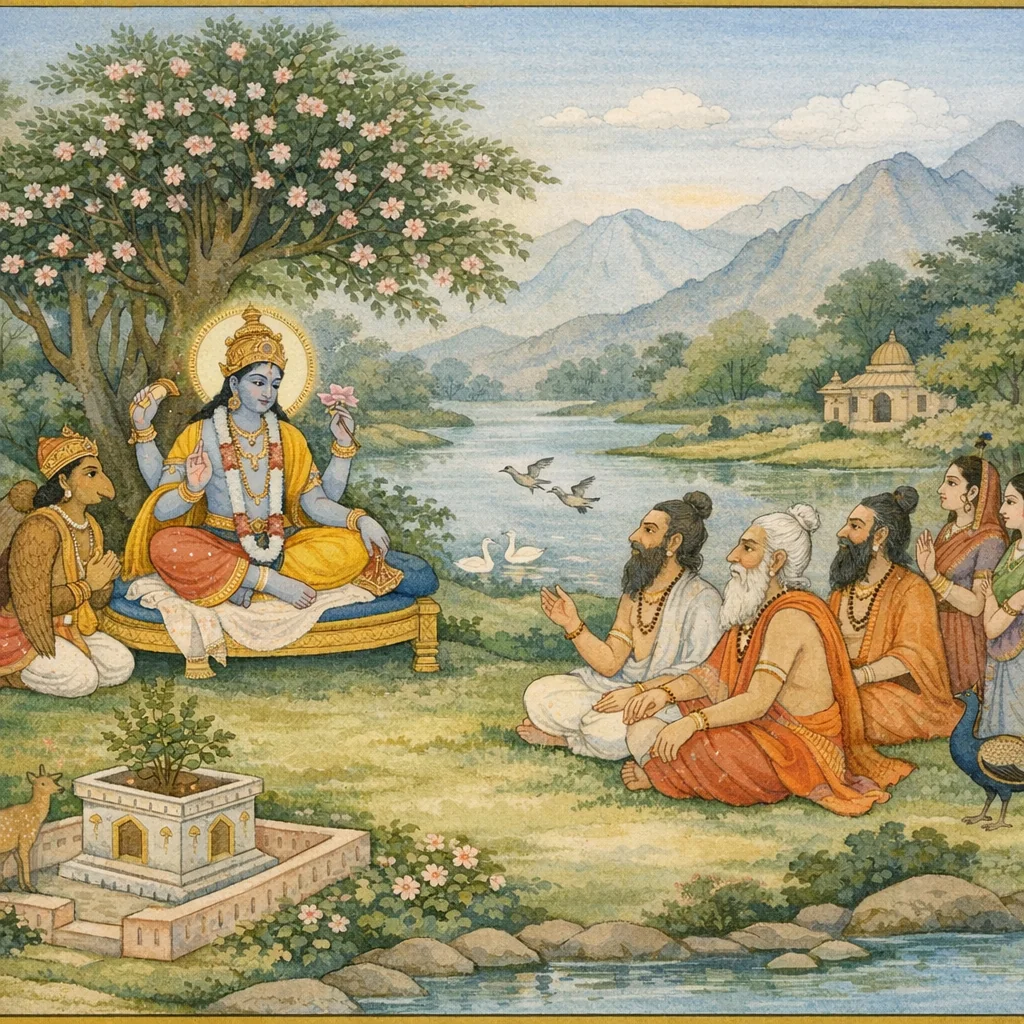
Chapter 35, within the Vena-upākhyāna, frames a scene of counsel to a woman later identified as Sunīthā, weaving lineage, aspiration, and karmic causality. Rambhā recalls the primordial line of Brahmā, Prajāpati, and Atri, and tells how Aṅga, beholding Indra’s splendor, conceived the wish for an Indra-like son. The narrative turns to devotional resolve: worship of Hṛṣīkeśa through tapas and observances, leading to a boon-request and Viṣṇu’s gift of a son who destroys sin and upholds dharma. The addressee is urged to accept a worthy husband; even a prior curse is said to lose its force once a dharma-propagating son is born. A central Purāṇic ethic is stated: the fruit arises according to the “seed” sown—everything resembles its cause. Sunīthā reflects and assents to the truth of this instruction.
Shlokas
Verse 1
रंभोवाच । ब्रह्मा अव्यक्तसंभूतस्तस्माज्जज्ञे प्रजापतिः । अत्रिर्नाम स धर्मात्मा तस्य पुत्रो महामनाः
Rambhā said: “Brahmā arose from the Unmanifest; from him Prajāpati was born. That righteous-souled one was named Atri, and his son was the great-minded one.”
Verse 2
अंगो नाम अयं भद्रे नंदनं वनमागतः । इंद्रस्य संपदं दृष्ट्वा लीलातेजसमुत्तमाम्
O gentle lady, this person named Aṅga came to the Nandana grove; and, seeing Indra’s prosperity—his supreme splendor, displayed as if in effortless play—he was struck with wonder.
Verse 3
कृता स्पृहा अनेनापि इंद्रस्य सदृशे पदे । ईदृशो हि यदा पुत्रो मम स्याद्धर्मसंयुतः
Through him, a longing has arisen in me even for a rank equal to Indra’s; for when I have such a son—endowed with righteousness (Dharma)—then indeed my aspirations are fulfilled.
Verse 4
सुश्रेयो मे भवेज्जन्म यशः कीर्ति समन्वितम् । आराधितो हृषीकेशस्तपोभिर्नियमैस्तथा
May my birth be most auspicious, endowed with honor and fame; and may Hṛṣīkeśa be worshipped likewise through austerities and disciplined observances.
Verse 5
सुप्रसन्ने हृषीकेशे वरं याचितवानयम् । इंद्रस्य सदृशं पुत्रं विष्णुतेजः पराक्रमम्
When Hṛṣīkeśa (Viṣṇu) was greatly pleased, this one asked for a boon: a son like Indra—endowed with Viṣṇu’s radiance and heroic prowess.
Verse 6
वैष्णवं सर्वपापघ्नं देहि मे मधुसूदन । दत्तवान्स तदा पुत्रमीदृशं सर्वधारकम्
“O Madhusūdana, grant me a son devoted to Viṣṇu, a destroyer of all sins.” Then he granted a son of that very kind—one who was a support to all.
Verse 7
तदाप्रभृति विप्रेंद्रः पुण्यां कन्यां प्रपश्यति । यथा त्वं चारुसर्वांगी तथायं परिपश्यति
From that time onward, the best of brāhmaṇas keeps looking upon that virtuous maiden; just as you are lovely in every limb, so does he gaze upon her.
Verse 8
एनं गच्छ वरारोहे अस्मात्पुत्रो भविष्यति । पुण्यात्मा पुण्यधर्मज्ञो विष्णुतेजः पराक्रमः
Go to him, O fair-hipped lady; from him a son will be born to you—virtuous in soul, skilled in the ways of righteous merit, possessing Viṣṇu’s splendor, and mighty in valor.
Verse 9
एतत्ते सर्वमाख्यातं तथाहं पृच्छिता त्वया । अयं भर्ता भवत्यर्हो भवेदेव न संशयः
Thus, I have told you everything—just as you asked me. This man is indeed worthy to be your husband; of that there is no doubt.
Verse 10
सुशंखस्यापि यः शापो वृथा सोऽपि भविष्यति । अस्माज्जाते महाभागे पुत्रे धर्मप्रचारिणि
Even the curse pronounced by Suśaṅkha will turn out to be futile, once this noble son—who will propagate dharma—is born from us.
Verse 11
भविष्यसि सुखी भद्रे सत्यं सत्यं वदाम्यहम् । सुक्षेत्रे कृषिकारस्तु बीजं वपति तत्परः
You will be happy, O auspicious one—truth, truth, I tell you. Indeed, the farmer, intent upon his work, sows seed in a well-prepared field.
Verse 12
स तथा भुंजते देवि यथा बीजं तथा फलम् । अन्यथा नैव जायेत तत्सर्वं सदृशं भवेत्
O Goddess, beings experience the fruit exactly according to the seed (cause) they have sown. Otherwise it would not arise; everything comes to resemble its own cause.
Verse 13
अयमेष महाभागस्तपस्वी पुण्यवीर्यवान् । अस्य वीर्यात्समुत्पन्नो अस्यैवगुणसंपदा
This very one is a most fortunate ascetic, endowed with holy potency. From his vigor has arisen one who possesses the very same wealth of virtues as he.
Verse 14
युक्तः पुत्रो महातेजाःसर्वदेहभृतां वरः । भविष्यति महाभाग्यो युक्तात्मा योगतत्ववित्
A disciplined son, of great splendor—the best among all embodied beings—will be born. He will be most fortunate, self-controlled, and a knower of the true principles of Yoga.
Verse 15
एवं हि वाक्यं तु निशम्य बाला रंभाप्रियोक्तं शिवदायकं तत् । विचिंत्य बुद्ध्येह सुनीथया तदा तत्त्वार्थमेतत्परिसत्यमेव हि
Having heard these words—spoken by Rambhā’s beloved and bestowing auspiciousness—the young woman Sunīthā reflected and concluded: “The essential meaning of this is indeed completely true.”
Verse 35
इति श्रीपद्मपुराणे भूमिखंडेवेनोपाख्याने पंचत्रिंशोऽध्यायः
Thus ends the thirty-fifth chapter of the Bhūmi-khaṇḍa in the Śrī Padma Purāṇa, in the section known as the Vena-upākhyāna.