Adhyaya 31
The Episode Leading to Vena: Aṅga Learns the Cause of Indra’s Sovereignty
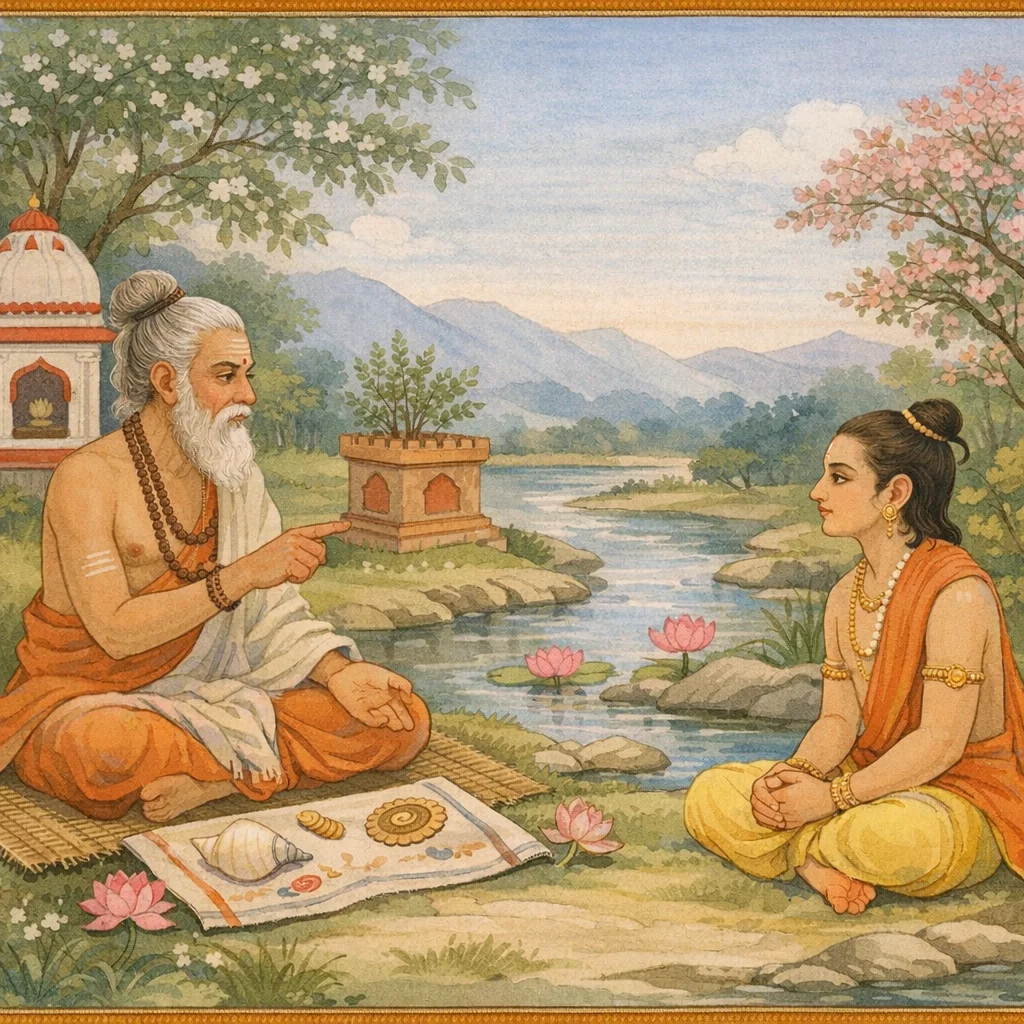
Seeing Indra’s prosperity and splendor, King Aṅga longs to obtain a righteous son equal to Indra. Returning home, he bows to his father, Sage Atri, and asks what merit and former austerity brought about Indra’s sovereignty and abundance. Atri praises the question and recounts Indra’s prior cause: long ago a learned brāhmaṇa named Suvrata pleased Kṛṣṇa/Hṛṣīkeśa through tapas and devotion. Reborn as Puṇyagarbha to Aditi and Kaśyapa, he became Indra by the grace of Viṣṇu. The teaching culminates in bhakti: Govinda is pleased by heartfelt devotion and contemplative meditation, and when satisfied grants every aim—including a son like Indra. Accepting this counsel, Aṅga bows and sets out toward Mount Meru, thus preparing the ground for the episode of Vena.
Shlokas
Verse 1
सूत उवाच । अथ त्वंगो महातेजा दृष्ट्वा इंद्रस्य संपदम् । भोगं चैव विलासं च लीलां तस्य महात्मनः
Sūta said: Then Aṅga, greatly radiant, having beheld Indra’s prosperity—his enjoyments, his splendor, and the līlā, the sportive pastimes of that great-souled lord—(reflected upon them).
Verse 2
कथं मे इंद्र सदृशः पुत्रः स्याद्धर्मसंयुतः । चिंतयित्वा क्षणं चैव अंगो धर्मभृतां वरः
“How might I have a son like Indra, endowed with dharma?” Having reflected for a moment, Aṅga—foremost among the upholders of dharma—(considered further).
Verse 3
स्वकं गेहं समायातः स त्वंगः सत्यतत्परः । अत्रिं पप्रच्छ पितरं प्रणतो नम्रकंधरः
Having returned to his own home, Aṅga—steadfastly devoted to truth—bowed with humbled neck and questioned his father Atri.
Verse 4
कोऽयं पुण्यः समाचारैरिंद्रत्वं भुंजते महत् । कस्य पुण्यस्य वै पुष्टिः किं कृतं कर्म कीदृशम्
By what meritorious conduct does one enjoy the great sovereignty of Indra? From which virtue does such prosperity arise? What deed was performed, and of what kind was that action?
Verse 5
कीदृशं तप एतस्य कमाराधितवान्पुरा । एतन्मे विस्तरेण त्वं ब्रूहि सत्यवतां वर
What kind of austerity did he perform in former times, by which he propitiated Kāma? Tell me this in detail, O best among the truthful.
Verse 6
अत्रिरुवाच । साधुसाधु महाभाग यद्येवं पृच्छसे मयि । चरित्रमिंद्रस्य वत्स तन्मे निगदतः शृणु
Atri said: “Well done, well done, noble one—since you ask me in this way. Dear child, listen as I relate to you the story of Indra.”
Verse 7
सुव्रतो नाम मेधावी पुरा ब्राह्मणसत्तमः । तेन कृष्णो हृषीकेशस्तपसा चैव तोषितः
In ancient times there was an excellent Brahmin, wise and discerning, named Suvrata; by his austerities, Kṛṣṇa—Hṛṣīkeśa—was indeed pleased.
Verse 8
पुण्यगर्भं पुनः प्राप्तो ह्यदित्याः कश्यपात्किल । विष्णोश्चैव प्रसादेन सुरराजो बभूव ह
Indeed, he was born again as Puṇyagarbha from Aditi and Kaśyapa; and by the grace of Viṣṇu he became the king of the gods.
Verse 9
अंग उवाच । कथमिंद्रसमः पुत्रो मम स्यात्पुत्रवत्सल । तदुपायं समाचक्ष्व भवाञ्ज्ञानवतां वरः
Aṅga said: “O affectionate one who loves sons, how may I have a son equal to Indra? Tell me the means to that, for you are the best among the wise.”
Verse 10
अत्रिरुवाच । समासेनैव तस्यैव सुव्रतस्य महात्मनः । चरित्रमखिलं पुण्यं निशामय महामते
Atri said: O great-minded one, listen as I relate—briefly—the entire sacred and meritorious life-story of that very noble, virtuous great soul (Suvrata).
Verse 11
यथा सुव्रत मेधावी पुराराधितवान्हरिम् । तस्य भावं च भक्तिं च ध्यानं चैव महात्मनः
(I shall tell) how the wise Suvrata formerly worshipped Hari—along with the inner disposition, devotion, and meditation of that great-souled person.
Verse 12
समालोक्य जगन्नाथो दत्तवान्वै महत्पदम् । स ऐंद्रं सर्वभोगाढ्यं त्रैलोक्यं सचराचरम्
Having looked on, the Lord of the universe indeed bestowed the great sovereign station—Indra’s realm—abounding in every enjoyment: the three worlds, with all that moves and all that is unmoving.
Verse 13
विष्णोश्चैव प्रसादाच्च पदं भुंक्ते त्रिलोकधृक् । एवं ते सर्वमाख्यातमिंद्रस्यापि विचेष्टितम्
Indeed, by the grace of Viṣṇu, the Sustainer of the three worlds, he enjoys his rank. Thus, everything—including Indra’s deeds—has been fully explained to you.
Verse 14
भक्त्या तुष्यति गोविंदो भावध्यानेन सत्तम । सर्वं ददाति तुष्टात्मा भक्त्या संतोषितो हरिः
O best of the virtuous, Govinda is pleased by devotion and by contemplative meditation filled with heartfelt feeling. When Hari is satisfied through bhakti, rejoicing within, He grants everything.
Verse 15
तस्मादाराध्य गोविंदं सर्वदं सर्वसंभवम् । सर्वज्ञं सर्ववेत्तारं सर्वेषां पुरुषं वरम्
Therefore worship Govinda—who grants all, from whom all arises; who is all-knowing, the knower of everything, the Supreme Person, the best among all beings.
Verse 16
तस्मात्प्राप्स्यसि सर्वं त्वं यद्यदिच्छसि नंदन
Therefore, my son, you shall obtain everything—whatever you wish for.
Verse 17
सुखस्य दाता परमार्थदाता मोक्षस्य दाता जगतां हि नाथः । तस्मात्तमाराधय गच्छ पुत्र संप्राप्स्यसे इंद्रसमं हि पुत्रम्
He is the giver of happiness, the giver of the highest good, and the giver of liberation (mokṣa)—the Lord of the worlds. Therefore go and worship Him, my son; indeed, you will obtain a son equal to Indra.
Verse 18
आकर्ण्य वाक्यं परमार्थयुक्तमुक्तं महात्मा ऋषिणा हि तेन । संगृह्य तत्त्वं वचनस्य तस्य प्रणम्य तं शाश्वतमभ्ययात्सः
Having heard those words—spoken by that great ṛṣi and filled with the highest truth—the noble one grasped their essential meaning; and, bowing to that eternal sage, he departed.
Verse 19
आमंत्र्य चांगः पितरं महात्मा ब्रह्मात्मजं ब्रह्मसमानमेव । संप्राप्तवान्मेरुगिरेस्तु शृंगं तं कांचनै रत्नमयैः समेतम्
Having duly invited his father—the great-souled son of Brahmā, equal to Brahmā himself—King Aṅga reached the peak of Mount Meru, adorned with golden, jewel-made splendors.
Verse 31
इति श्रीपद्मपुराणे पंचपंचाशत्सहस्रसंहितायां भूमिखंडे । वेनोपाख्याने एकत्रिंशोऽध्यायः
Thus ends the thirty-first chapter, “The Episode of Vena,” in the Bhūmi-khaṇḍa of the Śrī Padma Purāṇa, within the compendium of fifty-five thousand verses.