Adhyaya 23
Bala: The Rise and Slaying of the Dānava (and the Devas’ Restoration)
The sages praise this sin-dispelling account and ask Sūta to explain creation and dissolution; Sūta promises a detailed narration whose hearing grants profound knowledge. The discourse then turns to the deva–daitya cycle: after Viṣṇu destroys Hiraṇyakaśipu and Hiraṇyākṣa through his avatāras (Narasiṃha and Varāha), the devas regain their stations and yajña flourishes again. Diti, grieving her slain sons, approaches Kaśyapa and asks for a world-conquering son; the boon is granted, and Bala is born, named, initiated, and trained in brahmacarya and Vedic discipline. Danu urges Bala to avenge the asura line by slaying Indra and the gods. Aditi warns Indra, and Indra—fearful yet resolute—strikes Bala down during twilight worship on the bank of the Sindhu/by the seashore, restoring deva rule and peace.
Shlokas
Verse 1
ऋषय ऊचुः । विचित्रेयं कथा पुण्या धन्या यशोविधायिनी । सर्वपापहरा प्रोक्ता भवता वदतां वर
The sages said: “This narrative is wondrous—holy, auspicious, and fame-bestowing. It has been declared by you, O best of speakers, to be the remover of all sins.”
Verse 2
सृष्टिसंबंधमेतन्नस्तद्भवान्वक्तुमर्हति । पूर्वमेव यथासृष्टिर्विस्तरात्सूतनंदन
Please be so kind as to explain to us this matter connected with creation—how creation took place in the beginning, in detail, O son of Sūta.
Verse 3
सूत उवाच । विस्तरेण प्रवक्ष्यामि सृष्टिसंहारकारणम् । श्रुतमात्रेण यस्यापि नरः सर्वज्ञतां व्रजेत्
Sūta said: “I shall explain in detail the cause of creation and dissolution—hearing which alone, a person may attain omniscience.”
Verse 4
हिरण्यकश्यपेनापि व्यापितं भुवनत्रयम् । तपसाराध्य प्रबह्माणं वरं प्राप्तं सुदुर्लभम्
Even Hiraṇyakaśyapa overran the three worlds; and by austerity, having propitiated Brahmā, he obtained a boon that is exceedingly difficult to gain.
Verse 5
तस्माद्देवान्महाभागादमरत्वं तथैव च । देवांल्लोकान्स संव्याप्य प्रभुत्वं स्वयमर्जितम्
Therefore, from that greatly fortunate one, the gods likewise obtained immortality; and he, pervading the worlds of the gods, won sovereignty by his own effort.
Verse 6
ततो देवाः सगंधर्वा मुनयो वेदपारगाः । नागाश्च किन्नराः सिद्धा यक्षाश्चैव तथापरे
Then the gods, together with the Gandharvas and the sages who had mastered the Vedas, as well as the Nāgas, Kinnaras, Siddhas, Yakṣas, and other such beings too, assembled.
Verse 7
ब्रह्माणं तु पुरस्कृत्य जग्मुर्नारायणं प्रभुम् । क्षीरसागरसंसुप्तं योगनिद्रां गतं प्रभुम्
Placing Brahmā at their forefront, they went to Lord Nārāyaṇa—the Supreme Master—who lay asleep upon the Ocean of Milk, having entered yogic sleep.
Verse 8
तं संबोध्य महास्तोत्रैर्देवाः प्रांजलयस्तथा । संबुद्धे सति देवेशे वृत्तं तस्य दुरात्मनः
Then the gods, with joined palms, awakened him with great hymns of praise; and when the Lord of the gods had been roused, they related to him the episode concerning that wicked-souled one.
Verse 9
आचचक्षुर्महाप्राज्ञ समाकर्ण्य जगत्पतिः । नृसिंहरूपमास्थाय हिरण्यकशिपुं व्यहन्
O great sage, having heard their words, the Lord of the universe assumed the form of Narasiṃha and struck down Hiraṇyakaśipu.
Verse 10
पुनर्वाराहरूपेण हिरण्याक्षो महाबलः । उद्धृता वसुधा पुण्या असुरो घातितस्तदा
Then again, assuming the form of the Boar (Varāha), the mighty Hiraṇyākṣa was slain, and the holy Earth was lifted up.
Verse 11
अन्यांश्चघातयामास दानवान्घोरदर्शनान् । एवं चैतेषु नष्टेषु दानवेषु महत्सु च
And he caused other Dānavas, dreadful to behold, to be slain. Thus, when those great Dānavas too had been destroyed, ...
Verse 12
अन्येषु तेषु नष्टेषु दितिपुत्रेषु वै तदा । पुनः स्थानेषु प्राप्तेषु देवेषु च महत्सु च
Then, when those other sons of Diti had been destroyed, and the great gods had once again regained their proper stations,
Verse 13
यज्ञेष्वेव प्रवृत्तेषु सर्वेषु धर्मकर्मसु । सुस्थेषु सर्वलोकेषु सा दितिर्दुःखपीडिता
When sacrifices (yajñas) were in full flow, when all works of dharma were being carried out, and when all the worlds were prosperous and at peace—then Diti alone was tormented by sorrow.
Verse 14
पुत्रशोकेन संतप्ता हाहाभूता विचेतना । भर्तारं सूर्यसंकाशं तपस्तेजः समन्वितम्
Scorched by grief for her son, crying “alas, alas,” and nearly out of her senses, she approached her husband—radiant like the sun and endowed with the fiery splendor of austerity (tapas).
Verse 15
दातारं च महात्मानं भर्तारं कश्यपं तदा । भक्त्या प्रणम्य विप्रेन्द्र तमुवाच महामतिम्
Then, bowing with devotion to Kaśyapa—her noble husband, the great-souled benefactor—she spoke to that supremely wise one, O best of brāhmaṇas.
Verse 16
भगवन्नष्टपुत्राहं कृता देवेन चक्रिणा । दैतेया दानवाः सर्वे देवैश्चैव निपातिताः
O Blessed Lord, the discus-bearing God has made me bereft of my sons; and all the Daityas and Dānavas as well have been struck down by the gods.
Verse 17
पुत्रशोकानलेनाहं संतप्ता मुनिसत्तम । ममानंदकरं पुत्रं सर्वतेजोहरं विभो
Burned by the fire of grief for my son, O best of sages, I am tormented. O Lord, my son—the source of my joy—has taken away all my radiance.
Verse 18
सुबलं चारुसर्वांगं देवराजसमप्रभम् । बुद्धिमंतं सुसर्वज्ञं ज्ञातारं सर्वपंडितम्
He was very strong, handsome in every limb, and radiant like the king of the gods; intelligent, truly all-knowing, discerning, and foremost among all learned men.
Verse 19
तपस्तेजः समायुक्तं सबलं चारुलक्षणम् । ब्रह्मण्यं ज्ञानवेत्तारं देवब्राह्मणपूजकम्
Endowed with the radiance born of austerity, strong and marked by auspicious features—devoted to Brahman, a knower of true wisdom, one who worships the gods and honors the brāhmaṇas.
Verse 20
जेतारं सर्वलोकानां ममानंदकरं द्विज । सर्वलक्षणसंपन्नं पुत्रं मे देहि त्वं विभो
O brāhmaṇa, grant me a son—one who conquers all worlds, who brings me joy, and who is endowed with every auspicious mark, O mighty one.
Verse 21
एवमाकर्ण्य वै तस्याः कश्यपो वाक्यमुत्तमम् । कृपाविष्टमनास्तुष्टो दुःखिताया द्विजोत्तम
Having thus heard her excellent words, Kaśyapa—the foremost of twice-born—his mind filled with compassion, was pleased, though moved by the sorrow of that afflicted woman.
Verse 22
तामुवाच महाभाग कृपणां दीनमानसाम् । तस्याः शिरसि संन्यस्य स्वहस्तं भावतत्परः
The noble one spoke to her—poor and heavy-hearted—placing his own hand upon her head, fully intent in compassionate feeling.
Verse 23
इति श्रीपद्मपुराणे पंचपंचाशत्सहस्रसंहितायां भूमिखंडे बल । दैत्यवधोनाम त्रयोविंशोऽध्यायः
Thus ends the twenty-third chapter, called “Bala—The Slaying of the Daityas,” in the Bhūmi-khaṇḍa of the Śrī Padma Purāṇa, within the compilation of fifty-five thousand verses.
Verse 24
तपस्तेपे निरालंबः साधयन्परमव्रतः । एतस्मिन्नंतरे सा तु दधार गर्भमुत्तमम्
Unsupported by any aid, he performed austerities, steadfast in the supreme vow. Meanwhile, she conceived an excellent child in her womb.
Verse 25
सा दितिः सर्वधर्मज्ञा चारुकर्मा मनस्विनी । शतवर्षप्रमाणं सा शुचि स्वांता बभूव ह
That Diti—knower of all dharma, graceful in conduct, and steadfast in mind—lived for a hundred years, remaining pure and inwardly serene.
Verse 26
तया वै जनितः पुत्रो ब्रह्मतेजः समन्वितः । अथ कश्यप आयातो हर्षेण महतान्वितः
By her, indeed, a son was born, endowed with the radiance of Brahman. Then Kaśyapa arrived, filled with great joy.
Verse 27
चकार नाम मेधावी तस्य पुत्रस्य सत्तमः । बलमित्यब्रवीत्पुत्रं नामतः सदृशो महान्
That intelligent and excellent man gave a name to his son; he called the boy “Bala,” and the great child truly lived up to his name.
Verse 28
एवं नाम चकाराथ व्रतबंधं चकार सः । प्राह पुत्र महाभाग ब्रह्मचर्यं प्रसाधय
Thus he performed the naming, and he also carried out the rite of initiating him into vows. Then he said, “O highly fortunate son, duly undertake brahmacarya—the disciplined, celibate student-life.”
Verse 29
एवमेवं करिष्यामि तव वाक्यं द्विजोत्तम । वेदस्याध्ययनं कुर्यां ब्रह्मचर्येण सत्तम
“So be it—I shall do exactly as you say, O best of the twice-born. I will study the Veda while observing brahmacarya, O noble one.”
Verse 30
एवं वर्षशतं साग्रं गतं तस्य तपस्यतः । मातुः समक्षमायातस्तपस्तेजः समन्वितः
Thus, after a little more than a hundred years had passed while he was engaged in austerities, he came into his mother’s presence, endowed with the radiance born of penance.
Verse 31
तपोवीर्यमयं दिव्यं ब्रह्मचर्यं महात्मनः । दितिः पश्यति पुत्रस्य हर्षेण महतान्विता
Diti beheld, with great joy, the divine celibacy of her noble son—filled with the potency born of austerity.
Verse 32
तमुवाच महात्मानं बलं पुत्रं तपस्विनम् । मेधाविनं महात्मानं प्रज्ञाज्ञानविशारदम्
He then addressed Bala, his son—an ascetic of great soul, intelligent and noble, and highly accomplished in wisdom and knowledge.
Verse 33
त्वयि जीवति मेधाविन्प्रजीवंति सुता मम । हिरण्यकशिपाद्यास्ते ये हताश्चक्रपाणिना
So long as you live, O wise one, my sons will continue to live on—those beginning with Hiraṇyakaśipu, who were slain by the discus-bearing Lord.
Verse 34
वैरं साधय मे वत्स जहि देवान्रिपून्रणे । सा दनुस्तमुवाचेदं बलं पुत्रं महाबलम्
“Avenge my enmity, my child; slay the gods—our foes—in battle.” Thus Danu spoke these words to her son Bala, the mighty one.
Verse 35
आदाविंद्रं हि देवेंद्रं द्रुतं सूदय पुत्रक । पश्चाद्देवा निपात्यंतां ततो गरुडवाहनः
“First, swiftly strike down Indra, lord of the devas, my son. After that, let the other gods be cast down; then confront the One who rides upon Garuḍa.”
Verse 36
तयोराकर्ण्य सा देवी अदितिः पतिदेवता । दुःखेन महताविष्टा पुत्रमिंद्रमभाषत
Hearing their words, the goddess Aditi—who revered her husband as her very deity—overwhelmed by great sorrow, spoke to her son Indra.
Verse 37
दितिपुत्रो महाकायो वर्द्धते ब्रह्मतेजसा । देवानां हि वधार्थाय तपस्तेपे निरंजने
Diti’s son, of enormous body, grew by the splendor born of Brahmā’s might. Indeed, intent on slaying the devas, he performed austerities in the spotless wilderness.
Verse 38
एवं जानीहि देवेश यदि क्षेममिहेच्छसि । एवमाकर्ण्य तद्वाक्यं स मातुः पाकशासनः
“Know it thus, O Lord of the devas, if you desire well-being here.” Hearing those words in this manner, Pākaśāsana (Indra), his mother’s son, acted accordingly.
Verse 39
चिंतामवाप दुःखेन महतीं देवराट्तदा । महाभयेन संत्रस्तश्चिंतयामास वै ततः
Then the king of the devas was seized by profound anxiety born of sorrow; terrified by a great fear, he began to ponder what should be done next.
Verse 40
कथमेनं हनिष्यामि देवधर्मविदूषकम् । इति निश्चित्य देवेशो बलस्य निधनं प्रति
“How shall I slay this defiler of the gods’ sacred dharma?”—thus resolved, the Lord of the devas set his mind upon Bala’s destruction.
Verse 41
एकदा हि बलः सोपि संध्यार्थं सिंधुमाश्रितः । कृष्णाजिनेन दिव्येन दंडकाष्ठेन राजितः
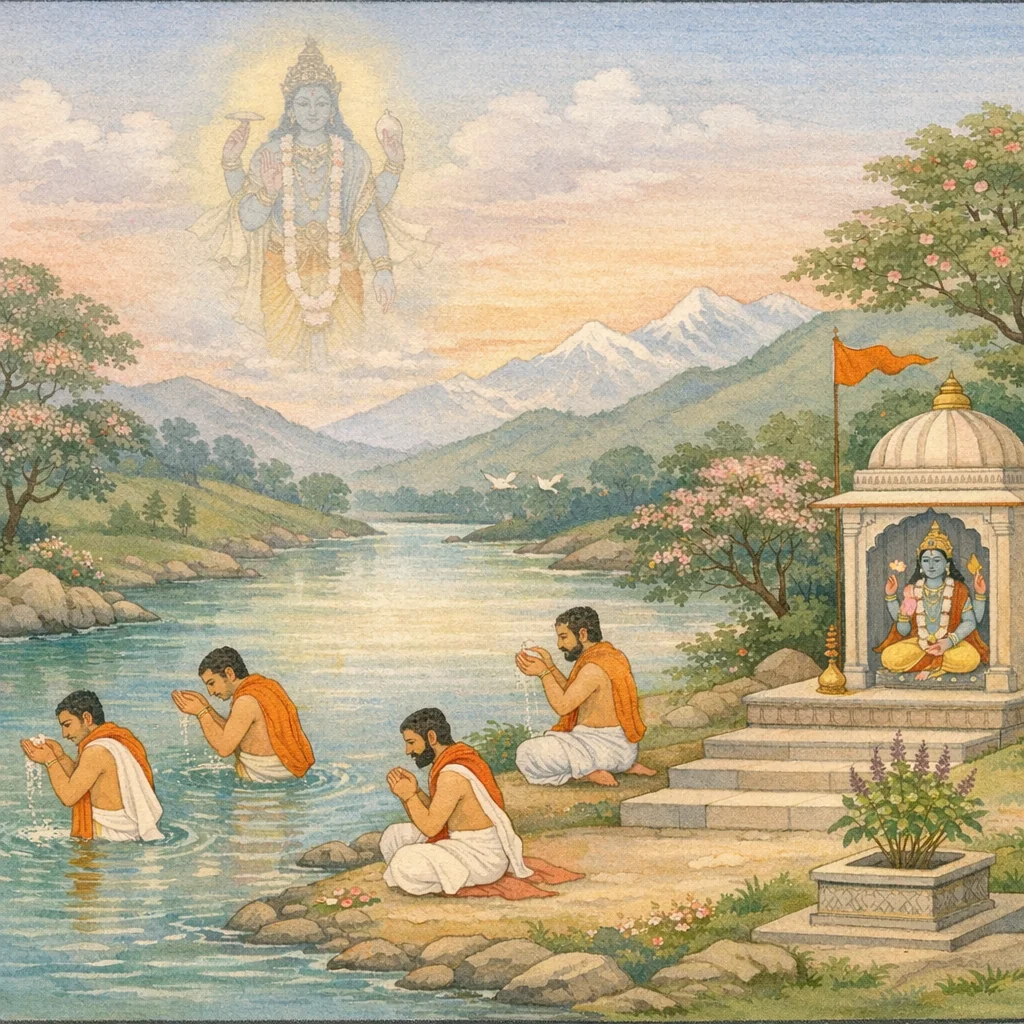
Once, that Bala, seeking to perform the sandhyā twilight rites, went to the river Sindhu—adorned with a divine black antelope-skin and a wooden staff.
Verse 42
अमलेनापि पुण्येन ब्रह्मचर्येण तेन सः । सागरस्योपकंठे तं संध्यासनमुपागतम्
By that pure merit and through his practice of brahmacarya, he went to the seashore to perform the sandhyā worship.
Verse 43
जपमानं सुशांतं तं ददृशे पाकशासनः । वज्रेण तेन दिव्येन ताडितो दितिनंदनः
Pākaśāsana (Indra) beheld him—calm and absorbed in japa. Struck by that divine vajra, the son of Diti was smitten down.
Verse 44
बलं निपतितं दृष्ट्वा गतसत्वं गतं भुवि । हर्षेण महताविष्टो देवराण्मुमुदे तदा
Seeing the asura Bala fallen upon the earth—his strength spent and his life-breath departed—the king of the devas was filled with great joy and rejoiced.
Verse 45
एवं निपात्य तं दैत्यं दितिनंदनमेव च । राज्यं चकार धर्मात्मा सुखेन पाकशासनः
Thus, having struck down that Dānava—Diti’s son as well—Pākaśāsana (Indra), righteous-souled, ruled his kingdom in peace and ease.