Adhyaya 18
The Sumanā Narrative: Vaiṣṇava Hospitality, Āṣāḍha Śukla Ekādaśī, and the Rise to Brāhmaṇahood
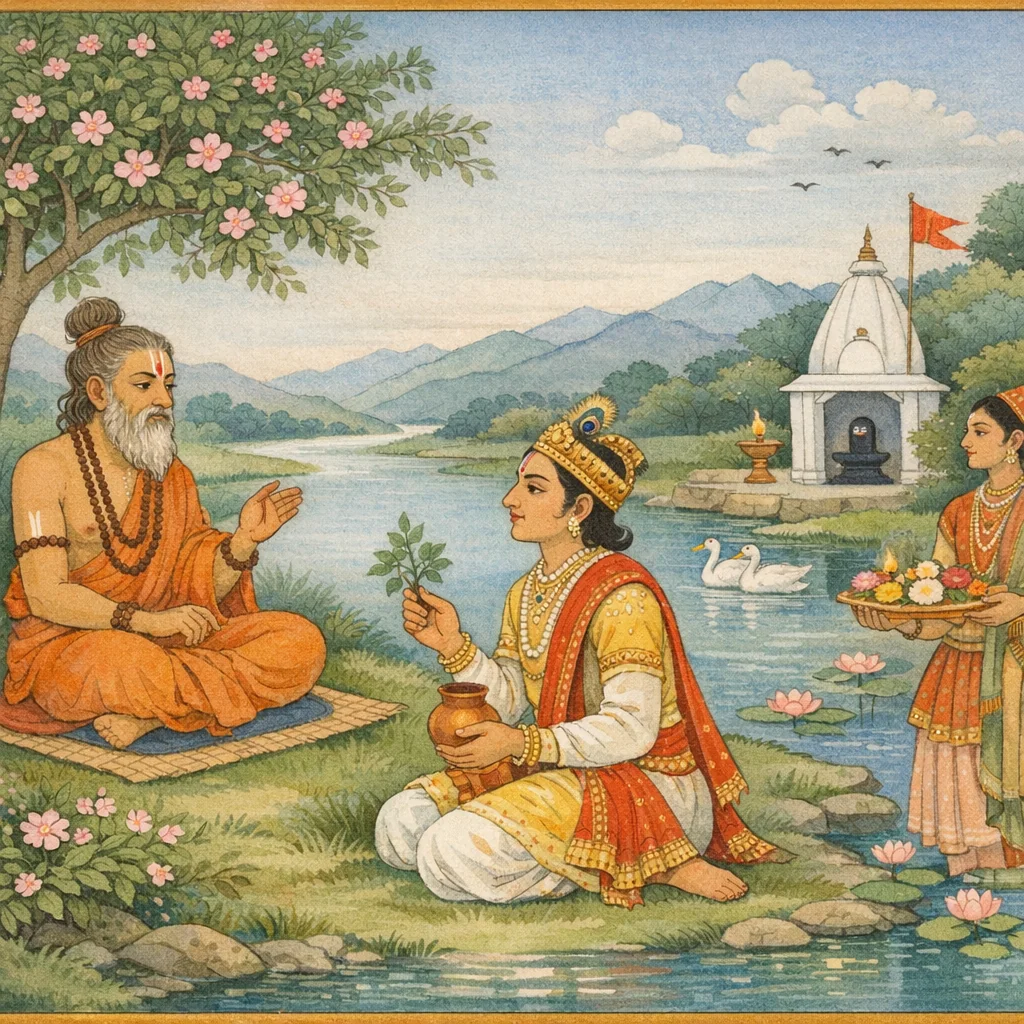
PP.2.18 (Sumanopākhyāna) teaches how karmic destiny and social-spiritual standing can be transformed through dharma illumined by bhakti. Somaśarmā asks Vasiṣṭha how he attained brāhmaṇahood after abandoning a śūdra condition, and Vasiṣṭha recounts an episode from a former life. A virtuous Vaiṣṇava brāhmaṇa arrives as a wandering guest, and a householder family—wife Sumanā and their sons—offers him lodging, reverent welcome, foot-washing, food, and gifts. On the auspicious Āṣāḍha bright-fortnight Ekādaśī, when Hṛṣīkeśa enters yogic sleep, they keep vigil with worship, song, and fasting; afterward they perform pāraṇa and continue with dāna to brāhmaṇas. The chapter links these deeds to purification from past hoarding and craving, teaching that saintly association, the Ekādaśī vrata, and devotion to Govinda bestow truth, righteousness, worthy lineage, and attainment of the highest abode.
Shlokas
Verse 1
सोमशर्मोवाच । पूर्वजन्मकृतं पापं त्वयाख्यातं च मे मुने । शूद्रत्वेन तु विप्रेन्द्र मयैव परिवर्जितम्
Somaśarmā said: “O sage, you have told me of the sin committed in a former birth. Yet, O best of brāhmaṇas, I myself have renounced the condition of being a śūdra.”
Verse 2
विप्रत्वं हि मया प्राप्तं तत्कथं द्विजसत्तम । तत्सर्वं कारणं ब्रूहि ज्ञानविज्ञानपंडित
I have indeed attained the status of a brāhmaṇa—how did that come about, O best of the twice-born? Tell me the complete cause of it, O scholar learned in both knowledge and realized understanding.
Verse 3
वसिष्ठ उवाच । यत्त्वया चेष्टितं पूर्वं कर्मधर्माश्रितंद्विज । तदहं संप्रवक्ष्यामि श्रूयतां यदि मन्यसे
Vasiṣṭha said: O twice-born one, I shall fully declare that former conduct of yours, grounded in righteous action and dharma—listen, if you so desire.
Verse 4
ब्राह्मणः कश्चिदनघः सदाचारः सुपंडितः । विष्णुभक्तस्तु धर्मात्मा नित्यं विष्णुपरायणः
There was a certain blameless brāhmaṇa—of good conduct and highly learned—who was a devotee of Viṣṇu, righteous in spirit, and ever wholly devoted to Viṣṇu alone.
Verse 5
यात्राव्याजेन तीर्थानां भ्रमत्येकः समेदिनीम् । अटमानः समायातस्तव गेहं महामतिः
On the pretext of pilgrimage to the sacred tīrthas, a great-minded man has wandered over the whole earth; and while roaming, he has now arrived at your house, O wise one.
Verse 6
याचितं स्थानमेकं वै वासार्थं द्विजसत्तम । तवैव भार्यया दत्तं त्वया च सह पुत्रकैः
O best of brāhmaṇas, the single place requested for residence was granted by your own wife—and by you as well, together with your sons.
Verse 7
एयतामेयतां ब्रह्मन्सुखेन सुगृहे मम । वैष्णवं ब्राह्मणं पुण्यमित्युवाच पुनः पुनः
“Come, come, O Brahman—enter at ease into my good home.” Thus he spoke again and again: “A Vaiṣṇava brāhmaṇa is holy and full of merit.”
Verse 8
सुखेन स्थीयतामत्र गृहोयं तव सुव्रत । अद्य धन्योस्म्यहं पुण्यमद्य तीर्थमहं गतः
Stay here in comfort, O you of noble vows—this house is yours. Today I am blessed; today I have gained merit, for today I have reached a sacred tīrtha, a place of pilgrimage.
Verse 9
अद्य तीर्थफलं प्राप्तं तवांघ्रिद्वयदर्शनात् । गवां स्थानं वरं पुण्यं निवासाय निवेदितम्
Today I have obtained the full fruit of pilgrimage by beholding your two feet; and an excellent, sacred place for the cows has been offered as a dwelling.
Verse 10
अंगसंवाहनं कृत्वा पादौ चैव प्रमर्दितौ । क्षालितौ चपुनस्तोयैः स्नातः पादोदकेन हि
Having massaged the limbs and thoroughly rubbed the feet, and having washed them again with water, one is indeed purified, as though bathed in the water from the feet (pādodaka).
Verse 11
सद्यो घृतं दधिक्षीरमन्नं तक्रं प्रदत्तवान् । तस्मै च ब्राह्मणायैव भवानित्थं महात्मने
He immediately gave ghee, curd, milk, food, and buttermilk to that very brāhmaṇa—just so, O noble one, to that great-souled man.
Verse 12
एवं संतोषितो विप्रस्त्वया च सह भार्यया । पुत्रैः सार्धं महाभागो वैष्णवो ज्ञानपंडितः
Thus satisfied by you, together with your wife, that brāhmaṇa—greatly fortunate, a Vaiṣṇava and a scholar of spiritual knowledge—remained together with his sons.
Verse 13
अथ प्रभाते संप्राप्ते दिने पुण्ये सुभाग्यदे । आषाढस्य तु शुद्धस्यैकादशी पापनाशनी
Then, when morning arrived—on that holy day that bestows good fortune—the sin-destroying Ekādaśī of the bright fortnight of Āṣāḍha came.
Verse 14
तस्मिन्दिने सुसंप्राप्ता सर्वपातकनाशिनी । यस्यां देवो हृषीकेशो योगनिद्रां प्रगच्छति
On that day arrives the sacred time that destroys all sins, on which the Lord Hṛṣīkeśa enters yogic sleep (Yoga-nidrā).
Verse 15
तां प्राप्य च ततो लोकास्तत्यजुर्बुद्धिपंडिताः । गृहस्य सर्वकर्माणि विष्णुध्यानरता द्विज
Having attained that, the wise and discerning people then abandoned all household duties, O brāhmaṇa, remaining absorbed in meditation on Viṣṇu.
Verse 16
उत्सवं परमं चक्रुर्गीतमंगलवादनैः । स्तुवंति ब्राह्मणाः सर्वे वेदैः स्तोत्रैः सुमंगलैः
They held a grand festival with auspicious songs and musical instruments; and all the brāhmaṇas offered praise through the Vedas and through auspicious hymns of blessing and good fortune.
Verse 17
एवं महोत्सवं प्राप्य स च ब्राह्मणसत्तमः । तस्मिन्दिने स्थितस्तत्र संप्राप्तं समुपोषणम्
Thus, having attained that great festival, the best of brāhmaṇas remained there on that very day, and the observance of fasting (upavāsa) came upon him.
Verse 18
इति श्रीपद्मपुराणे पंचपंचाशत्सहस्रसंहितायां भूमिखंडे । ऐंद्रे सुमनोपाख्याने अष्टादशोऽध्यायः
Thus ends the eighteenth chapter, the “Sumanopākhyāna” in the Aiṃdra section, in the Bhūmi-khaṇḍa of the Śrī Padma Purāṇa, within the compilation of fifty-five thousand verses.
Verse 19
श्रुते तस्मिन्महापुण्ये भार्या पुत्रैस्तु प्रेरितः । संसर्गादस्य विप्रस्य व्रतमेतत्समाचर
When that supremely meritorious account was heard, urged on by his wife and sons, he undertook this vow—because of his association with that brāhmaṇa.
Verse 20
तदाकर्ण्य महद्वाक्यं सर्वपुण्यप्रदायकम् । व्रतमेतं करिष्यामि इति निश्चितमानसः
Having heard those exalted words, bestowing all merit, he resolved in his heart: “I shall undertake this vow.”
Verse 21
भार्या पुत्रैः समं गत्वा नद्यां स्नानं कृतं त्वया । हृष्टेन मनसा विप्र पूजितो मधुसूदनः
O brāhmaṇa, you went together with your wife and sons and bathed in the river; with a joyful mind, you worshiped Madhusūdana (Viṣṇu).
Verse 22
सर्वोपहारैः पुण्यैश्च गंधधूपादिभिस्तथा । रात्रौ जागरणं कृत्वा नृत्यगीतादिभिस्तथा
With all auspicious offerings—along with fragrances, incense, and the like—one should keep vigil through the night, and likewise engage in dance, singing, and similar acts of devotional celebration.
Verse 23
ब्राह्मणस्य प्रसंगेन नद्यां स्नानं पुनः कृतम् । पूजितो देवदेवेशः पुष्पधूपादिमंगलैः
By association with a brāhmaṇa, bathing in the river was performed again; and the Lord of lords was worshipped with auspicious offerings such as flowers and incense.
Verse 24
भक्त्या प्रणम्य गोविंदं स्नापयित्वा पुनः पुनः । निर्वापं तादृशं दत्तं ब्राह्मणाय महात्मने
Having bowed to Govinda with devotion, and having bathed the deity again and again, he then offered a like nirvāpa—an offering of food—to a great-souled brāhmaṇa.
Verse 25
भक्त्या प्रणम्य तं विप्रं दत्ता तस्मै सुदक्षिणा । कृतवान्पारणं विप्र पुत्रैर्भार्यादिभिः समम्
Having bowed to that brāhmaṇa with devotion and having given him a generous dakṣiṇā, the brāhmaṇa then performed the pāraṇa—the concluding meal—together with his sons, wife, and the rest of his family.
Verse 26
प्रेषितो भक्तिपूर्वेण सद्भावेन त्वयैव सः । एवं व्रतं समाचीर्णं त्वया वै द्विजसत्तम
He was indeed dispatched by you yourself, with devotion and sincere intent. Thus has this vow been duly observed by you, O best of the twice-born.
Verse 27
संगत्या ब्राह्मणस्यैव विष्णोश्चैव प्रसादतः । भवान्ब्राह्मणतां प्राप्तः सत्यधर्मसमन्वितः
Through association with a brāhmaṇa, and by the grace of Viṣṇu, you have attained the state of brāhmaṇahood—endowed with truth and righteousness.
Verse 28
तस्य व्रतस्य भावेन त्वया प्राप्तं महत्कुलम् । भूसुराणां महाप्राज्ञं सत्यधर्मसमाविलम्
By the sincere spirit of that vow, you have attained a great lineage—among the bhūsuras, the godlike brāhmaṇas—highly wise, and filled with truth and dharma.
Verse 29
तस्मै तु ब्राह्मणायैव वैष्णवाय महात्मने । श्रद्धया सत्यभावेन दत्तमन्नं सुसंस्कृतम्
To that brāhmaṇa—indeed a great-souled Vaiṣṇava—well-prepared food was given with faith and with a sincere, truthful intention.
Verse 30
तस्य दानस्य भावेन मिष्टान्नमुपतिष्ठति । महामोहैः प्रमुग्धो हि तृष्णया व्यापितं मनः
By the very impulse of that giving, sweet food comes forth; for one deluded by great infatuations has a mind pervaded by craving.
Verse 31
पूर्वजन्मनि ते विप्र अर्थमेव प्रसंचितम् । न दत्तं ब्राह्मणेभ्यो हि दीनेष्वन्येषु वै त्वया
O brāhmaṇa, in your previous birth you only amassed wealth; indeed, you gave nothing to brāhmaṇas, nor to other needy people.
Verse 32
दारेषु पुत्रलोभेन म्रियमाणेन वै तदा । तस्य पापस्य भावेन दारिद्रं त्वामुपाविशत्
Then, as he was dying—consumed by craving for a son through his wife—by the force of that sin, poverty came upon you.
Verse 33
पुत्रलोभं परित्यज्य स्नेहं त्यक्त्वा प्रदूरतः । अपुत्रवान्भवाञ्जातस्तस्य पापस्य वै फलम्
Abandoning your craving for a son and casting off affection from afar, you have become childless—this indeed is the fruit of that sin.
Verse 34
सुपुत्रं च कुलं विप्र धनधान्यवरस्त्रियः । सुजन्ममरणं चैव सुभोगाः सुखमेव च
O brāhmaṇa, (one is blessed with) good sons and a noble family, wealth and grain, excellent wives; and also an auspicious birth and death, good enjoyments, and happiness alone.
Verse 35
राज्यं स्वर्गश्च मोक्षश्च यद्यद्दुर्लभमेव च । प्रसादात्तस्य देवस्य विष्णोश्चैव महात्मनः
Kingship, heaven, liberation, and whatever else is truly hard to obtain—all of it comes through the grace of that great-souled Lord, Viṣṇu.
Verse 36
तस्मादाराध्य गोविन्दं नारायणमनामयम् । प्राप्स्यसि त्वं परं स्थानं तद्विष्णोः परमं पदम्
Therefore, worship Govinda—Nārāyaṇa, the flawless and disease-free Lord—and you will attain the highest abode: that supreme state, the highest station of Viṣṇu.
Verse 37
सुपुत्र त्वं धनं धान्यं सुभोगान्सुखमेव च । पूर्वजन्मकृतं सर्वं यत्त्वया परिचेष्टितम्
A good son, wealth, grain, fine enjoyments, and happiness as well—everything you have striven for is, in truth, the result of deeds done in a former birth.
Verse 38
तन्मया कथितं विप्र तवाग्रे परिनिष्ठितम् । एवं ज्ञात्वा महाभाग नारायणपरो भव
O brāhmaṇa, what I have spoken has been firmly set forth before you. Knowing it thus, O fortunate one, become wholly devoted to Nārāyaṇa.
Verse 39
ब्रह्मात्मजेनापि महानुभावः स विप्रवर्यः परिबोधितो हि । हर्षेणयुक्तः स महानुभावो भक्त्या वसिष्ठं प्रणिपत्य तत्र
That eminent best of brāhmaṇas was indeed instructed even by Brahmā’s son. Filled with joy, that noble one then bowed down there to Vasiṣṭha with devotion.
Verse 40
आमंत्र्य विप्रं स जगाम गेहं तां प्राप्य भार्यां सुमनां प्रहर्षः । सर्वं हि वृत्तं ममपूर्वचेष्टितं तेनैव विप्रेण तव प्रसादात्
Having respectfully taken leave of the brāhmaṇa, he went home. On reaching his wife Sumanā, he was filled with joy. Indeed, all that occurred—my earlier efforts and their outcome—came to pass through that very brāhmaṇa, by your grace.
Verse 41
भद्रे वसिष्ठेन विकाशनीतमद्यैव मोहं परिनाशितं मे । आराधयिष्ये मधुसूदनं हि यास्यामि मोक्षं परमं पदं तत्
O auspicious one, through Vasiṣṭha’s enlightening instruction my delusion has been destroyed today itself. Therefore I shall worship Madhusūdana; I shall attain liberation—That supreme abode.
Verse 42
आकर्ण्य वाक्यं परमं महांतं सुमंगलं मंगलदायकं हि । हर्षेण युक्ता तमुवाच कांतं पुण्योसि विप्रेण विबोधितोऽसि
Hearing those supreme and noble words—most auspicious and truly bestowing auspiciousness—she, filled with joy, said to her beloved: “You are blessed; you have been enlightened by a brāhmaṇa.”