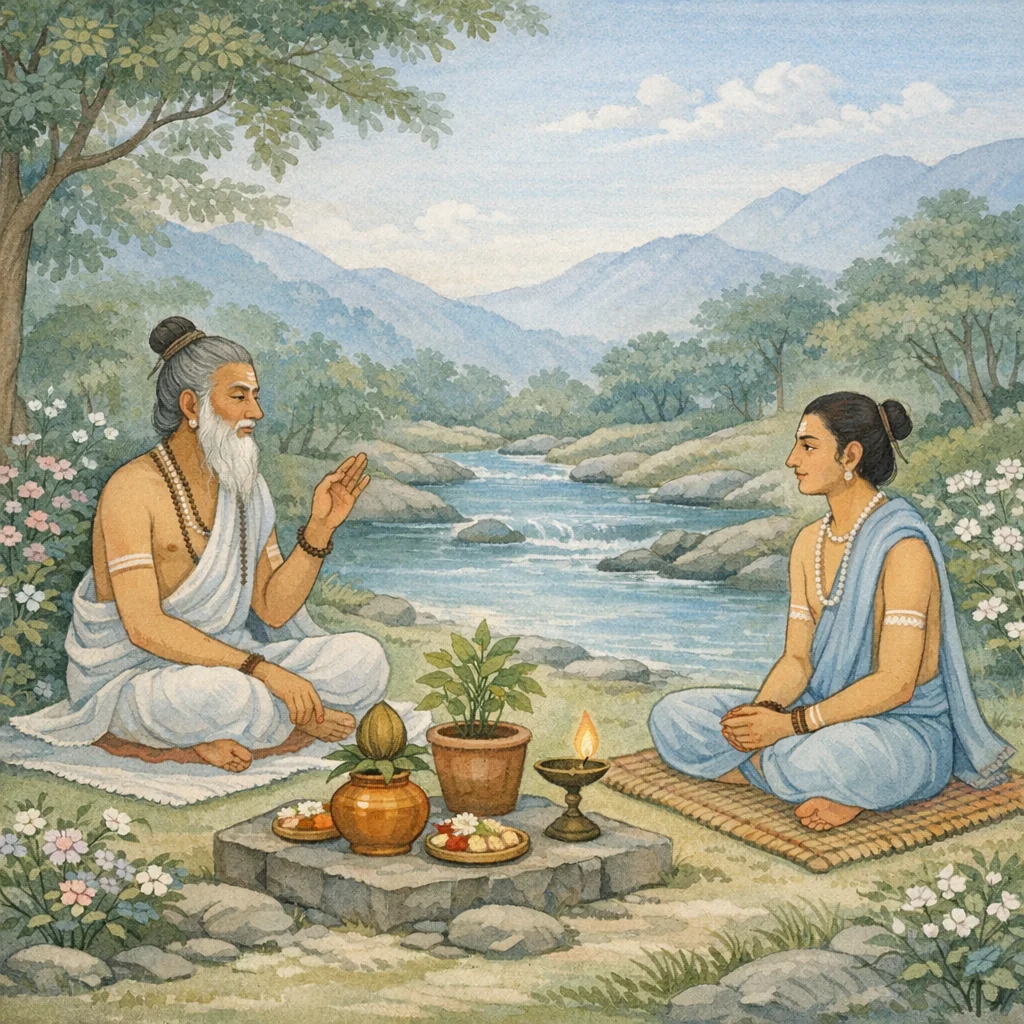
Adhyaya 124
The Episode of Vena: Pṛthu’s Counsel, Royal Proclamation, and Brahmā’s Boon
After Viṣṇu vanishes from sight, Vena’s anxiety turns into instruction and reconciliation with Pṛthu. Pṛthu is praised as the son whose virtues restore a lineage that had been compromised. The chapter then sets forth practical rajadharma: provisions are gathered, Veda-knowing brāhmaṇas are invited, and a strict proclamation is issued—no sin is to be committed through the three modes of action (mind, speech, body), with severe punishment, even death, for transgression. Pṛthu entrusts governance and withdraws to the forest for intense tapas, enduring a symbolic hundred years. Pleased, Brahmā asks his purpose; Pṛthu seeks a boon that his father not be stained by the sins of the subjects, invoking Viṣṇu as the unseen chastiser. Brahmā grants purification, affirms that Vena was chastised by Viṣṇu and by Pṛthu, and Pṛthu returns to kingship; under Vainya’s rule, even the intention to sin is deterred, and society reforms through righteous conduct.
Shlokas
Verse 1
सूत उवाच । अंतर्द्धानं गते विष्णौ वेनो राजा महामतिः । क्व गतो देवदेवेश इति चिंतापरोऽभवत्
Sūta said: When Viṣṇu vanished from sight, King Vena—though greatly wise—was consumed by anxious thought: “Where has the Lord of the gods gone?”
Verse 2
हर्षेण महताविष्टश्चिंतयित्वा नृपोत्तमः । समाहूय नृपश्रेष्ठं तं पृथुं मधुराक्षरैः
Overwhelmed with great joy, the noble king reflected; then, summoning Pṛthu, foremost among kings, he addressed him in gentle, sweet words.
Verse 3
तमुवाच महात्मानं हर्षेण महता तदा । त्वया पुत्रेण भूर्लोके तारितोस्मि सुपातकात्
Then, with immense joy, he spoke to the great-souled one: “By you, my son, here in the mortal world, I have been delivered from a grievous sin.”
Verse 4
नीत उज्ज्वलतां वत्स वंशो मे सांप्रतं पृथो । मया विनाशितो दोषैस्त्वया गुणैः प्रकाशितः
O dear child Pṛthu, my lineage has now been brought to brightness. What I had ruined through my faults, you have made illustrious by your virtues.
Verse 5
यजेहमश्वमेधेन दास्ये दानान्यनेकशः । विष्णुलोकं व्रजाम्यद्य सकायस्ते प्रसादतः
I shall perform the Aśvamedha sacrifice and bestow many gifts in abundance. Today, by your grace, I go to Viṣṇu’s world—together with this very body.
Verse 6
संभरस्व महाभाग संभारांस्त्वं नृपोत्तम । आमंत्रय महाभाग ब्राह्मणान्वेदपारगान्
O noble one, O best of kings—gather the needed provisions and preparations. And, O fortunate one, invite the brāhmaṇas who have mastered the Vedas.
Verse 7
एवं पृथुः समादिष्टो वेनेनापि महात्मना । प्रत्युवाच महात्मा स वेनं पितरमादरात्
Thus instructed by Vena, that great-souled one, Pṛthu—the noble-hearted—respectfully replied to his father Vena.
Verse 8
कुरु राज्यं महाराज भुंक्ष्व भोगान्मनोनुगान् । दिव्यान्वा मानुषान्पुण्यान्यज्ञैर्यज जनार्दनम्
Rule your kingdom, O great king, and enjoy the pleasures your heart desires—whether heavenly or human, yet meritorious. With sacrifices (yajñas), worship Janārdana (Viṣṇu).
Verse 9
एवमुक्त्वा प्रणम्यैव पितरं ज्ञानतत्परम् । धनुरादाय पृथ्वीशः सबाणं यत्नपूर्वकम्
Having spoken thus, he bowed to his father, who was devoted to spiritual knowledge; then the lord of the earth carefully took up his bow together with arrows, with due effort.
Verse 10
आदिदेश भटान्सर्वान्घोषध्वं भूतले मम । पापमेव न कर्तव्यं कर्मणा त्रिविधेन वै
He commanded all his attendants: “Proclaim this throughout my land: one must not commit sin—by any of the three kinds of action.”
Verse 11
करिष्यंति च यत्पापं आज्ञां वेनस्य भूपतेः । उल्लंघ्य वध्यतां सो हि यास्यते नात्र संशयः
Whoever commits the sin of transgressing the command of King Vena, O lord of the earth—let him be put to death; indeed he shall meet that fate, of this there is no doubt.
Verse 12
दानमेव प्रदातव्यं यज्ञैश्चैव जनार्दनम् । यजध्वं मानवाः सर्वे तन्मनस्का विमत्सराः
Indeed, charity should be given; and by sacrifices (yajñas) as well, Janārdana (Viṣṇu) should be worshiped. Worship, all you human beings, with minds fixed on Him and free from envy.
Verse 13
एवं शिक्षां प्रदत्वासौ राज्यं भृत्येषु वेनजः । निःक्षिप्य च गतो विप्रास्तपसोर्थे तपोवनम्
Thus, having imparted instruction, that son of Vena entrusted the kingdom to his servants; and then, O brāhmaṇas, he departed to the forest of austerities for the sake of performing tapas.
Verse 14
सर्वान्दोषान्परित्यज्य संयम्य विषयेन्द्रियान् । शतवर्षप्रमाणं वै निराहारो बभूव ह
Casting off all faults, and restraining the sense-organs that run toward objects, he indeed remained without food for a full measure of a hundred years.
Verse 15
तपसा तस्य वै तुष्टो ब्रह्मा पृथुमुवाच ह । तपस्तपसि कस्मात्त्वं तन्मे त्वं कारणं वद
Pleased with his austerity, Brahmā indeed spoke to Pṛthu: “Why do you practice austerities? Tell me the reason for that.”
Verse 16
पृथुरुवाच । वेन एष महाप्राज्ञः पिता मे कीर्तिवर्द्धनः । समाचरति यः पापमस्य राज्ये नराधमः
Pṛthu said: “This Vena—highly wise, my father, the increaser of fame—yet that lowest of men commits sin within his own kingdom.”
Verse 17
शिरश्छेत्ता भवत्वेष तस्य देवो जनार्दनः । अदृष्टैश्च महाचक्रैर्हरिः शास्ता भवेत्स्वयम्
May Janārdana, the Divine Lord, be the one to sever his head; and with unseen, mighty discus-wheels, may Hari Himself become the chastiser.
Verse 18
मनसा कर्मणा वाचा कर्तुं वांछति पातकम् । तेषां शिरांसि त्रुट्यंतु फलं पक्वं यथा द्रुमात्
Those who, by mind, deed, or speech, desire to commit sin—may their heads be shattered, just as a ripe fruit falls from a tree.
Verse 19
एतदेव वरं मन्ये त्वत्तः शृणु सुरेश्वर । प्रजानां दोषभावेन न लिप्यति पिता मम
This alone I deem the finest boon. Hear me, O Lord of the gods: my father is not tainted by the faults that arise from his subjects.
Verse 20
तथा कुरुष्व देवेश वरं दातुं यदीच्छसि । ददस्व उत्तमं कामं चतुर्मुखनमोऽस्तु ते
Therefore do so, O Lord of the gods, if you wish to grant a boon. Bestow upon me the highest desired blessing. Salutations to You, O Four-faced One.
Verse 21
ब्रह्मोवाच । एवमस्तु महाभाग पिता ते पूततां गतः । विष्णुना शासितो वत्स पुत्रेणापि त्वया पृथो
Brahmā said: “So be it, O noble one. Your father has attained purification. O dear child, he has been chastised by Viṣṇu—and also by you, his son, O Pṛthu.”
Verse 22
एवं पृथुं समुद्दिश्य वरं दत्वा गतो विभुः । पृथुरेव समायातो राज्यकर्मणि संस्थितः
Thus, having addressed Pṛthu and granted him a boon, the mighty Lord departed. Pṛthu then returned and took his place in the duties of kingship.
Verse 23
वैन्यस्य राज्ये विप्रेन्द्राः पापं कश्चिन्न चाचरेत् । यस्तु चिंतयते पापं त्रिविधेनापि कर्मणा
O best of Brahmins, in Vainya’s reign no one would commit sin. But whoever even contemplates sin—by any of the threefold modes of action—incurs blame.
Verse 24
शिरश्छेदो भवेत्तस्य यथाचक्रैर्निकृंतितः । तदाप्रभृति वै पापं नैव कोपि समाचरेत्
His head would be severed, as though cut off by a sharp discus; from that time onward, indeed, no one should commit sin.
Verse 25
इत्याज्ञा वर्तते तस्य वैन्यस्यापि महात्मनः । सर्वलोकाः समाचारैः परिवर्तंति नित्यशः
Thus the command of that great-souled Vainya prevails; and all people, through right conduct and established custom, continually reform their ways day by day.
Verse 26
दानभोगैः प्रवर्तंते सर्वधर्मपरायणाः । सर्वसौख्यैः प्रवर्द्धंते प्रसादात्तस्य भूपतेः
Those devoted to all dharma flourish through gifts and rightful enjoyments; and by the favor of that king, they grow in every kind of happiness.
Verse 124
इति श्रीपद्मपुराणे भूमिखंडे वेनोपाख्याने चतुर्विंशत्यधिक शततमोऽध्यायः
Thus ends the one hundred and twenty-fourth chapter of the Bhūmi-khaṇḍa of the Śrī Padma Purāṇa, in the section narrating the episode of Vena.