Adhyaya 110
The Devas Arm Nahuṣa: Divine Weapons, Mātali’s Chariot, and the March Against Huṇḍa
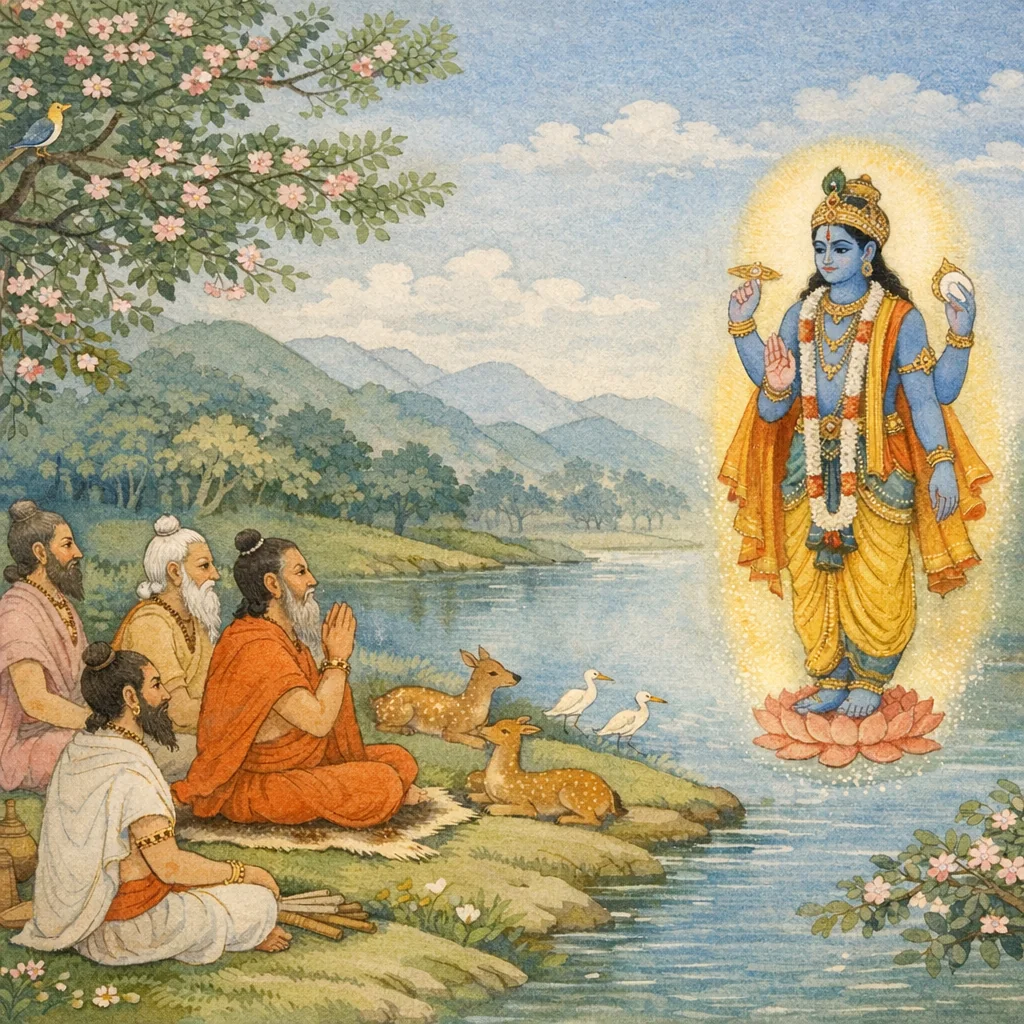
After taking leave of the sages—especially Vasiṣṭha—Nahuṣa sets out to confront the Dānava Huṇḍa. The sages bless him, and the devas rejoice with drums and a rain of flowers. Indra and the gods bestow celestial weapons and astras. At the devas’ request, Indra commands his charioteer Mātali to bring a bannered chariot to carry the king into battle, and he explicitly commissions Nahuṣa to slay the sinful Huṇḍa. Gladdened by divine favor and Vasiṣṭha’s grace, Nahuṣa vows victory. The Lord appears bearing conch, discus, and mace, and further astras are granted—Śiva’s trident, Brahmā’s weapon, Varuṇa’s noose, Indra’s thunderbolt, Vāyu’s spear, and Agni’s missile. Nahuṣa mounts the radiant chariot and advances toward the enemy’s position with Mātali.
Shlokas
Verse 1
कुंजल उवाच । आमंत्र्य स मुनीन्सर्वान्वशिष्ठं तपतांवरम् । समुत्सुको गंतुकामो नहुषो दानवं प्रति
Kuñjala said: Having taken leave of all the sages—especially Vaśiṣṭha, foremost among ascetics—Nahuṣa, eager and longing to depart, set out toward the Dānava.
Verse 2
ततस्ते मुनयः सर्वे वशिष्ठाद्यास्तपोधनाः । आशीर्भिरभिनंद्यैनमायुपुत्रं महाबलम्
Then all those sages—Vaśiṣṭha and the others, rich in ascetic merit—honored and congratulated that mighty son of Āyu with blessings.
Verse 3
आकाशे देवताः सर्वा जघ्नुर्वै दुंदुभीन्मुदा । पुष्पवृष्टिं प्रचक्रुस्ते नहुषस्य च मूर्धनि
In the sky, all the gods joyfully beat the kettledrums and caused a shower of flowers to fall upon Nahuṣa’s head.
Verse 4
अथ देवः सहस्राक्षः सुरैः सार्द्धं समागतः । ददौ शस्त्राणि चास्त्राणि सूर्यतेजोपमानि च
Then the god Sahasrākṣa (Indra), arriving together with the other deities, bestowed weapons and divine missiles, radiant like the sun’s splendor.
Verse 5
देवेभ्यो नृपशार्दूलो जगृहे द्विजसत्तम । तानि दिव्यानि चास्त्राणि दिव्यरूपोपमोऽभवत्
O best of brāhmaṇas, the tiger among kings received those celestial weapons from the gods; and through those divine arms, he became comparable in splendor to a divine form.
Verse 6
अथ ता देवताः सर्वाः सहस्राक्षमथाब्रुवन् । स्यंदनो दीयतामस्मै नहुषाय सुरेश्वर
Then all the gods spoke to Sahasrākṣa (Indra): “O Lord of the suras, let a chariot be bestowed upon Nahusha.”
Verse 7
देवानां मतमाज्ञाय वज्रपाणिः स्वसारथिम् । आहूय मातलि तं तु आदिदेश ततो द्विज
Understanding the gods’ decision, Vajrapāṇi (Indra) summoned his own charioteer Mātali and then gave him an order, O brāhmaṇa.
Verse 8
एनं गच्छ महात्मानमुह्यतां स्यंदनेन वै । सध्वजेन महाप्राज्ञमायुजं समरोद्यतम्
“Go to that great-souled one; let him indeed be conveyed in the bannered chariot—the very wise Ayuja, ready for battle and intent upon war.”
Verse 9
स चोवाच सहस्राक्षं करिष्ये तवशासनम् । एवमुक्त्वा जगामाशु ह्यायुपुत्रं रणोद्यतम्
And he said to Sahasrākṣa (Indra), “I will carry out your command.” Having spoken thus, he quickly went toward Āyu’s son, ready for battle.
Verse 10
राजानं प्रत्युवाचैव देवराजस्य भाषितम् । विजयी भव धर्मज्ञ रथेनानेन संगरे
He then repeated to the king the words of the devarāja: “O knower of dharma, be victorious in battle with this chariot.”
Verse 11
इत्युवाच सहस्राक्षस्त्वामेव नृपतीश्वर । जहि त्वं दानवं संख्ये तं हुंडं पापचेतनम्
Thus spoke Sahasrākṣa (Indra): “O lord of kings—indeed you alone—slay in battle that Dānava, Huṇḍa, whose mind is fixed on sin.”
Verse 12
समाकर्ण्य स राजेंद्र सानंदपुलकोद्गमः । प्रसादाद्देवदेवस्य वशिष्ठस्य महात्मनः
Hearing this, O king of kings, he was thrilled—his hairs stood on end with joy—through the grace of the God of gods, the great-souled Vasiṣṭha.
Verse 13
दानवं सूदयिष्यामि समरे पापचेतनम् । देवानां च विशेषेण मम मायापचारितम्
In battle I shall slay that Dānava of wicked intent—one who, by my illusory power, has been set against the gods, especially.
Verse 14
एवमुक्ते महावाक्ये नहुषेण महात्मना । अथायातः स्वयं देवः शंखचक्रगदाधरः
When those great words were thus spoken by the noble Nahūṣa, then the Lord Himself arrived—bearing the conch, discus, and mace.
Verse 15
चक्राच्चक्रं समुत्पाट्य सूर्यबिंबोपमं महत् । ज्वलता तेजसा दीप्तं सुवृत्तारं शुभावहम्
Wrenching a discus from (another) discus, he brought forth a great one—like the orb of the sun—blazing with flaming radiance, perfectly circular, and auspicious in its effects.
Verse 16
नहुषाय ददौ देवो हर्षेण महता किल । तस्मै शूलं ददौ शंभुः सुतीक्ष्णं तेजसान्वितम्
Indeed, the god bestowed it upon Nahuṣa with great delight. To him, Śambhu (Śiva) gave a trident—exceedingly sharp and filled with fiery brilliance.
Verse 17
तेन शूलवरेणासौ शोभते समरोद्यतः । द्वितीयः शंकरश्चासौ त्रिपुरघ्नो यथा प्रभुः
Armed with that excellent trident, he shines forth, ready for battle—like a second Śaṅkara, like the Lord who destroyed Tripura.
Verse 18
ब्रह्मास्त्रं दत्तवान्ब्रह्मा वरुणः पाशमुत्तमम् । चंद्र तेजःप्रतीकाशं शंखं च नादमंगलम्
Brahmā bestowed the Brahmā-weapon (Brahmāstra); Varuṇa gave his excellent noose (pāśa); and there was a conch (śaṅkha), radiant like the moon’s splendor, whose sound is auspicious.
Verse 19
वज्रमिंद्रस्तथा शक्तिं वायुश्चापं समार्गणम् । आग्नेयास्त्रं तथा वह्निर्ददौ तस्मै महात्मने
Indra gave him the vajra (thunderbolt); Vāyu gave a spear, along with a bow and a quiver of arrows. Agni too bestowed the fiery missile—thus did they grant these to that great-souled one.
Verse 20
शस्त्राण्यस्त्राणि दिव्यानि बहूनि विविधानि च । ददुर्देवा महात्मानस्तस्मै राज्ञे महौजसे
The noble gods bestowed upon that king—mighty and radiant—many kinds of divine weapons, varied and numerous: both hand-held arms and missile-weapons (astras).
Verse 21
कुंजल उवाच । अथ आयुसुतो वीरो दैवतैः परिमानितः । आशीर्भिर्नंदितश्चापि मुनिभिस्तत्त्ववेदिभिः
Kuṃjala said: Then the heroic son of Āyu was duly honored by the gods, and he was also gladdened by the blessings of sages who were knowers of truth.
Verse 22
आरुरोह रथं दिव्यं भास्वरं रत्नमालिनम् । घंटारवैः प्रणदंतं क्षुद्रघंटासमाकुलम्
He mounted a divine chariot, radiant and adorned with garlands of jewels—resounding with the clangor of bells, filled all around with the tinkling of many small bells.
Verse 23
रथेन तेन दिव्येन शुशुभे नृपनदंनः । दिविमार्गे यथा सूर्यस्तेजसा स्वेन वै किल
Riding that divine chariot, the prince shone forth—like the sun, indeed, blazing with its own radiance along the pathway of the heavens.
Verse 24
प्रतपंस्तेजसा तद्वद्दैत्यानां मस्तकेषु सः । जगाम शीघ्रं वेगेन यथा वायुः सदागतिः
Blazing with his radiance, he moved likewise upon the heads of the Daityas, swiftly and with great speed—like the wind, ever in motion.
Verse 25
यत्रासौ दानवः पापस्तिष्ठते स्वबलैर्युतः । तेन मातलिना सार्द्धं वाहकेन महात्मना
Where that sinful Dānava stands, supported by his own forces—there he went, together with Mātali, the noble charioteer.