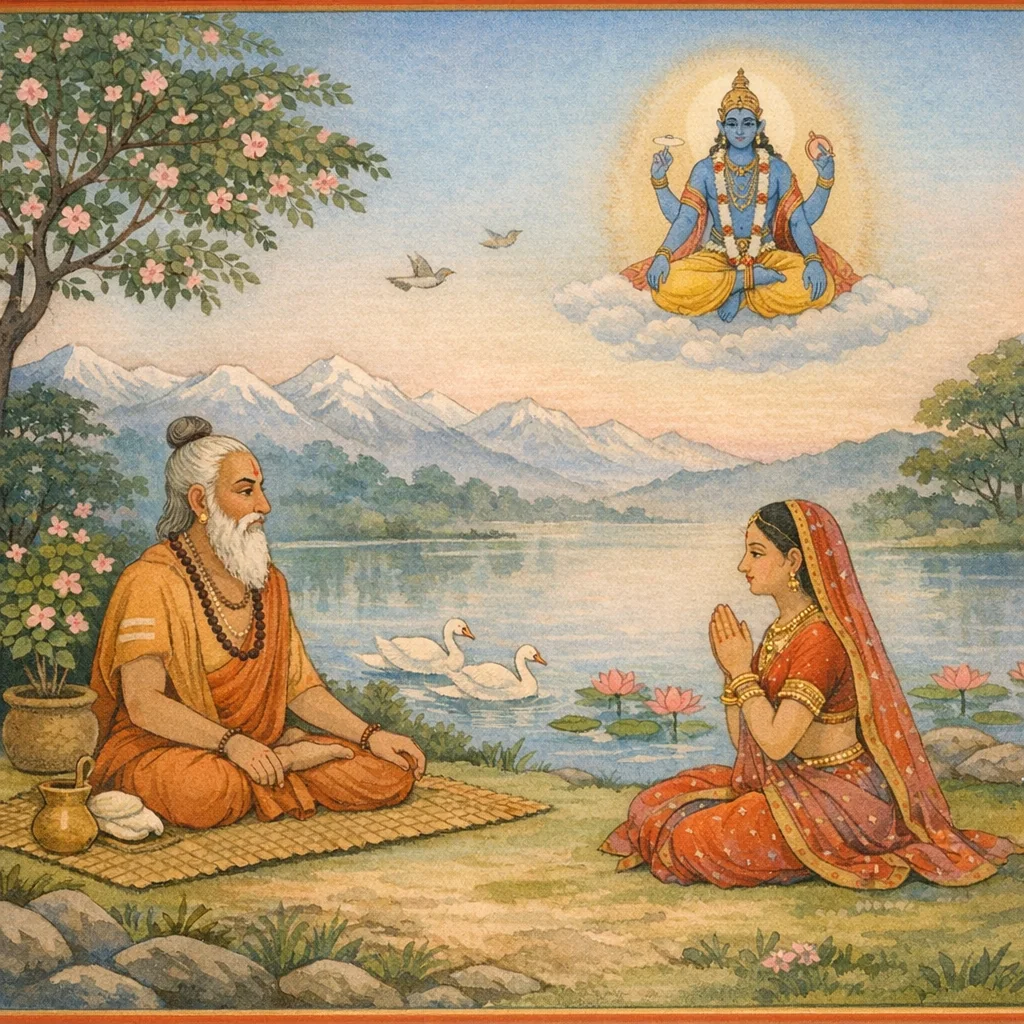
Adhyaya 11
Prologue to the Suvrata Narrative: Revā (Narmadā) and Vāmana-tīrtha; Greed, Anxiety, and the Ethics of Trust
The sages ask Sūta to recount the story of the great-souled Suvrata—his lineage, his austerities, and how he propitiated Hari. Sūta agrees to narrate a sacred Vaiṣṇava account and sets it in an earlier age on the bank of the Revā (Narmadā), at Vāmana-tīrtha. The chapter introduces Somaśarmā, a Kauśika-gotra brāhmaṇa, distressed by poverty and the lack of a son. His wife Sumanā, portrayed as an ascetic-minded counselor within the household, warns that anxiety corrodes spiritual merit and teaches a moral allegory: greed is the seed of sin, delusion its root, falsehood its trunk, and ignorance its fruit. It then offers social-ethical instruction on relationships, debts, and duties, emphasizing the grave karmic consequences of misappropriating a deposited trust. In this way, it prepares the ground for the Suvrata-centered exemplum that follows.
Shlokas
Verse 1
ऋषय ऊचुः । सर्वज्ञेन त्वया प्रोक्तं दैत्यदानवसंगरम् । इदानीं श्रोतुमिच्छामः सुव्रतस्य महात्मनः
The sages said: “O omniscient one, you have told us of the battle between the Daityas and the Dānavas. Now we wish to hear of Suvrata, the great-souled one.”
Verse 2
कस्य पुत्रो महाप्राज्ञः कस्य गोत्रसमुद्भवः । किं तपस्तस्य विप्रस्य कथमाराधितो हरिः
Whose son is that greatly wise man, and from which lineage (gotra) was he born? What austerity did that brāhmaṇa perform, and how did he propitiate Hari (Viṣṇu)?
Verse 3
सूत उवाच । कथा प्रज्ञाप्रभावेण पूर्वमेव यथा श्रुता । तथा विप्राः प्रवक्ष्यामि सुव्रतस्य महात्मनः
Sūta said: “O brāhmaṇas, just as this account was formerly heard through the power of insight, so too shall I recount it—the story of Suvrata, the great-souled one.”
Verse 4
चरितं पावनं दिव्यं वैष्णवं श्रेयआवहम् । भवतामग्रतः सर्वं विष्णोश्चैव प्रसादतः
This sacred and divine Vaiṣṇava account, bestowing the highest good, shall be related in full before you—solely by the grace of Lord Viṣṇu.
Verse 5
पूर्वकल्पे महाभागाः सुक्षेत्रे पापनाशने । रेवातीरे सुपुण्ये च तीर्थे वामनसंज्ञके
In a former aeon, O noble ones, in that excellent holy region that destroys sin—upon the bank of the Revā River—at the most sacred ford known as “Vāmana-tīrtha”...
Verse 6
कौशिकस्य कुले जातः सोमशर्मा द्विजोत्तमः । स तु पुत्रविहीनस्तु बहुदुःखसमन्वितः
In the lineage of Kauśika was born Somaśarmā, an excellent brāhmaṇa. Yet he was without a son and burdened with many sorrows.
Verse 7
दारिद्रेण स दुःखेन सर्वदैवप्रपीडितः । पुत्रोपायं धनस्यापि दिवारात्रौ प्रचिंतयेत्
Crushed by the sorrow of poverty and ever pressed by fate, he pondered day and night the means to obtain a son—and also to gain wealth.
Verse 8
एकदा तु प्रिया तस्य सुमना नाम सुव्रता । भर्तारं चिंतयोपेतमधोमुखमलक्षयत्
Once, his beloved wife—Sumanā by name, a woman of noble vows—noticed her husband with face cast down, weighed by anxious thoughts.
Verse 9
समालोक्य तदा कांतं तमुवाच तपस्विनी । दुःखजालैरसंख्यैस्तु तव चित्तं प्रधर्षितम्
Then, seeing her beloved, the ascetic woman said to him: “Your mind has been assailed by countless nets of sorrow.”
Verse 10
व्यामोहेन प्रमूढोसि त्यज चिंतां महामते । मम दुःखं समाचक्ष्व स्वस्थो भव सुखं व्रज
You have become bewildered through delusion; abandon your worry, O great-minded one. Tell me of my sorrow; become composed and go on in peace.
Verse 11
नास्ति चिंतासमं दुःखं कायशोषणमेव हि । यश्चिंतां त्यज्य वर्तेत स सुखेन प्रमोदते
There is no sorrow equal to worry; indeed, it alone dries up the body. But one who casts off worry and lives on rejoices in happiness.
Verse 12
चिंतायाः कारणं विप्र कथयस्व ममाग्रतः । प्रियावाक्यं समाकर्ण्य सोमशर्माब्रवीत्प्रियाम्
“O brāhmaṇa, tell me plainly, here before me, the cause of your worry.” Hearing these affectionate words, Somaśarmā spoke to his beloved.
Verse 13
सोमशर्मोवाच । इच्छया चिंतितं भद्रे चिंता दुःखस्य कारणम् । तत्सर्वं तु प्रवक्ष्यामि श्रुत्वा चैवावधार्यताम्
Somaśarmā said: “O good lady, worry born of desire is a cause of sorrow. I shall explain all of that—listen and understand it well.”
Verse 14
न जाने केन पापेन धनहीनोस्मि सुव्रते । तथा पुत्रविहीनश्च एतद्दुःखस्य कारणम्
I know not by what sin, O virtuous one, I have been bereft of wealth; and likewise I am without a son—this is the cause of my sorrow.
Verse 15
सुमनोवाच । श्रूयतामभिधास्यामि सर्वसंदेहनाशनम् । स्वरूपमुपदेशस्य सर्वविज्ञानदर्शनम्
Sumana said: “Listen; I shall explain that which destroys all doubts—the true nature of instruction, through which the vision of all knowledge is attained.”
Verse 16
लोभः पापस्य बीजं हि मोहो मूलं च तस्य हि । असत्यं तस्य वै स्कंधो माया शाखा सुविस्तरा
Greed is indeed the seed of sin; delusion (moha) is its very root. Falsehood is its trunk, and māyā—deception—is its widely spreading branch.
Verse 17
चिंतामोहौ परित्यज्य अनुवर्तस्व च द्विज । संसारे नास्ति संबंधः केन सार्धं महामते
Abandon anxiety and delusion, O twice-born one, and proceed onward. In this worldly saṃsāra there is no lasting relationship—so with whom, O great-minded one, can there truly be companionship?
Verse 18
छद्मपाखंडशौर्येर्ष्याः क्रूराः कूटाश्च पापिनः । पक्षिणो मोहवृक्षस्य मायाशाखा समाश्रिताः
Cruel and sinful—given to hypocritical heresy, boastful “heroism,” and jealousy—they are deceitful. Like birds upon the tree of delusion, they take refuge in the branches of māyā, illusion.
Verse 19
अज्ञानं सुफलं तस्य रसोऽधर्मः फलस्य हि । तृष्णोदकेन संवृद्धाऽश्रद्धा तस्य द्रवः प्रिय
Ignorance is its fair-seeming fruit; unrighteousness (adharma) is the juice—the very essence—of that fruit. Nourished by the water of craving, disbelief becomes its beloved, flowing sap.
Verse 20
अधर्मः सुरसस्तस्य उत्कटो मधुरायते । यादृशैश्च फलैश्चैव सुफलो लोभपादपः
To him, unrighteousness (adharma) tastes delightful; even what is harsh seems sweet. And the tree of greed bears abundant fruit—whatever kind of fruits he longs for.
Verse 21
अस्यच्छायां समाश्रित्य यो नरः परितुष्यते । फलानि तस्य चाश्नाति सुपक्वानि दिनेदिने
Whoever, taking refuge in its shade, becomes content—he eats its fruits, perfectly ripened, day after day.
Verse 22
फलानां तु रसेनापि अधर्मेण तु पालितः । स संतुष्टो भवेन्मर्त्यः पतनायाभिगच्छति
Even if a mortal is sustained merely by the juice of fruits, if that livelihood is maintained through unrighteousness (adharma), he may feel satisfied—yet he goes toward downfall.
Verse 23
तस्माच्चिंतां परित्यज्य पुमांल्लोभं न कारयेत् । धनपुत्रकलत्राणां चिंतामेकां न कारयेत्
Therefore, abandoning anxiety, a man should not give rise to greed. He should not keep a single, consuming worry about wealth, sons, and wife.
Verse 24
यो हि विद्वान्भवेत्कांत मूर्खाणां पथमेति हि । मूर्खश्चिंतयते नित्यं कथमर्थं ममैव हि
Beloved, even if a man is learned, he may still be counted first among fools; for the fool continually thinks: “How can the wealth be mine alone?”
Verse 25
सुभार्यामिह विंदामि कथं पुत्रानहं लभे । एवं चिंतयते नित्यं दिवारात्रौ विमोहितः
“Here I have obtained a good wife—how shall I gain sons?” Thus, deluded, he worries constantly, day and night.
Verse 26
क्षणमेकं प्रपश्येत चिंतामध्ये महत्सुखम् । पुनश्चैतन्यमायाति महादुःखेन पीड्यते
For a single moment, amid anxious thoughts, one may glimpse great happiness; but when full awareness returns again, one is afflicted by immense sorrow.
Verse 28
मित्राश्च बांधवाः पुत्राः पितृमातृसभृत्यकाः । संबंधिनो भवंत्येव कलत्राणि तथैव च
Friends, kinsmen, sons, parents together with attendants—these indeed are called relations; and likewise spouses as well.
Verse 29
सोमशर्मोवाच । संबंधः कीदृशो भद्रे तथा विस्तरतो वद । येन संबंधिनः सर्वे धनपुत्रादिबांधवाः
Somaśarmā said: “O noble lady, what is the nature of relationship? Please explain it in detail, by which all who are called ‘relations’—wealth, sons, and other kin—may be understood.”
Verse 30
सुमनोवाच । ऋणसंबंधिनः केचित्केचिन्न्यासापहारकाः । लाभप्रदा भवंत्येके उदासीनास्तथापरे
Sumana said: Some are bound by debts; some are embezzlers of what was entrusted as a deposit. Some become givers of gain, while others remain indifferent.
Verse 31
भेदैश्चतुर्भिर्जायंते पुत्रमित्रस्त्रियस्तथा । भार्या पिता च माता च भृत्याः स्वजनबांधवाः
Through four kinds of division arise: sons, friends, and women; likewise wife, father, and mother; servants, one’s own people, and kinsmen.
Verse 32
स्वेनस्वेन हि जायंते संबंधेन महीतले । न्यासापहारभावेन यस्य येन कृतं भुवि
On the earth, beings indeed arise according to their own connections; and in the world, whatever one has done—whether in the spirit of a trust or in the spirit of misappropriation—accrues to that doer accordingly.
Verse 33
न्यासस्वामी भवेत्पुत्रो गुणवान्रूपवान्भुवि । येनैवापह्रतं न्यासं तस्य गेहे न संशयः
The son becomes the rightful owner of the deposited property—virtuous and handsome upon the earth; and the very deposit that was stolen, without doubt, is in the house of the one who took it.
Verse 34
न्यासापहरणाद्दुःखं स दत्वा दारुणं गतः । न्यासस्वामी सुपुत्रोभून्न्यासापहारकस्य च
Having caused dreadful suffering by misappropriating a deposit, he met a terrible end. Yet the owner of the deposit obtained a virtuous son—and so too did the one who had misappropriated the deposit.
Verse 35
गुणवान्रूपवांश्चैव सर्वलक्षणसंयुतः । भक्तिं तु दर्शयंस्तस्य पुत्रो भूत्वा दिनेदिने
Endowed with virtue and beauty, bearing every auspicious mark, he became his son—day after day—unceasingly displaying devotion to him.
Verse 36
प्रियवाङ्मधुरो रोगी बहुस्नेहं विदर्शयन् । स्वीयं द्रव्यं समुद्गृह्य प्रीतिमुत्पाद्य चोत्तमाम्
Speaking pleasantly and sweetly, the ailing man—showing great affection—gathered up his own wealth and thereby awakened excellent goodwill in others.
Verse 37
यथा येन प्रदत्तं स्यान्न्यासस्य हरणात्पुरा । दुःखमेव महाभाग दारुणं प्राणनाशनम्
O noble one, if a trust deposited by someone is taken away from where it was placed, it yields only suffering—dreadful suffering that can even destroy life.
Verse 38
तादृशं तस्य सौहृद्यात्पुत्रो भूत्वा महागुणैः । अल्पायुषस्तथा भूत्वा मरणं चोपगच्छति
Through such affection toward him, one is born as his son, endowed with great virtues; yet, becoming short-lived, one comes to meet with death.
Verse 39
दुःखं दत्वा प्रयात्येवं भूत्वाभूत्वा पुनःपुनः । यदा हा पुत्रपुत्रेति प्रलापं हि करोति सः
Thus, having inflicted sorrow, he departs—again and again coming into being and passing away. And when he cries, ‘Alas, my son! my grandson!’, it is indeed only lamentation.
Verse 40
तदा हास्यं करोत्येव कस्य पुत्रो हि कः पिता । अनेनापहृतं न्यासं मदीयस्योपकारणम्
Then he merely laughs: “Whose son is whose father, after all?”—and under this pretext he seizes the deposited trust, claiming it to be for my own “benefit.”
Verse 41
द्रव्यापहरणेनापि न मे प्राणा गताः किल । दुःखेन महता चैव असह्येन च वै पुरा
Even when my wealth was taken away, my life-breath did not depart. But formerly, through a great and unbearable sorrow, it almost did.
Verse 42
तथा दुःखं प्रदत्वाहं द्रव्यमुद्गृह्य चोत्तमम् । गंतास्मि सुभृशं चाद्य कस्याहं सुत ईदृशः
Having thus inflicted sorrow, and taking up the finest wealth, I will now depart far away. Of whom am I the son, that I have become such a one?
Verse 43
न चैष मे पिता पुत्रः पूर्वमेव न कस्यचित् । पिशाचत्वं मया दत्तमस्यैवेति दुरात्मनः
He is neither my father nor my son; even formerly he belonged to no one. It is to this very wicked man that I have granted the state of a piśāca (ghoul).
Verse 44
एवमुक्त्वा प्रयात्येवं तं प्रहस्य पुनःपुनः । प्रयात्यनेन मार्गेण दुःखं दत्वा सुदारुणम्
Having spoken thus, he departs in this manner, repeatedly laughing at him; and along this very path he goes on, inflicting exceedingly dreadful sorrow.
Verse 45
एवं न्यासं समुद्धर्तुः पुत्राः कांत भवंति वै । संसारे दुःखबहुला दृश्यंते यत्रतत्र च
Thus, the sons of one who misappropriates a deposited trust become truly pitiable; and in this world they are seen here and there, abounding in misery.
Verse 46
ऋणसंबंधिनः पुत्रान्प्रवक्ष्यामि तवाग्रतः
I shall explain to you, here in your presence, the sons who are connected with (the repayment of) debts.