Adhyaya 106
The Lament of King Āyū and Indumatī: The Abduction/Loss of the Child and Karmic Reflection
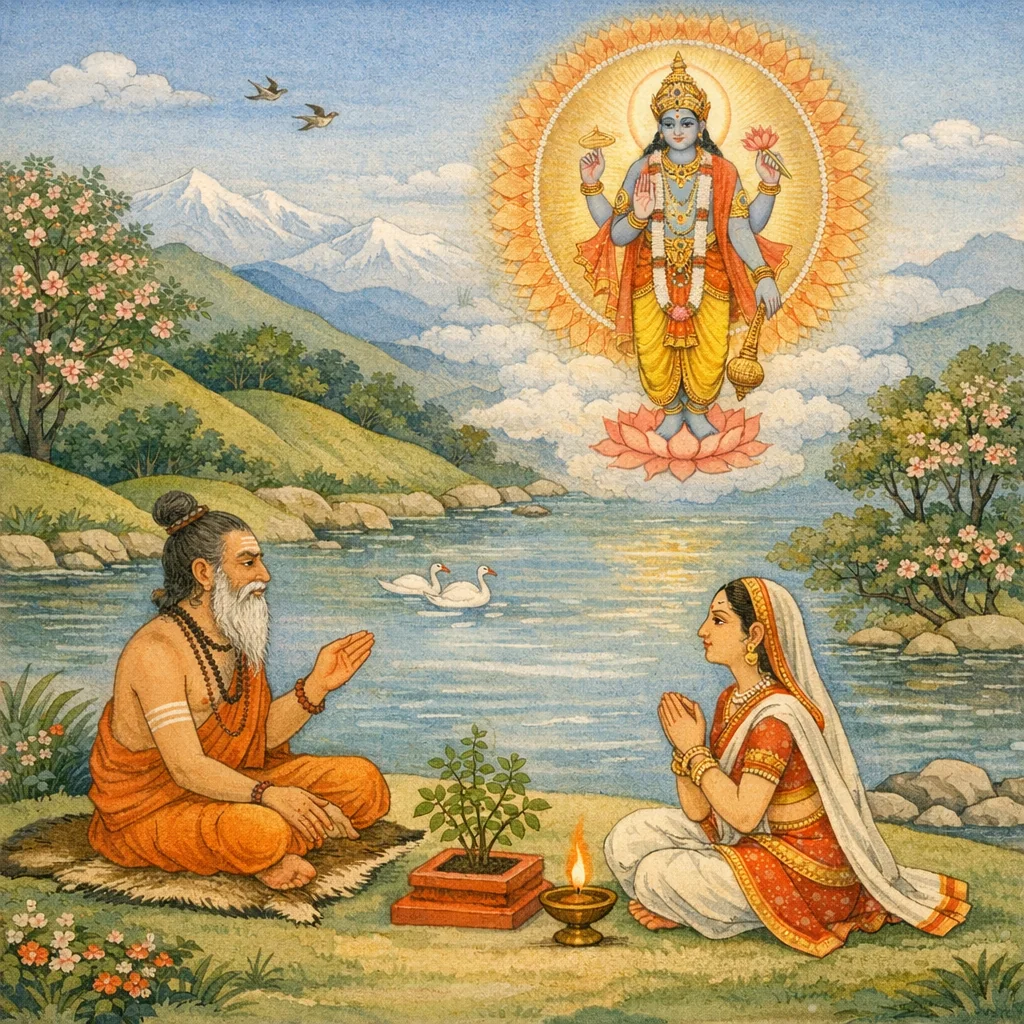
Chapter 106 portrays the sudden loss/abduction of the child of King Āyū and Indumatī (daughter of Svarbhānu). The mother’s lament rises into self-scrutiny: she ascribes the calamity to wrongdoing in a former birth—breach of trust, deceit, or an offense against a child—and asks whether ritual obligations were neglected, such as Vaiśvadeva hospitality and offerings consecrated by Brahmins. The narrative also recalls Dattātreya’s boon of a virtuous, unconquerable son, sharpening the crisis: how can an obstacle arise against a blessing already granted? Indumatī faints in grief; Āyū, shaken, weeps and doubts the power of austerity and charity before destiny. The colophon places the chapter within the Vena account, the glorification of Gurutīrtha, the Cyavana narrative, and the Nāhuṣa episode.
Shlokas
Verse 1
कुंजल उवाच । आयुभार्या महाभागा स्वर्भानोस्तनया सुतम् । अपश्यंती सुबालं तं देवोपममनौपमम्
Kuṃjala said: The illustrious wife of Āyu—daughter of Svarbhānu—did not see her little son, that lovely child, godlike and beyond compare.
Verse 2
हाहाकारं महत्कृत्वा रुरोद वरवर्णिनी । केन मे लक्षणोपेतो हृतो बालः सुलक्षणः
Raising a great cry of lament, the fair-complexioned lady wept: “By whom has my child—endowed with auspicious marks, that well-featured boy—been taken away?”
Verse 3
तपसा दानयज्ञैश्च नियमैर्दुष्करैः सुतः । संप्राप्तो हि मया वत्स कष्टैश्च दारुणैः पुनः
Through austerity, gifts, sacrifices, and difficult disciplines, I have indeed obtained you, my son—after hardships and harsh trials again and again.
Verse 4
दत्तात्रेयेण पुण्येन संतुष्टेन महात्मना । दत्तः पुत्रो हृतः केन रुरोद करुणान्विता
Pleased by the meritorious Dattātreya, that great-souled one granted a son; yet, “By whom has the given son been taken away?”—thus she cried, overcome with compassion and sorrow.
Verse 5
हा पुत्र वत्स मे तात हा बालगुणमंदिर । क्वासि केनापनीतोसि मम शब्दः प्रदीयताम्
Alas, my son—my dear child, my beloved! O abode of a child’s virtues—where are you? By whom have you been taken away? Let me hear your voice!
Verse 6
सोमवंशस्य सर्वस्य भूषणोसि न संशयः । केन त्वमपनीतोसि मम प्राणैः समन्वितः
You are, without doubt, the ornament of the entire Lunar dynasty. By whom have you been taken away—though you are bound up with my very life-breaths?
Verse 7
राजसुलक्षणैर्दिव्यैः संपूर्णः कमलेक्षणः । केनाद्यापहृतो वत्सः किं करोमि क्व याम्यहम्
“That lotus-eyed child, endowed with divine marks of royalty, has been taken away today. By whom has my dear son been abducted? What am I to do? Where shall I go?”
Verse 8
स्फुटं जानाम्यहं कर्म ह्यन्यजन्मनि यत्कृतम् । न्यासनाशः कृतः कस्य तस्मात्पुत्रो हृतो मम
I clearly know the deed I performed in another birth. Whose entrusted deposit did I destroy? Because of that, my son has been taken from me.
Verse 9
किं वा छलं कृतं कस्य पूर्वजन्मनि पापया । कर्मणस्तस्य वै दुःखमनुभुंजामि नान्यथा
Or what deceit did I, a sinful one, commit against someone in a former birth? Surely I endure this sorrow only as the fruit of that karma—there is no other cause.
Verse 10
रत्नापहारिणी जाता पुत्ररत्नं हृतं मम । तस्माद्दैवेन मे दिव्य अनौपम्य गुणाकरः
She has become a thief of jewels—my jewel-like son has been taken away. Therefore, by destiny, there is now for me this divine one, an incomparable mine of virtues.
Verse 11
किं वा वितर्कितो विप्रः कर्मणस्तस्य वै फलम् । प्राप्तं मया न संदेहः पुत्रशोकान्वितं भृशम्
What use is further speculation, O brāhmaṇa? The fruit of that deed has indeed come upon me—there is no doubt—overwhelmingly accompanied by grief for my son.
Verse 12
किं वा शिशुविरोधश्च कृतो जन्मांतरे मया । तस्य पापस्य भुंजामि कर्मणः फलमीदृशम्
Or did I commit some offense against a child in a former birth? I am now experiencing the consequence—such is the fruit of that sinful deed.
Verse 13
याचमानस्य चैवाग्रे वैश्वदेवस्य कर्मणः । किं वापि नार्पितं चान्नं व्याहृतीभिर्हुतं द्विजैः
When a beggar stands at the threshold during the rite of Vaiśvadeva, what food is there that has not been offered? Or what food has not been sanctified by Brahmins as an oblation, poured with the sacred utterances—the vyāhṛtis?
Verse 14
एवं सुदेवमानाच्च स्वर्भानोस्तनया तदा । इंदुमती महाभाग शोकेन करुणाकुला
Thus, at that time, Indumatī—the daughter of Svarbhānu—was greatly honored by Sudeva; yet, O noble one, she was overwhelmed with sorrow and filled with compassion.
Verse 15
पतिता मूर्च्छिता शोकाद्विह्वलत्वं गता सती । निःश्वासान्मुंचमाना सा वत्सहीना यथा हि गौः
Overcome by grief, the virtuous woman collapsed and fainted, falling into utter distress; she kept heaving deep sighs, like a cow bereft of her calf.
Verse 16
आयू राजा स शोकेन दुःखेन महतान्वितः । बालं श्रुत्वा हृतं तं तु धैर्यं तत्याज पार्थिवः
King Āyū, overwhelmed by intense sorrow and grief, on hearing that the child had been taken away, lost his composure and abandoned all steadiness.
Verse 17
तपसश्च फलं नास्ति नास्ति दानस्य वै फलम् । यस्मादेवं हृतः पुत्रस्तस्मान्नास्ति न संशयः
There is no fruit in austerity, and indeed no fruit in charity—since my son has been taken away in this manner; of this there is no doubt.
Verse 18
दत्तात्रेयः प्रसादेन वरं मे दत्तवान्पुरा । अजेयं च जयोपेतं पुत्रं सर्वगुणान्वितम्
Formerly, by the grace of Dattātreya, a boon was bestowed upon me: a son unconquerable, attended by victory and endowed with every virtue.
Verse 19
तस्य वरप्रदानस्य कथं विघ्नो ह्यजायत । इति चिंतापरो राजा दुःखितः प्रारुदद्भृशम्
“How, indeed, did an obstacle arise to the granting of that boon?” Thus, absorbed in anxious thought, the king, distressed, began to weep bitterly.
Verse 106
इति श्रीपद्मपुराणे भूमिखंडे वेनोपाख्याने गुरुतीर्थमाहात्म्ये च्यवनचरित्रे नाहुषाख्याने षडधिकशततमोऽध्यायः
Thus, in the Śrī Padma Purāṇa, in the Bhūmi-khaṇḍa—within the account of Vena, in the glorification of the sacred ford called Gurutīrtha, in the narrative of Cyavana, and in the episode concerning Nāhuṣa—ends the one-hundred-and-sixth chapter.