The Exposition of Spiritual Knowledge (Jñāna-pradarśanam)
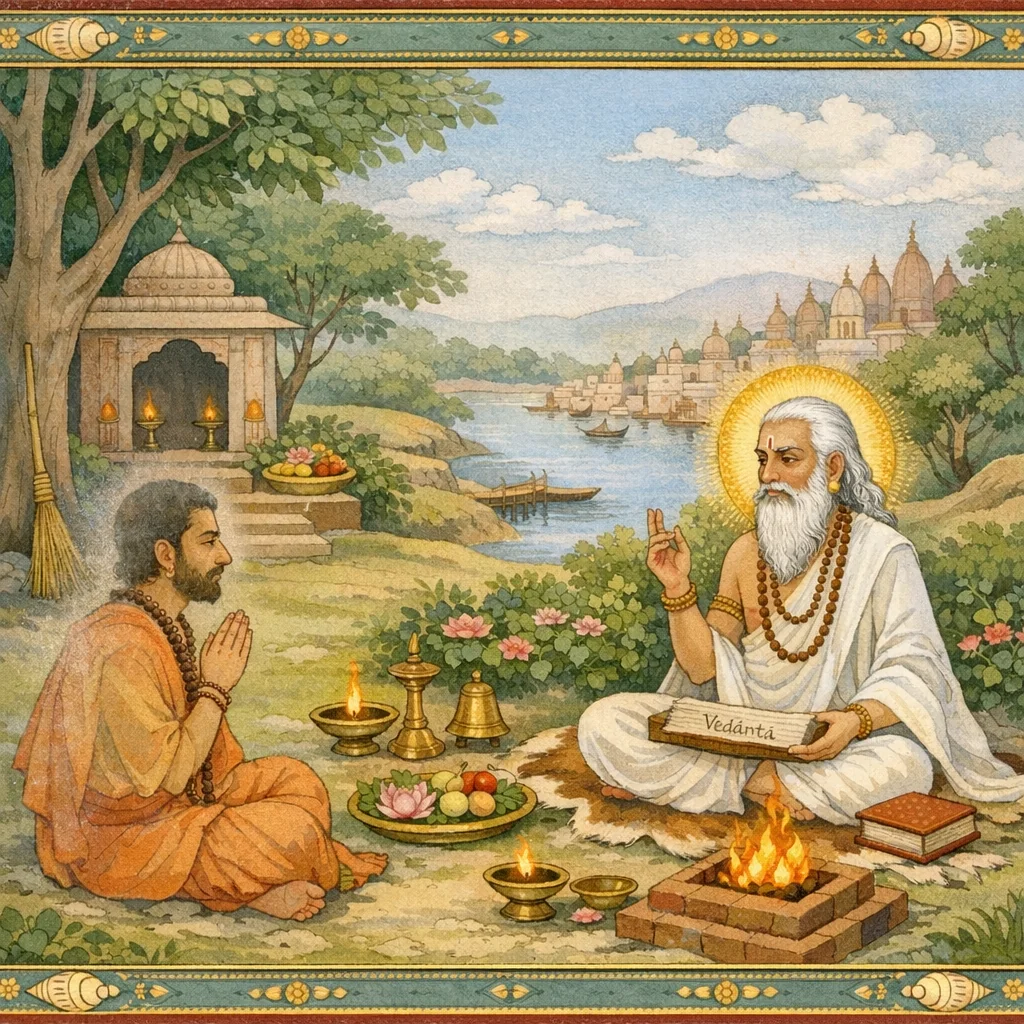
Sanaka praises the immediate sin-destroying power of hearing or reciting Viṣṇu’s greatness, and distinguishes devotees by fitness: the serene conquer the six inner enemies and approach the Imperishable through jñāna-yoga; the ritually purified approach Acyuta through karma-yoga; the greedy and deluded neglect the Lord. He then relates an ancient tale promising Aśvamedha-like merit: Vedamālī, a Veda-master and Hari-bhakta, falls into unrighteous trade through family-centered greed—selling forbidden goods and liquor, trafficking in vows, and accepting impure gifts. Seeing the insatiability of hope and craving, he renounces, divides his wealth, supports public works and temples, and goes to the hermitage of Nara–Nārāyaṇa. There he meets the radiant sage Jānantī, receives hospitality, and seeks liberating knowledge. Jānantī prescribes constant Viṣṇu-smaraṇa, non-slander, compassion, abandonment of the six vices, honoring guests, selfless flower/leaf worship, offerings to gods–ṛṣis–pitṛs, agni-sevā, temple cleaning/repair and lamp-lighting, circumambulation and stotra, and daily study of Purāṇa and Vedānta. Vedamālī’s question “Who am I?” is answered through teaching on mind-born ego, the attributeless Self, and the mahāvākya “Tat tvam asi,” culminating in Brahman-realization and final liberation at Vārāṇasī. The chapter ends with the phalaśruti: hearing or reciting severs karmic bondage.
Shlokas
Verse 1
सनक उवाच । पुनर्वक्ष्यामि माहात्म्यं देवदेवस्य चक्रिणः । पठतां शृण्वतां सद्यः पापराशिः प्रणश्यति 1. ॥ १ ॥
Sanaka said: I shall again proclaim the greatness of the Divine Lord who bears the discus (Viṣṇu). For those who recite it and those who listen to it, the mass of sins is destroyed at once.
Verse 2
शान्ता जितारिषड्वर्गा योगेनाप्यनहङ्कृताः । यजन्ति ज्ञानयोगेन ज्ञानरूपिणमव्ययम् ॥ २ ॥
Peaceful, having conquered the six inner enemies, and remaining free from ego even while established in yoga, they worship through the discipline of knowledge the Imperishable One whose very nature is Knowledge.
Verse 3
तीर्थस्नानैर्विशुद्धा ये व्रतदानतपोमखैः । यजन्ति कर्मयोगेन सर्वधातारमच्युतम् ॥ ३ ॥
Those purified by bathing at sacred tīrthas, and by vows, charity, austerity, and sacrificial rites, worship Acyuta—the Imperishable Lord who upholds all beings—through the discipline of karma-yoga.
Verse 4
लुब्धा व्यसनिनोऽज्ञाश्च न यजन्ति जगत्पतिम् । अजरामरवन्मूढास्तिष्ठन्ति नरकीटकाः ॥ ४ ॥
The greedy, the vice-addicted, and the ignorant do not worship the Lord of the world; deluded as though ageless and deathless, they remain like worms of hell.
Verse 5
तडिल्लेखाश्रिया मत्ता वृथाहङ्कारदूषिताः । न यजन्ति जगन्नाथं सर्वश्रेयोविधायकम् ॥ ५ ॥
Intoxicated by splendor as fleeting as a streak of lightning, and tainted by vain ego, they do not worship Jagannātha, the Lord of the universe, bestower of every highest good.
Verse 6
हरिधर्मरताः शान्ता हरिपादाब्जसेवकाः । दैवात्केऽपीह जायन्ते लोकानुग्रहतत्पराः ॥ ६ ॥
Peaceful souls devoted to Hari’s dharma, servants of Hari’s lotus-feet, are—by divine providence—born here and there in the world, intent on bestowing grace upon all people.
Verse 7
कर्मणा मनसा वाचा यो यजेद्भक्तितो हरिम् । स याति परमं स्थानं सर्वलोकोत्तमोत्तमम् ॥ ७ ॥
Whoever worships Hari with bhakti through action, mind, and speech attains the supreme abode—transcending and surpassing even the highest of all worlds.
Verse 8
अत्रैवोदाहरन्तीममितिहासं पुरातनम् । पठतां शृण्वतां चैव सर्वपापप्रणाशनम् ॥ ८ ॥
Here itself I shall cite this ancient, sacred narrative; for those who recite it and those who listen, it becomes the destroyer of all sins.
Verse 9
तत्प्रवक्ष्यामि चरितं यज्ञमालिसुमालिनोः । यस्य श्रवणमात्रेण वाजिमेधफलं लभेत् ॥ ९ ॥
I shall now recount the sacred story of Yajñamāli and Sumāli—by merely hearing it, one gains the merit that comes from performing the Aśvamedha (horse-sacrifice).
Verse 10
कश्चिदासीत्पुरा विप्र ब्राह्मणो रैवतेऽन्तरे । वेदमालिरिति ख्यातो वेदवेदाङ्गपारगः ॥ १० ॥
O brāhmaṇa, in former times—during the reign of Raivata—there lived a brāhmaṇa renowned as Vedamāli, who had mastered the Vedas and the Vedāṅgas.
Verse 11
सर्वभूतदयायुक्तो हरिपूजापरायणः । पुत्रमित्रकलत्रार्थं धनार्जनपरोऽभवत् ॥ ११ ॥
Though compassionate to all beings and devoted to the worship of Hari, he became intensely preoccupied with acquiring wealth for the sake of son, friends, and wife.
Verse 12
अपण्यविक्रयं चक्रे तथा च रसविक्रयम् । चण्डालाद्यैरपि तथा सम्भाषी तत्प्रतिग्रही ॥ १२ ॥
He engaged in selling what ought not be sold, and also in trading intoxicating liquor. He even conversed with outcastes such as Caṇḍālas and accepted gifts from them as well.
Verse 13
तपसां विक्रयं चक्रे व्रतानां विक्रयं तथा । परार्थं तीर्थगमनं कलत्रार्थमकारयत् ॥ १३ ॥
He began to sell austerities and likewise to sell sacred vows; even pilgrimages to the tīrthas—meant for higher spiritual ends—he made to serve worldly aims, arranging them for the sake of obtaining a wife.
Verse 14
कालेन गच्छता विप्र जातौ तस्य सुतावुभौ । यज्ञमाली सुमाली च यमलावतिशोभनौ ॥ १४ ॥
As time passed, O brāhmaṇa, two sons were born to him—Yajñamālī and Sumālī—twin brothers of exceedingly handsome appearance.
Verse 15
ततः पिता कुमारौ तावतिस्नेहसमन्वितः । पोषयामास वात्सल्याद्बहुभिः साधनैस्तदा ॥ १५ ॥
Then the father, filled with such affection, nourished and brought up the two boys; out of parental tenderness he provided for them at that time with many means and resources.
Verse 16
वेदमालिर्बहूपायैर्धनं सम्पाद्य यत्नतः । स्वधनं गणयामास कियत्स्यादिति वेदितुम् ॥ १६ ॥
Having diligently amassed wealth by many means, Vedamālī began to count his own money, wishing to know how much it amounted to.
Verse 17
निधिकोटिसहस्राणां कोटिकोटिगुणान्वितम् । विगणय्य स्वयं हृष्टो विस्मितश्चार्थचिन्तया ॥ १७ ॥
After reckoning it as surpassing thousands of crores of treasures, as though multiplied by crores upon crores, he became delighted; and, pondering its significance, he grew astonished.
Verse 18
असत्प्रतिग्रहैश्चैव अपण्यानां च विक्रयैः । मया तपोविक्रयाद्यैरेतद्धनमुपार्जितम् ॥ १८ ॥
This wealth I have amassed through improper gifts and bribes, by selling what ought not be sold, and even by trafficking in austerity (tapas) and the like.
Verse 19
नाद्यापि शान्तिमापन्ना मम तृष्णातिदुःसहा । मेरुतुल्यसुवर्णानि ह्यसङ्ख्यातानि वाञ्छति ॥ १९ ॥
Even now my unbearable craving has not found peace; it yearns for countless heaps of gold, vast as Mount Meru.
Verse 20
अहो मन्ये महाकष्टं समस्तक्लेशसाधनम् । सर्वान्कामानवाप्नोति पुनरन्यच्च कांक्षति ॥ २० ॥
Alas, I deem it a great misery—an engine of every affliction—that even after gaining all one desires, a person again longs for something else.
Verse 21
जीर्यन्ति जीर्यतः केशाः दन्ताः जीर्यन्ति जीर्यतः । चक्षुःश्रोत्रे च जोर्येते तृष्णैका तरुणायते ॥ २१ ॥
As one ages, the hair grows old; as one ages, the teeth wear away. The eyes and ears too decline—yet craving alone keeps growing younger, ever fresh.
Verse 22
ममेन्द्रि याणि सर्वाणि मन्दभावं व्रजन्ति च । बलं हृतं च जरसा तृष्णा तरुणतां गता ॥ २२ ॥
All my senses are slipping into dullness; old age has stolen my strength—yet my craving has returned to youth.
Verse 23
कष्टाशा वर्त्तते यस्य स विद्वानथ पण्डितः । सुशान्तोऽपि प्रमन्युः स्याद्धीमानप्यतिमूढधीः ॥ २३ ॥
One whose hopes are set upon what is hard to obtain is still called learned and a scholar; yet even one who seems very calm may blaze with fierce anger, and even an intelligent person may act with utterly deluded understanding.
Verse 24
आशा भङ्गकरी पुंसामजेयारातिसन्निभा । तस्मादाशां त्यजेत्प्राज्ञो यदीच्छेच्छाश्वतं सुखम् ॥ २४ ॥
Hope (worldly expectation) shatters men and is like an unconquerable enemy. Therefore the wise should abandon hope, if they desire everlasting happiness.
Verse 25
बलं तेजो यशश्चैव विद्यां मानं च वृद्धताम् । तथैव सत्कुले जन्म आशा हन्त्यतिवेगतः ॥ २५ ॥
Hope (craving expectation), rushing with great force, destroys one’s strength, radiance, and fame; it also ruins learning, honour, and maturity—and even the advantage of being born in a noble family.
Verse 26
नृणामाशाभिभूतानामाश्चर्यमिदमुच्यते । किञ्चिद्दातापि चाण्डालस्तस्मादधिकतां गतः ॥ २६ ॥
This is said to be the wonder concerning people overpowered by craving: even a Caṇḍāla, if he gives even a little, rises to a higher state than such a person.
Verse 27
आशाभिभूताः ये मर्त्या महामोहा महोद्धताः । अवमानादिकं दुःखं न जानन्ति कदाप्यहो ॥ २७ ॥
Those mortals who are overpowered by hope (craving)—deeply deluded and greatly arrogant—never recognize, alas, the suffering that begins with dishonor and humiliation.
Verse 28
मयाप्येवं बहुक्लेशैरेतद्धनमुपार्जितम् । शरीरमपि जीर्णं च जरसापहृतं बलम् ॥ २८ ॥
“I too have amassed this wealth only through many hardships; yet my body has grown old, and my strength has been carried away by age.”
Verse 29
इतः परं यतिष्यामि परलोकार्थमादरात् । एवं निश्चित्य विप्रेन्द्र धर्ममार्गरतोऽभवत् ॥ २९ ॥
“From this point onward, I shall strive with earnestness for the sake of the next world.” Having resolved thus, O best of brāhmaṇas, he became devoted to the path of dharma.
Verse 30
तदैव तद्धनं सर्वं चतुर्द्धा व्यभजत्तथा । स्वयं तु भागद्वितयं स्वार्जितार्थादपाहरत् ॥ ३० ॥
Just then he divided all that wealth into four parts; yet for himself he took away two shares from the earnings he had acquired by his own effort.
Verse 31
शेषं च भागद्वितयं पुत्रयोरुभयोर्ददौ । स्वेनार्जितानां पापानां नाशं कर्तुमनास्तदा ॥ ३१ ॥
And he then gave the remaining two portions to both of his sons, intending thereby to bring about the destruction of the sins he himself had accumulated.
Verse 32
प्रपातडागारामांश्च तथा देवगृहान्बहून् । अन्नादीनां च दानानि गङ्गातीरे चकार सः ॥ ३२ ॥
He had many rest-houses with drinking-water facilities, ponds, and gardens built, and also numerous temples of the gods; and on the bank of the Gaṅgā he arranged gifts of food and other necessities.
Verse 33
एवं धनमशेषं च विश्राण्य हरिभक्तिमान् । नरनारायणस्थानं जगाम तपसे वनम् ॥ ३३ ॥
Thus, having distributed all his wealth without remainder, that devotee of Hari went to the sacred abode of Nara and Nārāyaṇa, entering the forest to perform tapas (austerities).
Verse 34
तत्रापश्यन्महारम्यमाश्रमं मुनिसेवितम् । फलितैः पुष्पितैश्चैव शोभितं वृक्षसञ्चयैः ॥ ३४ ॥
There he beheld a most delightful hermitage (āśrama), frequented and served by sages, adorned with clusters of trees laden with fruits and blossoms.
Verse 35
गृणद्भिः परमं ब्रह्म शास्त्रचिन्तापरैस्तथा । परिचर्यापरैर्वृद्धैर्मुनिभिः परिशोभितम् ॥ ३५ ॥
It was splendidly adorned by aged sages—some chanting the Supreme Brahman, others devoted to contemplation of the śāstras, and others intent on paricaryā, devoted service.
Verse 36
शिष्यैः परिवृतं तत्र मुनिं जानन्तिसंज्ञकम् । गृणन्तं परमं ब्रह्म तेजोराशिं ददर्श ह ॥ ३६ ॥
There he beheld the sage named Jānanti, surrounded by disciples, chanting the Supreme Brahman—appearing like a concentrated mass of divine radiance.
Verse 37
शमादिगुणसंयुक्तं रागादिरहितं मुनिम् । शीर्णपर्णाशनं दृष्ट्वा वेदमालिर्ननाम तम् ॥ ३७ ॥
Seeing that sage endowed with virtues beginning with śama (serenity), free from rāga (passion) and the like, and living on withered leaves, Vedamāli bowed down to him.
Verse 38
तस्य जानन्तिरागन्तोः कल्पयामास चार्हणम् । कन्दमूलफलाद्यैस्तु नारायणधिया मुने ॥ ३८ ॥
Recognizing him as a newly arrived guest, she arranged a fitting reception—offering tubers, roots, fruits, and the like—O sage, with her mind fixed upon Nārāyaṇa.
Verse 39
कृतातिथ्यक्रियस्तेन वेदमाली कृताञ्जलि । विनयावनतो भूत्वा प्रोवाच वदतां वरम् ॥ ३९ ॥
Having duly performed the rites of hospitality, Vedamālī—hands folded in reverence—bowed with humility and then spoke to the best among speakers.
Verse 40
भगवन्कृतकृत्योऽस्मि विगतं कल्मषं मम । मामुद्धर महाभाग ज्ञानदानेन पण्डित ॥ ४० ॥
O Blessed Lord, I feel my purpose has been fulfilled; the stain of my sin has departed. O great-souled, wise one—raise me up by granting the gift of true knowledge.
Verse 41
एवमुक्तस्ततस्तेन जानन्तिर्मुनिसत्तमः । प्रोवाच प्रहसन्वाग्मी वेदमालि गुणान्वितम् ॥ ४१ ॥
Thus addressed by him, the best of sages—Jānanti—smilingly spoke, eloquent in speech, adorned with the garland of the Vedas, and endowed with virtues.
Verse 42
जानन्तिरुवाच । शृणुष्व विप्रशार्दूल संसारोच्छेदकारणम् । प्रवक्ष्यामि समासेन दुर्लभं त्वकृतात्मनाम् ॥ ४२ ॥
Jānanti said: “Listen, O tiger among brāhmaṇas. I shall briefly declare the cause that cuts off saṃsāra, the round of transmigration—something hard to obtain for those who have not disciplined themselves.”
Verse 43
भज विष्णुं परं नित्यं स्मर नारायणं प्रभुम् । परापवादं पैशुन्यं कदाचिदपि मा कृथाः ॥ ४३ ॥
Ever worship Vishnu, the Supreme, and constantly remember Lord Narayana. Never, at any time, engage in slander or malicious tale-bearing about others.
Verse 44
परोपकारनिरतः सदा भव महामते । हरिपूजापरश्चैव त्यज मूर्खसमागमम् ॥ ४४ ॥
O wise one, always be devoted to the welfare of others; be steadfast in the worship of Hari, and abandon the company of the foolish.
Verse 45
कामं क्रोधं च लोभं च मोहं च मदमत्सरौ । परित्यज्यात्मवल्लोकं दृष्ट्वा शान्तिं गमिष्यसि ॥ ४५ ॥
Abandon desire, anger, greed, delusion, pride, and envy. Seeing the world with the vision of the Self (Atman), you will attain peace.
Verse 46
असूयां परनिन्दा च कदाचिदपि मा कुरु । दम्भाचारमहङ्कारं नैष्ठुर्यं च परित्यज ॥ ४६ ॥
Never, at any time, indulge in envy or in criticizing others. Renounce hypocrisy in conduct, arrogance, and harshness.
Verse 47
दयां कुरुष्व भूतेषु शुश्रूषां च तथा सताम् । त्वया कृतांश्च धर्मान्वै मा प्रकाशय पृच्छताम् ॥ ४७ ॥
Show compassion toward all beings, and likewise render attentive service to the virtuous. And even when people ask, do not proclaim the righteous deeds you have performed.
Verse 48
अनाचारपरान्दृष्ट्वा नोपेक्षां कुरु शक्तितः । पूजयस्वातिथिं नित्यं स्वकुटुम्बाविरोधतः ॥ ४८ ॥
Seeing people inclined to improper conduct, do not neglect them; help as far as you are able. And always honor the guest, yet do so in a way that does not bring conflict within your own family.
Verse 49
पत्रैः पुष्पैः फलैर्वापि दूर्वाभिः पल्लवैरथ । पूजयस्व जगन्नाथं नारायणमकामतः ॥ ४९ ॥
With leaves, flowers, or fruits, and also with dūrvā grass and tender sprouts—worship Jagannātha Nārāyaṇa selflessly, without any desire for reward.
Verse 50
देवानृषीन्पितॄंश्चापि तर्पयस्व यथाविधि । अग्नेश्च विधिवद्विप्र परिचर्यापरो भव ॥ ५० ॥
Offer libations (tarpana), according to the prescribed rite, to the gods, the sages (ṛṣis), and the ancestors; and, O brāhmaṇa, be devoted as well to the proper, rule-based service of the sacred fire (Agni).
Verse 51
देवतायतने नित्यं सम्मार्जनपरो भव । तथोपलेपनं चैव कुरुष्व सुसमाहितः ॥ ५१ ॥
In the temple of the Deity, be ever devoted to sweeping and cleaning; and likewise, with a well-collected mind, you should also perform the plastering and smearing of the sacred place.
Verse 52
शीर्णस्फुटितसम्धानं कुरु देवगृहे सदा । मार्गशोभां च दीपं च विष्णोरायतने कुरु ॥ ५२ ॥
Always repair what is worn out or cracked in the Lord’s temple; and in Viṣṇu’s shrine, arrange for the beautification of the approach-path and the lighting of lamps.
Verse 53
कन्दमूलफलैर्वापि सदा पूजय माधवम् । प्रदक्षिणनमस्कारैः स्तोत्राणां पठनैस्तथा ॥ ५३ ॥
Even with roots, tubers, and fruits, always worship Mādhava; likewise, by circumambulation, prostration, and the recitation of hymns of praise.
Verse 54
पुराणश्रवणं चैव पुराणपठनं तथा । वेदान्तपठनं चैव प्रत्यहं कुरु शक्तितः ॥ ५४ ॥
Each day, to the best of your ability, engage in hearing the Purāṇas, reading the Purāṇas, and also studying Vedānta.
Verse 55
एवंस्थिते तव ज्ञानं भविष्यत्युत्तमोत्तमम् । ज्ञानात्समस्तपापानां मोक्षो भवति निश्चितम् ॥ ५५ ॥
When this is thus established, your knowledge will become supremely excellent; and through that knowledge, liberation from all sins surely comes to pass.
Verse 56
एवं प्रबोधितस्तेन वेदमालिर्महामतिः । तथा ज्ञानरतो नित्यं ज्ञानलेशमवाप्तवान् ॥ ५६ ॥
Thus instructed by him, Vedamāli—the great-minded one—became ever devoted to knowledge, and in due course attained at least a portion, a spark of true spiritual insight.
Verse 57
वेदमालि कदाचित्तु ज्ञानलेशप्रचोदितः । कोऽहं मम क्रिया केति स्वयमेव व्यचिन्तयत् ॥ ५७ ॥
Once, Veda-māli, stirred by a mere trace of knowledge, reflected within himself: “Who am I? And what, truly, is my action—my duty?”
Verse 58
मम जन्म कथं जातं रूपं कीदृग्विधं मम । एवं विचारणपरो दिवानिशमतन्द्रि तः ॥ ५८ ॥
“How did my birth come about, and what is the nature of my form?”—thus intent on inquiry, he remained tirelessly engaged in reflection day and night.
Verse 59
अनिश्चितमतिर्भूत्वा वेदमालिर्द्विजोत्तमः । पुनर्जानन्तिमागम्य प्रणम्येदमुवाच ह ॥ ५९ ॥
Having become uncertain in mind, the excellent brāhmaṇa Vedamāli again approached Jānanti; bowing down, he spoke these words.
Verse 60
वेदमालिरुवाच । ममचित्तमतिभ्रान्तं गुरो ब्रह्मविदां वर । कोऽहं मम क्रिया का च मम जन्म कथं वद ॥ ६० ॥
Vedamāli said: “O Guru, best among the knowers of Brahman—my mind and understanding are bewildered. Who am I? What is my true duty and course of action? And how did I come to be born? Please tell me.”
Verse 61
जानन्तिरुवाच । सत्यं सत्यं महाभाग चित्तं भ्रान्तं सुनिश्चितम् । अविद्यानिलयं चित्तं कथं सद्भावमेष्यति ॥ ६१ ॥
Jānanti said: “Truly, truly, O greatly fortunate one, the mind is certainly deluded. Since the mind is a dwelling-place of ignorance, how can it ever attain true being (right reality)?”
Verse 62
ममेति गदितं यत्तु तदपि भ्रान्तिरिष्यते । अहङ्कारो मनोधर्म आत्मनो न हि पण्डित ॥ ६२ ॥
Even the notion expressed as “mine” is regarded as delusion. O learned one, egoism is merely a function of the mind; it does not belong to the Self.
Verse 63
पुनश्च कोऽहंमित्युक्तं वेदमाले त्वया तु यत् । मम जात्यादिशून्यस्य कथं नाम करोम्यहम् ॥ ६३ ॥
And again, O Vedamālā, garland of the Vedas, you asked, “Who am I?” Yet since I am devoid of caste and the like, how could I ever assign a name to myself?
Verse 64
अनौपम्यस्वभावस्य निर्गुणस्य परात्मनः । निरूपस्याप्रमेस्य कथं नाम करोम्यहम् ॥ ६४ ॥
How can I possibly assign a name to the Supreme Self—whose nature is without any comparison, who is beyond the guṇas, who has no describable form, and who is immeasurable?
Verse 65
परं ज्योतिस्स्वरूपस्य परिपूर्णाव्ययात्मनः । अविच्छिन्नस्वभावस्य कथ्यते च कथं क्रिया ॥ ६५ ॥
For the Supreme, whose very form is the highest Light—complete, imperishable in essence, and of uninterrupted nature—how can any ‘action’ be spoken of at all, and in what way could it be possible?
Verse 66
स्वप्रकाशात्मनो विप्र नित्यस्य परमात्मनः । अनन्तस्य क्रिया चैव कथं जन्म च कथ्यते ॥ ६६ ॥
O brāhmaṇa, how can action—and even birth—be spoken of in regard to the Supreme Self, who is self-luminous, eternal, and infinite?
Verse 67
ज्ञानैकवेद्यमजरं परं ब्रह्म सनातनम् । परिपूर्णं परानन्दं तस्मान्नान्यदिह द्विज ॥ ६७ ॥
The supreme, eternal Brahman—unaging and knowable only through true knowledge—is complete and of the nature of highest bliss; therefore, O twice-born one, there is nothing else here apart from That.
Verse 68
तत्त्वमस्यादिवाक्येभ्यो ज्ञानं मोक्षस्य साधनम् । ज्ञाने त्वनाहते सिद्धे सर्वं ब्रह्ममयं भवेत् ॥ ६८ ॥
From mahāvākya statements such as “Tat tvam asi” arises liberating knowledge—the means to mokṣa. When that knowledge is firmly established, untouched and unshaken, everything is realized as pervaded by Brahman.
Verse 69
एवं प्रबोधितस्तेन वेदमालिर्मुनीश्वर । मुमोद पश्यन्नात्मानमात्मन्येवाच्युतं प्रभुम् ॥ ६९ ॥
Thus instructed by him, O lord among sages, Vedamāli rejoiced—seeing his own Self, and within that very Self, the imperishable Lord (Acyuta), the Supreme Master.
Verse 70
उपाधिरहितं ब्रह्म स्वप्रकाशं निरञ्जनम् । अहमेवेति निश्चित्य परां शान्तिमवाप्तवान् ॥ ७० ॥
Having ascertained with certainty, “I alone am that Brahman”—free from all limiting adjuncts, self-luminous, and stainless—he attained the supreme peace.
Verse 71
ततश्च व्यवहारार्थं वेदमालिर्मुनीश्वरम् । गुरुं प्रणम्य जानन्तिं सदा ध्यानपरोऽभवत् ॥ ७१ ॥
Then, for the sake of proper conduct in worldly dealings, Vedamāli bowed to the lordly sage—his guru, the all-knowing one—and thereafter remained constantly devoted to meditation.
Verse 72
गते बहुतिथे काले वेदमालिर्मुनीश्वर । वाराणसीपुरं प्राप्य परं मोक्षमवाप्तवान् ॥ ७२ ॥
After a long time had passed, the lordly sage Vedamāli reached the city of Vārāṇasī and attained the supreme liberation.
Verse 73
य इमं पठतेऽध्यायं शृणुयाद्वा समाहितः । स कर्मपाशविच्छेदं प्राप्य सौख्यमवाप्नुयात् ॥ ७३ ॥
Whoever, with a collected mind, recites this chapter or even listens to it, attains the cutting of the bondage of karma and thereby obtains happiness and well-being.
Verse 74
इति श्रीबृहन्नारदीयपुराणे पूर्वभागे प्रथमपादे ज्ञाननिरूपणं नाम पञ्चत्रिंशोऽध्यायः ॥ ३५ ॥
Thus ends the thirty-fifth chapter, called “The Exposition of Spiritual Knowledge,” in the First Quarter of the First Part of the Śrī Bṛhannāradīya Purāṇa.
Frequently Asked Questions
As a Purāṇic phalaśruti strategy, it elevates śravaṇa (devotional listening) as a powerful, accessible substitute for costly Vedic royal rites, while reorienting merit toward inner purification, Viṣṇu-bhakti, and mokṣa-dharma rather than ritual prestige alone.
A combined regimen of yama-like ethics (non-slander, non-envy, compassion, humility), devotional worship with simple offerings (leaves/flowers/fruits), ritual duties (libations to devas/ṛṣis/pitṛs and fire-service), temple-sevā (cleaning, plastering, repairs, lamps, pathway beautification), and daily study/listening to Purāṇas and Vedānta—done niṣkāma (without desire for reward).
The chapter presents Viṣṇu/Nārāyaṇa as the Imperishable Reality and culminates in non-dual Self-knowledge through mahāvākya, portraying jñāna as the fruition of purified karma and steadfast bhakti—an integrative Purāṇic model where devotion matures into Brahman-realization.