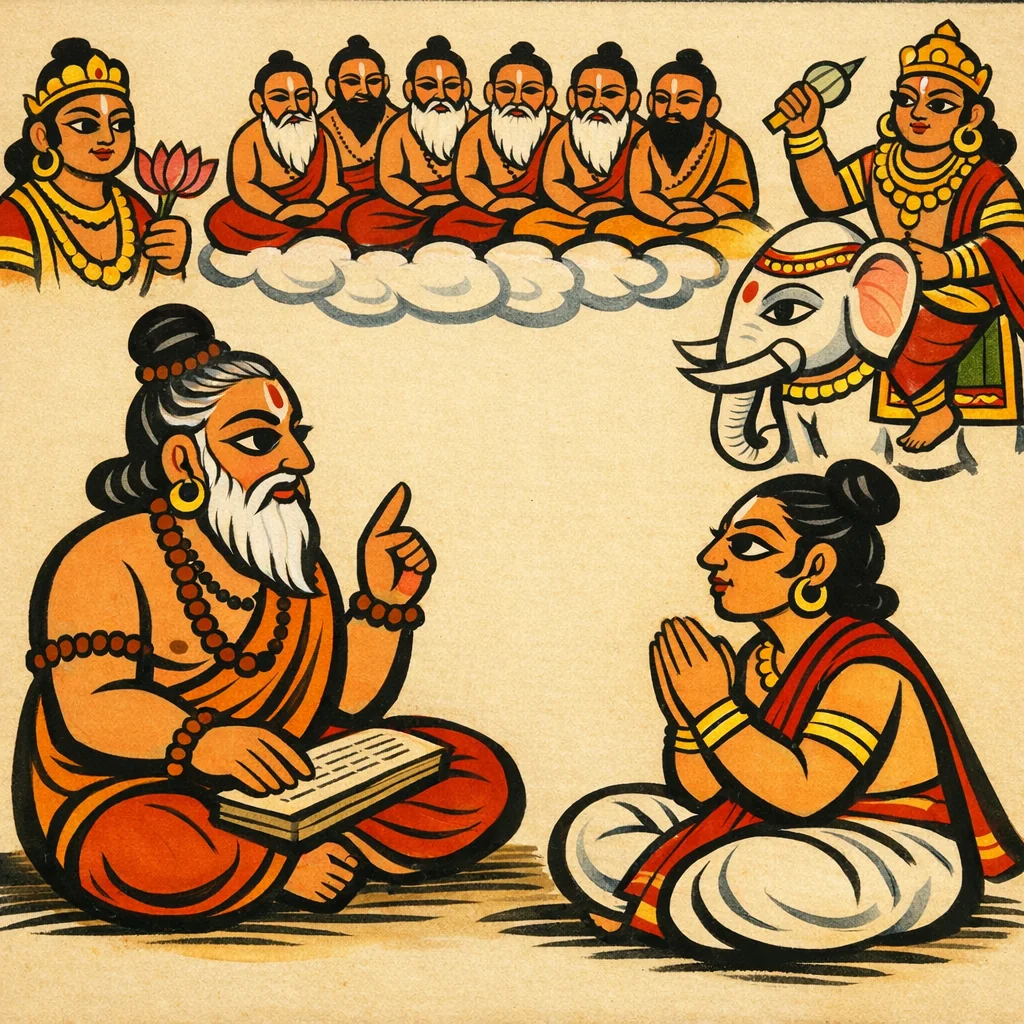
Adhyaya 80: Vaivasvata Manvantara: Enumeration of Manus and the Eighth Manu Sāvarṇi
वैवस्वतकिर्तनम् (Vaivasvata-kīrtanam)
Raktabija
This adhyaya extols the Vaivasvata Manvantara, enumerating the succession of all Manus and describing the Eighth Manu, Sāvarṇi—his lineage, rule, and merits in upholding Dharma—thus affirming the sacred order of the ages.
Divine Beings
Celestial Realms
Key Content Points
Focus Keywords
Shlokas in Adhyaya 80
Verse 1
इति श्रीमार्कण्डेयपुराणे सावर्णिके मन्वन्तरे वैवस्वतकिर्तनं नामैकोनाशीतितमोऽध्यायः । अशीतितमोऽध्यायः— ८० । क्रौष्टुकिरुवाच स्वायम्भुवाद्याः कथिताः सप्तैते मनवो मम । तदन्तरेषु ये देवा राजानो मुनयस्तथा ॥
Thus in the Śrī Mārkaṇḍeya Purāṇa, in the Sāvarṇika Manvantara, the seventy-ninth chapter called ‘The Praise/Account of Vaivasvata’ ends. Chapter 80 begins. Krauṣṭuki said: ‘The seven Manus beginning with Svāyambhuva have been told to me; and in their intervals, which gods, kings, and sages appear?’
Verse 2
अस्मिन् कल्पे सप्त येऽन्ये भविष्यन्ति महामुने । मनवस्तान् समाचक्ष्व ये च देवादयश्च ये ॥
In this kalpa, O great sage, tell me of the other seven Manus who are yet to come to be, and also of the gods and others associated with them.
Verse 3
मार्कण्डेय उवाच कथितस्तव सावर्णिश्छायासंज्ञासुतश्च यः । पूर्वजस्य मनोस्तुल्यः स मनुर्भविताष्टमः ॥
Mārkaṇḍeya said: ‘Sāvarṇi—who is the son of Chāyā and Saṃjñā—has been described to you. Equal to the earlier Manu, he will be the eighth Manu.’
Verse 4
रामो व्यासो गालवश्च दीप्तिमान्कृप एव च । ऋष्यशृङ्गस्तथा द्रोणस्तत्र सप्तर्षयोऽभवन् ॥
There were the Seven Sages: Rāma, Vyāsa, Gālava, Dīptimān, Kṛpa, Ṛṣyaśṛṅga, and Droṇa.
Verse 5
सुतपाश्चामिताभाश्च मुख्याश्चैव त्रिधा सुराः । विंशकः कथिताश्चैषां त्रयाणां त्रिगुणो गणः ॥
The gods are threefold: the Sutapās, the Amitābhās, and the Mukhyas. Each is declared as a group of twenty; thus, for the three, the total host is three times twenty.
Verse 6
तपस्तप्तश्च शक्रश्च द्युतिर्ज्योतिः प्रभाकरः । प्रभासो दयितो धर्मस्तेजोरश्मिश्चिरक्रतुः ॥
Tapastapta, Śakra, Dyuti, Jyotis, Prabhākara, Prabhāsa, Dayita, Dharma, Tejorāśmi, and Cirakratu—(these are among that group).
Verse 7
इत्यादिकस्तु सुतपा देवानां विंशको गणः । प्रभुर्विभुर्विभासाद्यस्तथान्यो विंशको गणः ॥
Such names beginning with these constitute the Sutapā group of twenty gods. Likewise, another group of twenty begins with Prabhu, Vibhu, and Vibhāsa.
Verse 8
सुराणाममिताभानां तृतीयमपि मे शृणु । दमो दान्तो ऋतः सोमो वित्ताद्याश्चैव विंशतिः ॥
Hear from me also the third group of the gods—the Amitābhās: Dama, Dānta, Ṛta, Soma, Vitta, and others—making up twenty.
Verse 9
मुख्या ह्येते समाख्याता देवा मन्वन्तराधिपाः । मारीचस्यैव ते पुत्राः कश्यपस्य प्रजापतेः ॥
These are called the Mukhyas—the gods who preside over a Manvantara. Indeed, they are the sons of Marīci, born of Kaśyapa the Prajāpati.
Verse 10
भविष्याश्च भविष्यन्ति सावर्णस्यान्तरे मनोः । तेषामिन्द्रो भविष्यस्तु बलिर्वैरोचनिर्मुने ॥
In the future, in the Manvantara of Sāvarṇi Manu, they will be so. And their Indra will be Bali, the son of Virocana, O sage.
Verse 11
पाताल आस्ते योऽद्यापि दैत्यः समयबन्धनः । विरजाश्चार्ववीरश्च निर्मोहः सत्यवाक्कृतिः । विष्ण्वाद्याश्चैव तनयाः सावर्णस्य मनोर्नृपाः ॥
That Daitya (Bali) still dwells in Pātāla, bound by an agreement. Viraja, Cārvavīra, Nirmoha, Satyavāk, Kṛti, and others beginning with Viṣṇu are the sons—kings—of Sāvarṇi Manu.
Frequently Asked Questions
The chapter’s inquiry is classificatory and cosmological: it seeks a logically ordered account of Manvantara administration—who governs (Manu), who supports cosmic order (deva-gaṇas), and who preserves revelation and dharma (saptarṣis)—rather than a moral dilemma or narrative conflict.
It bridges from the already-described first seven Manus to the future sequence by explicitly naming the eighth Manu as Sāvarṇi, listing his saptarṣis, specifying his Indra (Bali Vairocani), and anchoring the relevant devas in a Kaśyapa–Mārīci genealogy, thereby strengthening the Purana’s Manvantara timeline.
The chapter emphasizes (1) Sāvarṇi’s descent as the son of Chāyā-Saṃjñā, (2) the deva groups’ descent as sons of Mārīci within Kaśyapa Prajāpati’s lineage, and (3) the assignment of the Indra-office to Bali Vairocani, described as presently residing in Pātāla under a binding covenant.