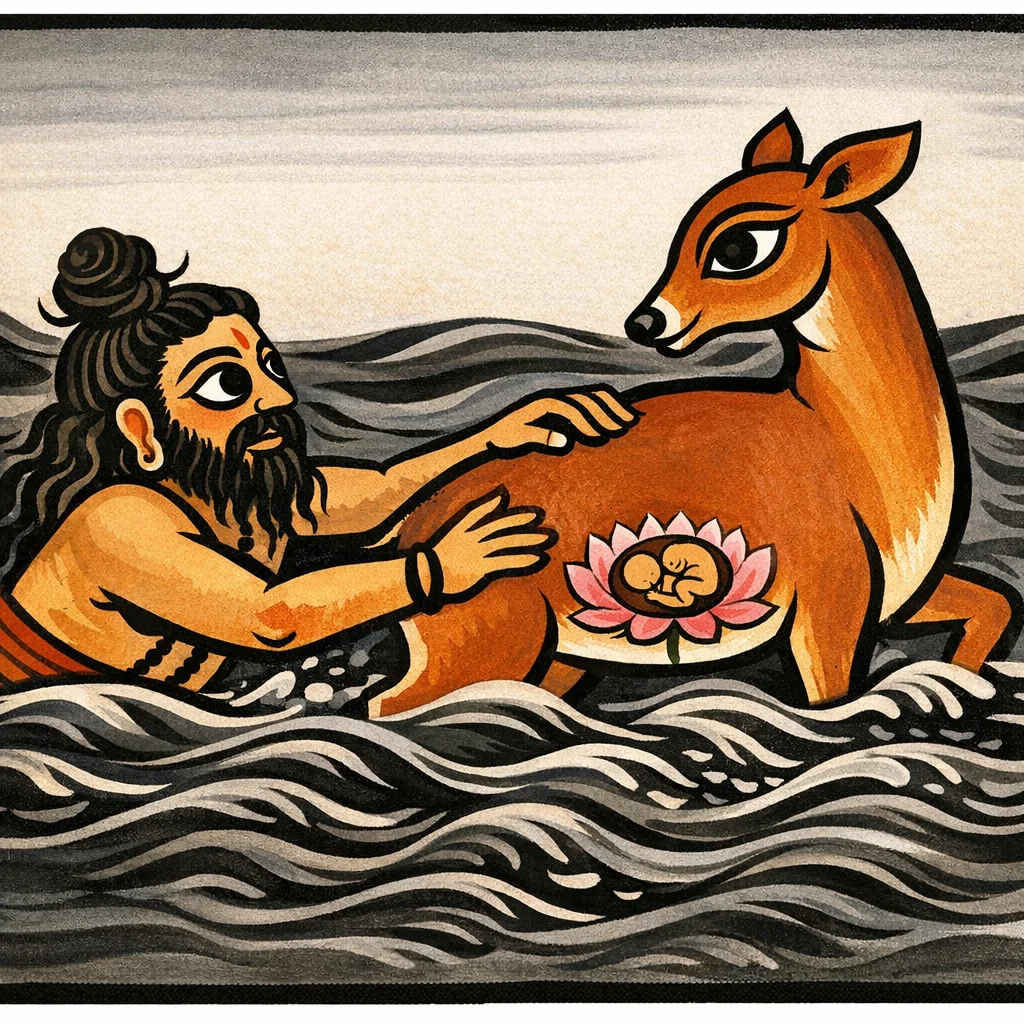
Adhyaya 74: King Svarashtra, the Deer-Queen’s Curse, and the Rise of Tamasa Manu
तामस-मन्वन्तर-प्रस्तावः (Tāmasa-Manvantara-Prastāvaḥ)
Battle with Mahishasura
This chapter recounts King Svarashtra and the curse pronounced by the Deer-Queen, by which calamity arises and the king’s destiny is overturned. It emphasizes the sacred law of karma and the power of dharma as he passes through grief, remorse, and awakening. The narrative also serves as a prelude to the advent of Tāmasa Manu and the beginning of the Tāmasa-manvantara.
Divine Beings
Celestial Realms
Key Content Points
Focus Keywords
Shlokas in Adhyaya 74
Verse 1
इति श्रीमार्कण्डेयपुराणे औत्तममन्वन्तरे त्रिसप्ततितमोऽध्यायः चतुःसप्ततितमोऽध्यायः—७४ । मार्कण्डेय उवाच । राजाभूद्विख्यातः स्वराष्ट्रो नाम वीर्यवान् । अनेकयज्ञकृत् प्राज्ञः संग्रामेष्वपराजितः ॥
Thus, in the Śrī Mārkaṇḍeya Purāṇa, in the Auttama Manvantara, the seventy-third chapter ends, and the seventy-fourth begins. Mārkaṇḍeya said: There was a renowned king named Svarāṣṭra, mighty in valor—one who performed many sacrifices, wise, and unconquered in battles.
Verse 2
तस्यायुḥ सुमहत्प्रादात् मन्त्रिणाराधितो रविः । पत्नीणाञ्च शतं तस्य धन्यानामभवद् द्विज ॥
The Sun (Ravi), propitiated by his minister, granted him a very great lifespan. And he had a hundred fortunate wives, O twice-born (brāhmaṇa).
Verse 3
तस्य दीर्घायुṣः पत्न्यो नातिदीर्घायुṣो मुने । कालेन जग्मुर्निधनं भृत्यमन्त्रिजनास्तथा ॥
O sage, the wives of that long-lived king were not long-lived; in time they went to death—likewise his servants, ministers, and other people.
Verse 4
स भार्याभिस्तथायुक्तो भृत्यैश्च सहजन्मभिः । उद्विग्नचेताः संप्राप वीर्यहानिमहर्निशम् ॥
Though accompanied by wives and by servants born alongside him (long-time companions), he became anxious at heart and, day and night, fell into a loss of vigor.
Verse 5
तं वीर्यहीनं निभृतैर्भृत्यैस्त्यक्तं सुदुःखितम् । अनन्तरो विमर्दाख्यो राज्याच्च्यावितवांस्तदा ॥
When he had become devoid of vigor—abandoned by his subdued, timid servants and plunged into great sorrow—then Anantara, called Vimarda, drove him out of the kingdom.
Verse 6
राज्याच्च्युतः सोऽपि वनं गत्वा निर्विण्णमानसः । तपस्तेपे महाभागे वितस्तापुलिने स्थितः ॥
Cast out from the kingdom, he too went to the forest with a disenchanted mind and performed austerities, standing on the blessed sandbank of the Vitastā river.
Verse 7
ग्रीष्मे पञ्चतमा भूत्वा वर्षास्वभ्रावकाशिकः । जलशायी च शिशिरे निराहारो यतव्रतः ॥
In summer he practiced the ‘five fires’ austerity; in the rains he remained exposed to the open sky; in winter he lay in water. He was fasting and firm in his vows.
Verse 8
ततस्तपस्यतस्तस्य प्रावृट्काले महाप्लवः । बभूवानुदिनं मेघैर्वर्षद्भिरनुसन्ततम् ॥
Then, while he was performing austerities, in the monsoon season a great flood arose, as clouds poured rain continuously day after day.
Verse 9
न दिग्विज्ञायते पूर्वा दक्षिणा वा न पश्चिमा । नोत्तरा तमसा सर्वमनुलिप्तमिवाभवत् ॥
No direction could be discerned—neither east, south, west, nor north; everything seemed as if smeared over with darkness.
Verse 10
ततोऽतिपूरेण नृपः स नद्याः प्रेरितस्तटम् । प्रार्थयन्नापि नावाप ह्रियमाणो महीपतिः ॥
Then, driven on by the river’s mighty flood, the king was forced toward the bank; though he pleaded, he found no boat, and the lord of the earth was being carried away.
Verse 11
अथ दूरे जलौघेन ह्रियमाणो महीपतिः । आससाद जले रौहीं स पुच्छे जगृहे च ताम् ॥
Then, carried far away by the torrent of waters, the king came upon a rauhī (a doe) in the water, and he seized her by the tail.
Verse 12
तेन प्लवेन स ययावूध्यमानो महीतले । इतश्चेतश्चान्धकारे आससाद तटं ततः ॥
Using her as a float, he went along borne by the current; tossed this way and that in the darkness, he then reached the bank.
Verse 13
विस्तारि पङ्कमत्यर्थं दुस्तरं स नृपस्तरन् । तथैव कृष्यमाणोऽन्यद्रम्यं वनमवाप सः ॥
The king, wading through a widely spread mire that was hard to cross, and still being dragged along, reached another delightful forest.
Verse 14
तत्रान्धकारे सा रौही चकर्ष वसुधाधिपम् । पुच्छे लग्नं महाभागं कृशं धमनिसन्ततौ ॥
There, in the darkness, that rauhī dragged the lord of the earth—clinging to her tail—noble, yet emaciated, with veins standing out.
Verse 15
तस्याश्च स्पर्शसम्भूतामवाप मुदमुत्तमाम् । सोऽन्धकारे भ्रमन् भूयो मदनाकृष्टमानसः ॥
By her touch he attained a most excellent delight; and, wandering again in the darkness, his mind was drawn by Kāma (desire).
Verse 16
विज्ञाय सानुरागं तं पृष्ठस्पर्शनतत्परम् । नरेन्द्रं तद्वनस्यान्तः सा मृगी तमुवाच ह ॥
Knowing him to be full of attachment and intent on touching her back, that doe, within the forest, spoke to the king.
Verse 17
किं पृष्ठं वेपथुमता करेण स्पृशसे मम । अन्यथैवास्य कार्यस्य सञ्जाता नृपते गतिः ॥
Why do you touch my back with a trembling hand? O king, the course of this matter has arisen in quite another way.
Verse 18
नास्थाने वो मनो यातं नागम्याहं तवेश्वर । किन्तु त्वत्सङ्गमे विघ्नमेष लोलः करोति मे ॥
Your mind has gone to an improper place; I am not one to be approached by you, O lord. Rather, this fickle impulse creates an obstacle for me in coming into association with you.
Verse 19
माङ्कण्डेय उवाच इति श्रुत्वा वचस्तस्या मृग्याश्च जगतीपतिः । जातकौतूहलो रौहीमिदं वचनमब्रवीत् ॥
Mārkaṇḍeya said: Hearing those words of the doe, the lord of the earth, his curiosity aroused, spoke this speech to the rauhī.
Verse 20
का त्वं ब्रूहि मृगी वाक्यं कथं मानुषवद्वदेत् । कश्चैव लोलो यो विघ्नं त्वत्सङ्गे कुरुते मम ॥
The king said: “Who are you? Tell me, O doe—how do you speak like a human? And who is that fickle one who raises an obstacle, preventing me from being with you?”
Verse 21
मृग्युवाच अहं ते दयिता भूप ! प्रागासमुत्पलावती । भार्या शताग्रमहिषी दुहिता दृढधन्वनः ॥
The doe said: “O king, formerly I was your beloved—Utpalāvatī. I was the wife of Śatāgra, the chief queen, and the daughter of Dṛḍhadhanvan.”
Verse 22
राजोवाच किन्तु यावत्कृतं कर्म येनेमां योनिमागता । पतिव्रता धर्मपरा सा चेत्थं सथमीदृशी ॥
The king said: “By what deed did she come into this womb? If she was devoted to her husband and intent on dharma, how has she become such as this?”
Verse 23
मृग्युवाच अहं पितृगृहे बाला सखीभिः सहिता वनम् । रन्तुं गता ददर्शैकं मृगं मृग्या समागतम् ॥
The doe said: “When I was a young girl in my father’s house, I went with my friends into the forest to play. There I saw a stag united with a doe.”
Verse 24
ततः समीपवर्तिन्या मया सा ताडिता मृगी । मया त्रस्ता गतान्यत्र क्रुद्धः प्राह ततो मृगः ॥
“Then, as I came near, I struck that doe. Frightened by me, she ran elsewhere; then the stag, angered, spoke.”
Verse 25
मूढे किमेवं मत्तासि धिक्ते दौः शील्यमीदृशम् । आधानकालो येनायं त्वया मे विफलीकृतः ॥
“Foolish girl—why are you so wanton? Shame on you for such bad conduct! By this act you have made my time for conception fruitless.”
Verse 26
वाचं श्रुत्वा ततस्तस्य मानुषस्येव भाषतः । भीता तमब्रुवं कोऽसीत्येतां योनिमुपागतः ॥
“Hearing his speech, as if he were a man speaking, I became afraid and said to him: ‘Who are you, having come into this womb (as a deer)?’”
Verse 27
ततः स प्राह पुत्रोऽहमृषेर्निर्वृतिचक्षुषः । सुतपा नाम मृग्यान्तु साभिलाषो मृगोऽभवम् ॥
“Then he said: ‘I am the son of the sage Nirvṛticakṣuṣ. My name is Sutapā. Desiring the doe, I became a stag.’”
Verse 28
इमाञ्चानुगतः प्रेम्णा वाञ्छितश्चानया वने । त्वया वियोजिता दुष्टे तस्माच्छापं ददामि ते ॥
“I followed this one out of love, and in the forest I was desired by her as well. You separated us, wicked girl; therefore I give you a curse.”
Verse 29
मया चोक्तं तवाज्ञानादपराधः कृतो मुने । प्रसादं कुरु शापं मे न भवान् दातुमर्हति ॥
“And I said: ‘O sage, through ignorance an offense has been committed by me. Show me favor—your reverence should not give me a curse.’”
Verse 30
इत्युक्तः प्राह मां सोऽपि मुनिरित्थं महीपते । न प्रयच्छामि शापं ते यद्यात्मानं ददासि मे ॥
Thus addressed, that sage said to me, “O king, I will not withdraw your curse—unless you give yourself to me.”
Verse 31
मया चोक्तं मृगी नाहं मृगरूपधरा वने । लप्स्यसेऽन्यां मृगीन्तावन्मयि भावो निवर्त्यताम् ॥
And I said, “I am not a doe—(I am) one who has taken a deer-form in the forest. You will obtain another doe; until then, let your feeling for me cease.”
Verse 32
इत्युक्तः कोपरक्ताक्षः स प्राह स्फुरिताधरः । नाहं मृगी त्वयेत्युक्तं मृगी मूढे भविष्यसि ॥
Thus addressed, with eyes reddened in anger and trembling lips, he said: “You said, ‘I am not a doe’—therefore, O fool, you shall become a doe.”
Verse 33
ततो भृशं प्रव्यथिता प्रणम्य मुनिमब्रुवम् । स्वरूपस्थमतिक्रुद्धं प्रसीदेति पुनः पुनः ॥
Then, deeply distressed, I bowed to the sage and said again and again to him—still in his own form yet exceedingly enraged—“Be gracious, be gracious!”
Verse 34
बालानभिज्ञा वाक्यानां ततः प्रोक्तमिदं मया । पितर्यसति नारीभिर्व्रियते हि पतिः स्वयम् ॥
Then I said this, being a child and ignorant in speech: ‘Indeed, when the father is not present, women choose a husband for themselves.’
Verse 35
सति ताते कथञ्चाहं वृणोमि मुनिसत्तम । सापराधाथवा पादौ प्रसीदेश नमाम्यहम् ॥
“While my father is alive, how could I choose (a husband), O best of sages? Whether I am at fault or not, I bow to your feet; be gracious, O lord.”
Verse 36
प्रसीदेति प्रसीदेति प्रणतायाः महामते । इत्थं लालप्यमानायाः स प्राह मुनिपुङ्गवः ॥
As she, bowing down, kept saying “Be gracious, be gracious,” O wise one, and thus was pleading, that bull among sages spoke.
Verse 37
न भवत्यन्यथा प्रोक्तं मम वाक्यं कदाचन । मृगी भविष्यसि मृता वनेऽस्मिन्नेव जन्मनि ॥
“My spoken word never turns out otherwise. You will become a doe and die in this very forest, in this very life.”
Verse 38
मृगत्वे च महाबाहुस्तव गर्भमुपैष्यति । लोलो नाम मुनेः पुत्रः सिद्धवीर्यस्य भामिनि ॥
“And while you are in deerhood, a mighty-armed one will approach your womb. O fair woman, the son of the sage Siddhavīrya will be named Lolo.”
Verse 39
जीतिस्मरा भवित्री त्वं तस्मिन्गर्भमुपागते । स्मृतिं प्राप्य तथा वाचं मानुषीमीrayiṣ्यसि ॥
“When that pregnancy has come to be, you will retain memory of your past life; having regained remembrance, you will also utter human speech.”
Verse 40
तस्मिन् जाते मृगीत्वात् त्वं विमुक्ता पतिनार्चिता । लोकानवाप्स्यसि प्राप्या ये न दुष्कृतकर्मभिः ॥
When he is born, you will be freed from the condition of being a doe; honored by your husband, you will attain those worlds reached by those untainted by evil deeds.
Verse 41
सोऽपि लोलो महावीर्यः पितृशत्रून् निपात्य वै । जित्वा वसुन्धरां कृत्स्नां भविष्यति ततो मनुः ॥
That Lolo too, of great valor, will indeed slay the enemies of his father; having conquered the entire earth, he will thereafter become a Manu.
Verse 42
एवं शापमहं लब्ध्वा मृता तिर्यक्त्वमागता । त्वत्संस्पर्शाच्च गर्भोऽसौ संभूतो जठरे मम ॥
Thus, having incurred a curse, I died and came to an animal state; and by your contact, that embryo has arisen in my womb.
Verse 43
अतो ब्रवीमि नास्थाने तव यातं मनो मयि । न चाप्यगम्या गर्भस्थो लोलो विघ्नं करोत्यसौ ॥
Therefore I say: your mind has turned toward me improperly. Nor should I be approached—Lolo, dwelling in the womb, will indeed create an obstacle.
Verse 44
मार्कण्डेय उवाच एवमुक्तस्ततः सोऽपि राजा प्राप्य परां मुदम् । पुत्रो ममारिञ्जित्वेति पृथिव्यां भविता मनुः ॥
Mārkaṇḍeya said: Thus addressed, that king too attained supreme joy, thinking, “My son will be a Manu upon the earth, after conquering enemies.”
Verse 45
ततस्तं सुषुवे पुत्रं सा मृगी लक्षणान्वितम् । तस्मिन् जाते च भूतानि सर्वाणि प्रययुर्मुदम् ॥
Then that doe gave birth to a son endowed with auspicious marks; and when he was born, all beings were filled with joy.
Verse 46
विशेषतश्च राजासौ पुत्रे जाते महाबले । सा विमुक्ता मृगी शापात् प्राप लोकाननुत्तमान् ॥
And especially that king rejoiced when the mighty son was born. That doe, freed from the curse, attained unsurpassed worlds.
Verse 47
ततस्तस्यर्षयः सर्वे समेत्य मुनिसत्तम । अवेक्ष्य भाविनीमृद्धिं नाम चक्रुर्महात्मनः ॥
Then all the ṛṣis assembled, O best of sages; seeing the prosperity that was to come, they bestowed a name upon that great-souled one.
Verse 48
तामसीं भजमानायां योनिं मातर्यजायत । तमसा चावृते लोके तामसोऽयं भविष्यति ॥
He was born from a mother who had entered a tamasic womb; and since the world was covered in darkness, he will be called Tāmasa.
Verse 49
ततः स तामसस्तेन पित्रा संवर्धितो वने । जातबुद्धिरुवाचेदं पितरं मुनिसत्तम ॥
Then that Tāmasa, reared by his father in the forest, when his understanding awoke, spoke these words to his father, O best of sages.
Verse 50
कस्त्वं तात कथं वाहं पुत्रो माता च का मम । किमर्थमागतश्च त्वमेतत् सत्यं ब्रवीहि मे ॥
“Who are you, dear one? And how am I your son, and who is my mother? For what purpose have you come? Tell me this truthfully.”
Verse 51
मार्कण्डेय उवाच । ततः पिता यथावृत्तं स्वराज्यच्यवनादिकम् । तस्याचष्टे महाबाहुः पुत्रस्य जगतीपतिः ॥
Mārkaṇḍeya said: Then the father recounted to him everything that had occurred, beginning with the loss of his own kingdom. The mighty-armed lord of the world explained it all to his son.
Verse 52
श्रुत्वा तत् सकलं सोऽपि समाराध्य च भारस्करम् । अवाच दिव्यान्यस्त्राणि ससंहाराण्यशेषतः ॥
Having heard all of that, he too worshipped Bhāraskara (the Sun) and obtained in full the divine weapons, together with the methods for withdrawing and recalling them.
Verse 53
कृतास्त्रस्तानरीन् जित्वा पितुरानीय चान्तिकम् । अनुज्ञातान् मुनोचाथ तेन स्वं धर्ममास्थितः ॥
Armed with those weapons, he conquered those enemies and brought them before his father. Then, when permission was granted, he released them and thus remained established in his own dharma.
Verse 54
पितापि तस्य स्वान् लोकांस्तपोयज्ञसमार्जितान् । विसृष्टदेहः संप्राप्तो दृष्ट्वा पुत्रमुखं सुखम् ॥
And his father too attained his own worlds—won by austerity and sacrifice—casting off the body, happily after seeing his son’s face.
Verse 55
जित्वा समस्तां पृथिवीं तामसाख्यः स पार्थिवः । तामसाख्यो मनुरभूत्तस्य मन्वन्तरं शृणु ॥
Having conquered the entire earth, that king named Tāmasa became the Manu called Tāmasa. Hear now of his Manvantara.
Verse 56
ये देवा यत्पतिर्यश्च देवेन्द्रो ये तथर्षयः । ये पुत्राश्च मनोस्तस्य पृथिवीपरिपालकाः ॥
Which gods there were, who was their lord—who was Indra—and which sages there were; and which sons of that Manu became protectors of the earth—(all this will be described).
Verse 57
सत्यास्तथान्ये सुधियः सुरूपा हरयस्तथा । एते देवगणास्तत्र सप्तविंशतिकाः मुने ॥
There, the groups of gods were the Satyas, the Anyas, the Sudhiyas, the Surūpas, and likewise the Harayas. These divine hosts there were twenty-seven (in number), O sage.
Verse 58
महाबलो महावीर्यः शतयज्ञोपलक्षितः । शिखिरीन्द्रस्तथा तेषां देवानामभवद्विभुः ॥
Mighty in strength, mighty in valor, distinguished by a hundred sacrifices—Śikhirī became the Indra, the sovereign of those gods.
Verse 59
ज्योतिर्धर्मा पृथुः काव्यश्चैत्रोऽग्निर्वलकस्तथा । पीवरश्च तथा ब्रह्मन् ! सप्त सप्तर्षयोऽभवन् ॥
Jyotis, Dharma, Pṛthu, Kāvya, Caitra, Agni, Valaka, and likewise Pīvara—these were the seven Saptarṣis, O brāhmaṇa.
Verse 60
नरः क्षान्तिः शान्तदान्तजानुजङ्घादयस्तथा । पुत्रास्तु तामसस्यासन् राजानः सुमहाबलाः ॥
Nara, Kṣānti, and likewise Śānta, Dānta, Jānu, Jaṅghā and others were the sons of Tāmasa; they became kings of exceedingly great strength.
Verse 61
इत्येतत्तामसं विप्र मन्वन्तरमुदाहृतम् । यः पठेत् शृणुयाद्वापि तमसा स न बाध्यते ॥
Thus, O brāhmaṇa, this Tāmasa Manvantara has been declared. Whoever recites it—or even hears it—does not become afflicted by darkness (tamas).
Frequently Asked Questions
The chapter examines how karmic causality and dharmic restraint operate even under crisis: Svarāṣṭra’s vulnerability after loss and exile, Utpalāvatī’s curse arising from a harmful act, and the unborn Lola’s role in preventing an adharmic attachment, together illustrating that desire and suffering are regulated by prior deeds and moral boundaries.
It provides the origin-story (upākhyāna) for Tāmasa Manu—his birth, naming, training, conquest, and accession—and then begins the manvantara register by listing the deva-gaṇas, the Indra (Śikhin), the seven ṛṣis, and the royal sons who rule under Tāmasa.
Adhyāya 74 identifies the Tāmasa Manvantara’s constituents: 27 groups of gods (including Satyas and Haris), Indra named Śikhin, the saptarṣis (Jyotirdharmā, Pṛthu, Kāvya, Caitra, Agni, Valaka, Pīvara), and the principal sons/kings of Tāmasa such as Nara, Kṣānti, Śānta, Dānta, and Jānujaṅgha.