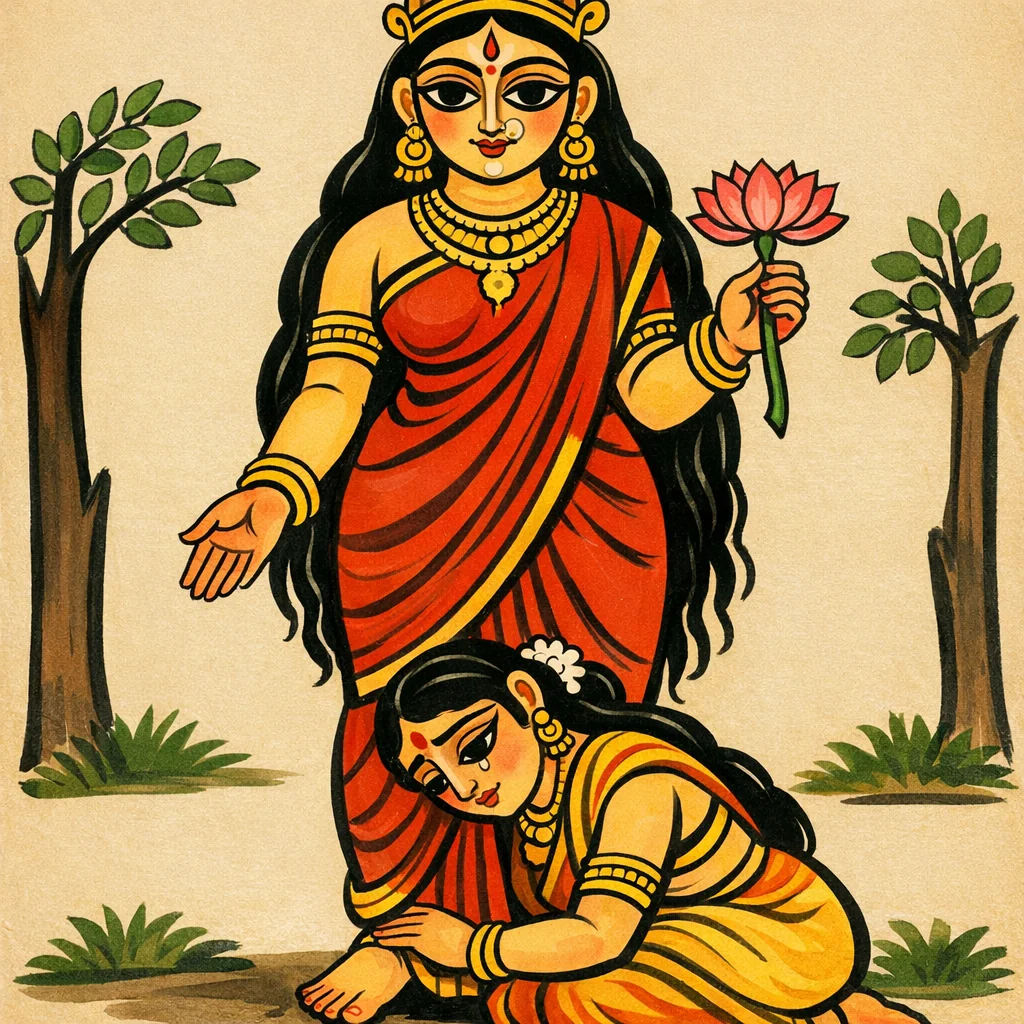
Adhyaya 64: Kalavati (Vibhavari) Offers Herself and the Padmini Vidya to Svarocisha
कलावती-विभावरी-स्वरोचिषोपाख्यानम् (Kalāvatī–Vibhāvarī–Svarociṣopākhyānam)
Creation Narrative
In Adhyaya 64 of the Markandeya Purana, Kalavati (Vibhavari), moved by steadfast bhakti, offers herself to Svarocisha and bestows upon him the secret Padmini Vidya. The chapter traces the rasas of love, surrender, and sacrifice, affirming the power of dharma and the grace that follows a pure and faithful heart.
Divine Beings
Celestial Realms
Key Content Points
Focus Keywords
Shlokas in Adhyaya 64
Verse 1
इति श्रीमार्कण्डेयपुराणे स्वारोचिषे मन्वन्तरे त्रिषष्टितमोऽध्यायः । चतुःषष्टितमोऽध्यायः- ६४ । मार्कण्डेय उवाच एवं विमुक्तरोगा तु कन्यका तं मुदान्विता । स्वरोचिषमुवाचेदं शृणुष्व वचनं प्रभो ॥
Thus ends the sixty-third chapter in the Śrī Mārkaṇḍeya Purāṇa in the Svārociṣa Manvantara. Now begins Chapter 64. Mārkaṇḍeya said: “So, the maiden, freed from disease and filled with joy, spoke to Svārociṣa: ‘O lord, listen to these words.’”
Verse 2
मन्दारविद्याधरजा नाम्ना ख्याता विभावरी । उपकारिन् स्वमात्मानं प्रयच्छामि प्रतीच्छ माम् ॥
“I am Vibhāvarī, famed by name, born of the Mandāra Vidyādharas. O benefactor, I offer my very self to you—accept me.”
Verse 3
विद्याञ्च तुभ्यं दास्यामि सर्वभूतरुतानि ते । ययाभिव्यक्तिमेष्यन्ति प्रसादपुरगो भव ॥
“And I shall give you a knowledge by which all the sounds and speech of beings will become clear to you. Become one who dwells in the city of favor (Prasāda-pura).”
Verse 4
मार्कण्डेय उवाच । एवमस्त्विति तेनोक्ते धर्मज्ञेन स्वरोचिषा । द्वितीया तु तदा कन्या इदं वचनमब्रवीत् ॥
Mārkaṇḍeya said: When Svarociṣa, knower of dharma, had said, “So be it,” then the second maiden spoke these words.
Verse 5
कुमारब्रह्मचार्यासीत् पारो नाम पिता मम । ब्रह्मर्षिः सुमहाभागो वेदवेदाङ्गपारगः ॥
My father was a lifelong celibate (a kumāra-brahmacārī); his name was Pāra. He was a brahmarṣi, greatly fortunate, and thoroughly learned in the Vedas and their ancillary sciences.
Verse 6
तस्य पुंस्कोकिलालापरमणीयॆ मधौ पुरा । आजगामाप्सराभ्यासं प्रख्याता पुंजिकास्तना ॥
Long ago, in the springtime made charming by the calls of male cuckoos, the famed apsaras Puñjikāstanā came near him.
Verse 7
कामवक्तव्यतां नीतः स तदा मुनिपुङ्गवः । तत्संयोगेऽहमुत्पन्ना तस्यामत्र महाचले ॥
Then that foremost sage was drawn into the sphere of desire; from their union I was born—here, on this great mountain.
Verse 8
विहाय मां गता सा च मातास्मिन्निर्जने वने । बालामेकां महीपृष्ठे व्यालश्वापदसंकुले ॥
Leaving me behind, my mother went away in this lonely forest—me, a single little girl upon the earth’s surface, in a place filled with serpents and wild beasts.
Verse 9
ततः कलाभिः सोमस्य वर्धन्तीभिरहः क्षये । आप्याय्यमानाहरहो वृद्धिं यातास्मि सत्तम ॥
Then, as the kalās (digits, phases) of Soma—the Moon—increased day by day, I too, being nourished each day, grew, O best among the virtuous.
Verse 10
ततः कलावतीत्येतन्मम नाम महात्मना । गृहीतायाः कृतं पित्रा गन्धर्वेण शुभानना ॥
Then, O fair-faced one, my name “Kalāvatī” was bestowed upon me by a noble gandharva who accepted me as a father—that is, acknowledged me and became my guardian.
Verse 11
न दत्ताहं तदा तेन याचितेन महात्मना । देवारिणालिना सुप्तस्ततो मे घातितः पिता ॥
When that noble one was asked (to give me), he did not give me. Then my father was slain by Devāriṇāli while he slept.
Verse 12
ततोऽहमतिनिर्वेदादात्मव्यापादनodyatā । निवारिता शम्भुपत्न्या सत्या सत्यप्रतिश्रवा ॥
Then, overwhelmed with despair, I was about to take my own life; but I was restrained by Śambhu’s wife—Satī, whose promise is truth.
Verse 13
मा शुचः सुभ्रु ! भर्ता ते महाभागो भविष्यति । स्वरोचिर्नाम पुत्रश्च मनुस्तस्य भविष्यति ॥
“Do not grieve, O fair-browed one. Your husband will be most illustrious; and you will have a son named Svaroci, who will become a Manu.”
Verse 14
आज्ञाञ्च निधयः सर्वे करिष्यन्ति तवादृताः । यथाभिलषितं वित्तं प्रदास्यन्ति च ते शुभे ॥
O auspicious lady, all the Treasures (nidhis) will respectfully carry out your command, and they will grant you wealth exactly as you desire.
Verse 15
यस्या वत्स प्रभावेण विद्यायास्तां गृहाण मे । पद्मिनी नाम विद्येयं महापद्माभिपूजिता ॥
O child, accept from me that vidyā by whose power all this is accomplished. This vidyā is known as ‘Padminī’, and it is greatly revered (worshipped) by Mahāpadmā.
Verse 16
इत्याह मां दक्षसुता सती सत्यपरायणाः । स्वरोचिस्त्वं ध्रुवं देवी नान्यथा सा वदिष्यति ॥
Thus Satī, Dakṣa’s daughter, devoted to truth, spoke to me: ‘You are surely Svārociṣ (O goddess); she would not speak otherwise.’
Verse 17
साहं प्राणप्रदायाद्य तां विद्यां स्वं तथा वपुः । प्रयच्छामि प्रतीच्छ त्वं प्रसादसुमुखो मम ॥
Therefore, having granted life-breath today, I bestow that vidyā and also my own form/body. Do you accept it—be graciously inclined toward me.
Verse 18
मार्कण्डेय उवाच । एवमस्त्विति तामाह स तु कन्यां कलावतीम् । विभावर्याः कलावत्याः स्निग्धदृष्ट्यानुमोदितः ॥
Mārkaṇḍeya said: He replied to her, ‘So be it.’ Then he accepted the maiden Kalāvatī, being approved by Vibhāvarī, and Kalāvatī looked on with affectionate glances.
Verse 19
जग्राह च ततः पाणी स तयोऽमरद्युतिः । नदत्सु देवतूर्येषु नृत्यन्तीष्वप्सरः सु च ॥
Then that radiant celestial being took their hands in marriage, while divine instruments resounded and the Apsarases danced.
Frequently Asked Questions
The chapter frames dharma as restorative and legitimizing: suffering and social rupture (abandonment, violence, despair) are resolved through divine intervention (Satī’s assurance) and a sanctioned union, while vidyā functions as a moral-spiritual power that aligns the recipient with prasāda (divine favor) and right order.
It directly supports the Svārociṣa Manvantara genealogy by presenting Satī’s prophecy that Kalāvatī will wed Svarociṣa and that their son Svarocis will become Manu, thereby anchoring cosmic chronology in a narrated, divinely authenticated lineage event.
A dual transmission is emphasized: (1) biological lineage—Brahmarṣi Pāra and apsaras Puñjikāstanā producing Kalāvatī, culminating in the birth-prophecy of Manu Svarocis; and (2) knowledge lineage—Satī’s bestowal of the Padminī Vidyā (linked with Mahāpadmā worship), presenting śakti-mediated vidyā as an instrument for establishing auspicious destiny within the Manvantara framework.