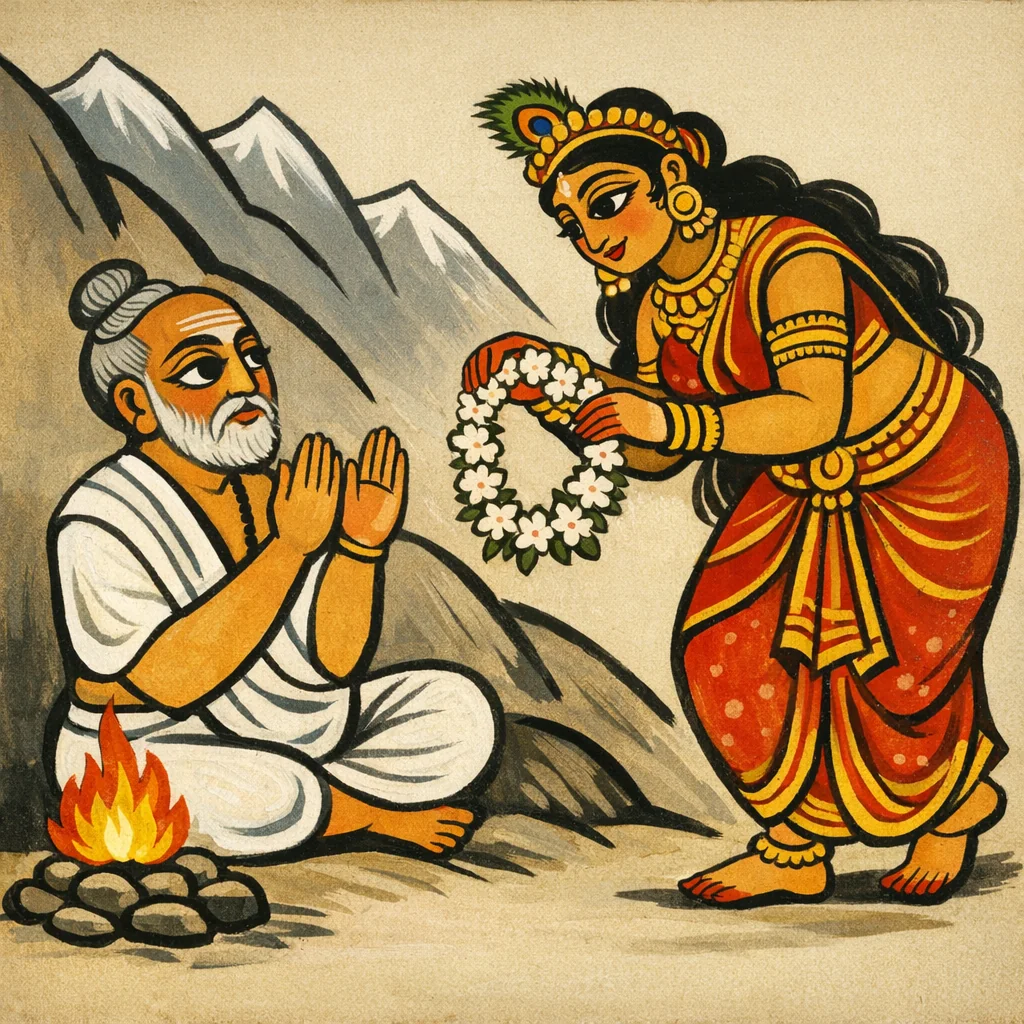
Adhyaya 61: The Second Manvantara Begins: The Brahmin’s Swift Journey and Varuthini’s Temptation on Himavat
स्वारोचिषमन्वन्तरारम्भः—हिमवद्गमनं वरूथिन्युपाख्यानम्
Avanti Narrative
This chapter marks the beginning of the Second Manvantara, the Svarocisa Manvantara. A Brahmin sage, intent on dharma and austerity, makes a swift journey to Mount Himavat. There Varuthini appears as a temptation, seeking to unsettle him through desire and guile. Yet the sage remains steadfast in his vows and tapas, restrains the senses, and reveals the spiritual power of purity and self-mastery.
Divine Beings
Celestial Realms
Key Content Points
Focus Keywords
Shlokas in Adhyaya 61
Verse 1
कrauष्टुकिरुवाच कथितं भवता सम्यग् यत् पृष्टोऽसि महामुने । भूसमुद्रादिसंस्थानं प्रमाणानि तथा ग्रहाः ॥
Krauṣṭuki said: O great sage, you have properly described what you were asked—namely the arrangement of the earth, the oceans and the rest, their measurements, and also the planets.
Verse 2
तेषाञ्चैव प्रमाणञ्च नक्षत्राणाञ्च संस्थितिः । भूरादयस्तथा लोकाः पातालान्यखिलान्यपि ॥
And also their measures, and the positions of the constellations; likewise the worlds beginning with Bhūḥ, and all the nether regions as well.
Verse 3
स्वायम्भुवं तथा ख्यातं मुने मन्वन्तरं मम । तदन्तराण्यहं श्रोतुमिच्छे मन्वन्तराणि वै । मन्वन्तराधिपान् देवानृषींस्तत्तनयान्नृपान् ॥
O sage, the Svāyambhuva Manvantara has thus been explained to me. I wish to hear, in due order, the other Manvantaras—together with their presiding gods, sages, the sons of Manu, and the kings.
Verse 4
मार्कण्डेय उवाच मन्वन्तरं मयाख्यातं तव स्वायम्भुवं च यत् । स्वारोचिषाख्यमन्यत्तु शृणु तस्मादनन्तरम् ॥
Mārkaṇḍeya said: The Svāyambhuva Manvantara, which I have explained to you, has been told. Now hear, next after that, the other one called Svārociṣa.
Verse 5
कश्चिद् द्विजातिप्रवरः पुरेऽभूदरुणास्पदे । वरुणायास्तटे विप्रो रूपेणात्यश्विनावपि ॥
In a city called Aruṇāspada there lived an excellent twice-born (brāhmaṇa). On the bank of the Varuṇā river, that brahmin was exceedingly handsome—like the Aśvins in beauty.
Verse 6
मृदुस्वभावः सद्वृत्तो वेदवेदाङ्गपारगः । सदातिथिप्रियो रात्रावागतानां समाश्रयः ॥
He was gentle by nature, of good conduct, and well-versed in the Vedas and their auxiliaries. Always fond of guests, he offered shelter to those who arrived even at night.
Verse 7
तस्य बुद्धिरियं त्वासीदहं पश्ये वसुन्धराम् । अतिरम्यवनोद्यानां नानानगरशोभिताम् ॥
This thought arose in him: ‘May I behold the earth—adorned with exceedingly delightful forests and gardens, beautified by many cities.’
Verse 8
अथागतोऽतिथिः कश्चित् कदाचित्तस्य वेश्मनि । नानौषधिप्रभावज्ञो मन्त्रविद्याविशारदः ॥
At one time, a certain guest came to his house—one who knew the powers of many medicinal herbs and was skilled in the science of mantras.
Verse 9
अभ्यर्थितस्तु तेनासौ श्रद्धापूतेन चेतसा । तस्याचख्यौ स देशांश्च रम्याणि नगराणि च ॥
Requested by him with a mind purified by faith, that man then told him of various regions and also delightful cities.
Verse 10
वनानि नद्यः शैलांश्च पुण्याण्यायतनानि च । स ततो विस्मयाविष्टः प्राह तं द्विजसत्तमम् ॥
He described forests, rivers, mountains, and also sacred sanctuaries. Then the listener, filled with wonder, spoke to that excellent brāhmaṇa.
Verse 11
अनेकदेशदर्शित्वेनातिश्रमसमान्वितः । त्वं नातिवृद्धो वयसा नातिवृत्तश्च यौवनात् । कथम् अल्पेन कालेन पृथिवीमटसि द्विज ॥
Having shown many lands, you would seem burdened with great exertion; yet you are neither very old nor past youth. How, in so little time, do you roam the earth, O brāhmaṇa?
Verse 12
ब्राह्मण उवाच मन्त्रौषधिप्रभावेण विप्राप्रतिहता गतिः । योजनानां सहस्रं हि दिनार्धेन व्रजाम्यहम् ॥
The brāhmaṇa said: By the power of mantra and medicinal herbs, my movement is unobstructed. Indeed, I travel a thousand yojanas in half a day.
Verse 13
मार्कण्डेय उवाच ततः स विप्रस्तं भूयः प्रत्युवाचेदमादरात् । श्रद्धधानो वचस्तस्य ब्राह्मणस्य विपश्चितः ॥
Mārkaṇḍeya said: Then that brāhmaṇa (the listener) again replied to him with reverence, trusting the words of that wise brāhmaṇa.
Verse 14
मम प्रसादं भगवन् कुरु मन्त्रप्रभावजम् । द्रष्टुमेतां मम महीम् अतिवेच्छा प्रवर्तते ॥
O Blessed one, grant me your favor born of mantra-power; an intense desire has arisen in me to behold this earth.
Verse 15
प्रादात् स ब्राह्मणश्चास्मै पादलेपम् उदारधीः । अभिमन्त्रयामास दिशं तेनाख्यातां च यत्नतः ॥
That generous-minded brāhmaṇa gave him a foot-ointment, and he carefully empowered with mantra the direction that had been indicated.
Verse 16
तेनानुलिप्तपादोऽथ स द्विजो द्विजसत्तम । हिमवन्तमगाद् द्रष्टुं नानाप्रस्रवणान्वितम् ॥
Then, with his feet anointed by it, that brāhmaṇa went to see Himavat—the Himalaya—adorned with many waterfalls, O best of the twice-born.
Verse 17
सहस्रं योजनानां हि दिनार्धेन व्रजामि यत् । आयास्यामिति सञ्चिन्त्य तदर्धेनापरेण हि ॥
For I travel a thousand yojanas in half a day; thinking, ‘I shall return,’ he planned to do so with the other half of that time.
Verse 18
सम्प्राप्तो हिमवत्पृष्ठं नातिश्रान्ततनुर्द्विज । विचचार ततस्तत्र तुहिनाचलभूतले ॥
O brahmin, having reached the back uplands of Himavat, and with his body not overly fatigued, he then wandered there upon the ground of the snowy mountain.
Verse 19
पादाक्रान्तेन तस्याथ तुहिनेन विलीयता । प्रक्षालितः पादलेपः परमौषधिसम्भवः ॥
Then, by the snow that melted as it was trodden under his feet, the paste upon his feet—made from supreme medicinal herbs—was washed away.
Verse 20
ततो जडगतिः सोऽथ इतश्चेतश्च पर्यटन् । ददर्शातिमनोज्ञानि सानूनि हिमभूभृतः ॥
Thereafter, moving with a dulled and awkward gait, he wandered here and there and saw the exceedingly delightful slopes of the snow-clad mountain.
Verse 21
सिद्धगन्धर्वजुष्टानि किन्नराभिरतानि च । क्रीडाविहाररम्याणि देवादीनामितस्ततः ॥
Here and there were delightful grounds for play and recreation, frequented by siddhas and gandharvas and enjoyed by kinnaras, belonging to gods and other celestial beings.
Verse 22
दिव्याप्सरोगणशतैराकीर्णान्यवलोकयन् । नातृप्यत द्विजश्रेष्ठः प्रोद्धूतपुलको मुने ॥
Beholding places crowded with hundreds of hosts of divine apsarases, the best of brahmins was not satisfied; his hair stood on end, O sage.
Verse 23
क्वचित् प्रस्त्रवणाद् भ्रष्टजलपातमनोरमम् । प्रनृत्यच्छिखिकेकाभिरन्यतश्च निनादितम् ॥
In one place it was charming, with waterfalls dropping from springs; in another it resounded with the cries of dancing peacocks.
Verse 24
दात्यूहकोयष्टिकाद्यैः क्वचिच्चातिमनोहरैः । पुंस्कोकिलकलालापैः श्रुतिहारिभिरन्वितम् ॥
Somewhere it was adorned with very charming birds—such as dātyūhas and koyaṣṭikas—and with the sweet calls of male cuckoos that stole the ear.
Verse 25
प्रफुल्लतरुगन्धेन वासितानिलवीजितम् । मुदा युक्तः स ददृशे हिमवन्तं महागिरिम् ॥
Fanned by breezes perfumed with the fragrance of blossoming trees, he—filled with joy—beheld Himavat, the great mountain.
Verse 26
दृष्ट्वा चैतं द्विजसुतो हिमवन्तं महाचलम् । श्वो द्रक्ष्यामिति संचित्य मतिञ्चक्रे गृहं प्रति ॥
Having seen this Himavat, the great mountain, the brahmin’s son thought, ‘Tomorrow I shall see it (more),’ and turned his resolve toward returning home.
Verse 27
विभ्रष्टपादलेपोऽथ चिरेण जडितक्रमः । चिन्तयामास किमिदं मयाज्ञानादनुष्ठितम् ॥
Then, his foot-paste having been lost and his steps becoming slow only after a long while, he reflected: ‘What is this that I have done out of ignorance?’
Verse 28
यदि प्रलेपो नष्टो मे विलीनो हिमवारिणा । शैलोऽतिदुर्गमश्चायं दूरञ्चाहमिहागतः ॥
“If my marking (upon the path) is lost—dissolved by the waters from the snow—and this mountain is exceedingly hard to traverse, and I have come here from far away…”
Verse 29
प्रयास्यामि क्रियाहानिमग्निशुश्रूषणादिकम् । कथमत्र करिष्यामि सङ्कटं महदागतम् ॥
“I am about to incur a lapse of prescribed duties—such as tending the sacred fire and the like. How shall I act here, now that a great distress has come upon me?”
Verse 30
इदं रम्यमिदं रम्यमित्यस्मिन् वरपर्वते । शक्तदृष्टिरहं तृप्तिं न यास्येऽब्दशतैरपि ॥
“‘This is delightful, this is delightful!’—on this excellent mountain, my gaze is held fast; I would not reach satiety even in a hundred years.”
Verse 31
किन्नराणां कलालापाः समन्ताच्छ्रोत्रहारिणः । प्रफुल्लतरुगन्धान्श्च घ्राणमत्यन्तमृच्छति ॥
“From all sides, the sweet songs of the Kinnaras steal the ear; and the fragrances of blossoming trees reach the nose intensely.”
Verse 32
सुखस्पर्शस्तथा वायुः फलानि रसवन्ति च । हरन्ति प्रसभं चेतो मनोज्ञानि सरांसि च ॥
“The wind is pleasant to the touch, the fruits are full of flavor, and the charming lakes forcibly carry away the mind.”
Verse 33
एवं गते तु पश्येयं यदि कञ्चित् तपोनिधिम् । स ममोपदिशेन्मार्गं गमनाय गृhaं प्रति ॥
“If, as things stand, I might behold some great ascetic, a very treasury of austerity (tapas), he would instruct me in the path for returning home.”
Verse 34
मार्कण्डेय उवाच स एवम् चिन्तयन् विप्रो बभ्राम च हिमाचले । भ्रष्टपादौषधिबलो वैक्लवं परमं गतः ॥
“Mārkaṇḍeya said: Thinking thus, that brāhmaṇa wandered upon the Himālaya; when the strength bestowed by the foot-herbs (medicinal plants) was lost, he fell into extreme helplessness.”
Verse 35
तं ददर्श भ्रमन्तञ्च मुनिश्रेष्ठं वरूथिनी । वराप्सरा महाभागा मौलेया रूपशालिनी ॥
“Varūthinī saw him wandering—the excellent sage. She was a noble apsaras, most fortunate, Mauleyā (of the Mauleya lineage), endowed with beauty.”
Verse 36
तस्मिन् दृष्टे ततः साभूद् द्विजवर्ये वरूथिनी । मदनाकृष्टहृदया सानुरागा हि तत्क्षणात् ॥
“When she saw him, Varūthinī, upon that excellent brāhmaṇa, became at once filled with affection—her heart drawn by Kāma.”
Verse 37
चिन्तयामास को न्वेष रमणीयतमाकृतिः । सफलं मे भवेञ्जन्म यदि मां नावमन्यते ॥
“She reflected: ‘Who indeed is this, of such exceedingly charming form? My birth would be fulfilled if he does not disdain me.’”
Verse 38
अहोऽस्य रूपमाधुर्यमहोऽस्य ललिता गतिः । अहो गम्भीरता दृष्टेः कुतोऽस्य सदृशो भुवि ॥
“Ah, how sweet is his beauty! Ah, how graceful is his gait! Ah, how deep is the gravity of his glance! Where on earth is there anyone like him?”
Verse 39
दृष्टा देवास्तथा दैत्याḥ सिद्धगन्धर्वपन्नगाः । कथमेकोऽपि नास्त्यस्य तुल्यरूपो महात्मनः ॥
“I have seen gods, and likewise daityas, siddhas, gandharvas, and serpents—how is it that not even one exists who is equal in form to this great-souled one?”
Verse 40
यथाहमस्मिन्मय्येष सानुरागस्तथा यदि । भवेदत्र मया कार्यस्तत्कृतः पुण्यसञ्चयः ॥
“If he were to feel affection for me in the same way that I feel it for him, then there would be something for me to do here; by that, a store of merit would be accumulated.”
Verse 41
यद्येष मयि सुस्निग्धां दृष्टिमद्य निपातयेत् । कृतपुण्या न मत्तोऽन्या त्रैलोक्ये वनिता ततः ॥
“If today he were to cast upon me a very affectionate glance, then no other woman in the three worlds would be more meritorious than I.”
Verse 42
मार्कण्डेय उवाच एवम् सञ्चिन्तयन्ती सा दिव्ययोषित् स्मरातुरा । आत्मानं दर्शयामास कमनीयतराकृतिम् ॥
Mārkaṇḍeya said: “Thus thinking, that celestial woman—afflicted by desire—then revealed herself, assuming an even more alluring form.”
Verse 43
तां तु दृष्ट्वा द्विजसुतश्चारुरूपां वरूथिनीम् । सोपचारं समागम्य वाक्यमेतदुवाच ह ॥
But seeing her—Varūthinī, of lovely form—the brahmin’s son approached with due courtesy and spoke these words.
Verse 44
का त्वं कमलगर्भाभे कस्य किं वानुतिष्ठसि । ब्राह्मणोऽहमिहायातो नगरादरुणास्पदात् ॥
“Who are you, O lotus-womb-like (lotus-bosomed) one? Whose are you, and what is it that you are doing? I am a brahmin, come here from the city called Aruṇāspada.”
Verse 45
पादलेपोऽत्र मे ध्वस्तो विलीनो हिमवारिणा । यस्यानुभावादत्राहमागतो मदिरेक्षणे ॥
“Here my foot-ointment has been ruined—dissolved by the cold water. By whose influence I have come here, O wine-eyed one.”
Verse 46
वरूथिन्युवाच मौलेयाहं महाभागा नाम्ना ख्याता वरूथिनी । विचरामि सदैवात्र रमणीये महाचले ॥
Varūthinī said: “O fortunate one, I am Mauleyā; I am famed by the name Varūthinī. I always wander here, on this delightful great mountain.”
Verse 47
साहं त्वद्दर्शनाद्विप्र कामवक्तव्यताङ्गता । प्रशाधि यन्मया कार्यं त्वदधीनास्मि साम्प्रतम् ॥
“And I—upon seeing you, O brahmin—have been driven into speaking by desire. Command what is to be done by me; at present I am under your direction.”
Verse 48
ब्राह्मण उवाच येनोपायेन गच्छेयं निजगेहं शुचिस्मिते । तन्ममाचक्ष्व कल्याणि हानिर्नोऽखिलकर्मणाम् ॥
The Brāhmaṇa said: “By what means may I go to my own house, O fair-smiling one? Tell me that, O auspicious lady, so that there be no loss of my rites and duties in their entirety.”
Verse 49
नित्यनैमित्तिकानान्तु महाहानिर्द्विजन्मनः । भवत्यतस्त्वं हे भद्रे ! मामुद्धर हिमालयात् ॥
“For a twice-born man, there is great loss indeed in (neglecting) daily and occasional rites. Therefore, O gracious lady, rescue me from the Himālaya.”
Verse 50
प्रशस्यते न प्रवासो ब्राह्मणानां कदाचम । अपराद्धं न मे भीरु देशदर्शनकौतुकम् ॥
“Wandering or living away (from one’s proper place) is never praised for Brāhmaṇas. O timid one, I have not committed an offense—(this is) merely the curiosity of seeing different lands.”
Verse 51
सतो गृहे द्विजाग्र्यस्य निष्पत्तिः सर्वकर्मणाम् । नित्यनैमित्तिकानाञ्च हानिरेवं प्रवासिनः ॥
“In the house of a good and foremost twice-born man, all duties reach their proper completion; but for one living away, thus there is loss of the daily and occasional rites.”
Verse 52
सा त्वं किं बहुनोक्तेन तथा कुरु यशस्विनि । यथा नास्तं गते सूर्ये पश्यामि निजमालयम् ॥
“So—what is the use of many words? Do it thus, O illustrious lady, that before the sun sets I may see my own dwelling.”
Verse 53
वरूथिन्युवाच मैवं ब्रूहि महाभाग ! मा भूtsa दिवसॊ मम । मां परित्यज्य यत्र त्वं निजगेहमुपैष्यसि ॥
Varūthinī said: “Do not speak so, O fortunate one. Let that day not come for me—the day on which you, abandoning me, will go to your own house.”
Verse 54
अहो रम्यतरः स्वर्गो न यतो द्विजनन्दन । अतो वयं परित्यज्य तिष्ठामोऽत्र सुरालयम् ॥
“Ah! There is no heaven more delightful than this, O joy of the twice-born. Therefore we shall abandon (that idea) and remain here in this divine abode.”
Verse 55
स त्वं सह मया कान्त ! कान्तेऽत्र तुहिनाचले । रममाणो न मर्त्यानां बान्धवानां स्मरिष्यसि ॥
“And you, beloved—staying here with me on this snowy mountain—enjoying yourself, you will not remember your mortal relatives.”
Verse 56
स्रजो वस्त्राण्यलङ्कारान् भोगभोज्यानुलेपनम् । दास्याम्यत्र तथाहन्ते स्मरेण वशगा हृता ॥
“Garlands, garments, ornaments, enjoyments, foods, and unguents—I shall give you all of these here. Alas, I am captivated and brought under control by Love.”
Verse 57
वीणावेणुस्वनं गीतं किन्नराणां मनोरमम् । अङ्गाह्लादकरो वायुरुष्णान्नमुदकं शुचि ॥
“The sound of vīṇā and flute, the charming songs of the Kinnaras; a breeze that delights the limbs; warm food and pure water (are here).”
Verse 58
मनॊभिलषिता शय्या सुगन्धमनुलेपनम् । इहासतो महाभाग गृहे किं ते निजे 'धिकम् ॥
“Here are beds as your heart desires, and fragrant unguents for anointing. O noble one, while you dwell here, what greater thing is there for you in your own house?”
Verse 59
इहासतो नैव जरा कदाचित्ते भविष्यति । त्रिदशानामियं भूमिर्यौवनोपचयप्रदा ॥
“For you who stay here, old age will never arise at any time. This is the land of the gods, a place that bestows an increase of youth.”
Verse 60
इत्युक्त्वा सानुरागा सा सहसा कमलेक्षणा । आलिलिङ्ग प्रसीदेति वदन्ती कलमुन्मनाः ॥
“Having said this, she—full of attachment, lotus-eyed—suddenly embraced him, softly saying, ‘Be pleased,’ her mind unsettled with longing.”
Verse 61
ब्राह्मण उवाच मा मां स्प्राक्षीर्व्रजान्यत्र दुष्टे यः सदृशस्तव । मयान्यथा याचिता त्वमन्यथैवाप्युपैषि माम् ॥
The brāhmaṇa said: “Do not touch me. Go elsewhere, O wicked one, for one like you is depraved. Though I asked you in one way, you approach me in quite another.”
Verse 62
सायं प्रातरहुतं हव्यं लोकान् यच्छति शाश्वतान् । त्रैलोक्यमेतदखिलं मूढे इव्ये प्रतिष्ठितम् ॥
“The oblations offered morning and evening grant enduring worlds (heavenly attainments). Indeed, this entire triple world stands established upon that—yet you are as if deluded here.”
Verse 63
वरूथिन्युवाच किं ते नाहं प्रिया विप्र ! रमणीयो न किं गिरिः । गन्धर्वान् किन्नरादींश्च त्यक्त्वाभीष्टो हि कस्तव ॥
Varūthinī said: “What ails you—am I not dear to you, O brāhmaṇa? Is not this mountain delightful? Having set aside the Gandharvas, the Kinnaras, and the rest, whom indeed do you desire?”
Verse 64
निजमालयमप्यस्माद्भवान् यास्यत्यसंशयम् । स्वल्पकालं मया सार्धं भुङ्क्ष्व भोगान् सुदुर्लभान् ॥
“Even from here you will surely go, in the end, to your own abode. Therefore, for a short while, enjoy with me pleasures that are exceedingly hard to obtain.”
Verse 66
ब्राह्मण उवाच अष्टावात्मगुणा ये हि तेषामादौ दया द्विज । तां करोṣi कथं न त्वं मयि सद्धर्मपालक ॥
The brāhmaṇa said: “Among the eight qualities of the self, compassion is foremost, O twice-born. How is it that you do not show that compassion toward me—you who claim to uphold true dharma?”
Verse 67
त्वद्विमुक्ता न जीवामि तथा प्रीतिमती त्वयि । नैतद्वदाम्यहं मिथ्या प्रसीद कुलनन्दन ॥
“If I am separated from you, I shall not live; such is my affection for you. I do not say this falsely—be gracious, O delight of your lineage.”
Verse 68
ब्राह्मण उवाच यदि प्रीतिमती सत्यं नोपचाराद्ब्रवीषि माम् । तदुपायं समाचक्ष्व येन यामि स्वमालयम् ॥
The brāhmaṇa said: “If your affection is truly sincere and you are not speaking to me merely as a tactic, then tell me the means by which I may go to my own abode.”
Verse 69
वरूथिन्युवाच निजमालयमप्यस्माद्भवान् यास्यत्यसंशयम् । स्वल्पकालं मया सार्धं भुङ्क्ष्व भोगान् सुदुर्लभान् ॥
Varūthinī said: “Even from here you will surely go to your own abode. Therefore, for a short while, enjoy with me pleasures that are very hard to obtain.”
Verse 70
ब्राह्मण उवाच न भोगार्थाय विप्राणां शस्यते हि वरूथिनि । इह क्लेशाय विप्राणां चेष्टा प्रेत्याफलप्रदा ॥
The brāhmaṇa said: “For brāhmaṇas, pursuit for the sake of pleasure is not praised, O Varūthinī. Their striving is for hardship here, and it yields its fruit after death.”
Verse 71
वरूथिन्युवाच सन्त्राणं म्रियमाणायाः मम कृत्वा परत्र ते । पुण्यस्यैव फलं भावि भोगाश्चान्यत्र जन्मनि ॥
Varūthinī said: “If you rescue me as I am dying, then for you in the next world there will be the fruit of merit—and enjoyments as well in another birth.”
Verse 72
एवं च द्वयमप्यत्र तवोपचयकारणम् । प्रत्याख्यानादहं मृत्युः त्वञ्च पापमवाप्स्यसि ॥
“Thus, both outcomes here are a cause of your ‘gain’: if you reject me, I will die—and you will incur sin.”
Verse 73
ब्राह्मण उवाच परस्त्रियां नाभिलषेदित्युगुर्गुरवो मम । तेन त्वां नाभिवाञ्छामि कामं विलप शुष्य वा ॥
The brāhmaṇa said: “My teachers have declared: ‘One should not desire another man’s wife.’ Therefore I do not desire you. Cry as you please, or wither away.”
Verse 74
मार्कण्डेय उवाच इत्युक्त्वा स महाभागः स्पृष्ट्वापः प्रयतः शुचिः । प्राहेदं प्रणिपत्याग्निं गार्हपत्यं उपांशुना ॥
Mārkaṇḍeya said: Having spoken thus, that fortunate man—having touched water, restrained himself and purified—bowed to the household (Gārhapatya) fire and softly spoke as follows.
Verse 75
भगवन्! गार्हपत्याग्ने योनिस्त्वं सर्वकर्मणाम् । त्वत्त आहवनीयोऽग्निर्दक्षिणाग्निश्च नान्यतः ॥
“O blessed Gārhapatya Fire, you are the womb and source of all rites. From you arise the Āhavanīya fire and the Dakṣiṇa fire—from nowhere else.”
Verse 76
युष्मदाप्यायनाद् देवा वृष्टिशस्यादिहेतवः । भवन्ति शस्यादखिलं जगद्भवति नान्यतः ॥
“By your nourishment the gods become the causes of rain, crops, and the like. From crops the entire world subsists—not otherwise.”
Verse 77
एवं त्वत्तो भवत्येतद्येन सत्येन वै जगत् । तथाहमद्य स्वं गेहं पश्येयं सति भास्करे ॥
“Thus, from you arises that by which the world exists in truth. By that very truth, may I today behold my own home while the sun still shines.”
Verse 78
यथा वै वैदिकं कर्म स्वकाले नोज्झितं मया । तेन सत्येन पश्येयं गृहस्थोऽद्य दिवाकरम् ॥
“Since I have not neglected Vedic duties at their proper times, by that truth may I—though a householder—behold the sun today.”
Verse 79
यथा च न परद्रव्ये परदारे च मे मतिः । कदाचित् साभिलाषाभूत्तथैतत् सिद्धिमेतु मे ॥
Just as my mind has never—at any time—inclined with desire toward another’s property or another’s wife, so may this my resolve/prayer attain success for me.
Frequently Asked Questions
The chapter tests dharmic steadfastness under extraordinary temptation: whether a householder-Brahmin should abandon nitya-naimittika Vedic duties and moral restraint for svarga-like pleasures. The narrative resolves in favor of ritual continuity, avoidance of parastrī, and satya (truth) as a performative, protective principle.
It functions as a hinge: after Krauṣṭuki requests the remaining Manvantaras and their rulers, Markandeya announces the Svārociṣa Manvantara as the next to be heard. The embedded upākhyāna then supplies an ethical-ritual exemplum consistent with Manvantara discourse—how dharma is preserved across cosmic administrations.
The chapter foregrounds the gṛhastha-Brahmin institutional dharma—especially the Gārhapatya fire as the generative center of śrauta/vaidika ritual and the maintenance of nitya-naimittika obligations. This emphasis frames household rite as cosmically consequential and portrays deviation (through prolonged pravāsa or sensual distraction) as a threat to both personal merit and social-ritual order.