Adhyaya 44: Subahu’s Counsel to the King of Kashi and Alarka’s Renunciation through Yoga
अलर्कवैराग्य-योगोपदेश (Alarka-vairāgya-yogopadeśa)
Planetary System
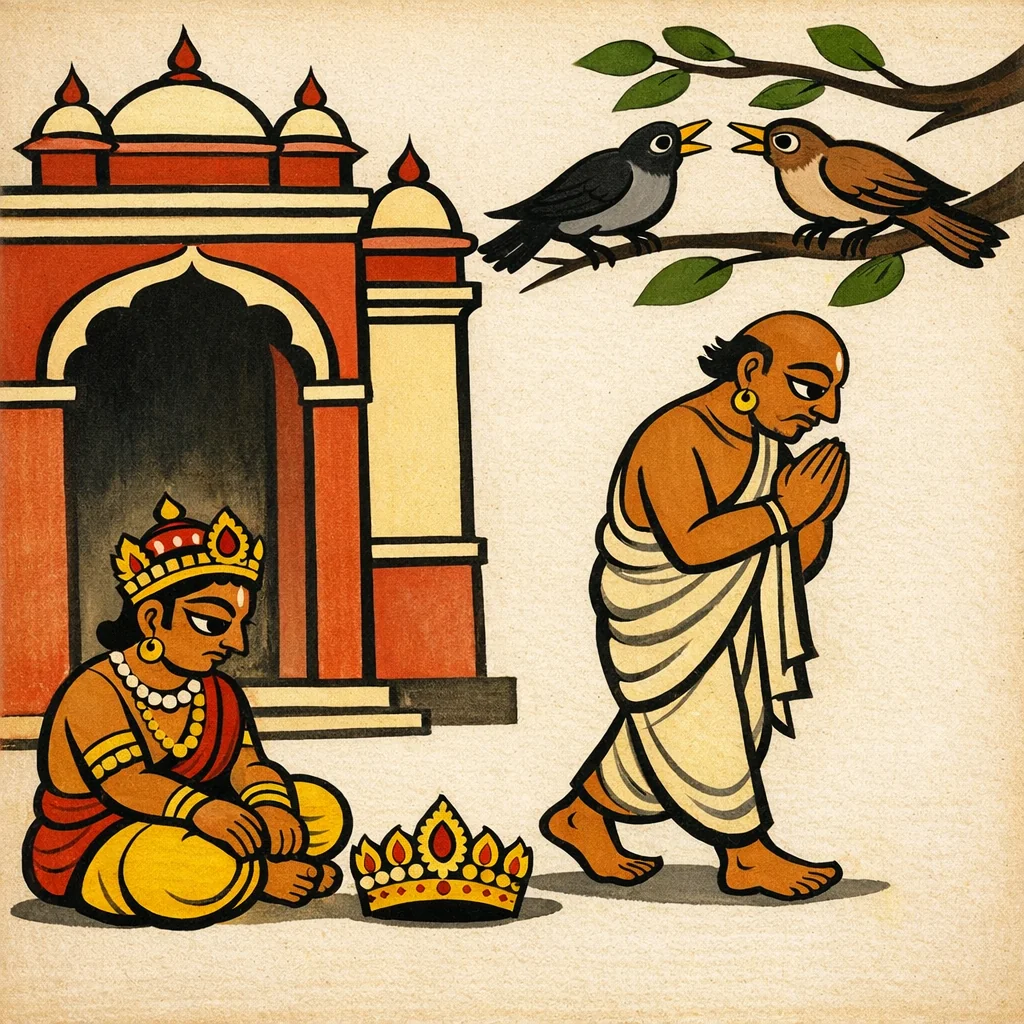
In Adhyaya 44, Subāhu counsels the King of Kāśī on righteous rule grounded in dharma—justice, restraint, and freedom from pride. Alarka then awakens to the impermanence of worldly pleasure and honor, renounces his kingdom, and through vairāgya and yoga seeks inner peace and liberation.
Celestial Realms
Key Content Points
Focus Keywords
Shlokas in Adhyaya 44
Verse 1
इति श्रीमार्कण्डेयपुराणे अरिष्टकथनं नाम त्रिचत्वारिंशोऽध्यायः । चतुःचत्वारिंशोऽध्यायः । सुबाहुरुवाच— यदर्थं नृपशार्दूल ! त्वामहं शरणं गतः । तन्मया सकलं प्राप्तं यास्यामि त्वं सुखी भव ॥
Thus ends in the Śrī Mārkaṇḍeya Purāṇa the forty-third chapter called “The Account concerning Ariṣṭa.” Now begins the forty-fourth chapter. Subāhu said: “For the sake of which, O tiger among kings, I came to you for refuge—that entire aim has been attained by me. I shall go; may you be happy.”
Verse 2
काखिराज उवाच— किं निमित्तं भवान् प्राप्तो निष्पन्नोऽर्थश्च कस्तव । सुबाहो ! तन्ममाचक्ष्व परं कौतूहलं हि मे ॥
Kākhirāja said: “For what reason have you come, and what is the purpose that has been accomplished for you? O Subāhu, tell me that—for I am greatly curious.”
Verse 3
समाक्रान्तमलर्केण पितृपैतामहं महत् । राज्यं देहीति निर्जित्य त्वयाहमभिचोदितः ॥
My great ancestral kingdom—of my father and forefathers—was seized by Alarka. After you had conquered (him), you urged me, saying, “Give (him) the kingdom!”
Verse 4
ततो मया समाक्रम्य राज्यमस्यानुजस्य ते । एतत्ते बलमानितं तद्भुङ्क्ष्वस्वकुलोचितम् ॥
Then I seized the kingdom of this younger brother of yours. I have brought to you this army/strength; enjoy it as is fitting for your own lineage.
Verse 5
सुबाहुरुवाच काशिराज ! निबोध त्वं यदर्थमयमुद्यमः । कृतो मया भवान्श्चैव कारितोऽत्यन्तमुद्यमम् ॥
Subāhu said: “O king of Kāśī, understand for what purpose I have undertaken this endeavor—and why I have also urged you to the utmost exertion.”
Verse 6
भ्राता ममायं ग्राम्येषु सक्तो भोगेषु तत्त्ववित् । विमूढौ बोधवन्तौ च भ्रातरावग्रजौ मम ॥
“This brother of mine is attached to rustic/worldly pleasures, though he is a knower of truth. My two elder brothers are at once deluded—and yet possessed of understanding.”
Verse 7
तयोर्मम च यन्मात्रा बाल्ये स्तन्यं यथा मुखे । तथावबोधो विन्यस्तः कर्णयोरवनिपते ॥
“Just as our mother placed milk into our mouths in childhood, so too, O lord of the earth, she placed understanding into our ears.”
Verse 8
तयोर्मम च विज्ञेयाः पदार्था ये मता नृभिः । प्राकाश्यं मनसो नीतास्ते मात्रा नास्य पार्थिव ॥
“Whatever knowable ‘objects/meanings’ are held by men to be worth knowing—those, O king, were brought by our mother into the light of our minds.”
Verse 9
यथैकमर्थे यातानामेकस्मिन्नवसीदति । दुःखं भवति साधूनां ततास्माकं महीपते ॥
“As it is with those who set out for a single purpose: when one person falters, it becomes a sorrow for the good—so it is for us, O king.”
Verse 10
गार्हस्थ्यमोहमापन्ने सीदत्यस्मिन्नरेश्वर । सम्बन्धिन्यस्य देहस्य बिभ्रति भ्रातृकल्पनाम् ॥
When this one falls into the delusion of householder-life, O lord of men, he sinks—imagining “brotherhood” and relations with regard to this body and its connections.
Verse 11
ततो मया विनिश्चित्य दुःखाद्वैराग्यभावना । भविष्यतीत्यस्य भवानित्युद्योगाय संश्रितः ॥
Therefore, having concluded that from sorrow the cultivation of detachment would arise for him, I took refuge in you (as an ally) for this undertaking.
Verse 12
तदस्य दुःखाद्वैराग्यं सम्बोधादवनिपते । समुद्भूतं कृतं कार्यं भद्रं तेऽस्तु व्रजाम्यहम् ॥
Thus, from sorrow—and from awakening—detachment has arisen in him, O king. The task is accomplished. May good be yours; I depart.
Verse 13
उष्ट्वा मदालसागर्भे पीत्वा सत्सास्तथा स्तनम् । नान्यनारीसुतैर्यातं वर्त्म यात्विति पार्थिव ॥
Having been born from Madālasā’s womb and having drunk her breast (and the instruction of the good), O king—go on a path not traversed by the sons of other women.
Verse 14
विचार्य तन्मया सर्वं युष्मत्संश्रयपूर्वकम् । कृतं तच्चापि निष्पन्नं प्रयास्ये सिद्धये पुनः ॥
Having considered all that, and relying first upon you, I have acted—and it has been accomplished. Now I shall strive again for attainment (siddhi).
Verse 15
उपेक्ष्यते सीदमाणः स्वजनो बान्धवः सुहृत् । यैर्नरेन्द्र ! न तान् मन्ये सेन्द्रिया विकला हि ते ॥
“Those who neglect their own people—kinsmen and friends—when they are sinking into distress, O king, I do not regard as truly human; for their senses and moral discernment are impaired.”
Verse 16
सुहृदि स्वजने बन्धौ समर्थे योऽवसीदति । धर्मार्थकाममोक्षेभ्यो वाच्या स्ते तत्र न त्वसौ ॥
“One who fails in duty toward a capable friend, one’s own people, or a kinsman is not fit to be instructed even about dharma, artha, kāma, and mokṣa; such teaching should be spoken only to the worthy, not to him.”
Verse 17
एतत् त्वत्सङ्गमाद् भू प ! मया कार्यं महत् कृतम् । स्वस्ति तेऽस्तु गमिष्यामि ज्ञानभाग्भव सत्तम ॥
“By association with you, O king, I have accomplished a great purpose. May auspiciousness be yours; I shall depart. Become a sharer in true knowledge, O best of men.”
Verse 18
काशिराज उवाच उपकारस्त्वया साधोः अलर्कस्य कृतो महान् । ममोपकाराय कथं न करोṣi स्वमानसम् ॥
“The king of Kāśī said: You rendered great help to the saintly Alarka. Why do you not similarly turn your mind toward helping me?”
Verse 19
फलदायी सतां सद्भिः सङ्गमो नाफलो यतः । तस्मात् तवत्संश्रयाद् युक्ता मया प्राप्ता समुन्नतिः ॥
“Association with the virtuous is fruit-bearing; it is never fruitless. Therefore, by rightly taking refuge in you, I have attained advancement.”
Verse 20
सुबाहुरुवाच धर्मार्थकाममोक्षाख्यं पुरुषार्थचतुष्टयम् । तत्र धर्मार्थकामास्ते सकला हीयतेऽपरः ॥
Subāhu said: The four aims of man are called dharma, artha, kāma, and mokṣa. Among them, when dharma, artha, and kāma are all diminished, the remaining one—mokṣa—is to be sought.
Verse 21
तत्ते संक्षेपतो वक्ष्ये तदिहैकमनाः शृणु । श्रुत्वा च सम्यगालोच्य यतेथाः श्रेयसे नृप ॥
I shall tell you briefly; listen here with one-pointed mind. Having heard and rightly reflected, strive for your highest good, O king.
Verse 22
ममेति प्रत्ययो भू प ! न कार्योऽहमिति त्वया । सम्यगालोच्य धर्मो हि धर्माभावे निराश्रयः ॥
O king, you should not cultivate the notion “mine”, nor the ego-notion “I”. Consider rightly: dharma, in the absence of dharma—without its foundation—becomes supportless.
Verse 23
कस्याहमिति संज्ञेयमित्यालोच्य त्वयात्मना । बाह्यान्तर्गतं आलॊच्य आलॊच्यापररात्रिषु ॥
Reflect within yourself: “Of whom (or of what) is this ‘I’ to be understood?” Examining what is external and what is internal—reflect again and again, night after night.
Verse 24
अव्यक्तादिविशेषान्तम् अविकारम् अचेतनम् । व्यक्ताव्यक्तं त्वया ज्ञेयं ज्ञाता कश्चाहमित्युत ॥
From the unmanifest up to the manifest particulars—all that is unchanging and insentient—this manifest-and-unmanifest is to be understood by you; and then you will know who the knower ‘I’ truly am.
Verse 25
एतस्मिन्नेव विज्ञानॆ विज्ञान्तमखिलं त्वया । अनात्मन्यात्मविज्ञानमखे खमिति मूढता ॥
By this very knowledge, you have known everything. But to seek knowledge of the Self (Ātman) in what is not-Self (anātman)—like seeking the sky in empty space—is sheer delusion.
Verse 26
सोऽहं सर्वगतो भूप ! लोकसंव्यवहारतः । मयेदमुच्यते सर्वं त्वया पृष्टो व्रजाम्यहम् ॥
“I am That,” O king, all-pervading—yet in worldly convention I speak thus. Having been questioned by you, I now depart.
Verse 27
एवमुक्त्वा ययौ धीमान् ! सुबाहुः काशिभूमिपम् । काशिराजोऽपि संपूज्य सोऽलर्कं स्वपुरं ययौ ॥
Having spoken thus, the wise Subāhu departed from the ruler of Kāśī. And the king of Kāśī, having duly honored him, that Alarka too went to his own city.
Verse 28
अलर्कोऽपि सुतं ज्येष्ठमभिषिच्य नराधिपम् । वनं जगाम सन्त्यक्तसर्वसङ्गः स्वसिद्धये ॥
Alarka too, having consecrated his eldest son as king, went to the forest, abandoning all attachments, for his own spiritual accomplishment.
Verse 29
ततः कालेन महता निर्द्वन्द्वो निष्परिग्रहः । प्राप्य योगर्धिमतुलां परं निर्वाणमाप्तवान् ॥
Then, after a long time, free from pairs of opposites and without possessions, having attained incomparable yogic accomplishment, he reached the supreme nirvāṇa.
Verse 30
पश्यन् जगदिदं सर्वं सदेवासुरमानुषम् । पाशैर्गुणमयैर्बद्धं बध्यमानञ्च नित्यशः ॥
He beheld this entire world—gods, demons, and humans—bound by nooses wrought of the guṇas, and bound again and again, perpetually.
Verse 31
पुत्रादिभ्रातृपुत्रादि-स्वपारक्यादिभावितैः । आकृष्यमाणं करणैर्दुःखार्तं भिन्नदर्शनम् ॥
(He saw the world) dragged along by the sense-faculties, conditioned by notions such as “son,” “brother’s son,” “one’s own” and “another’s,” afflicted by sorrow, its vision fragmented.
Verse 32
अज्ञानपङ्कगर्भस्थमनुद्धारं महामतिः । आत्मानञ्च समुत्तीर्णं गाथामेतामगायत ॥
The great-minded one, seeing beings sunk in the mire-womb of ignorance and not rescued, and seeing himself already crossed over, sang this gāthā:
Verse 33
अहो कष्टं यदस्माभैः पूर्वं राज्यमनुष्ठितम् । इति पश्चान्मया ज्ञातं योगान्नास्ति परं सुखम् ॥
“Alas, how grievous that I formerly carried out kingship!” Thus I realized later: there is no happiness higher than yoga.
Verse 34
जड उवाच तातैनं त्वं समातिष्ठ मुक्तये योगमुत्तमम् । प्राप्स्यसे येन तद् ब्रह्म यत्र गत्वा न शोचसि ॥
Jaḍa said: Beloved, undertake this highest yoga for liberation. By it you will attain Brahman; having reached That, you do not grieve.
Verse 35
ततोऽहमपि यास्यामि किं यज्ञैः किं जपेन मे । कृतकृत्यस्य करणं ब्रह्मभावाय कल्पते ॥
“Therefore I too shall depart upon the path of saṃnyāsa (renunciation). What need have I of sacrifices, what need of muttered recitation (japa)? For one who has done what must be done, further ‘doing’ serves only to establish oneself in the nature of Brahman.”
Verse 36
त्वत्तोऽनुज्ञामवाप्याहं निर्द्वन्द्वो निष्परिग्रहः । प्रयतिष्ये तथा मुक्तौ यथा यास्यामि निर्वृतिम् ॥
“Having obtained your permission, I—free from the pairs of opposites and without possessions—shall strive for liberation (mokṣa) in such a way that I may attain final peace, like the tranquility of nirvāṇa.”
Verse 37
पक्षिण ऊचुः एवमुक्त्वा स पितरं प्राप्यानुज्ञां ततश्च सः । ब्रह्मन् ! जगाम मेधावी परित्यक्तपरिग्रहः ॥
The birds said: “Having spoken thus, and having obtained his father’s permission, that wise one departed, O Brahmin, having abandoned possessions.”
Verse 38
सोऽपि तस्य पिता तद्वत् क्रमेण सुमहामतिः । वानप्रस्थं समास्थाय चतुर्थाश्रममभ्यगात् ॥
“His father too, likewise, in due order—being of great understanding—entered the forest-dweller stage (vānaprastha), and then attained the fourth āśrama, the life of saṃnyāsa (renunciation).”
Verse 39
तत्रात्मजं समासाद्य हित्वा बन्धं गुणादिकम् । प्राप सिद्धिं परां प्राज्ञस्तत्कालोपात्तसंमतिः ॥
“There, having met his son and having abandoned bondage beginning with the guṇas, that wise one attained the supreme accomplishment—his conviction having arisen at the proper time.”
Verse 40
एतत्ते कथितं ब्रह्मन् ! यत्पृष्टा भवता वयम् । सुविस्तरं यथावच्च किमन्यच्छ्रोतुमिच्छसि ॥
O Brahmin, what you asked of us has been told to you fully and correctly. What else do you wish to hear?
Frequently Asked Questions
The chapter centers on how suffering arises from misidentification with body, kinship, and possessive notions (‘I’/‘mine’), and it proposes ātma-vicāra (self-inquiry) and vairāgya as the corrective path culminating in yoga-based liberation.
This Adhyaya is not structured as a Manvantara chronicle; it functions within the Alarka exemplum, emphasizing ethical kingship, engineered disillusionment, renunciation, and yogic soteriology rather than Manu-lineages or cosmic time cycles.
Adhyaya 44 lies outside the Devi Mahatmyam section (traditionally Adhyayas 81–93). Its contribution is instead a liberation-oriented teaching: the superiority of yoga and self-knowledge over ritual action, illustrated through Alarka’s abdication and nirvāṇa.