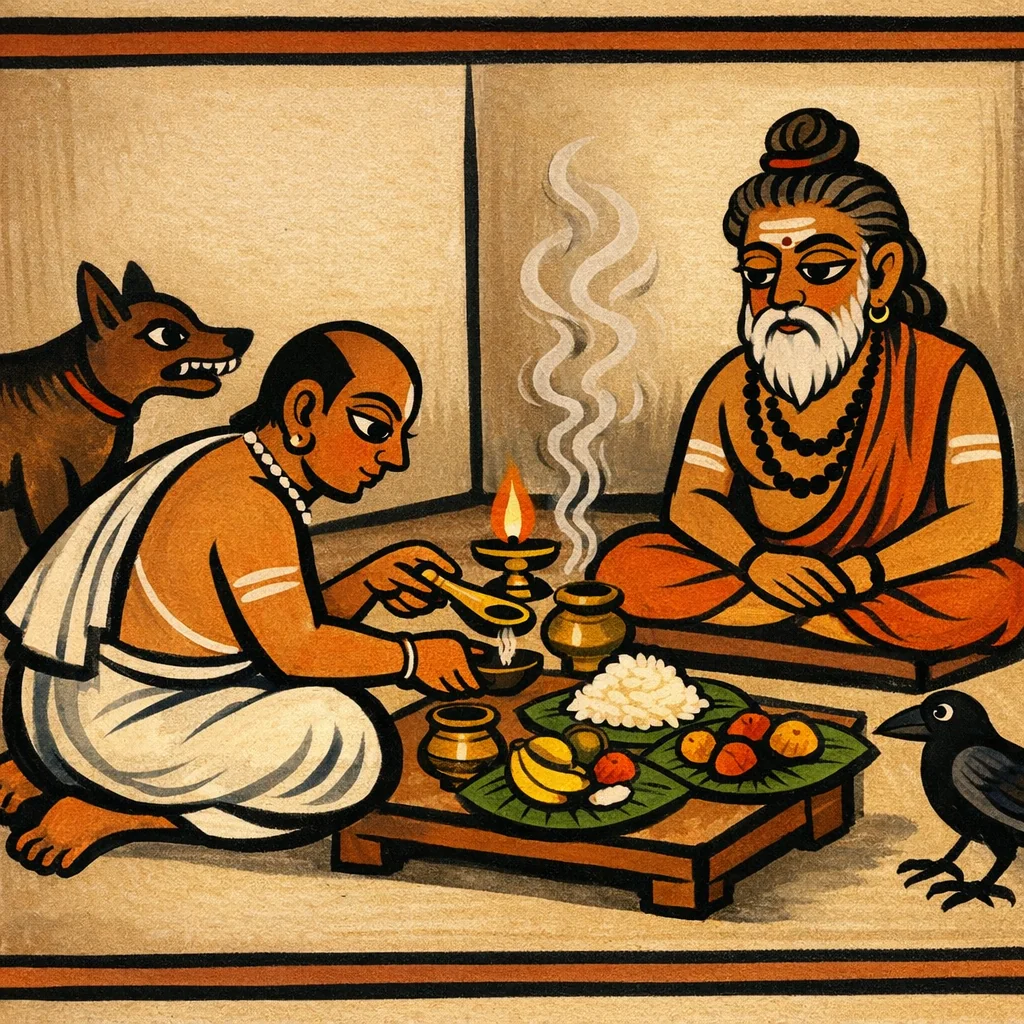
Adhyaya 32: Rules for Parvana Śrāddha: Foods that Please the Ancestors and Items to Avoid
पार्वणश्राद्धकल्प (Pārvaṇa-Śrāddha-Kalpa)
Sankhya Philosophy
This chapter sets forth the observances of Pārvaṇa Śrāddha, the prescribed ancestral rite offered to the Pitṛs. It lists the foods and offerings that delight the ancestors and specifies what must be avoided, so that the śrāddha is performed in purity, according to dharma, and yields complete spiritual merit.
Divine Beings
Celestial Realms
Key Content Points
Focus Keywords
Shlokas in Adhyaya 32
Verse 1
इति श्रीमार्कण्डेयपुराणेऽलर्कानुशासने पार्वणश्राद्धकल्पोनाम एकत्रिंशोऽध्यायः । द्वात्रिंशोऽध्यायः । मदालसोवाच । अतः परं शृणुष्वेमं पुत्र ! भक्त्या यदाहृतम् । पितॄणां प्रीतये यद्वा वर्ज्यं वा प्रीतिकारकम् ॥
Thus ends, in the Śrī Mārkaṇḍeya Purāṇa, within the instruction to Alarka, the thirty-first chapter called “The Procedure for the Pārvaṇa Śrāddha.” Now begins the thirty-second chapter. Madālasa said: “Henceforth, listen, my son, with devotion, to what is taught—what brings pleasure to the Pitṛs, what should be avoided, and what causes their satisfaction.”
Verse 2
मासं पितॄणां तृप्तिश्च हविष्यानेन जायते । मासद्वयं मत्स्यमांसैस्तृप्तिं यान्ति पितामहाः ॥
By an offering-meal of haviṣyānna, the satisfaction of the Pitṛs arises for a month; by fish and meat, the grandfathers attain satisfaction for two months.
Verse 3
त्रीन् मासान् हारिणां मांसं विज्ञेयं पितृतृप्तये । चतुर्मासांस्तु पुष्णाति शशस्य पिशितं पितॄन् ॥
Deer-meat is understood to satisfy the Pitṛs (ancestral spirits) for three months. The flesh of the hare nourishes and satisfies the Pitṛs for four months.
Verse 4
शाकुनं पञ्च वै मासान् षण्मासान् शूकरामिषम् । छागलं सप्त वै मासान् ऐणेयं चाष्टमासिकीम् ॥
Bird-meat satisfies (the Pitṛs) for five months; boar-meat for six months; goat-meat for seven months; and antelope-meat for eight months.
Verse 5
करोति तृप्तिं नव वै रुरोर्मांसं न संशयः । गवयस्यामिषं तृप्तिं करोति दशमासिकीम् ॥
The meat of the ruru-deer certainly produces satisfaction for nine months. The flesh of the gavaya produces satisfaction for ten months.
Verse 6
तथैकादशमासांस्तु औरभ्रं पितृतृप्तिदम् । संवत्सरं तथा गव्यं पयः पायसमेव वा ॥
Likewise, aurabhra (sheep/ram-meat) gives satisfaction to the Pitṛs for eleven months. And cow-derived foods—milk or even rice cooked in milk (pāyasa)—give satisfaction for a full year.
Verse 7
वाद्ह्रीणसामिषं लौहं कालशाकं तथा मधु । दौहित्रामिषमन्यच्च यच्चान्यत् स्वकुलोद्भवैः ॥
The flesh of the vādhrīṇa, as well as lauha, kālaśāka (a dark leafy vegetable), and honey; and the flesh of a daughter’s son (dauhitra) and other items too—whatever is produced within one’s own family line—are mentioned in this context of Pitṛ-satisfaction.
Verse 8
अनन्तां वै प्रयच्छन्ति तृप्तिं गौरीसुतस्तथा । पितॄणां नात्र सन्देहो गयाश्राद्धञ्च पुत्रक ॥
These indeed bestow endless satisfaction—so also declares the son of Gaurī. For the Pitṛs there is no doubt of this, my child; and so too with the śrāddha performed at Gayā.
Verse 9
श्यामाकराजश्यामाकौ तद्वच्चैव प्रसातिकाः । नीवाराः पौष्कलाश्चैव धान्यानां पितृतृप्तये ॥
Śyāmāka and rājaśyāmāka, and likewise prasātikā; nīvāra and pauṣkala as well—these grains are commended for the satisfaction of the Pitṛs.
Verse 10
यवव्रीहिसगोधूमतिला मुद्गाः ससरषपाः । प्रियङ्गवः कोविदारा निष्पावाश्चातिशोभनाः ॥
Barley, rice, wheat, sesame; mung beans with mustard; priyaṅgu; kovidāra; and niṣpāva—these are exceedingly excellent for such rites.
Verse 11
वर्ज्या मर्कटकाः श्राद्धे राजमाषास्तथाणवः । विप्राषिका मसूराश्च श्राद्धकर्मणि गर्हिताः ॥
Markaṭaka, rājāmāṣa, aṇu, viprāṣikā, and masūra (lentils) are to be avoided in śrāddha; they are censured in the performance of śrāddha-rites.
Verse 12
लशुनं गृञ्जनञ्चैव पलाण्डं पिण्डमूलकम् । करम्भं यानि चान्यानि हीनानि रसवर्णतः ॥
Garlic, gṛñjana, onion, piṇḍamūlaka, karambha, and other items inferior in taste and color (in this context) are to be avoided.
Verse 13
गान्धारिकामलाबूनि लवणान्यूषराणि च । आरक्ताः ये च निर्यासाः प्रत्यक्षलवणानि च ॥
Gāndhārika (a kind of salt), āmalā-bū (a kind of gourd/fruit), salted foods, alkaline or saline substances, reddish exudations (resins/juices), and anything plainly over-salty—these are to be avoided in the śrāddha offerings.
Verse 14
वर्ज्यान्येतानि वै श्राद्धे यच्च वाचा न शस्यते । यच्चोत्कोचादिना प्राप्तं पतिताद्यदुपार्जितम् ॥
All these are indeed to be avoided in śrāddha; and also whatever is not sanctioned by right speech (not fit to be named or endorsed), whatever is obtained through bribes and the like, and whatever is gained from or through association with fallen or impure persons and similar sources.
Verse 15
अन्यायकन्याशुल्कोत्थं द्रव्यञ्चात्र विगर्हितम् । दुर्गन्धि फेनिलञ्चाम्बु तथैवाल्पतरोदकम् ॥
Also condemned here is wealth arising from an unlawful ‘maiden’s fee’ (an unjust bride-price) and similar improper sources; likewise, water that is foul-smelling or foamy, and water that is scant due to little flow.
Verse 16
न लभेद्यत्र गौस्तृप्तिं नक्तं यच्चाप्युपाहृतम् । यन्न सर्वापचोत्सृष्टं यच्चाभोज्यं निपानजम् ॥
That water should not be used where a cow would not find satisfaction (would not drink contentedly); nor water brought at night; nor water not released by a ‘complete/competent cook’ (not properly prepared/handled); nor water from a drinking-place or trough that is unfit for consumption.
Verse 17
तद्वर्ज्यं सलिलं तात ! सदैव पितृकर्मणि । मार्गमाविकमौष्ट्रञ्च सर्वमैैकशपफञ्च यत् ॥
Therefore, dear one, such water should always be avoided in rites for the Pitṛs (the Ancestors). Also to be avoided are the meats of deer, sheep, and camel, and in general the flesh of all single-hoofed animals.
Verse 18
माहिषञ्चामरञ्चैव धेन्वा गोश्चाप्यनिर्दशम् । पित्रर्थं मे प्रयच्छस्वेत्युक्त्वा यच्चाप्युपाहृतम् ॥
Buffalo milk, camel milk, and also the milk of a cow that is not duly specified or approved (anirdaśa—of uncertain or improper status), and whatever is brought after saying, “Give it to me for my Pitṛs” (i.e., obtained by importunate solicitation in the name of śrāddha)—all these are to be avoided.
Verse 19
वर्जनीयṃ सदा सदिभस्तत्पयः श्राद्धकर्मणि । वर्ज्या जन्तुमती रूक्षा क्षितिः प्लुष्टा तथाग्निना ॥
In śrāddha one should always avoid milk associated with “sadibhas” (a textual term of uncertain sense, likely indicating tainted/impure milk or milk from an improper animal or condition). One should also avoid ground that teems with living creatures (infested), ground that is dry and rough, and earth scorched by fire.
Verse 20
अनिष्टदुष्टशब्दोग्रदुर्गन्धा चात्र कर्मणि । कुलापमानकाः श्राद्धे व्यायुञ्ज्य कुलहिंसकाः ॥
In this rite, inauspicious and harsh or evil sounds, and strong foul odors, are to be avoided. Those who disgrace the family, who disturb the śrāddha, and who harm the family line should be kept away and removed.
Verse 21
नग्नाः पातकिनश्चैव हन्युर्दृष्ट्या पितृक्रियाम् । अपुमानपविद्धश्च कुक्कुटो ग्रामशूकरः ॥
Naked persons and sinners, by their very sight, would spoil the ancestral rite. Also to be kept away are a rooster and a village pig (domestic swine), and one called “apumāna-paviddha” (a censured or impure person; the term requires contextual confirmation).
Verse 22
श्वा चैव हन्ति श्राद्धानि यातुधानाश्च दर्शनात् । तस्मात् सुसंवृतो दद्याद् तिलैश्चावकिरन् महीम् ॥
A dog indeed ruins śrāddha rites, and yātudhānas (malevolent beings) do so by mere appearance. Therefore one should present the offerings well covered and guarded, and should scatter sesame seeds upon the ground.
Verse 23
एवं रक्षा भवेच्छ्राद्धे कृता तातोभयोरपि । शावसूतकसंस्पृष्टं दीर्घरोगिभिरेव च ॥
Thus, in a śrāddha, ritual protection (rakṣā) is held to be established for both—the performer and the ancestors. Yet one should avoid food or rites touched by those in death-impurity (śāva) or birth-impurity (sūtaka), and likewise by those afflicted with prolonged illness.
Verse 24
पतितैर्मलिनैश्चैव न पुष्णाति पितामहान् । वर्जनीयं तथा श्राद्धे तथोदक्याश्च दर्शनम् ॥
By association with the fallen (patita) and the impure, one does not nourish the Pitṛs (forefathers). Therefore, in a śrāddha these are to be avoided; likewise, the sight or presence of a woman in the udakyā state (menstrual/ritual period) is to be avoided.
Verse 25
मुण्डशौण्डसमाभ्यासो यजमानेन यादरात् । केशकीटावपन्नञ्च तथाश्वभिरवेक्षितम् ॥
If the yajamāna (sacrificer), through negligence, associates with a shaven-headed (disreputable) person or a drunkard, it is a fault. Also to be avoided in the rite are things infested with hair or insects, and anything that has been looked at by dogs.
Verse 26
पूति पर्युषितञ्चैव वार्ताक्यभिषवांस्तथा । वर्जनीयानि वै श्राद्धे यच्च वस्त्रानिलाहतम् ॥
Foul-smelling and stale food, and also certain preparations such as vārtākī and fermented or intoxicating brews—these are indeed to be avoided in śrāddha; and also any cloth that has been blown about or soiled by the wind.
Verse 27
श्रद्धया परया दत्तं पितॄणां नामगोत्रतः । यदाहारास्तु ते जातास्तदाहारत्वमेति तत् ॥
What is given with supreme faith, addressed to the Pitṛs by their names and lineages (gotras), becomes precisely their food—whatever form of sustenance is appropriate to them, that offering attains that very state.
Verse 28
तस्मात् श्रद्धावता पात्रे यच्छस्तं पितृकर्मणि । यथावच्चैव दातव्यं पितॄणां तृप्तिमिच्छता ॥
Therefore, in the ancestral rite (śrāddha), one should give with faith to a worthy recipient (pātra); and one who seeks the satisfaction of the Pitṛs must give rightly, in the prescribed manner.
Verse 29
योगिनश्च सदा श्राद्धे भोजनीया विपश्चिता । योगाधारा हि पितरस्तस्मात् तान् पूजयेत् सदा ॥
In śrāddha, wise yogins should always be fed. For the Pitṛs are sustained by yoga; therefore one should ever honor such yogins.
Verse 30
ब्राह्मणानां सहस्रेभ्यो योगी त्वग्राशनी यदि । यजमानञ्च भोक्तॄंश्च नौरीवाम्भसि तारयेत् ॥
If, in the śrāddha, a yogin is the foremost eater (the first to partake), then (his presence and act) can carry across both the patron and the diners—like a boat upon water—more than even a thousand brāhmaṇas could.
Verse 31
पितृगाथास्तथवात्र गीयन्ते ब्रह्मवादिभिः । या गीताः पितृभिः पूर्वमैलस्यासीन् महीपतेः ॥
Here too, the brahmavādins—those who expound the Veda—sing the Pitṛ-gāthās: those very verses that the Pitṛs long ago sang in the time of King Aila, descendant of Ilā, O king.
Verse 32
कदा नः सन्ततावग्र्यः कस्यचिद् भविता सुतः । यो योगिभुक्तशोषान्नो भुवि पिण्डं प्रदास्यति ॥
(The Pitṛs sing:) “When indeed will there be born, in some lineage, a foremost son for us—one who, after the yogins have eaten, will offer on earth the piṇḍa (rice-ball oblation) from the remaining food?”
Verse 33
गयायामथवा पिण्डं खड्गमांसं महाहविः । कालशाकं तिलाढ्यं वा कृसरं मासतृप्तये ॥
At Gayā one may offer the piṇḍa; and rhinoceros-meat is spoken of as a great oblation. Or one may offer black leafy greens, or kṛsara (a rice-and-pulse dish) rich in sesame—these are said to satisfy the Pitṛs for a month.
Verse 34
वैश्वदेवञ्च सौम्यञ्च खड्गमांसं परं हविः । विषाणवर्ज्यखड्गाप्त्या आसूर्यञ्चाश्नुवामहे ॥
In the Vaiśvadeva and Saumya rites, rhinoceros-meat is declared the supreme oblation. By obtaining a rhinoceros without its horn, one attains merit enduring as long as the sun endures.
Verse 35
दद्यात् श्राद्धं त्रयोदश्यां मघासु च यथाविधि । मधुसर्पिः समायुक्तं पायसं दक्षिणायने ॥
One should perform śrāddha on the thirteenth lunar day, and also when the Maghā constellation prevails, according to rule. In the southern course (Dakṣiṇāyana), one should offer pāyasa (sweet milk-rice) mixed with honey and ghee.
Verse 36
तस्मात् सम्पूजयेत् भक्त्या स्वपितॄन् पुत्र मानवः । कामानभीप्सन् सकलान् पापाच्चात्मविमोचनम् ॥
Therefore, O son, a man should worship his own ancestors with devotion—if he desires the fulfillment of all wishes and also the release of himself from sin.
Verse 37
वसून् रुद्रांस्तथादित्यान् नक्षत्रग्रह तारकाः । प्रीणयन्ति मनुष्याणां पितरः श्राद्धतर्पिताः ॥
When the ancestors of human beings are satisfied by śrāddha and libations, they in turn delight the Vasus, Rudras, Ādityas, and also the constellations, planets, and stars.
Verse 38
आयुः प्रज्ञां धनं विद्यां स्वर्गं मोक्षं सुखानि च । प्रयच्छन्ति तथा राज्यं पितरः श्राद्धतर्पिताः ॥
Ancestors, satisfied by śrāddha and libations, bestow long life, intelligence, wealth, learning, heaven, liberation, and pleasures—and also sovereignty and kingdom.
Verse 39
एतत् ते पुत्र कथितं श्राद्धकर्म यथोदितम् । काम्यानां श्रूयतां वत्स श्राद्धानां तिथिकीर्तनम् ॥
Thus, O son, the śrāddha rite has been explained to you as stated in tradition. Now, dear child, listen to the recitation of the lunar dates (tithi) for desire-motivated (kāmya) śrāddhas.
Frequently Asked Questions
It investigates how intention (śraddhā) and ethical procurement of offerings condition ritual efficacy, arguing that śrāddha is not merely material gifting but a morally regulated act where purity, rightful means, and worthy recipients determine pitṛ-tṛpti and the yajamāna’s merit.
This Adhyāya does not develop Manvantara chronology; instead, it functions as a dharma-ritual insert within the Alarkānuśāsana stream, providing normative śrāddha regulations rather than genealogical or Manu-specific transitions.
It is outside the Devi Māhātmya unit (Adhyāyas 81–93) and contains no śākta stuti or goddess-battle narrative; its contribution is instead to pitṛ-dharma by codifying Pārvaṇa-śrāddha offerings, prohibitions, and the special commendation of honoring yogins.