Adhyaya 144
कुन्ती–कर्णसंवादः (Kuntī–Karṇa Dialogue: Loyalty, Fate, and Constrained Assurance)
Upa-parva: Kuntī–Karṇa Saṃvāda (Kuntī-Karṇa Dialogue Episode)
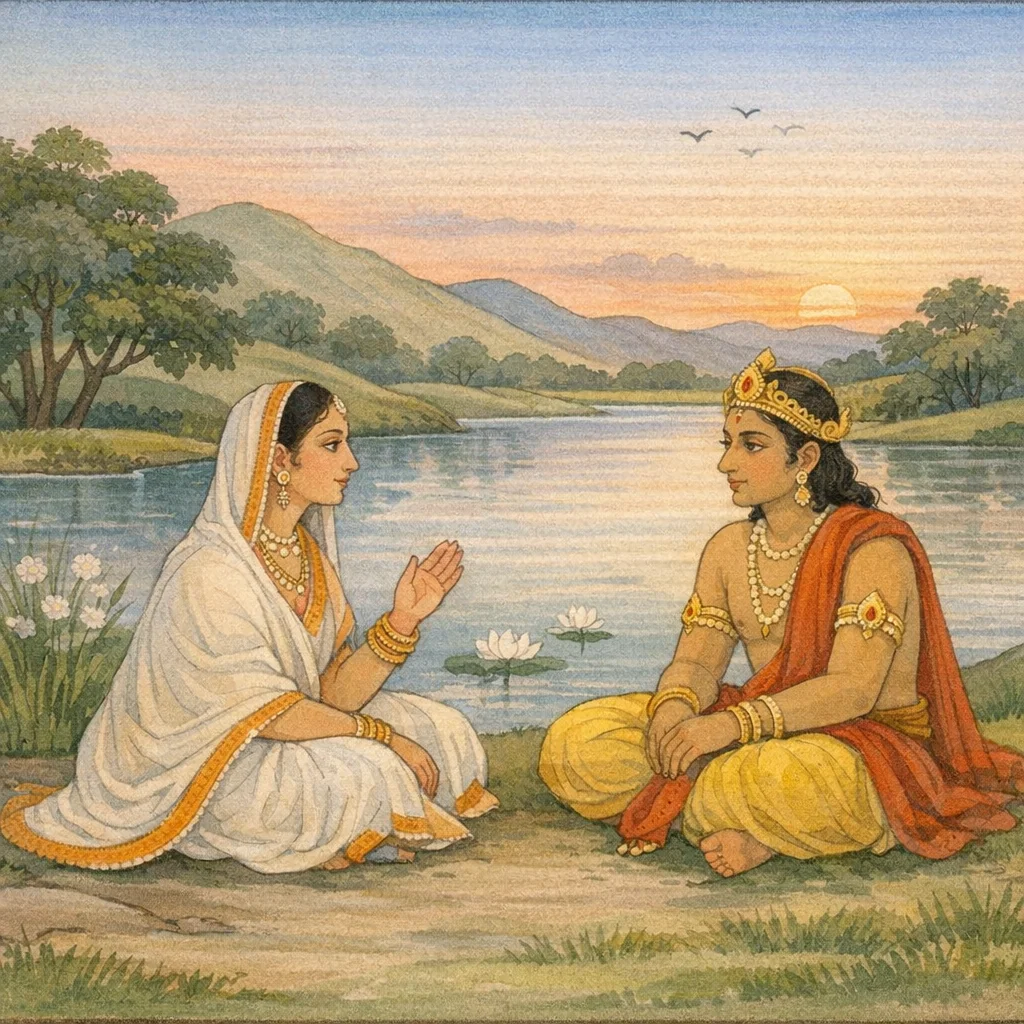
Vaiśaṃpāyana narrates that Karṇa hears a formidable, affectionate appeal associated with Bhāskara (Sūrya), framed as paternal in force. The appeal urges him to accept Kuntī’s truthful words and act in accordance with maternal counsel for his welfare. Karṇa’s resolve does not waver: he challenges the credibility and timing of Kuntī’s claim, stating that her earlier actions deprived him of due kṣatriya rites and social standing, and that the present appeal appears self-interested. He argues that shifting sides now would damage his honor and the expectations of those who rely on him; he frames loyalty to the Dhārtarāṣṭras as a duty, even at personal risk, and critiques betrayal as ethically ruinous. He affirms he will fight for Dhṛtarāṣṭra’s sons, yet offers a limited concession: he will not kill Yudhiṣṭhira, Bhīma, or the twins, reserving his decisive rivalry for Arjuna; thus, whichever outcome occurs, Kuntī will not be left without five renowned sons (either with Karṇa surviving among them or Arjuna). Kuntī, distressed, acknowledges the force of destiny (daiva) and asks him to reaffirm his assurance regarding her other sons; the exchange ends with formal well-wishing and separation.
Chapter Arc: युद्ध की छाया घनी है; उसी संध्या कुन्ती अकेले कर्ण के पास पहुँचती है और एक वाक्य में उसके जीवन की जड़ हिला देती है—“तू राधेय नहीं, कौन्तेय है।” → कुन्ती अपने गुप्त मातृत्व का उद्घाटन करती है: कन्यावस्था में सूर्यदेव से उत्पन्न प्रथम पुत्र, जिसे लोकलज्जा से त्यागना पड़ा। वह कर्ण को उसके वास्तविक भ्रातृत्व से परिचित कराती है और धृतराष्ट्र-पक्ष की सेवा को ‘मोह’ कहकर रोकती है। साथ ही वह उसे पाण्डवों की ‘यौधिष्ठिरी श्री’—धर्मसम्मत राज्यलक्ष्मी—का भागी बनने का प्रलोभन नहीं, अधिकार बताती है। → कुन्ती का निर्णायक आग्रह: कर्ण पाँचों भाइयों से घिरकर वैसे शोभित होगा जैसे यज्ञवेदी पर देवों से घिरा ब्रह्मा; ‘सूतपुत्र’ का कलंक मिटेगा—वह वीर्यवान पार्थ है, ज्येष्ठ है, श्रेष्ठ बन्धुओं में श्रेष्ठ है। → कुन्ती कर्ण के सामने जन्म-सत्य, देव-जन्य तेज, और धर्मपक्ष का स्पष्ट विकल्प रख देती है—पाण्डवों के साथ आकर भ्रातृधर्म निभाने का मार्ग। → कर्ण इस सत्य और प्रस्ताव पर क्या उत्तर देगा—मातृत्व की पुकार मानेगा या दुर्योधन-ऋण? (उत्तर अगले अध्याय की देहरी पर ठहरता है।)
Shlokas
Verse 1
अत-#-#कत पजञज्चचत्वारिशर्दाधिकशततमो< ध्याय: कुन्तीका कर्णको अपना प्रथम पुत्र बताकर उससे पाण्डवपक्षमें मिल जानेका अनुरोध कर्ण उवाच राधेयो5हमाधिरथि: कर्णस्त्वामभिवादये । प्राप्ता किमर्थ भवती ब्रूहि किं करवाणि ते,कर्ण बोला--देवि! मैं राधा तथा अधिरथका पुत्र कर्ण हूँ और आपके चरणोंमें प्रणाम करता हूँ। आपने किसलिये यहाँतक आनेका कष्ट किया है? बताइये, मैं आपकी क्या सेवा करूँ?
Karna said: “I am Radheya, the son of Adhiratha—Karna. I bow to you. For what purpose have you come here? Tell me; what service can I render to you?”
Verse 2
कुन्त्युवाच कौन्तेयस्त्वं न राधेयो न तवाधिरथ: पिता । नासि सूतकुले जात: कर्ण तद् विद्धि मे वच:,कुन्तीने कहा--कर्ण! तुम राधाके नहीं, कुन्तीके पुत्र हो। तुम्हारे पिता अधिरथ नहीं हैं और तुम सूतकुलमें नहीं उत्पन्न हुए हो। मेरी इस बातको ठीक मानो
Kuntī said: “You are a son of Kuntī, not Rādhā’s. Adhiratha is not your father, and you were not born in the charioteer (sūta) community. O Karṇa, know this statement of mine to be true.”
Verse 3
कानीनस्त्वं मया जात: पूर्वज: कुक्षिणा धृतः । कुन्तिराजस्य भवने पार्थस्त्वमसि पुत्रक,तुम कन्यावस्थामें मेरे गर्भसे उत्पन्न हुए प्रथम पुत्र हो। महाराज कुन्तिभोजके घरमें रहते समय मैंने तुम्हें गर्भभें धारण किया था; अतः बेटा! तुम पार्थ हो
Karna said: “You are a kānīna son—born of me while I was still unmarried—my firstborn, once carried in my womb. When I was living in the house of King Kuntibhoja, I conceived you. Therefore, dear child, you are a Pārtha.”
Verse 4
प्रकाशकर्मा तपनो यो<यं देवो विरोचन: । अजीजनत त्वां मय्येष कर्ण शस्त्रभृतां वरम्
Karna said: “That radiant, heat-giving god Virocana—whose very work is illumination—has brought you forth in me, O Karna, as the foremost among weapon-bearers.”
Verse 5
कर्ण! ये जो जगतमें प्रकाश और उष्णता प्रदान करनेवाले भगवान् सूर्यदेव हैं, इन्होंने शस्त्रधारियोंमें श्रेष्ठ तुम-जैसे वीर पुत्रको मेरे गर्भसे उत्पन्न किया है ।। कुण्डली बद्धकवचो देवगर्भ: श्रिया वृतः । जातस्त्वमसि दुर्धर्ष मया पुत्र पितुर्गहे,दुर्धर्ष पुत्र! मैंने पिताके घरमें तुम्हें जन्म दिया था। तुम जन्मकालसे ही कुण्डल और कवच धारण किये देवबालकके समान शोभासम्पन्न रहे हो
“O Karna! The Sun-god, who grants the world its light and heat, brought forth from my womb a heroic son like you, foremost among weapon-bearers. Born with earrings and an innate cuirass, radiant as a divine child and wrapped in splendor, you came into the world—O invincible one. O son, I gave birth to you in your father’s house.”
Verse 6
स त्वं भ्रातृनसम्बु्धा मोहाद् यदुपसेवसे । धार्तराष्ट्रानू न तद् युक्त त्वयि पुत्र विशेषत:,बेटा! तुम जो अपने भाइयोंसे अपरिचित रहकर मोहवश धृतराष्ट्रके पुत्रोंकी सेवा कर रहे हो, वह तुम्हारे लिये कदापि योग्य नहीं है
But you—unaware of your own brothers—are, out of delusion, serving the sons of Dhṛtarāṣṭra. That course is not fitting for you at all, especially for you, my son.
Verse 7
एतदू धर्मफल पुत्र नराणां धर्मनिश्चये । यत् तुष्यन्त्यस्य पितरो माता चाप्येकदर्शिनी,बेटा! धर्मशास्त्रमें मनुष्योंके लिये यही धर्मका उत्तम फल बताया गया है कि उनके पिता आदि गुरुजन तथा एकमात्र पुत्रपर ही दृष्टि रखनेवाली माता उनसे संतुष्ट रहें
Karna said: “My son, this is declared in the Dharmaśāstras to be the highest fruit of dharma for men who seek to determine what is righteous: that one’s fathers and other revered elders, and also one’s mother—who fixes her gaze upon her only son—remain satisfied with him.”
Verse 8
अर्जुनेनार्जितां पूर्व हृतां लोभादसा धुभि: । आच्चिद्य धार्तराष्ट्रेभ्यो भुड़क्ष्य यौधिष्ठिरी श्रियम्,अर्जुनने पूर्वकालमें जिसका उपार्जन किया था और दुष्टोंने लोभवश जिसे हर लिया है, युधिष्ठिरकी उस राज्यलक्ष्मीको तुम धृतराष्ट्रपुत्रोंसे छीनकर भाइयोंसहित उसका उपभोग करो
Karna said: “Seize back from the sons of Dhṛtarāṣṭra that royal fortune of Yudhiṣṭhira—won long ago by Arjuna, yet stolen by wicked men out of greed—and then enjoy it rightfully, together with your brothers.”
Verse 9
अद्य पश्यन्ति कुरव: कर्णार्जुनसमागमम् | सौभ्रात्रेण समालक्ष्य संनमन्न्तामसाधव:,आज उत्तम बन्धुजनोचित स्नेहके साथ कर्ण और अर्जुनका मिलन कौरवलोग देखें और इसे देखकर दुष्टलोग नतमस्तक हों
“Today let the Kurus witness the meeting of Karṇa and Arjuna. Seeing it marked by true brotherly affection, let the wicked bow their heads in submission.”
Verse 10
कर्णार्जुनौ वै भवेतां यथा रामजनार्दनौ | असाध्यं कि तु लोके स्याद् युवयो: संहितात्मनो:,कर्ण और अर्जुन दोनों मिलकर वैसे ही बलशाली हैं जैसे बलराम और श्रीकृष्ण। बेटा! तुम दोनों हृदयसे संगठित हो जाओ तो इस जगत्में तुम्हारे लिये कौन-सा कार्य असाध्य होगा?
Karna said: “Let Karna and Arjuna be together, just as Balarāma and Janārdana (Kṛṣṇa) stand together. If you two become united in heart, what task in this world could possibly remain beyond your power?”
Verse 11
कर्ण शोभिष्यसे नूनं पञ्चभिय्भ्रातृभिर्वृत: । देवै: परिवृतो ब्रह्मा वेद्यामिव महाध्वरे,कर्ण! जिस प्रकार महान् यज्ञकी वेदीपर देवगणोंसे घिरे हुए ब्रह्माजी सुशोभित होते हैं, उसी प्रकार अपने पाँचों भाइयोंसे घिरे हुए तुम भी शोभा पाओगे
Karna said: “Surely you will shine, surrounded by your five brothers—just as Brahmā appears resplendent when encircled by the gods upon the altar-platform in a great sacrifice.”
Verse 12
उपपन्नो गुणै: सर्वर्ज्येष्ठ: श्रेष्ठेषु बन्धुषु । सूतपुत्रेति मा शब्द: पार्थस्त्वमसि वीर्यवान्,अपने श्रेष्ठ स्वभाववाले बन्धुओंके बीचमें तुम सर्वगुणसम्पन्न ज्येष्ठ भ्राता परम पराक्रमी कुन्तीपुत्र कर्ण हो। तुम्हारे लिये सूतपुत्र शब्दका प्रयोग नहीं होना चाहिये
“Among your noble kin, you are the eldest, endowed with every virtue; you are Karna, Kuntī’s son, a hero of great might. The word ‘charioteer’s son’ should not be used of you.”
Verse 145
इति श्रीमहाभारते उद्योगपर्वणि भगवद्यानपर्वणि कुन्तीकर्णसमागमे पज्चचत्वारिंशदधिकशततमो<ध्याय:
Thus ends, in the Śrī Mahābhārata, within the Udyoga Parva—specifically in the section concerning the Blessed Lord’s embassy—at the meeting of Kuntī and Karṇa, the one-hundred-and-forty-fifth chapter. This closing colophon frames the episode as a morally charged encounter on the eve of war, where kinship, duty, and the impending catastrophe of fratricidal conflict converge.
Frequently Asked Questions
The dilemma is whether biological kinship and maternal appeal can override established loyalties, public honor, and patronage-debts when a conflict is imminent—especially when the appeal is perceived as delayed and strategically timed.
The passage emphasizes that ethical life in political contexts is shaped by time-sensitive duties: delayed acknowledgment can create irreversible social harm, and later truth-claims may not ethically dissolve prior commitments; it also frames destiny (daiva) as a force that can outweigh personal preference.
No explicit phalaśruti is stated; the meta-significance is narrative-ethical: the chapter functions as a formal record of Karṇa’s constraints and assurances, clarifying moral accountability and foreshadowing how vows structure subsequent outcomes.