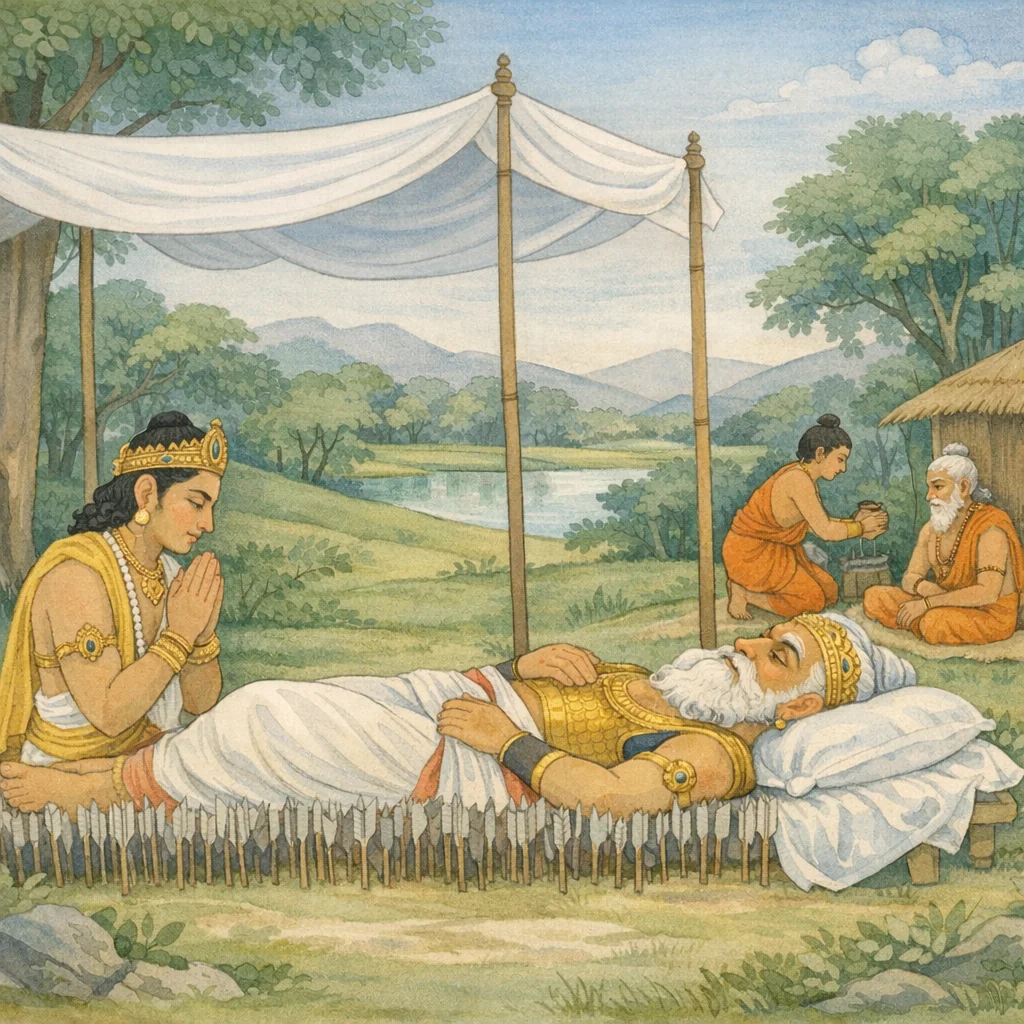
Adhyaya 62
Varṇāśrama-ācāra and Vikarma: Yudhiṣṭhira’s Inquiry on Safe Dharmas (शिवधर्मप्रश्नः)
Upa-parva: Rājadharmānuśāsana Upa-Parva (Instruction on Royal and Social Duties)
Yudhiṣṭhira requests instruction on “auspicious, happiness-yielding, non-injurious, and socially approved” dharmas suitable for a ruler-like agent seeking stable well-being (Śl. 1). Bhīṣma responds by situating the discussion within the varṇāśrama framework: four āśramas are prescribed for the brāhmaṇa, and the other three varṇas are said to follow these patterns in adapted form (Śl. 2). He notes that many acts have been described as heaven-oriented and associated with the kṣatriya vocation, implying that occupational duty has a complete and proper ordering when followed as intended (Śl. 3). A warning follows: a brāhmaṇa who adopts kṣatriya, vaiśya, or śūdra-type work is censured in this world and is described as incurring severe post-mortem consequences (Śl. 4–5), framed as a reputational and moral reclassification of the agent who persists in vikarma. The chapter then praises the purified brāhmaṇa engaged in the “six duties” (ṣaṭkarma) across āśramas, characterized by discipline, austerity, non-attachment, and generosity, and associates such conduct with exalted states (Śl. 6–7). A general karmic principle is articulated: the quality (guṇa) one acquires corresponds to the kind of action performed, by the manner, means, and context of its performance (Śl. 8). Subsequent verses acknowledge livelihood practices (e.g., agriculture, trade, sustaining dependents) and stress that time (kāla) impels agents toward higher, middling, or lower acts (Śl. 9–10). The closing observation relativizes gifts and earlier merit as finite, while emphasizing steadfastness in one’s own work as a stabilizing orientation (Śl. 11).
Chapter Arc: युधिष्ठिर के शोक-शांत हृदय में भी एक जिज्ञासा उठती है—युद्ध के बाद राज्य-धर्म सुनकर भी मन क्यों नहीं टिकता? तब भीष्म धर्म को जीवन-आश्रमों की सीढ़ी पर रखकर समझाने लगते हैं: मोक्ष की ओर जाने वाला मार्ग घर, वन और गुरु-सेवा से होकर कैसे गुजरता है। → भीष्म चार आश्रमों का क्रम और उनका भार बताते हैं—ब्रह्मचर्य, गृहस्थ, वानप्रस्थ और भिक्षु/संन्यास। वे ब्रह्मचारी के संस्कारों (जटा-धारण, उपनयन, वेदाध्ययन) और अनुशासन को कठोर नियमों में बाँधते हैं: एकाग्र जप, एक गुरु की सेवा, इन्द्रिय-निग्रह, विनय, अधिकार-प्रदर्शन से बचना, द्वेषियों की संगति न करना। साथ ही गृहस्थ के लिए सत्य, आर्जव, अतिथि-पूजन, स्वधर्मानुसार अर्थ और स्वदार-संतोष को ‘इस लोक और परलोक’ दोनों का सुख बताकर वे जीवन के दो ध्रुव—प्रवृत्ति और निवृत्ति—को आमने-सामने रखते हैं। → अध्याय का शिखर ब्रह्मचर्य-धर्म की तीखी परिभाषा में आता है: ‘स्मरन्नेको जपन्नेकः… एकस्मिन्नेव चाचार्ये शुश्रूषुम्’—एकाग्रता, एकनिष्ठ गुरु-सेवा, और निरन्तर व्रत-दीक्षा में स्थित रहना; साथ ही ‘षट्कर्मसु निवृत्तः’ जैसे वाक्यों से बाह्य कर्म-प्रदर्शन की जगह अंतःशुद्धि को प्रधान ठहराया जाता है। यही वह बिंदु है जहाँ शिक्षा केवल नियम नहीं रहती, साधना बन जाती है। → भीष्म निष्कर्ष देते हैं कि जिसने ब्रह्मचर्य का पालन किया है, उसके लिए भैक्ष्यचर्या (भिक्षा-आधारित संयमित जीवन) प्रशस्त है—क्योंकि वही मोक्ष-मार्ग की तैयारी है। गृहस्थ के गुण (सत्य, सरलता, अतिथि-पूजन, स्वदार-रति) को भी धर्म के रूप में प्रतिष्ठित कर वे बताते हैं कि आश्रम-धर्म परस्पर विरोधी नहीं, एक ही लक्ष्य की अलग अवस्थाएँ हैं।
Shlokas
Verse 1
अपर - पूर्णपात्रका परिमाण इस प्रकार है--आठ मुदठ्ठी अन्नको 'किंचित” कहते हैं, आठ किंचित्का एक 'पुष्कल' होता है और चार पुष्कलका एक '(पूर्णपात्र” होता है। इस प्रकार दे सौ छप्पन मुद्ठीका एक पूर्णपात्र होता है। एकषष्टितमो< ध्याय: आश्रम-धर्मका वर्णन भीष्म उवाच आश्रमाणां महाबाहो शृणु सत्यपराक्रम । चतुर्णामपि नामानि कर्माणि च युधिष्ठिर,भीष्मजी कहते हैं--सत्यपराक्रमी महाबाहु युधिष्ठिर! अब तुम चारों आश्रमोंके नाम और कर्म सुनो
Bhishma said: “O mighty-armed Yudhishthira, whose valor is grounded in truth—now listen. I shall tell you the names of the four āśramas (stages of life) and the duties that belong to each.”
Verse 2
वानप्रस्थं भैक्ष्यचर्य गार्हस्थ्यं च महाश्रमम् । ब्रह्मचर्याश्रमं प्राहुश्नतुर्थ ब्राह्मणैर्वतम्,ब्रह्मचर्य, महान् आश्रम गार्हस्थ्य, वानप्रस्थ और भैक्ष्यचर्य (संन्यास)--ये चार आश्रम हैं। चौथे आश्रम संन्न्यासका अवलम्बन केवल ब्राह्मणोंने किया है
The Brahmins declare four āśramas: brahmacarya, gṛhastha (the great stage of household life), vānaprastha, and bhaikṣyacaryā (sannyāsa, the life of renunciation). The fourth stage, sannyāsa, has been undertaken only by Brahmins.
Verse 3
जटाधारणसंस्कारं द्विजातित्वमवाप्य च | आधानादीनि कर्माणि प्राप्य वेदमधीत्य च,(ब्रह्मचर्य-आश्रममें) चूड़ाकरण-संस्कार और उपनयनके अनन्तर द्विजत्वको प्राप्त हो वेदाध्ययन पूर्ण करके (समावर्तनके पश्चात् विवाह करे, फिर) गार्हस्थ्य आश्रममें अग्निहोत्र आदि कर्म सम्पन्न करके इन्द्रियोंको संयममें रखते हुए मनस्वी पुरुष स्त्रीको साथ लेकर अथवा बिना स्त्रीके ही गृहस्थाश्रमसे कृतकृत्य हो वानप्रस्थाश्रममें प्रवेश करे
Bhishma said: Having undergone the rite connected with wearing the matted hair and, after the initiation that confers ‘twice-born’ status, having completed Vedic study, one should proceed through the prescribed sacramental duties beginning with the establishment of the sacred fires. Thus disciplined, a thoughtful man—having fulfilled the obligations of the householder stage with self-control—should then enter the forest-dweller stage, regarding the household life as completed in its purpose.
Verse 4
सदारो वाप्यदारो वा आत्मवान् संयतेन्द्रिय: । वानप्रस्थाश्रमं गच्छेत् कृतकृत्यो गृहाश्रमात्,(ब्रह्मचर्य-आश्रममें) चूड़ाकरण-संस्कार और उपनयनके अनन्तर द्विजत्वको प्राप्त हो वेदाध्ययन पूर्ण करके (समावर्तनके पश्चात् विवाह करे, फिर) गार्हस्थ्य आश्रममें अग्निहोत्र आदि कर्म सम्पन्न करके इन्द्रियोंको संयममें रखते हुए मनस्वी पुरुष स्त्रीको साथ लेकर अथवा बिना स्त्रीके ही गृहस्थाश्रमसे कृतकृत्य हो वानप्रस्थाश्रममें प्रवेश करे
Bhīṣma said: Whether accompanied by a wife or without one, a self-possessed man who has mastered his senses—having fulfilled the duties of the householder’s stage—should depart from the gṛhastha-āśrama and enter the vānaprastha-āśrama.
Verse 5
तत्रारण्यकशास्त्राणि समधीत्य स धर्मवित् । ऊर्ध्वरेता: प्रव्रजित्वा गच्छत्यक्षरसात्मताम्,वहाँ धर्मज्ञ पुरुष आरण्यकशास्त्रोंका अध्ययन करके वानप्रस्थ-धर्मका पालन करे। तत्पश्चात् ब्रह्मचर्य पालनपूर्वक उस आश्रमसे निकल जाय और विधिपूर्वक संन्यास ग्रहण कर ले। इस प्रकार संन्यास लेनेवाला पुरुष अविनाशी ब्रह्मभावको प्राप्त हो जाता है
Bhīṣma said: There, having thoroughly studied the Āraṇyaka teachings, that knower of dharma should live according to the discipline of the forest-dweller. Thereafter, maintaining strict continence, he should depart from that stage and, following due rule, accept renunciation. One who thus takes sannyāsa attains the imperishable state—identity with the Eternal (Brahman).
Verse 6
एतान्येव निमित्तानि मुनीनामूर्थ्वरेतसाम् । कर्तव्यानीह विप्रेण राजन्नादौ विपक्षिता,राजन! विद्वान् ब्राह्मणको ऊर्ध्वरेता मुनियोंद्वारा आचरणमें लाये हुए इन्हीं साधनोंका सर्वप्रथम आश्रय लेना चाहिये
Bhīṣma said: “O King, these very disciplines and observances are the recognized means followed by sages who practice lifelong continence. Here, a learned brāhmaṇa should first and foremost adopt and put into practice these prescribed measures.”
Verse 7
चरितव्रद्वाचर्यस्य ब्राह्मणस्य विशाम्पते । भैक्षचर्यास्वधीकार: प्रशस्त इह मोक्षिण:,प्रजानाथ! जिसने ब्रह्मचर्यका पालन किया है, उस ब्रह्मचारी ब्राह्मणके मनमें यदि मोक्षकी अभिलाषा जाग उठे तो उसे ब्रह्मचर्य-आश्रमसे ही संन्यास ग्रहण करनेका उत्तम अधिकार प्राप्त हो जाता है
Bhīṣma said: “O lord of the people, for a brāhmaṇa who has lived in disciplined vows and maintained the conduct of brahmacarya, if the longing for liberation arises, then in this very life the right to live by alms as a renunciant is praised as proper. In other words, one who has preserved celibate discipline may, from the brahmacarya stage itself, rightly take up the mendicant path aimed at moksha.”
Verse 8
यत्रास्तमितशायी स्यान्निराशीरनिकेतन: । यथोपलब्धजीवी स्यान्मुनिर्दान्तो जितेन्द्रिय:,संन्यासीको चाहिये कि वह मन और इन्द्रियोंको संयममें रखते हुए मुनिवृत्तिसे रहे। किसी वस्तुकी कामना न करे। अपने लिये मठ या कुटी न बनवाये। निरन्तर घूमता रहे और जहाँ सूर्यास्त हो वहीं ठहर जाय। प्रारब्धवश जो कुछ मिल जाय, उसीसे जीवन-निर्वाह करे
Bhīṣma said: “A renunciant should live like a sage with mind and senses restrained. He should be free from craving and without a fixed abode. Let him rest wherever the sun sets, not building a monastery or hut for himself. Sustained by whatever comes of itself through destiny, he should maintain his life on what is obtained without seeking.”
Verse 9
निराशी: स्यात् सर्वसमो निर्भोगो निर्विकारवान् | विप्र: क्षेमाश्रमं प्राप्तो गच्छत्यक्षरसात्मताम्,आशा-तृष्णाका सर्वथा त्याग करके सबके प्रति समान भाव रखे। भोगोंसे दूर रहे और हृदयमें किसी प्रकारका विकार न आने दे। इन्हीं सब धर्मोके कारण इस आश्रमको 'क्षेमाश्रम' (कल्याणप्राप्तिका स्थान) कहते हैं। इस आश्रममें आया हुआ ब्राह्मण अविनाशी ब्रह्मके साथ एकता प्राप्त कर लेता है
Bhīṣma said: “Let him be free from expectation, equal toward all, detached from enjoyments, and unshaken by inner modifications. A brahmin who has entered the ‘kṣema-āśrama’—the stage of life that leads to welfare and security—attains identity with the Imperishable (Brahman).”
Verse 10
अधीत्य वेदान् कृतसर्वकृत्य: संतानमुत्पाद्य सुखानि भुक्त्वा | समाहित: प्रचरेद् दुश्चरं यो गार्हस्थ्यधर्म मुनिधर्मजुष्टम्,अब गृहस्थाश्रमके धर्म सुनो--जो वेदोंका अध्ययन पूर्ण करके समस्त वेदोक्त शुभ कर्मोका अनुष्ठान करनेके पश्चात् अपनी विवाहिता पत्नीके गर्भसे संतान उत्पन्न कर उस आश्रमके न्यायोचित भोगोंको भोगता और एकाग्रचित्त हो मुनिजनोचित धर्मसे युक्त दुष्कर गार्हस्थ्य-धर्मका पालन करता है, वह उत्तम है
Bhīṣma said: “Having studied the Vedas and completed all the prescribed duties, having begotten offspring and enjoyed the rightful comforts of household life, the one who—steady and collected in mind—practices the difficult dharma of the householder, a way of life aligned with the discipline of sages, is truly excellent.”
Verse 11
स्वदारतुष्टस्त्वृुतुकालगामी नियोगसेवी न शठो न जिद्दः । मिताशनो देवरत: कृतज्ञः सत्यो मृदुश्चानृशंस: क्षमावान्,गृहस्थको चाहिये कि वह अपनी ही स्त्रीमें अनुराग रखते हुए संतुष्ट रहे। ऋतुकालमें ही पत्नीके साथ समागम करे। शास्त्रोंकी आज्ञाका पालन करता रहे। शठता और कुटिलतासे दूर रहे। परिमित आहार ग्रहण करे। देवताओंकी आराधनामें तत्पर रहे। उपकार करनेवालोंके प्रति कृतज्ञता प्रकट करे। सत्य बोले। सबके प्रति मृदुभाव रखे। किसीके प्रति क्रूर न बने और सदा क्षमाभाव रखे
Bhīṣma said: A householder should be content with love for his own wife alone, approaching her only in the proper season. He should follow the scriptural injunctions, free from deceit and crookedness. He should eat in moderation, be devoted to the worship of the gods, show gratitude to benefactors, speak truth, remain gentle toward all, never be cruel, and be ever forgiving.
Verse 12
दान्तो विधेयो हव्यकव्ये<प्रमत्तो हान्नस्य दाता सतत द्विजेभ्य: । अमत्सरी सर्वलिड्ल्डप्रदाता वैताननित्यश्व गृहाश्रमी स्यात्,गृहस्थाश्रमी पुरुष इन्द्रियोंका संयम करे, गुरुजनों एवं शास्त्रोंकी आज्ञा माने, देवताओं और पितरोंकी तृप्तिके लिये हव्य और कव्य समर्पित करनेमें कभी भूल न होने दे, ब्राह्मणोंको निरन्तर अन्नदान करे, ईर्ष्या-द्वेषसे दूर रहे, अन्य सब आश्रमोंको भोजन देकर उनका पालन-पोषण करता रहे और सदा यज्ञ-यागादिमें लगा रहे
Bhīṣma said: A householder should keep his senses restrained and remain obedient to elders and to scriptural injunctions. He should be ever vigilant in offering the proper oblations to the gods and the ancestral rites for the Pitṛs, and he should continually give food in charity to the twice-born. Free from envy and malice, he should support and nourish those of all other modes of life by providing them sustenance, and he should remain regularly engaged in Vedic sacrifices and sacred rites—thus should one live the discipline of the householder’s āśrama.
Verse 13
अथात्र नारायणगीतमाहु- महर्षयस्तात महानुभावा: । महार्थमत्यन्ततप:प्रयुक्तं तदुच्यमानं हि मया निबोध,तात! इस विषयमें महानुभाव महर्षिगण नारायण-गीतका उल्लेख किया करते हैं जो महान् अर्थसे युक्त और अत्यन्त तपस्याद्वारा प्रेरित होकर कहा गया है। मैं उसका वर्णन करता हूँ, तुम सुनो
Bhishma said: “Here, dear one, the great-souled seers speak of the ‘Nārāyaṇa-gītā’—a teaching of profound import, uttered under the impetus of intense austerity. As I now recount it, listen attentively, my child.”
Verse 14
सत्यार्जवं चातिथिपूजनं च धर्मस्तथार्थश्ष रति: स्वदारै: | निषेवितव्यानि सुखानि लोके हास्मिन् परे चैव मतं ममैतत्,“गृहस्थ पुरुष इस लोकमें सत्य, सरलता, अतिथि-सत्कार, धर्म, अर्थ, अपनी पत्नीके प्रति अनुराग तथा सुखका सेवन करे। ऐसा होनेपर ही उसे परलोकमें भी सुख प्राप्त होते हैं, यह मेरा मत है”
Bhishma said: “Truthfulness and straightforwardness, honoring guests, and the pursuit of dharma and artha, along with faithful affection for one’s own wife—these are the rightful enjoyments to be cultivated by a householder in this world. When these are practiced, happiness is gained here and also in the world beyond; this is my considered view.”
Verse 15
भरणं पुत्रदाराणां वेदानां धारणं तथा । वसतामाश्रमं श्रेष्ठ वदन्ति परमर्षय:
Bhishma said: “The highest sages declare that two duties are foremost: sustaining one’s sons and wife through rightful support, and upholding the Vedas through study and preservation. For those who live the disciplined life of an āśrama, these are praised as the best foundations of conduct.”
Verse 16
श्रेष्ठ आश्रम गार्हस्थ्यमें निवास करनेवाले द्विजोंके लिये महर्षिगण यह कर्तव्य बताते हैं कि वह स्त्री और पुत्रोंका भरण-पोषण तथा वेदशास्त्रोंका स्वाध्याय करे ।। एवं हि यो ब्राह्मणो यज्ञशीलो गार्हस्थ्यमध्यावसते यथावत् | गृहस्थवृत्तिं प्रविशोध्य सम्यक् स्वर्गे विशुद्धं फलमाप्तुते स:,जो ब्राह्मण इस प्रकार स्वभावत: यज्ञपरायण हो, गृहस्थ-धर्मका यथावत् रूपसे पालन करता है, वह गृहस्थ-वृत्तिका अच्छी तरह शोधन करके स्वर्गलोकमें विशुद्ध फलका भागी होता है
Bhishma said: The sages declare that for twice-born men who dwell in the excellent āśrama of householdership, the proper duty is to maintain wife and children and to pursue the disciplined study of the Veda and the śāstras. Indeed, a brāhmaṇa who is naturally devoted to sacrifice and who lives the householder’s life in the prescribed manner—purifying his livelihood and conduct thoroughly—attains in heaven a pure and untainted reward.
Verse 17
तस्य देहपरित्यागादिष्टा: कामाक्षया मता: । आनन्त्यायोपतिष्ठ न्ति सर्वतो$क्षिशिरोमुखा:,उस गृहस्थको देह-त्यागके पश्चात् उसके अभीष्ट मनोरथ अक्षयरूपसे प्राप्त होते हैं। वे उस पुरुषका संकल्प जानकर इस प्रकार अनन्तकालतकके लिये उसकी सेवामें उपस्थित हो जाते हैं, मानो उनके नेत्र, मस्तक और मुख सभी दिशाओंकी ओर हों
Bhīṣma said: After that householder casts off the body, the cherished aims he has deemed ‘imperishable’ are attained without diminution. Knowing that man’s intention, those desired ends stand ready to serve him for endless time, as though their eyes, heads, and faces were turned in every direction.
Verse 18
स्मरन्नेको जपन्नेक: सर्वानिको युधिष्ठिर । एकस्मिन्नेव चाचार्ये शुश्रूषुमलपड्कवान्,युधिष्ठिर! ब्रह्मचारीको चाहिये कि वह अकेला ही वेदमन्त्रोंका चिन्तन और अभीष्ट मन्त्रोंका जप करते हुए सारे कार्य सम्पन्न करे, अपने शरीरमें मैल और कीचड़ लगी हो तो भी वह सेवाके लिये उद्यत हो एकमात्र आचार्यकी ही परिचर्यामें संलग्न रहे
Bhīṣma said: “O Yudhiṣṭhira, the brahmacārin should live with single-minded discipline—alone in recollection, alone in mantra-recitation, and alone in carrying out all his duties. Even if his body is soiled with dirt and mud, he should remain eager to serve, devoted exclusively to the service of one teacher.”
Verse 19
ब्रह्मचारी व्रती नित्यं नित्यं दीक्षापरो वशी । परिचार्य तथा वेदं कृत्यं कुर्वन् वसेत् सदा,ब्रह्मचारी नित्य निरन्तर मन और इन्द्रियोंको वशमें रखते हुए व्रत एवं दीक्षाके पालनमें तत्पर रहे। वेदोंका स्वाध्याय करते हुए सदा कर्तव्य-कर्मोके पालनपूर्वक गुरु-गृहमें निवास करे
Bhīṣma said: “A brahmacārin should always be a keeper of vows—ever intent on disciplined observances and self-controlled. He should serve accordingly and study the Veda, and, while performing his obligatory duties, should always dwell in the teacher’s household.”
Verse 20
शुश्रूषां सततं कुर्वन् गुरो: सम्प्रणमेत च । षट्कर्मसु निवृत्तश्न न प्रवृत्तश्न सर्वश:,निरन्तर गुरुकी सेवामें संलग्न रहकर उन्हें प्रणाम करे। जीवन-निर्वाहके उद्देश्यसे किये जानेवाले यजन-याजन, अध्ययन-अध्यापन तथा दान और प्रतिग्रह--इन छ: कर्मोंसे अलग रहे और किसी भी असत् कर्ममें वह कभी प्रवृत्त न हो
Bhishma said: “Let him constantly attend upon his teacher and bow to him with due reverence. Let him keep away from the six livelihood-oriented occupations—sacrificing and officiating for others, studying and teaching, giving and accepting gifts—and let him never, in any way, engage in unrighteous conduct.”
Verse 21
न चरत्यधिकारेण सेवेत द्विषतो न च । एषो5<श्रमपदस्तात ब्रह्मुचारिण इष्यते,अपने अधिकारका प्रदर्शन करते हुए व्यवहार न करे; द्वेष रखनेवालोंका सड़ न करे। वत्स युधिष्ठिर! ब्रह्मचारीके लिये यही आश्रम-धर्म अभीष्ट है
Bhishma said: “A brahmacārin should not conduct himself with a show of entitlement or authority, nor should he seek the company or service of those who bear hatred. Dear child, Yudhiṣṭhira—this is the approved discipline of the student’s stage of life.”
Verse 61
इति श्रीमहाभारते शान्तिपर्वणि राजधर्मानुशासनपर्वणि चतुराश्रमधर्मकथने एकषष्टितमो5ध्याय:
Thus, in the Śrī Mahābhārata, within the Śānti Parva—specifically in the section on the instruction of royal dharma—ends the sixty-first chapter, which narrates the duties of the four āśramas (stages of life).
Frequently Asked Questions
How to pursue well-being and legitimate success through “safe” and non-injurious conduct while remaining aligned with svadharma, especially when practical livelihoods and social expectations create pressure toward role-deviation.
Ethical identity is action-formed: repeated conduct, performed with particular means and contexts, generates corresponding qualities (guṇa) and consequences; therefore, stability is sought through disciplined alignment with prescribed duty.
No explicit phalaśruti is stated here; the meta-claim is implicit—role-aligned discipline, non-attachment, and integrity of conduct are presented as conditions for higher states and moral continuity beyond immediate rewards.