Adhyaya 82
Chapter 82: Linked Duels—Bṛhatkṣatra’s Kill, Dhṛṣṭaketu vs Vīradhanvas, Sahadeva’s Advance, and Droṇa Moves on Sātyaki
Upa-parva: Droṇābhisandhi and Allied Duels (Tactical Engagement Sequence)
Saṃjaya narrates a fast sequence of engagements. First, Kṣemadhūrti strikes the advancing Kekaya king Bṛhatkṣatra; Bṛhatkṣatra retaliates with a heavy arrow volley, and after a brief exchange in which Kṣemadhūrti severs his bow, Bṛhatkṣatra re-arms, disables Kṣemadhūrti’s chariot apparatus, and finally beheads him with a sharpened bhalla; the severed head is described with luminous imagery as it falls. Energized, Bṛhatkṣatra presses into the Kaurava host. Next, Dhṛṣṭaketu advances and is checked by the Trigarta champion Vīradhanvas; they exchange dense arrow showers, and Vīradhanvas cuts Dhṛṣṭaketu’s bow. Dhṛṣṭaketu then shifts to a spear (śakti), hurls it, and kills Vīradhanvas by piercing the heart, causing the Trigarta force to fracture under Pāṇḍava pressure. The focus moves to Sahadeva, who is challenged by Durmukha; Sahadeva counters by severing Durmukha’s banner, killing horses and the charioteer, and cutting Durmukha’s bow. Durmukha abandons the disabled chariot and mounts Niramitra’s; Sahadeva then kills Niramitra in the melee, prompting lamentation among the Trigartas. Brief notices follow: Nakula overcomes Vikarṇa; Sātyaki is attacked by Vyāghradatta but brings him down; Magadha troops surge at Sātyaki with mixed weapons and are repelled. Observing the rout and Sātyaki’s effectiveness, Droṇa becomes intensely provoked and charges directly toward Sātyaki, marking an escalation from distributed duels to commander-level confrontation.
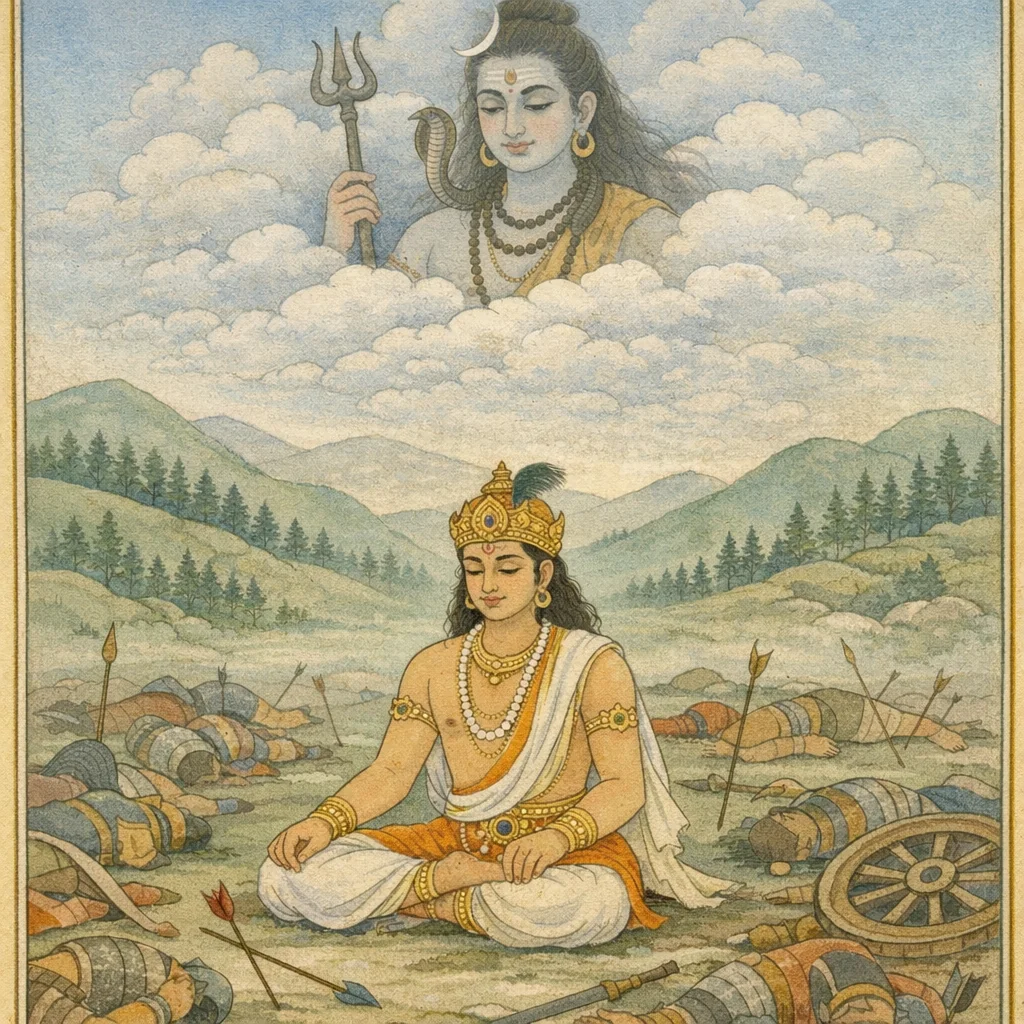
Chapter Arc: संजय धृतराष्ट्र को बताता है कि रणभूमि के कोलाहल के बीच पार्थ अर्जुन का मन एक क्षण के लिए भीतर की ओर मुड़ता है—वह उसी दिव्य संबल को स्मरण करता है जिससे कभी उसने पाशुपतास्त्र पाया था। → अर्जुन अपने ही ‘स्वप्रमाण’—अपने अनुभव, तप, और शिव-प्रसाद—को आधार बनाकर फिर से पाशुपतास्त्र की प्राप्ति/स्मृति को दृढ़ करता है; यह स्मरण केवल कथा नहीं, युद्ध के निर्णायक क्षण में आत्मबल और दैवी अधिकार का पुनर्संयोजन है। → रुद्र-तत्त्व का उद्घोष—‘जो दुःख को द्रवित/दूर करता है वही रुद्र’—के साथ अर्जुन के भीतर शिव-सम्बन्धित दिव्य अस्त्र-शक्ति का पुनर्जागरण चरम पर पहुँचता है; वह जानता है कि यह अस्त्र साधारण विजय के लिए नहीं, धर्म-संरक्षण की अंतिम सीमा पर ही उठाया जा सकता है। → अध्याय का निष्कर्ष अर्जुन के संकल्प को स्थिर करता है: दैवी अस्त्रों का अधिकार उसके पास है, पर उनका प्रयोग मर्यादा-बद्ध है; वह युद्ध में आगे बढ़ने के लिए मानसिक रूप से पुनः सुसज्जित होता है। → यह दिव्य सामर्थ्य किस क्षण, किस लक्ष्य पर, और किस धर्म-संकट में प्रयुक्त होगा—यह प्रश्न अगले प्रसंगों के लिए तीव्र उत्कंठा छोड़ता है।
Shlokas
Frequently Asked Questions
The episode repeatedly frames effectiveness versus restraint: fighters disable non-human and supporting elements (horses, charioteers, standards) to secure advantage, inviting reflection on how far tactical necessity can be pursued while still claiming adherence to kṣātra-dharma.
Competence in action includes adaptability under loss (re-arming after disarmament), clarity of objective (neutralizing an opponent’s capacity), and awareness that success on the field produces cascading social effects—fear, rout, and retaliatory escalation.
No explicit phalaśruti appears in the provided passage; its meta-significance is structural—showing how localized duels aggregate into strategic collapse and provoke higher-command intervention, thereby advancing the epic’s causal chain.