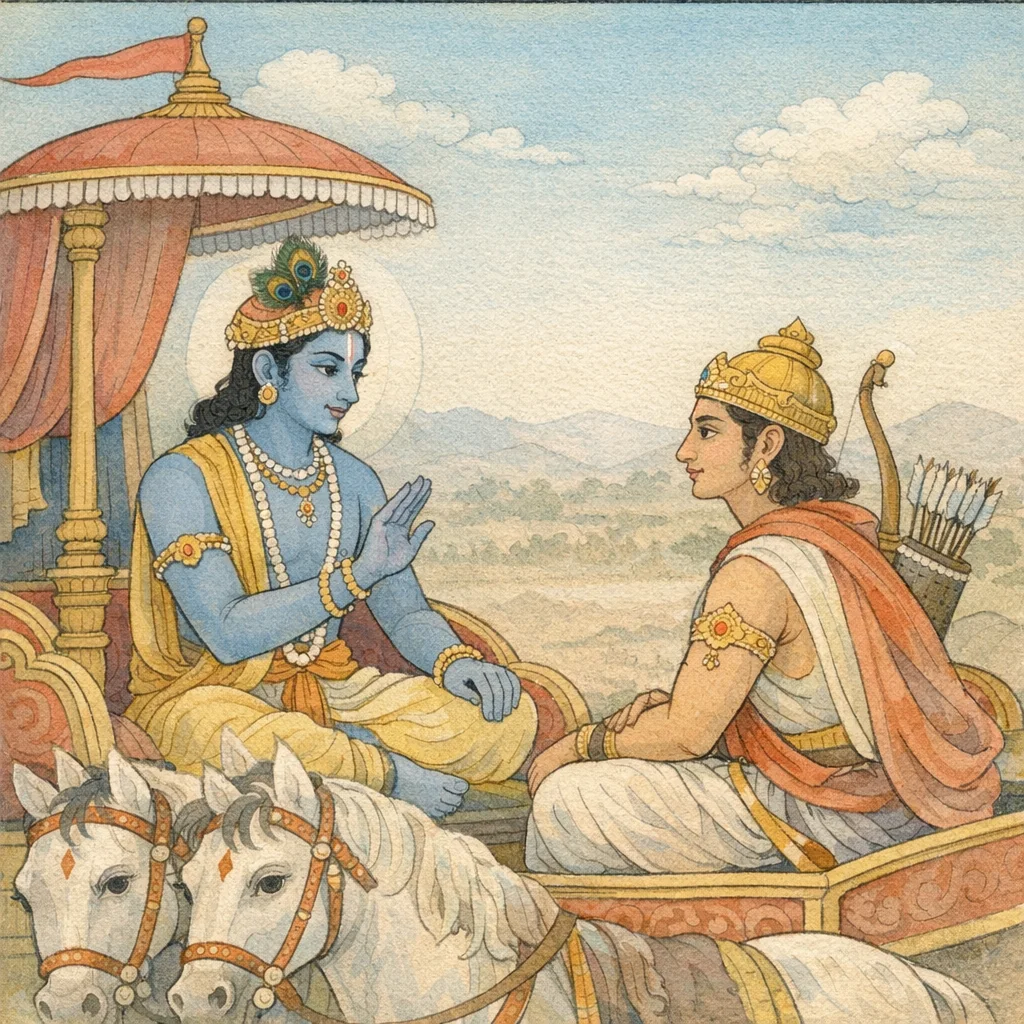
Adhyaya 42
भीमसेननादः तथा प्रथमसंमर्दः (Bhīmasena’s Roar and the First Clash)
Upa-parva: Yuddha-saṃmarda-prastāva (Opening Clash and Battle Din)
Dhṛtarāṣṭra asks who initiated the first strike once both armies were arrayed. Sañjaya reports the coordinated advance: Duryodhana proceeds with his brothers, placing Bhīṣma at the front, while the Pāṇḍavas move forward with Bhīmasena leading, intent on engagement with Bhīṣma. The chapter builds an acoustic and kinetic panorama—conches, drums, horns, and the rumble of elephants and horses—depicting the armies’ approach as a swelling, ocean-like tumult. Bhīmasena’s lion-like roar becomes the psychological pivot: it exceeds other battlefield sounds, spreads fear through the Kaurava ranks, and even unsettles mounts. Named Kaurava leaders (including Duryodhana and key brothers and allies) encircle and counter with volleys; in response, Draupadī’s sons, Abhimanyu, Nakula, Sahadeva, and Dhṛṣṭadyumna press forward, striking sharply. The engagement thickens into a dust-veiled melee where neither side appears distinctly advantaged, yet Bhīṣma’s presence is noted as preeminent amid the massed formations.
Chapter Arc: कुरुक्षेत्र के रण-कोलाहल के बीच अर्जुन का प्रश्न भीतर की रणभूमि खोल देता है—जो तीन गुणों से परे है, वह मनुष्य कैसा दिखता है, कैसे चलता है, और गुणों को कैसे लाँघता है? → भगवान् बताते हैं कि देह-उत्पत्ति के कारणभूत सत्त्व-रज-तम को पार कर लेने पर जन्म-मृत्यु-जरा-दुःख की जकड़न ढीली पड़ती है; पर अर्जुन के लिए यह रहस्य अभी भी व्यवहार में उतरने योग्य ‘लक्षण’ और ‘आचरण’ माँगता है। → गुणातीत पुरुष का निर्णायक चित्र उभरता है—वह साक्षी-भाव में ‘उदासीनवत्’ स्थित रहता है; गुण उसे विचलित नहीं करते, वह जानता है ‘गुणा वर्तन्ते’—गुण ही गुणों में बरत रहे हैं। → समदुःख-सुख, समलोष्टाश्मकाञ्चन, तुल्यप्रियाप्रिय, तुल्यनिन्दास्तुति, मान-अपमान में सम, मित्र-शत्रु पक्ष में सम—और समस्त आरम्भों में कर्तापन के अभिमान का त्याग: यही गुणातीत की स्थिरता है। → अध्याय का संकेत अगले सोपान की ओर जाता है—सगुण उपासना का फल निर्गुण ब्रह्म-प्राप्ति है; अब प्रश्न यह रह जाता है कि इस साक्षी-भाव को साधक निरन्तर कैसे स्थिर करे।
Shlokas
Verse 14
क्योंकि उस अविनाशी परब्रह्मका और अमृतका तथा नित्यधर्मका और अखण्ड एकरस आनन्दका आश्रय मैं हूँ: ।। इति श्रीमहाभारते भीष्मपर्वणि श्रीमद्भगवद्गीतापर्वणि श्रीमद्भगवद्गीतासूपनिषत्सु ब्रह्मविद्यायां योगशास्त्रे श्रीकृष्णार्जुनसंवादे गुणत्रयविभागयोगो नाम चतुर्दशो5ध्याय:
Arjuna said: “For I am the very foundation and abiding support of the imperishable Brahman—of immortality itself, of the eternal law of righteousness, and of the undivided, unalloyed bliss.” Thus ends the fourteenth chapter, called “Yoga of the Division of the Three Guṇas,” in the Mahābhārata’s Bhīṣma Parva, within the Bhagavad-gītā section, in the Upaniṣads of the Bhagavad-gītā, in the knowledge of Brahman and the science of yoga, in the dialogue of Śrī Kṛṣṇa and Arjuna.
Verse 19
जिस समय द्रष्टा5 तीनों गुणोंके अतिरिक्त अन्य किसीको कर्ता नहीं देखता और तीनों गुणोंसे अत्यन्त परे सच्चिदानन्दघनस्वरूप मुझ परमात्माको तत्त्वसे जानता है, उस समय वह मेरे स्वरूपको प्राप्त होता है?
Arjuna said: When a person of true insight no longer sees any doer other than the three guṇas, and when—having gone far beyond those guṇas—he knows in reality Me, the Supreme Self, whose nature is a solid mass of being, consciousness, and bliss, does he then attain My own state?
Verse 20
गुणानेतानतीत्य त्रीन् देही देहसमुद्धवान् । जन्ममृत्युजरादु:खैरविंमुक्तो5मृतम श्ुते,यह पुरुष शरीरकी उत्पत्तिके कारणरूप इन तीनों गुणोंको उल्लंघन करकेः जन्म, मृत्यु, वृद्धावस्था और सब प्रकारके दु:खोंसे मुक्त हुआ परमानन्दको प्राप्त होता हैः
Arjuna said: When the embodied self rises beyond these three guṇas—born of the body’s nature—it becomes free from birth, death, old age, and the whole burden of suffering, and attains the deathless state. In the ethical frame of the Gītā, this points to inner liberation: one acts without being ruled by the shifting forces of nature, and thereby reaches enduring freedom rather than temporary gains.
Verse 21
सम्बन्ध-- इस प्रकार जीवन-जअवस्थामें ही तीनों गुणोंसे अतीत होकर मनुष्य अगृतको प्राप्त हो जाता है--इस रहस्ययुक्त बातको युनकर गुणातीत पुरुषके लक्षण, आचरण और गुणातीत बननेके उपाय जाननेकी इच्छासे अर्जुन पूछते हैं अजुन उवाच कैलिंज्रिस्त्रीनु गुणानेतानतीतो भवति प्रभो | किमाचार: कथ॑ चैतांस्त्रीन् गुणानतिवर्तते,अर्जुन बोले--इन तीनों गुणोंसे अतीत पुरुष किन-किन लक्षणोंसे युक्त होता है और किस प्रकारके आचरणोंवाला होता है तथा हे प्रभो! मनुष्य किस उपायसे इन तीनों गुणोंसे अतीत होता है
Arjuna said: O Lord, by what signs is a person known to have gone beyond these three guṇas? What is his conduct like, and by what means does one transcend these three guṇas?
Verse 22
सम्बन्ध--इस प्रकार अजुनिके पूछनेपर भगवान् उनके प्रश्नेमेंसे “लक्षण” और 'आचरण' विषयक दो प्रश्नोंका उत्तर चार शलोकोंद्वारा देते हैं-- श्रीभगवानुवाच प्रकाशं च प्रवृत्ति च मोहमेव च पाण्डव । न द्वेष्टि सम्प्रवृत्तानि न निवृत्तानि काड्क्षति,श्रीभगवान् बोले--हे अर्जुन! जो पुरुष सत्त्व-गुणके कार्यरूप प्रकाशकोः और रजोगुणके कार्यरूप प्रवृत्तिकोई तथा तमोगुणके कार्यरूप मोहको” भी न तो प्रवृत्त होनेपर उनसे द्वेष करता है और न निवृत्त होनेपर उनकी आकांक्षा करता है
The Blessed Lord said: “O Pāṇḍava, the person who neither resents the arising of illumination (born of sattva), activity (born of rajas), or delusion (born of tamas), nor longs for their return when they subside—such a one remains inwardly balanced. He does not build his ethics on attraction and aversion toward changing mental states, but stands steady as a witness to the play of the guṇas.”
Verse 23
उदासीनवदासीनोः गुणैयों न विचाल्यते । गुणा वर्तन्त इत्येव योडवतिष्ठति नेज़ते,जो साक्षीके सदृश स्थित हुआ गुणोंके द्वारा विचलित नहीं किया जा सकताः और गुण ही गुणोंमें बरतते हैं--ऐसा समझता हुआ जो सच्चिदानन्दघन परमात्मामें एकीभावसे स्थित रहता हैः एवं उस स्थितिसे कभी विचलित नहीं होताई
He who sits as though indifferent—whom the qualities of nature cannot shake—who understands, ‘the guṇas alone move among the guṇas,’ and who remains established in that insight without wavering: such a person stands as a witness, steady in self-mastery and ethical clarity amid all changing conditions.
Verse 24
समदु:ःखसुख: स्वस्थ: समलोष्टाश्मकाउचन: । तुल्यप्रियाप्रियो धीरस्तुल्यनिन्दा55त्मसंस्तुति:,जो निरन्तर आत्मभावमें स्थित, दुःख-सुखको समान समझनेवाला, मिट्टी, पत्थर और स्वर्णमें समानभाववाला, ज्ञानी, प्रिय तथा अप्रियको एक-सा माननेवाला& और अपनी निन्दा-स्तुतिमें भी समानभाववाला है*
He is steady and self-possessed, regarding pleasure and pain alike; he looks with equal vision upon a clod of earth, a stone, and gold. Firm in understanding, he treats what is dear and what is not dear as the same, and remains equal-minded in blame and in praise directed toward himself.
Verse 25
मानापमानयोस्तुल्यस्तुल्यो मित्रारिपक्षयो: । सर्वारम्भपरित्यागी4 गुणातीत: स उच्यते
Arjuna said: He is called ‘beyond the guṇas’ who is the same in honor and dishonor, the same toward the side of friends and the side of enemies, and who abandons all self-driven undertakings—acting without the egoistic claim “I am the doer” and without attachment.
Verse 26
जो मान और अपमानमें सम है, मित्र और वैरीके पक्षमें भी सम हैः एवं सम्पूर्ण आरम्भोंमें कर्तापनके अभिमानसे रहित है, वह पुरुष गुणातीत कहा जाता हैः |। सम्बन्ध-- इस प्रकार अजुनिके दो प्रश्नोंका उत्तर देकर अब गुणातीत बननेके उपायविषयक तीसरे प्रश्चका उत्तर दिया जाता है। यद्यापि इस अध्यायके उतन्नीसवें शलोकमें भगवान्ने गुणातीत बननेका उपाय अपनेको अकर्ता समझकर निर्गुण- नियकार सच्चिदानन्दघन ब्रह्ममें नित्य-निरन्तर स्थित रहना बतला दिया था एवं उपर्युक्त चार शलोकोंमें गुणातीतके जिन लक्षण और आचरणोंका वर्णन किया गया है, उनको आदर्श मानकर धारण करनेका अभ्यास भी गुणातीत बननेका उपाय माना जाता है; किंतु अजुनने इन उपायोंसे भिन्न दूसरा कोई सरल उपाय जाननेकी इच्छासे प्रश्न किया था; इसलिये प्रश्नके अनुकूल भगवान् दूसरा सरल उपाय बतलाते हैं-- मां च योडव्यभिचारेण भक्तियोगेन सेवते । स गुणान् समतीत्यैतान् ब्रह्मभूयाय कल्पते,जो पुरुष अव्यभिचारी भक्तियोगके द्वारा मुझको निरन्तर भजता है, वह भी इन तीनों गुणोंको भलीभाँति लाँधकर सच्चिदानन्दघन ब्रह्मको प्राप्त होनेके लिये योग्य बन जाता है
He is called ‘beyond the guṇas’ who is even-minded in honor and dishonor, even-minded toward friend and foe, and who, in every undertaking, is free from the egoistic claim, “I am the doer.” Context: Having answered two of Arjuna’s questions, the teaching now turns to the third—how one becomes guṇātīta. Though the Lord earlier indicated abiding constantly in the attributeless, formless Brahman by knowing oneself as non-agent, and though practicing the traits described above is also a means, Arjuna sought a simpler method. Therefore the Lord states an accessible path: whoever serves Him with unwavering devotion (bhakti-yoga) transcends these three guṇas and becomes fit for Brahman-realization.
Verse 27
सम्बन्ध-- उपर्युक्त श्लोकमें सगुण परमेश्वरकी उपायनाका फल निर्गुण- नियकार ब्रह्मकी प्राप्ति बतलाया गया तथा इस जध्यायके उतन्नीसवें श्लोकमें गुणातीत-अवस्थाका फल भगवद्धावकी प्राप्ति एवं बीसवें श्लोकमें 'अमृत” की प्राप्ति बतलाया गया। अतएव फलमें विषमताकी शंकाका निराकरण करनेके लिये सबकी एकताका प्रतिपादन करते हुए इस अध्यायका उपसंहार करते हैं-- ब्रह्मणोः हि प्रतिष्ठाहममृतस्याव्ययस्यः च । शाश्वतस्य च धर्मस्यः सुखस्यैकान्तिकस्य च
The Blessed Lord said: “For I am the very foundation of Brahman—of the deathless and imperishable; I am also the ground of the eternal dharma and of the absolute, unalloyed happiness.”
Frequently Asked Questions
The chapter frames a command-level dilemma rather than a private debate: initiating contact and sustaining cohesion while confronting kin, where decisive action must be balanced against the recognition of shared lineage and unavoidable harm.
It illustrates that outcomes in collective conflict are shaped not only by weapons but by disciplined coordination and psychological steadiness; fear, sound, and perception operate as causal forces alongside physical action.
No explicit phalaśruti is stated here; its meta-function is archival and diagnostic—showing how early battlefield dynamics (morale shocks, dust, and parity of losses) condition the larger war narrative and its ethical readings.