Adhyaya 115
Bhīṣma’s Fall, the Arrow-bed (śara-talpa), and the Establishment of Guard
Upa-parva: Bhīṣma-śara-talpa (The Fall of Bhīṣma and the Arrow-bed Episode)
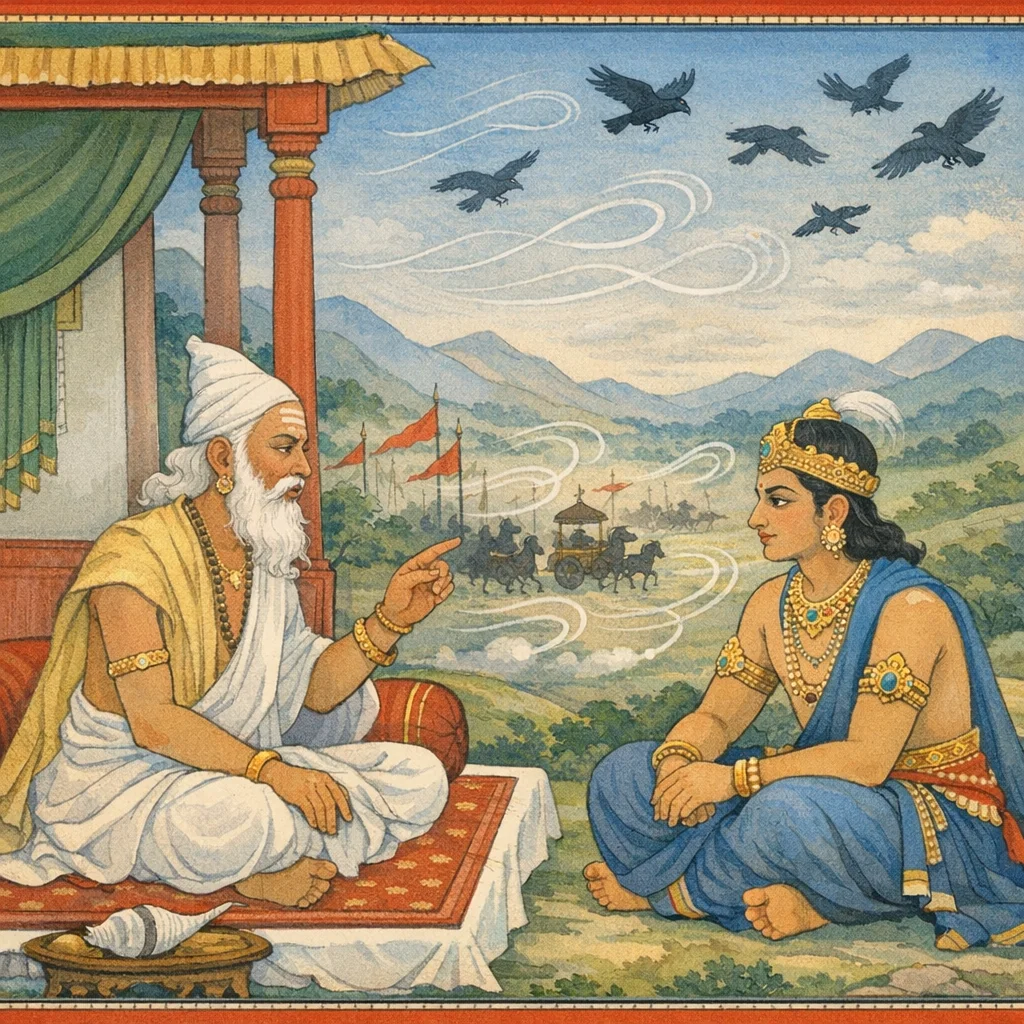
Dhṛtarāṣṭra, overwhelmed by the report of Bhīṣma’s incapacitation, interrogates Saṃjaya on how the Kuru forces persisted without their devakalka leader, emphasizing Bhīṣma’s prior invincibility and his hesitation to strike Draupadī’s brother (Drupada’s child, i.e., Śikhaṇḍin’s role as a constraint). Saṃjaya describes the late-afternoon collapse of Bhīṣma, the panicked and mournful reactions across both armies, and the temporary operational pause as formations withdraw. Combatants from both sides approach the fallen patriarch, who lies elevated on an arrow-bed without touching the ground, and offer salutations. Bhīṣma welcomes them and requests a suitable head-rest; he rejects soft cushions as unfitting for a warrior’s bed and instructs Arjuna (Phalguna) to provide an appropriate support. Arjuna fashions an arrow-pillow with three swift shafts, which Bhīṣma approves as consistent with kṣatriya standards. Bhīṣma then declares he will remain thus until an auspicious solar turn, requests a defensive trench and perimeter protection, and instructs cessation of hostilities in his vicinity. Physicians arrive but are dismissed with honor, as Bhīṣma asserts that treatment is not appropriate for his chosen dharmic condition. The chapter closes with the guarded withdrawal to camps and a brief exchange where Kṛṣṇa acknowledges the strategic significance of Bhīṣma’s fall and Yudhiṣṭhira attributes victory to Kṛṣṇa’s protection.
Chapter Arc: रणभूमि के ऊपर अपशकुनों की काली छाया उतरती है—दिशाओं में भयावह पक्षियों की चीखें, गिद्धों का नीचे उतरना, और अशान्त संकेत; निमित्तज्ञ द्रोण इन लक्षणों को देख अपने पुत्र अश्वत्थामा को बुलाते हैं। → द्रोण पाण्डव-सेना को रौंदते हुए आगे बढ़ते हैं, पर साथ ही सर्वत्र दिखते घोर निमित्त उन्हें आने वाले अनिष्ट की सूचना देते हैं। शंख-नाद (पाञ्चजन्य) और गाण्डीव की टंकार दोनों सेनाओं में उन्माद और भय का मिश्रित वातावरण रचते हैं। द्रोण पिता-हृदय और क्षत्रधर्म के बीच झूलते हुए अश्वत्थामा को कठोर आदेश देते हैं। → द्रोण अश्वत्थामा से कहते हैं—कौन पिता नहीं चाहेगा कि पुत्र दीर्घकाल तक जीवित रहे, पर क्षत्रधर्म को देखकर मैं तुम्हें युद्ध में नियुक्त करता हूँ; और साथ ही भीष्म के यम-वरुण तुल्य प्रचण्ड पराक्रम का उल्लेख कर रण की भीषणता को चरम पर पहुँचा देते हैं। → पुत्र को उपदेश/आदेश देकर द्रोण स्वयं महारण में उतरते हैं और धर्मराज युधिष्ठिर की ओर बढ़कर उसे युद्ध के लिए ललकारते/आक्रमण करते हैं। → द्रोण का युधिष्ठिर से सीधा संग्राम आरम्भ होने ही वाला है—धर्मराज इस प्रचण्ड आचार्य के सम्मुख कैसे टिकेंगे?
Shlokas
Verse 1
[दाक्षिणात्य अधिक पाठके ३ श्लोक मिलाकर कुल ६१ श्लोक हैं।] ऑपन--माज छा अि>-आकऋाज द्ादर्शाधिकशततमो< ध्याय: द्रोणाचार्यका अश्वत्थामाको अशुभ शकुनोंकी सूचना देते हुए उसे भीष्मकी रक्षाके लिये धृष्टद्युम्नसे युद्ध करनेका आदेश देना संजय उवाच अथ वीरो महेष्वासो मत्तवारणविक्रम: । समादाय महतच्चापं मत्तवारणवारणम्
Sanjaya said: Then that heroic warrior, a great archer whose onrush was like that of an intoxicated elephant, took up his mighty bow—an instrument capable of checking even a maddened elephant. The scene signals the hardening of resolve on the battlefield: strength is being deliberately marshalled for a duty understood as protection of one’s commander and side, even as it intensifies the moral weight of violence about to unfold.
Verse 2
विधुन्वानो नरश्रेष्ठो द्रावयाणो वरूथिनीम् । पृतनां पाण्डवेयानां गाहमाना महाबल:
Sañjaya said: The best of men, of mighty strength, shook the enemy ranks and drove their battle-array into flight, plunging deep into the Pāṇḍava host. The verse highlights the fierce momentum of a single powerful warrior in war—where valor and force can scatter formations—while implicitly reminding the listener that such prowess, though dazzling, operates within the larger moral and fated order governing the Kurukṣetra conflict.
Verse 3
निमित्तानि निमित्तज्ञ: सर्वतो वीक्ष्य वीर्यवान् प्रतपन्तमनीकानि द्रोण: पुत्रमभाषत
Sañjaya said: Drona, mighty and skilled in reading omens, surveyed the signs on every side. Seeing the battle-formations blazing with martial ardor, he addressed his son.
Verse 4
संजय कहते हैं--राजन्! तदनन्तर महाधनुर्धर
Sañjaya said: “O King, this indeed is the day, my son, on which mighty Pārtha (Arjuna), intent on slaying Bhīṣma in battle, will exert his utmost effort.”
Verse 5
उत्पतन्ति हि मे बाणा धनु: प्रस्फुरतीव च । योगमस्त्राणि गच्छन्ति क्रूरे मे वर्तते मति:
Sañjaya said: “Indeed, my arrows seem to leap forth, and my bow quivers as if alive. The weapons, of their own accord, fall into readiness upon the bow. In my mind there arises a harsh resolve—an impulse toward cruel action.”
Verse 6
दिक्ष्वशान्तानि घोराणि व्याहरन्ति मृगद्धिजा: । नीचैर्गुध्रा निलीयन्ते भारतानां चमूं प्रति,“सम्पूर्ण दिशाओंमें पशु और पक्षी अशान्तिपूर्ण भयंकर बोली बोल रहे हैं। गीध नीचे आकर कौरव-सेनामें छिप रहे हैं
Sañjaya said: “In every direction, beasts and birds are uttering restless, dreadful cries. Vultures are swooping low and hiding themselves toward the Bhāratas’ army—an ominous sign.”
Verse 7
नष्टप्रभ इवादित्य: सर्वतो लोहिता दिश: । रसते व्यथते भूमि: कम्पतीव च सर्वश:,'सूर्यकी प्रभा मन्द-सी पड़ गयी है। सम्पूर्ण दिशाएँ लाल हो रही हैं। पृथिवी सब ओरसे कोलाहलपूर्ण, व्यथित और कम्पित-सी हो रही है
Sañjaya said: “The sun seems as though its radiance has been lost; on every side the quarters are turning red. The earth, filled with a roaring tumult, appears distressed and trembling everywhere.”
Verse 8
कड्का गृश्रा बलाकाश्च व्याहरन्ति मुहुर्मुहुः । शिवाश्रवैवाशिवा घोरा वेदयन्त्यो महद् भयम्
Sañjaya said: “Herons, vultures, and cranes keep crying out again and again. And the dreadful she-jackals—inauspicious in their very nature—raise terrifying howls, as if announcing a great fear, facing toward the sun with mouths that seem aflame.”
Verse 9
पपात महती चोल्का मध्येनादित्यमण्डलात् । सकबन्धश्न परिघो भानुमावृत्य तिष्ठतति,'सूर्यमण्डलके मध्यभागसे बड़ी-बड़ी उल्काएँ गिरी हैं। कबन्धयुक्त परिघ सूर्यको चारों ओरसे घेरकर स्थित है
Sanjaya said: A great meteor fell from the very midst of the sun’s orb. And a halo-like ring, bearing the form of a headless trunk (kabandha), stands encircling and veiling the sun.
Verse 10
परिवेषस्तथा घोरश्रन्द्रभास्करयोरभूत् । वेदयानो भयं घोरें राज्ञां देहावकर्तनम्,“चन्द्रमा और सूर्यके चारों ओर भयंकर घेरा पड़ने लगा है, जो क्षत्रियोंके शरीरका विनाश करनेवाले घोर भयकी सूचना दे रहा है
Sanjaya said: A dreadful halo formed around the Moon and the Sun, foretelling a terrible fear—an omen of the cutting down of kings’ bodies, that is, the slaughter of rulers and warriors in the coming battle.
Verse 11
देवतायतनस्थाश्ष् कौरवेन्द्रस्य देवता: । कम्पन्ते च हसन्ते च नृत्यन्ति च रुदन्ति च,“कौरवराज धुृतराष्ट्रके देवालयोंकी देवमूर्तियाँ हिलती, हँसती, नाचती तथा रोती जान पड़ती हैं
Sanjaya said: “In the shrines of the lord of the Kurus, the very deities seem to tremble; they appear to laugh, to dance, and even to weep.”
Verse 12
अपसय् ग्रहाश्चक्रुरलक्ष्माणं दिवाकरम् | अवाक्शिराश्न भगवानुपातिष्ठत चन्द्रमा:
Sañjaya said: The planets moved in a leftward (inauspicious) course around the Sun, marking him with ominous signs; and the revered Moon rose with its horns turned downward—portents that the moral order was being disturbed and that the coming slaughter would be grievous and ill-starred.
Verse 13
वपूंषि च नरेन्द्राणां विगताभानि लक्षये । धार्रराष्ट्रस्य सैन्येषु न च भ्राजन्ति दंशिता:
Sañjaya said: “I observe that the bodies of the kings have lost their radiance. And among Dhṛtarāṣṭra’s forces, even those standing clad in armor do not shine.”
Verse 14
सेनयोरुभयोश्षवापि असर अब यते महान् । पाञ्चजन्यस्य निर्घोषो च निःस्वन:,“दोनों ही सेनाओंमें चारों ओर पांचजन्य शंखका गम्भीर घोष और गाण्डीवधनुषकी टंकारथ्वनि सुनायी देती है
Sañjaya said: “On both sides of the armies, a mighty tumult arose everywhere—the deep, resonant blast of the conch Pāñcajanya and the ringing twang of the Gāṇḍīva bow.”
Verse 15
ध्रुवमास्थाय बीभत्सुरुत्तमास्त्राणि संयुगे | अपास्यान्यान् रणे योधानभ्येष्यति पितामहम्
Sañjaya said: “It seems certain that Arjuna, taking firm recourse to his finest weapons in the thick of battle, will drive away the other warriors from the field and then press forward to confront the grandsire Bhishma himself.”
Verse 16
हृष्यन्ति रोमकूपाणि सीदतीव च मे मन: । चिन्तयित्वा महाबाहो भीष्मार्जुनसमागमम्,“महाबाहो! भीष्म और अर्जुनके युद्धका विचार करके मेरे रोंगटे खड़े हो रहे हैं और मन शिथिल-सा होता जा रहा है
Sañjaya said: “O mighty-armed one, as I contemplate the encounter in battle between Bhishma and Arjuna, my hair stands on end, and my mind seems to sink and grow faint.”
Verse 17
तं॑ चेह निकृतिप्रज्ञं पाउ्चाल्यं पापचेतसम् । पुरस्कृत्य रणे पार्थो भीष्मस्यायोधनं गत:
Sañjaya said: “Here, having placed in front that deceit-minded Pāñcāla prince of sinful intent, Pārtha (Arjuna) has gone into battle to engage Bhīṣma in combat.”
Verse 18
अब्रवीच्च पुरा भीष्मो नाहं हन्यां शिखण्डिनम् । स्त्री होषा विहिता धात्रा दैवाच्च स पुनः पुमान्
Sañjaya said: “Bhīṣma had declared long ago, ‘I will not strike down Śikhaṇḍin. The Creator ordained this one as a woman; only later, by the turn of fate, did he become a man.’”
Verse 19
अमड्ल्यध्वजश्नैव याज्ञसेनिर्महाबल: । न चामड्लिके तस्मिन् प्रहरेदापगासुत:
Sañjaya said: “Moreover, the mighty son of Drupada—Śikhaṇḍin—bears on his banner signs regarded as inauspicious. Therefore Bhīṣma, the son of the Gaṅgā, will not strike at that inauspicious Śikhaṇḍin.”
Verse 20
एतद् विचिन्तयानस्य प्रज्ञा सीदति मे भृशम् । अभ्युद्यतो रणे पार्थ: कुरुवृद्धमुपाद्रवत्
Sañjaya said: “As I reflect on all these things, my judgment sinks grievously. Today Pārtha—Arjuna—fully prepared upon the battlefield, has charged at Bhīṣma, the aged elder of the Kurus.”
Verse 21
युधिष्ठटिरस्य च क्रोधो भीष्मश्वार्जुनसज्भतः । मम चास्त्रसमारम्भ: प्रजानामशिवं ध्रुवम्
Sañjaya said: “Yudhiṣṭhira’s rising anger, the clash between Bhīṣma and Arjuna, and my own readiness to set various weapons in motion—these three are surely ominous signs, foretelling misfortune for the people.”
Verse 22
मनस्वी बलवाउुछूर: कृतास्त्रो लघुविक्रम: । दूरपाती दृढेषुश्व निमित्तज्ञश्न पाण्डव:
Sañjaya said: “That Pāṇḍava—Arjuna, the son of Pāṇḍu—is high-minded and resolute, strong and heroic; trained and accomplished in the use of weapons, swift in displaying his prowess; able to strike targets from afar, furnished with firm and effective arrows, and discerning in reading auspicious and inauspicious omens.”
Verse 23
अजेय: समरे चापि देवैरपि सवासवै: । बलवान बुद्धिमांश्वैव जितक्लेशो युधां वर:
Sañjaya said: Even the gods, Indra included, cannot defeat him in battle. He is mighty and discerning, one who has conquered hardship, and the foremost among warriors.
Verse 24
विजयी च रणे नित्यं भैरवास्त्रश्ष पाण्डव: । तस्य मार्ग परिहरन् द्रुतं गच्छ यतव्रत
Sañjaya said: “The Pāṇḍava (Arjuna) is ever victorious in battle, and his weapons are truly dreadful. Therefore, O son devoted to noble vows, avoid his path and go quickly—so that Bhīṣma may be protected.”
Verse 25
पश्याद्यैतन्महाघोरे संयुगे वैशसं महत् | हेमचित्राणि शूराणां महान्ति च शुभानि च
Sañjaya said: “Behold, today in this most dreadful battle, what a vast slaughter is taking place. The splendid, massive armor of the heroes—adorned with gold—is being shattered.”
Verse 26
कवचान्यवदीर्यन्ते शरै: संनतपर्वभि: । छिद्यन्ते च ध्वजाग्राणि तोमराश्न धनूंषि च
Sañjaya said: “Armours are being rent apart by arrows whose joints are bent; and the tips of banners are being severed—so too the javelins and the bows.”
Verse 27
प्रासाश्ष विमलास्तीक्ष्णा: शक््त्यश्ष॒ कनकोज्ज्वला: । वैजयन्त्यश्न नागानां संक्रुद्धेन किरीटिना
Sañjaya said: Bright, keen spears and spotless, sharp javelins—glittering with gold—along with the vaijayantī banners mounted on elephants, were being cut down and shattered by the enraged, diademed Arjuna.
Verse 28
नायं संरक्षितुं काल: प्राणान् पुत्रोपजीविभि: । याहि स्वर्ग पुरस्कृत्य यशसे विजयाय च
Sañjaya said: “This is not the time for men who live dependent on their sons to cling to the protection of their own lives. Go to Bhīṣma, keeping heaven before you—seeking fame and victory.”
Verse 29
रथनागहयावर्ता महाघोरां सुदुर्गमाम् । रथेन संग्रामनदीं तरत्येष कपिध्वज:
Sañjaya said: “This river of battle is terribly fearsome and hard to cross; its whirlpools are chariots, elephants, and horses. Yet Kapidhvaja—Arjuna, whose banner bears the monkey—crosses that war-river by means of his chariot, as though it were a boat.”
Verse 30
ब्रह्मण्यता दमो दानं तपश्च चरितं महत् | इहैव दृश्यते पार्थे भ्राता यस्य धनंजय:
Sañjaya said: “In this very world, devotion to the Brahmins, self-restraint, generosity, austerity, and noble conduct are clearly seen in that son of Pṛthā—he whose brother is Dhanañjaya (Arjuna).”
Verse 31
भीमसेनश्व बलवान माद्रीपुत्रौ च पाण्डवौ । वासुदेवश्व वा्ष्णेयो यस्य नाथो व्यवस्थित:
Sañjaya said: “He has mighty Bhīmasena, and the two Pāṇḍava sons of Mādrī; and Vāsudeva, the Vārṣṇeya, stands firmly as his protector. In Yudhiṣṭhira alone are clearly seen devotion toward brāhmaṇas, restraint of the senses, generosity, austerity, and noble conduct—by the fruit of these virtues he has such brothers as Arjuna, powerful Bhīma, and Nakula and Sahadeva, and the Lord Vāsudeva remains ever beside him as guardian and helper.”
Verse 32
तस्यैष मन्युप्रभवो धार्तराष्ट्रस्य दुर्मते: । तपोदग्धशरीरस्य कोपो दहति भारतीम्
Sañjaya said: “This is the wrath born of resentment in that ill-judging son of Dhṛtarāṣṭra. Though his body is as if scorched by his own austerities, it is his anger that burns the Bhārata host—consuming his own side in the fire of passion.”
Verse 33
एष संदृश्यते पार्थो वासुदेवव्यपाश्रय: । दारयन् सर्वसैन्यानि धार्तराष्ट्राणि सर्वश:
Sañjaya said: “Behold—there appears Pārtha (Arjuna), taking refuge in Vāsudeva. He is rending the entire forces of the Dhārtarāṣṭras on every side, and is seen advancing this way.”
Verse 34
एतदालोक्यते सैन्यं क्षोभ्यमाणं किरीटिना । महोर्मिनद्धं सुमहत् तिमिनेव महाजलम्
Sañjaya said: “Beholding this, the Kaurava host is seen thrown into turmoil by the diademed Arjuna—like the vast ocean-water, heaving with great waves, churned and agitated by the mighty fish called Timi.”
Verse 35
हाहाकिलकिलाशब्दा: श्रूयन्ते च चमूमुखे । याहि पाञ्चालदायादमहं यास्ये युधिछ्िरम्
Sañjaya said: “Cries of ‘hā hā!’ and shrill tumult are being heard at the very front of the army. Go, O heir of the Pāñcālas; I shall go to Yudhiṣṭhira.”
Verse 36
'सेनाके प्रमुख भागमें हाहाकार और किलकिलाहटके शब्द सुनायी देते हैं। तुम द्रपदकुमार धृष्टद्युम्मका सामना करनेके लिये जाओ और मैं युधिष्ठिरपर चढ़ाई करूँगा ।।
Sañjaya said: “From the foremost part of the army, cries of alarm and loud battle-shouts are being heard. Go and confront Dhṛṣṭadyumna, the son of Drupada, and I will press the attack against Yudhiṣṭhira. For the inner space of the mighty king’s battle-array is exceedingly hard to penetrate—like entering the belly of the ocean—since it is ringed on every side by great chariot-warriors.”
Verse 37
सात्यकिश्चाभिमन्युश्न धृष्टद्युम्नवृकोदरौ । पर्यरक्षन्त राजानं यमौ च मनुजेश्वरम्,'सात्यकि, अभिमन्यु, धृष्टद्युम्न, भीमसेन और नकुल, सहदेव नरेश्वर राजा युधिष्ठिरकी रक्षा कर रहे हैं
Sañjaya said: Sātyaki and Abhimanyu, along with Dhṛṣṭadyumna and Vṛkodara (Bhīma), and the twin brothers (Nakula and Sahadeva), were guarding the king—Yudhiṣṭhira, lord among men.
Verse 38
उपेन्द्रसदूश: श्यामो महाशाल इवोद्गत: । एष गच्छत्यनीकाग्रे द्वितीय इव फाल्गुन:
Sañjaya said: “Behold Abhimanyu—dark-hued like Upendra (Viṣṇu), and towering like a great śāla tree. He moves at the very front of the battle-array, like a second Arjuna.”
Verse 39
उत्तमास्त्राणि चाधत्स्व गृहीत्वा च महद् धनु: । पार्षतं याहि राजानं युध्यस्व च वृकोदरम्,“तुम अपने उत्तम अस्त्रोंको धारण करो और विशाल धनुष लेकर ट्रुपदकुमार धृष्टद्युम्न तथा भीमसेनके साथ युद्ध करो
Sañjaya said: “Arm yourself with your finest weapons; take up the great bow. Go to the son of Pṛṣata—King Dhṛṣṭadyumna—and engage in battle with Vṛkodara (Bhīma).”
Verse 40
को हि नेच्छेत् प्रियं पुत्रं जीवन्तं शाश्वती: समा: । क्षत्रधर्म तु सम्प्रेक्ष्य ततस्त्वां नियुनज्म्यहम्
“Who would not wish his beloved son to live on for many years? Yet, keeping the kṣatriya’s dharma in view, it is for that very reason that I appoint you to this task.”
Verse 41
एष चातिरणे भीष्मो दहते वै महाचमूम् । युद्धेषु सदूशस्तात यमस्य वरुणस्य च,'तात! ये भीष्म रणक्षेत्रमें यमराज और वरुणके समान पराक्रम दिखाते हुए पाण्डवोंकी विशाल सेनाको अत्यन्त दग्ध कर रहे हैं!
Sañjaya said: “O great king, here Bhīṣma in the thick of battle is indeed scorching the vast host. In warfare, his might is comparable to Yama and to Varuṇa.”
Verse 112
(पुत्रं समनुशास्यैवं भारद्वाज: प्रतापवान् । महारणे महाराज धर्मराजमयोधयत् ।।
Sañjaya said: “O great king, having thus instructed his son, the valiant Bhāradvāja (Droṇa) engaged Dharmarāja (Yudhiṣṭhira) in battle amid that great war.”
Frequently Asked Questions
The tension is between comfort-oriented care and dharma-coded warrior propriety: Bhīṣma rejects soft cushions as incongruent with a ‘vīra-śayyā’ and authorizes a support that matches the symbolic and normative standards of a kṣatriya’s battlefield end.
The episode conveys disciplined agency within dharma: Bhīṣma frames his condition as a chosen, normatively sanctioned endpoint for a warrior, thereby prioritizing vow-consistency and ethical self-governance over interventions that would contradict the narrative’s model of kṣatriya completion.
No explicit phalaśruti formula appears in this chapter; the meta-level framing is instead conveyed through narrative validation—Bhīṣma’s approval of Arjuna’s action as ‘anurūpa’ (fitting) and the broader implication that dharma-aligned conduct structures both honor and meaning in crisis.
Read Mahabharata in the Vedapath app
Scan the QR code to open this directly in the app, with audio, word-by-word meanings, and more.