Adhyaya 49
Brahmopadeśa: Ahiṃsā, Jñāna, and the Kṣetrajña–Sattva Analysis (Chapter 49)
Upa-parva: Anugītā Upākhyāna (Didactic Discourse Following the War)
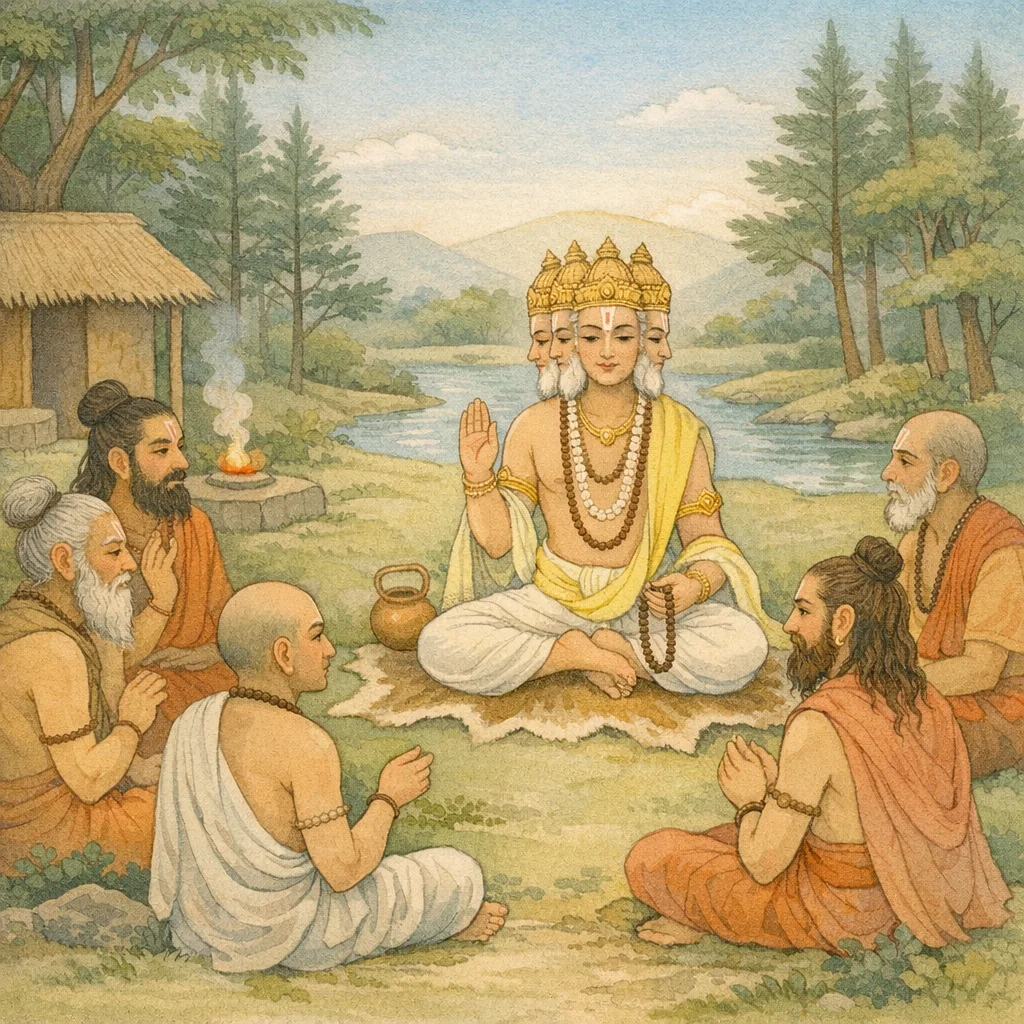
Brahmā responds to a learned query, first establishing ahiṃsā as a foremost dharma-indicator and framing purified knowledge (śuddha-jñāna) as liberative from moral demerit. The discourse then contrasts harmful, delusion-driven dispositions with disciplined action performed either with desire for outcomes (āśīḥ) or with non-appropriative yoga (anāśīḥ-yoga). A technical exposition follows on the relation of subject and object: the enduring knower (kṣetrajña/puruṣa) versus the guṇa-constituted, changeful field (sattva). Multiple analogies (mosquito-udumbara, lamp in darkness, chariot path, boat crossing, lotus-leaf water) operationalize non-attachment: one may engage qualities without being ‘smeared’ by them. The chapter proceeds into a Sāṃkhya-style cosmogonic ladder—pradhāna, mahat, ahaṃkāra, the five mahābhūtas—and enumerates each element’s characteristic sense-qualities (sound, touch, form, taste, smell) with expanded taxonomies for smell, taste, form, touch, and sound. It closes by ranking principles toward the ‘parama-avyakta’ and puruṣa, presented as the attainment of non-finitude (ānantya).
Chapter Arc: ऋषि ब्रह्माजी से धर्म-निर्णय जानने हेतु प्रश्न करते हैं—कौन-सा मत ‘अनुच्छेयतम’ (सबसे ग्राह्य) है, जब धर्म के विषय में परस्पर-विरोधी वचनों की भरमार दिखती है। → ऋषि अनेक मतों की सूची रखते हैं: देह के बाद फल है/नहीं; धर्म नित्य है/अनित्य; अस्ति/नास्ति; एकरूप/द्विरूप/व्यामिश्र; देश-काल की सत्ता है/नहीं; जटाधारी-चर्मधारी, मुण्डित-असंवृत जैसे विविध आचार; ज्ञान=संन्यास बनाम स्वभाव-प्रधान भौतिक दृष्टि; ‘सब कुछ’ प्रशंसनीय बनाम ‘सब कुछ’ नहीं—इस बहुलता से निर्णय असंभव-सा प्रतीत होता है। → ऋषि ‘परम गुह्य’ तत्त्व पूछते हैं—सत्त्व और क्षेत्रज्ञ (प्रकृति-पुरुष/देह-चेतना) का सम्बन्ध किस हेतु से है; यही प्रश्न मतभेदों के मूल पर चोट करता है। → ब्रह्माजी—लोकभावन, धर्मात्मा, बुद्धिमान—ऋषियों के प्रश्न का ‘याथातथ्य’ (यथार्थ) रूप से निरूपण आरम्भ करते हैं, संकेत देते हैं कि समाधान बाह्य-विवादों से ऊपर, तत्त्व-ज्ञान के स्तर पर है। → ब्रह्माजी का प्रतिपादन आरम्भ तो होता है, पर ‘परम गुह्य’ सम्बन्ध का पूर्ण निष्कर्ष अगले प्रवाह में खुलने हेतु शेष रहता है।
Shlokas
Verse 1
अत--#क+ एकोनपज्चाशत्तमो<ड्ध्याय: धर्मका निर्णय जाननेके लिये ऋषियोंका प्रश्न ऋषय ऊचु: को वा स्विदिह धर्माणामनुछेयतमो मतः । व्याहतामिव पश्यामो धर्मस्य विविधां गतिम्,ऋषियोंने पूछा--ब्रह्मन्! इस जगत्में समस्त धर्मोमें कौन-सा धर्म अनुष्ठान करनेके लिये सर्वोत्तम माना गया है, यह कहिये; क्योंकि हमें धर्मके विभिन्न मार्ग एक-दूसरेसे आहत हुए-से प्रतीत होते हैं
The sages asked: “O Brahmin, in this world which among all forms of dharma is regarded as the most worthy to be practiced? For we seem to see dharma’s many courses as though they conflict with and obstruct one another.”
Verse 2
ऊर्ध्व देहाद् वदन्त्येके नैतदस्तीति चापरे । केचित् संशयितं सर्व नि:संशयमथापरे,कोई तो कहते हैं कि देहका नाश होनेके बाद धर्मका फल मिलेगा। दूसरे कहते हैं कि ऐसी बात नहीं है। कितने ही लोग सब धर्मोको संशययुक्त बताते हैं और दूसरे संशयरहित कहते हैं
Vāyu said: “Some declare that, after the body perishes, one attains the fruits of dharma in a higher state. Others insist that nothing of the sort exists. Some regard all dharmic teaching as uncertain, while others affirm it as free from doubt.”
Verse 3
अनित्यं नित्यमित्येके नास्त्यस्तीत्यपि चापरे | एकरूपं द्विधेत्येके व्यामिश्रमिति चापरे,कोई कहते हैं कि धर्म अनित्य है और कोई उसे नित्य कहते हैं। दूसरे कहते हैं कि धर्म नामकी कोई वस्तु है ही नहीं। कोई कहते हैं कि अवश्य है। कोई कहते हैं कि एक ही धर्म दो प्रकारका है तथा कुछ लोग कहते हैं कि धर्म मिश्रित है
Vāyu said: “Some declare dharma to be impermanent, while others insist it is eternal. Some deny that there is any such thing as dharma at all, while others affirm its existence. Some say dharma is one in essence yet appears in two forms, and others maintain that it is a mixed and composite reality.”
Verse 4
मन्यन्ते ब्राह्मणा एव ब्रद्वाज्ञास्तत्त्वदर्शिन: । एकमेके पृथक् चान्ये बहुत्वमिति चापरे,वेद-शास्त्रोंके ज्ञाता तत्त्वदर्शी ब्राह्मण लोग यह मानते हैं कि एक ब्रह्म ही है। अन्य कितने ही कहते हैं कि जीव और ईश्वर अलग-अलग हैं और दूसरे लोग सबकी सत्ता भिन्न और बहुत प्रकारसे मानते हैं
Vāyu said: “The truth-seeing Brahmins, learned in the Veda and the śāstras, hold differing views. Some affirm that Reality is one—Brahman alone. Others maintain a distinction, saying the individual self and the Lord are separate. Still others assert plurality, that beings and principles are many and mutually distinct.”
Verse 5
देशकालावुभौ केचिन्नैतदस्तीति चापरे । जटाजिनधराश्रान्ये मुण्डा: केचिदसंवृता:,कितने ही लोग देश और कालकी सत्ता मानते हैं। दूसरे लोग कहते हैं कि इनकी सत्ता नहीं है। कोई जटा और मृगचर्म धारण करनेवाले हैं, कोई सिर मुडाते हैं और कोई दिगम्बर रहते हैं
Vāyu said: “Some people accept both place and time as real governing factors; others declare that they have no real existence. Some live as ascetics wearing matted locks and deerskin; some shave their heads; and some remain unclothed.”
Verse 6
अस्नानं केचिदिच्छन्ति स्नानमप्यपरे जना: | मन्यन्ते ब्राह्मणा देवा ब्रद्वाज्ञास्तत्त्वदर्शिन:,कितने ही मनुष्य स्नान नहीं करना चाहते और दूसरे लोग जो शास्त्रज्ञ तत्त्वदर्शी ब्राह्मणदेवता हैं, वे स्नानको ही श्रेष्ठ मानते हैं
Some people prefer not to bathe at all, while others insist on bathing. Those Brahmins—revered as divine, learned in the Bhāradvāja tradition, and true seers of reality—regard bathing as the superior course.
Verse 7
आहारं केचिदिच्छन्ति केचिच्चानशने रता: । कर्म केचित् प्रशंसन्ति प्रशान्तिं चापरे जना:,कई लोग भोजन करना अच्छा मानते हैं और कई भोजन न करनेमें अभिरत रहते हैं। कई कर्म करनेकी प्रशंसा करते हैं और दूसरे लोग परम शान्तिकी प्रशंसा करते हैं
Vāyu said: “Some people seek nourishment and approve of taking food, while others delight in fasting. Some praise the path of action and ritual effort, while other people praise the highest peace of inner stillness.”
Verse 8
केचिन्मोक्ष॑ प्रशंसन्ति केचिद् भोगान् पृथग्विधान् | धनानि केचिदिच्छन्ति निर्धनत्वमथापरे । उपास्यसाधन त्वेके नैतदस्तीति चापरे,कितने ही मोक्षकी प्रशंसा करते हैं और कितने ही नाना प्रकारके भोगोंकी प्रशंसा करते हैं। कुछ लोग बहुत-सा धन चाहते हैं और दूसरे निर्धनताको पसंद करते हैं। कितने ही मनुष्य अपने उपास्य इष्टदेवकी प्राप्तिकी साधना करते हैं और दूसरे कितने ही ऐसा कहते हैं कि 'यह नहीं है”
Vāyu said: “Some praise liberation, while others extol diverse kinds of enjoyment. Some desire great wealth, while others prefer poverty. Some undertake disciplines to attain their chosen deity, while others declare, ‘This does not exist.’”
Verse 9
अहिंसानिरताश्षान्ये केचिद् हिंसापरायणा: । पुण्येन यशसा चान्ये नैतदस्तीति चापरे,अन्य कई लोग अहिंसा-धर्मका पालन करनेमें रुचि रखते हैं और कई लोग हिंसाके परायण हैं। दूसरे कई पुण्य और यशसे सम्पन्न हैं। इनसे भिन्न दूसरे कहते हैं कि 'यह सब कुछ नहीं है”
Vāyudeva said: “Some are devoted to non-violence, while others are intent on violence. Some are distinguished by merit and good repute; yet others, different from these, declare, ‘None of this truly exists.’”
Verse 10
सद्धावनिरताश्चान्ये केचित् संशयिते स्थिता: । दुःखादन्ये सुखादन्ये ध्यानमित्यपरे जना:,अन्य कितने ही सद्धावमें रुचि रखते हैं। कितने ही लोग संशयमें पड़े रहते हैं। कितने ही साधक कष्ट सहन करते हुए ध्यान करते हैं और दूसरे कई सुखपूर्वक ध्यान करते हैं
Vāyu said: “Some are devoted to faith and earnestness; some remain caught in doubt. Some practice meditation while enduring hardship, and others practice meditation amid comfort—thus do different people pursue contemplation in different ways.”
Verse 11
यज्ञमित्यपरे विप्रा: प्रदानमिति चापरे । तपस्त्वन्ये प्रशंसन्ति स्वाध्यायमपरे जना:,अन्य ब्राह्मण यज्ञको श्रेष्ठ बताते हैं और दूसरे दानकी प्रशंसा करते हैं। अन्य कई तपकी प्रशंसा करते हैं तथा दूसरे स्वाध्यायकी प्रशंसा करते हैं
Vāyu said: “Some learned brāhmaṇas declare sacrifice (yajña) to be the highest good; others uphold charitable giving (pradāna). Some praise austerity (tapas), while other people extol self-study and recitation of sacred knowledge (svādhyāya).”
Verse 12
ज्ञानं संन्यासमित्येके स्वभावं भूतचिन्तका: । सर्वमेके प्रशंसन्ति न सर्वमिति चापरे,कई लोग कहते हैं कि ज्ञान ही संन्यास है। भौतिक विचारवाले मनुष्य स्वभावकी प्रशंसा करते हैं। कितने ही सभीकी प्रशंसा करते हैं और दूसरे सबकी प्रशंसा नहीं करते
Vāyu said: “Some declare that true renunciation is nothing but knowledge. Those who are absorbed in thinking only of material elements extol ‘nature’ (svabhāva) as the ultimate cause. Some praise every path without distinction, while others insist that not everything deserves praise.”
Verse 13
एवं व्युत्थापिते धर्मे बहुधा विप्रबोधिते । निश्चयं नाधिगच्छाम: सम्मूढा: सुरसत्तम,सुरश्रेष्ठ ब्रह्म! इस प्रकार धर्मकी व्यवस्था अनेक ढंगसे परस्पर विरुद्ध बतलायी जानेके कारण हमलोग धर्मके विषयमें मोहित हो रहे हैं; अतः किसी निश्चयपर नहीं पहुँच पाते
When dharma has been set forth in this way and explained in many different—indeed conflicting—manners, we become bewildered about what dharma truly is. Therefore, O best of the gods, O supreme deity, O Brahman, we are unable to arrive at any firm conclusion.
Verse 14
इदं श्रेय इदं श्रेय इत्येवं व्युत्थितो जन: । यो हि यस्मिन् रतो धर्मे स तं पूजयते सदा,“यही कल्याण-मार्ग है, यही कल्याण-मार्ग है'--इस प्रकारकी बातें सुनकर मनुष्य- समुदाय विचलित हो गया है। जो जिस धर्ममें रत है, वह उसीका सदा आदर करता है
“‘This is the true good, this is the true good!’—hearing such competing claims, people become unsettled and pulled in different directions. For a person invariably honors that very dharma in which he is devoted; whatever path one is attached to, that alone he continually reveres.”
Verse 15
तेन नो&विह्िता प्रज्ञा मनश्न बहुलीकृतम् एतदाख्यातमिच्छाम: श्रेय: किमिति सत्तम,इस कारण हमलोगोंकी बुद्धि विचलित हो गयी है और मन भी बहुत-से संकल्प- विकल्पोंमें पड़कर चंचल हो गया है। श्रेष्ठ ब्रह्मन! हम यह जानना चाहते हैं कि वास्तविक कल्याणका मार्ग क्या है?
Therefore our understanding has been unsettled, and our minds have become restless amid many doubts and alternatives. O most excellent Brahman, we wish to know: what, truly, is the path of the highest good?
Verse 16
अतः: परं तु यद् गुहां तद् भवान् वक्तुमर्हति । सत्त्वक्षेत्रज्ञयो श्वापि सम्बन्ध: केन हेतुना,इसलिये जो परम गुह्य तत्त्व है, वह आपको हमें बतलाना चाहिये। साथ ही यह भी बतलाइये कि बुद्धि और क्षेत्रज्षका सम्बन्ध किस कारणसे हुआ है?
Therefore, you ought to explain to us that supreme, most secret principle. And also tell us: for what reason does the connection arise between sattva (the inner faculty/mental disposition) and the kṣetrajña (the knower of the field, the Self)?
Verse 17
एवमुक्त: स तैविंप्रैर्भगवॉललोकभावन: । तेभ्य: शशंस धर्मात्मा याथातथ्येन बुद्धिमान्,लोकोंकी सृष्टि करनेवाले धर्मात्मा बुद्धिमान भगवान् ब्रह्माजी उन ऋषियोंकी यह बात सुनकर उनसे उनके प्रश्नोंका यथार्थ रूपसे उत्तर देने लगे
Thus addressed by those sages, the Blessed Lord—Brahmā, the sustainer and originator of the worlds—having heard their words, the righteous and wise one began to explain to them, answering their questions truthfully and in accordance with reality.
Verse 48
इस प्रकार श्रीमह्ााभारत आश्वमेधिकपर्वके अन्तर्गत अनुगीतापर्वमें गुरु-शिष्य- संवादविषयक अड़तालीसवाँ अध्याय पूरा हुआ
Thus ends the forty-eighth chapter of the Guru–Disciple dialogue within the Anugītā section of the Aśvamedhika Parva of the revered Mahābhārata. This closing colophon signals the completion of a didactic unit, framing the preceding discourse as a transmission of ethical and spiritual instruction from teacher to student.
Verse 49
इति श्रीमहाभारते आश्वमेधिके पर्वणि अनुगीतापर्वणि गुरुशिष्यसंवादे एकोनपज्चाशत्तमो5 ध्याय:,इस प्रकार श्रीमह्याभारत आश्वमेधिकपव॑के अन्तर्गत अनुगीतापर्वमें गुरु-शिष्य- संवादविषयक उनचासवाँ अध्याय पूरा हुआ
Thus, in the Śrī Mahābhārata, within the Āśvamedhika Parva—specifically in the Anugītā section—ends the teacher–disciple dialogue: the forty-ninth chapter is concluded. In this manner, the forty-ninth chapter dealing with the theme of the guru–śiṣya conversation in the Anugītā portion of the Āśvamedhika Parva is complete.
Frequently Asked Questions
The dilemma is how to evaluate action ethically after recognizing harm as a central fault: the chapter prioritizes ahiṃsā while distinguishing outcome-seeking action from disciplined, non-appropriative practice that reduces entanglement.
Liberation-oriented clarity arises from discriminating the enduring knower (kṣetrajña/puruṣa) from the changing field of guṇas (sattva/prakṛti), enabling engagement without attachment—illustrated through analogies like water on a lotus leaf.
Yes. Through travel and vehicle analogies (walking vs chariot; swimming vs boat), it asserts that method (upāya) determines whether effort yields effective progress, and that wisdom lies in using appropriate means and relinquishing instruments once the goal is reached.