Adhyaya 149
Kāla (Right Time), Effort, and the Ethics of Giving — कालः, प्रयत्नः, दानधर्मश्च
Upa-parva: Dāna–Nīti and Kāla–Puruṣakāra Discourse (Anuśāsana instructional sequence)
Yudhiṣṭhira raises an empirical problem: wealth and success do not reliably track strength, effort, learning, or ethical behavior. He observes that some obtain resources without apparent exertion, while others—despite repeated initiative—remain without results; similarly, the knowledgeable may be distressed and the unqualified may attain positions of counsel. He further frames mortality as governed by “arrived time” (prāpta-kāla): one may survive severe injury before one’s time, yet perish from a trivial touch when time has arrived. Bhīṣma answers by reaffirming disciplined initiative while recognizing conditionality: one should undertake enterprises and, if wealth is not attained, intensify austerity and right practice, since nothing grows without being sown. He then pivots to normative prescriptions: giving cultivates enjoyment rightly ordered, service to elders cultivates intelligence, and non-injury supports longevity. The chapter closes with a directive toward stable equanimity regarding pleasure and pain across beings, urging Yudhiṣṭhira to remain steady amid the natural variability of outcomes.
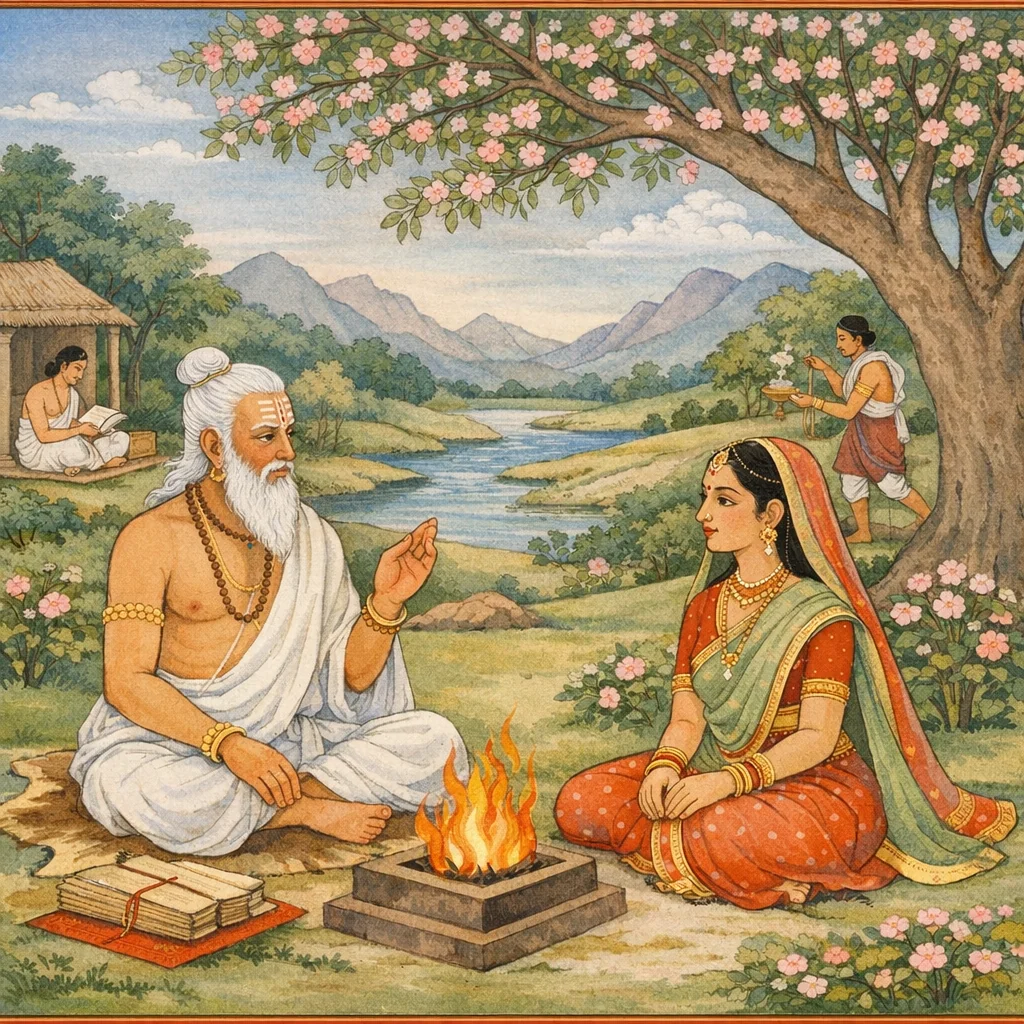
Chapter Arc: गिरिराजकुमारी के समक्ष भीष्म धर्म का सूक्ष्म रहस्य खोलते हैं—गृहस्थ ब्राह्मण का नित्य कर्तव्य क्या है, और विद्या को जीविका बनाना क्यों पतन का द्वार है। → उपदेश कठोर कसौटी पर चढ़ता है: संहिता-पाठ, शास्त्र-स्वाध्याय, आहिताग्नि और सत्य-पथ—ये ब्राह्मणत्व के बाह्य चिह्न नहीं, अंतःशुद्धि के प्रमाण हैं। फिर भीष्म चेताते हैं कि जन्म से मिला ‘ब्राह्मण्य’ भी असुरक्षित है; योनिदोष, अनुचित प्रतिग्रह, और अपवित्र कर्म उसे गिरा सकते हैं। → गुह्य वचन प्रकट होता है—‘जिस प्रकार शूद्र धर्माचरण से द्विजत्व को प्राप्त कर सकता है, और ब्राह्मण स्वधर्म से च्युत होकर शूद्रत्व को प्राप्त होता है।’ जाति का सार कर्म-शुचिता और सत्य-आचरण में है; केवल जन्म नहीं, केवल वेष नहीं। → भीष्म निष्कर्ष देते हैं: गृहस्थ ब्राह्मण को प्रतिदिन अध्ययन-स्वाध्याय करना चाहिए, पर उसे व्यापार नहीं बनाना चाहिए; सत्पथ, सत्य, आहिताग्नि और शुचि कर्मों से ही ‘ब्रह्मभूय’ की पात्रता बनती है। ब्राह्मण्य की रक्षा आत्मसंयम से होती है, न कि दंभ से। → यह ‘गुह्य’ सिद्धांत आगे के उपदेशों के लिए द्वार खोलता है—कौन-से कर्म ब्राह्मणत्व को स्थिर करते हैं और कौन-से उसे गिराते हैं, इसकी सूक्ष्म सूची आगे विस्तार मांगती है।
Shlokas
Verse 56
गृहस्थ ब्राह्मण घरमें रहकर प्रतिदिन संहिताका पाठ और शास्त्रोंका स्वाध्याय करे। अध्ययनको जीविकाका साधन न बनावे
Maheshvara said: “A Brahmin who lives the householder’s life should remain in his home and, every day, recite the Saṃhitā and pursue self-study of the sacred treatises. He should not turn learning into a means of livelihood.”
Verse 57
एवंभूतो हि यो विप्र: सत्पथं सत्यथे स्थित: । आहिताग्निरधीयानो ब्रह्म॒भूयाय कल्पते,इस प्रकार जो ब्राह्मण सन्मार्गपर स्थित हो सत्पथका ही अनुसरण करता है तथा अन्निहोत्र एवं स्वाध्यायपूर्वक जीवन बिताता है, वह ब्रह्मभावको प्राप्त होता है
Maheshvara said: “A brahmin who is of such a character—firmly established in truth and standing on the good path—who maintains the sacred fires and lives devoted to Vedic study, becomes fit to attain the state of Brahman.”
Verse 58
ब्राह्मण्यं देवि सम्प्राप्य रक्षितव्यं यतात्मना । योनिप्रतिग्रहादानै: कर्मभिश्न शुचिस्मिते,देवि! शुचिस्मिते! मनुष्यको चाहिये कि वह ब्राह्मणत्वको पाकर मन और इन्द्रियोंको संयममें रखते हुए योनि, प्रतिग्रह और दानकी शुद्धि एवं सत्कर्मोंद्वारा उसकी रक्षा करे
Maheshvara said: “O Goddess, once a person has attained the state and dignity of Brahminhood, it must be carefully protected through self-mastery. With a disciplined mind and senses, one should safeguard that Brahmin status by purity in birth and conduct, by purity in accepting gifts, by purity in giving, and by righteous actions—O fair-smiling one.”
Verse 59
एतत् ते गुह्माख्यातं यथा शूद्रो भवेद् द्विज: । ब्राह्मणो वा च्युतो धर्माद् यथा शूद्रत्वमाप्तुते
Maheshvara said: “I have now disclosed to you this secret—how a śūdra may become a twice-born, and likewise how a brāhmaṇa, fallen away from dharma, comes to attain the state of a śūdra.”
Verse 143
गिरिराजकुमारी! शूद्र धर्माचरण करनेसे जिस प्रकार ब्राह्मणत्वको प्राप्त करता है तथा ब्राह्मण स्वधर्मका त्याग करके जातिसे भ्रष्ट होकर जिस प्रकार शूद्र हो जाता है, यह गूढ़ रहस्यकी बात मैंने तुम्हें बतला दी ।। इति श्रीमहाभारते अनुशासनपर्वणि दानधर्मपर्वणि उमामहेश्व॒रसंवादे त्रिचत्वारिंशदधिकशततमो< ध्याय:,इस प्रकार श्रीमह्ाा भारत अनुशासनपर्वके अन्तर्गत दानधर्मपर्वमें उमामहेश्वरसंवादाविषयक एक सौ तैंतालीसवाँ अध्याय पूरा हुआ
Maheshvara said: “O daughter of the king of mountains! I have disclosed to you this profound secret: how a Shudra, by practicing dharma, may attain the status of a Brahmin; and how a Brahmin, by abandoning his own prescribed duty, becomes fallen from his caste and comes to be regarded as a Shudra.” Thus ends, in the Mahabharata, in the Anushasana Parva, within the section on the dharma of gifts, the dialogue of Uma and Maheshvara—Chapter 143.
Frequently Asked Questions
He highlights the mismatch between visible outcomes and moral or practical inputs—strength, effort, learning, and even ethical conduct do not consistently correlate with wealth, status, or security.
Bhīṣma recommends sustained initiative aligned with discipline—undertake rightful efforts, and anchor conduct in dāna, service to elders, purity, and non-injury, treating ethics as obligatory even when results vary.
Rather than a formal phalaśruti, it provides causal-ethical claims: giving supports rightful enjoyment, elder-service supports discernment, and ahiṃsā supports longevity, while advising steadiness toward pleasure and pain as a stabilizing virtue.