Adhyaya 89
Paurava-vaṃśa-kathana (Account of the Paurava Lineage) | महाभारत आदि पर्व अध्याय ८९
Upa-parva: Paurava–Aila Vaṃśānucarita (Genealogical Account of the Paurava Line)
This chapter is a structured genealogical response to Janamejaya’s inquiry about the kings of Pūru’s line, with emphasis on their virtues, prowess, and continuity. Vaiśaṃpāyana enumerates major nodes of succession: Pūru’s descendants (including Pravīra and Manasyu), the prolific Anādhṛṣṭi line, and subsequent rulers such as Matināra, Taṃsu, Ilina, and Duḥṣanta, culminating in Bharata and the consolidation of the Bharata identity. The narrative then traces Bhūmanyu and Vitatha, followed by Suhotra and his royal rituals and prosperity. A key historical-ethical episode appears with Saṃvaraṇa: a period of demographic and ecological collapse and military defeat leads to exile near the Sindhu; after prolonged hardship, Vasiṣṭha arrives, is accepted as purohita, and consecrates the Paurava back to sovereignty. The genealogy proceeds to Kuru—whose tapas sacralizes Kurukṣetra—and onward to later descendants, including Pratīpa and his sons (Devāpi, Śaṃtanu, Bāhlīka), thereby linking early Aila-Paurava origins to the immediate prehistory of the Kuru house central to the epic.
Chapter Arc: स्वर्गलोक के पुण्य-लोकों से राजर्षि ययाति का तेजस्वी पतन आरम्भ होता है—सूर्यपथ से गिरते हुए उस अद्भुत प्रकाशमान पुरुष को देखकर सिद्ध-समूह विस्मित हो उठता है। → ययाति इन्द्र से कहता है कि उसने देव, मनुष्य, गन्धर्व, महर्षि—किसी में भी अपने तप के तुल्य सामर्थ्य नहीं देखा; यह आत्म-गौरव (अवमानना) उसके पुण्य-क्षय का कारण बनता है। इन्द्र उसे चेताता है कि समान-श्रेष्ठ जनों के प्रति तिरस्कार से प्राप्त लोक नश्वर हो जाते हैं और पुण्य क्षीण होते ही पतन निश्चित है। → इन्द्र का निर्णायक वचन: ‘तू सत्पुरुषों के बीच प्रतिष्ठा से च्युत हुआ है; इसलिए तेरे ये लोक अन्तवान् हैं—पुण्य क्षीण होने पर तू गिर रहा है।’ उसी क्षण ययाति का स्वर्ग से पतन प्रत्यक्ष हो जाता है। → पतित ययाति को देखकर राजर्षि अष्टक (सत्धर्म-विधान का गोप्ता) उसे सम्बोधित करता है—भय, विषाद और मोह त्यागने को कहता है, और सत्संग/सत्प्रतिष्ठा की महिमा बताता है: जैसे अग्नि में तपन-शक्ति, पृथ्वी में धारण-शक्ति, सूर्य में प्रकाश-शक्ति—वैसे ही सत्पुरुषों में आगन्तुक को संभालने और प्रतिष्ठित करने की शक्ति है। → अष्टक के प्रश्नों और ययाति के उत्तरों की ओर कथा मुड़ती है—पतन का कारण तो स्पष्ट हुआ, पर अब यह जिज्ञासा शेष है कि ययाति किस प्रकार पुनः प्रतिष्ठा/उद्धार पाएगा।
Shlokas
Verse 1
(दाक्षिणात्य अधिक पाठके ४ ३ श्लोक मिलाकर कुल १७३ “लोक हैं) नशा (0) अत न अष्टाशीतितमो< ध्याय: ययातिका स्वर्गसे पतन और अष्टकका उनसे प्रश्न करना इन्द्र रवाच सर्वाणि कर्माणि समाप्य राजन् गृहं परित्यज्य वनं गतो$सि । तत् त्वां पृच्छामि नहुषस्य पुत्र केनासि तुल्यस्तपसा ययाते,इन्द्रने कहा--राजन्! तुम सम्पूर्ण कर्मोंको समाप्त करके घर छोड़कर वनमें चले गये थे। अतः नहुषपुत्र ययाते! मैं तुमसे पूछता हूँ कि तुम तपस्यामें किसके समान हो
Śakra (Indra) said: “O king, having brought all your duties and undertakings to completion, you abandoned your household and went to the forest. Therefore I ask you, O son of Nahuṣa, O Yayāti: to whom are you equal in austerity?”
Verse 2
ययातिरुवाच नाहं देवमनुष्येषु गन्धर्वेषु महर्षिषु । आत्मनस्तपसा तुल्यं कंचित् पश्यामि वासव,ययातिने कहा--इन्द्र! मैं देवताओं, मनुष्यों, गन्धर्वों और महर्षियोंमेंसे किसीको भी तपस्यामें अपनी बराबरी करनेवाला नहीं देखता हूँ
Yayāti said: “O Vāsava (Indra), among gods and men, among Gandharvas and great seers, I do not see anyone who equals me in austerity. By the power of my own tapas, I find no peer.”
Verse 3
इन्द्र रवाच यदावमंस्था: सदृश: श्रेयसश्न अल्पीयसश्षाविदितप्रभाव: । तस्माल्लोकास्त्वन्तवन्तस्तवेमे क्षीणे पुण्ये पतितास्यद्य राजन्,इन्द्र बोले--राजन्! तुमने अपने समान, अपनेसे बड़े और छोटे लोगोंका प्रभाव न जानकर सबका तिरस्कार किया है, अतः तुम्हारे इन पुण्यलोकोंमें रहनेकी अवधि समाप्त हो गयी; क्योंकि (दूसरोंकी निन्दा करनेके कारण) तुम्हारा पुण्य क्षीण हो गया, इसलिये अब तुम यहाँसे नीचे गिरोगे
Śakra (Indra) said: “Because you have shown contempt toward others—those equal to you, those superior, and those inferior—without understanding their true power and worth, the term of your stay in these meritorious worlds has come to an end. Your merit has been exhausted by such disparagement; therefore, O king, today you will fall from here.”
Verse 4
ययातिरुवाच सुरर्िगन्धर्वनरावमानात् क्षयं गता मे यदि शक्र लोका: । इच्छाम्यहं सुरलोकाद् विहीन: सतां मध्ये पतितुं देवराज,ययातिने कहा--देवराज इन्द्र! देवता, ऋषि, गन्धर्व और मनुष्य आदिका अपमान करनेके कारण यदि मेरे पुण्यलोक क्षीण हो गये हैं तो इन्द्रलोकसे भ्रष्ट होकर मैं साधु पुरुषोंके बीचमें गिरनेकी इच्छा करता हूँ
Yayāti said: “O Śakra (Indra), if through my contempt for gods, seers, Gandharvas, and men my meritorious worlds have been exhausted, then—fallen from the heavenly realm—I wish to descend and take my place among the righteous. O king of the gods, let me fall into the company of the good.”
Verse 5
इन्द्र उवाच सतां सकाशे पतितासि राजं- क्ष्युतः प्रतिष्ठां यत्र लब्धासि भूय: । एतद् विदित्वा च पुनर्ययाते त्वं मावमंस्था: सदृश: श्रेयसश्ल॒,इन्द्र बोले--राजा ययाति! तुम यहाँसे च्युत होकर साधु पुरुषोंके समीप गिरोगे और वहाँ अपनी खोयी हुई प्रतिष्ठा पुन: प्राप्त कर लोगे। यह सब जानकर तुम फिर कभी अपने बराबर तथा अपनेसे बड़े लोगोंका अपमान न करना
Indra said: “O King, you will fall from here into the company of the virtuous; and there you will regain the honor you have lost. Knowing this, O Yayāti, never again show contempt toward those who are your equals—or those who are superior to you.”
Verse 6
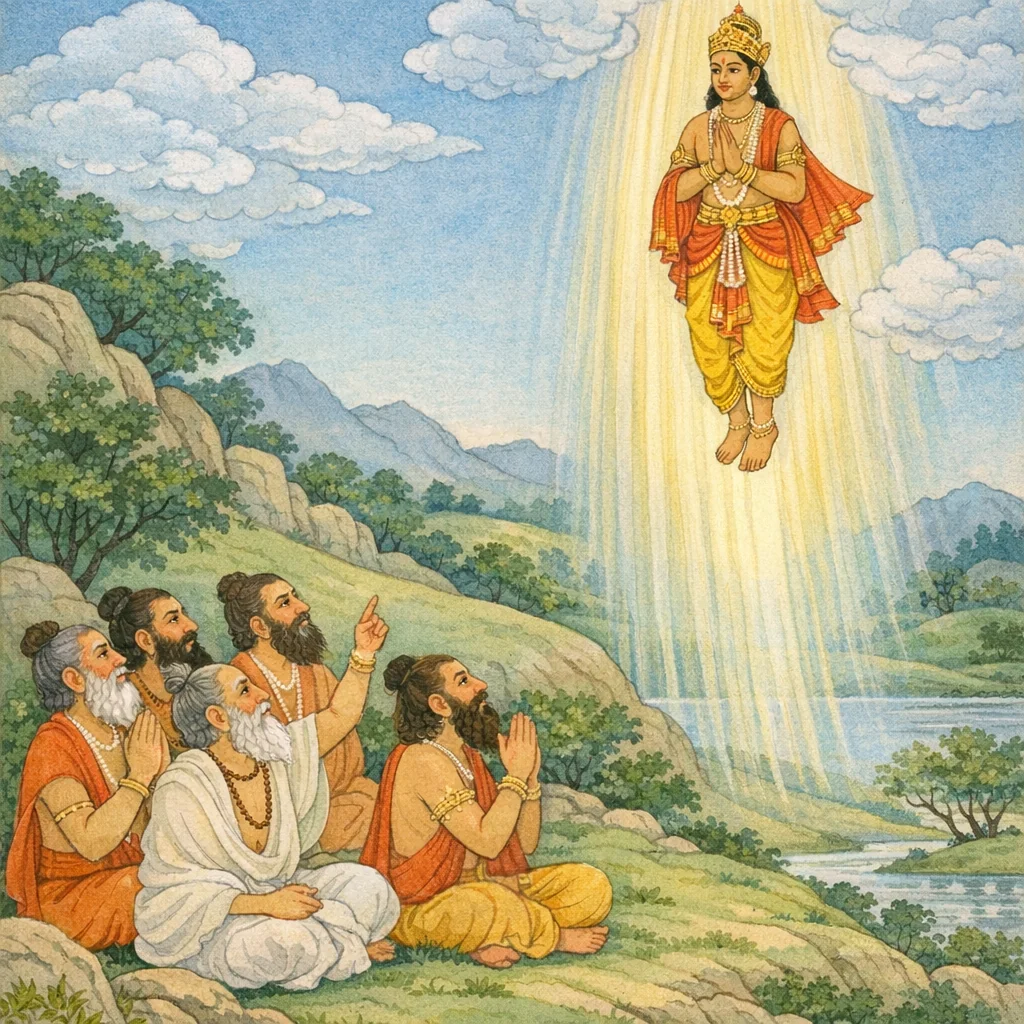
वैशम्पायन उवाच ततः प्रहायामरराजजुष्टान् पुण्याँलल्लोकान् पतमानं ययातिम् | सम्प्रेक्ष्य राजर्षिवरो5ष्टकस्त- मुवाच सद्धर्मविधानगोप्ता,वैशम्पायनजी कहते हैं--जनमेजय! तदनन्तर देवराज इन्द्रके सेवन करनेयोग्य पुण्यलोकोंका परित्याग करके राजा ययाति नीचे गिरने लगे। उस समय राजर्षियोंमें श्रेष्ठ अष्टकने उन्हें गिरते देखा। वे उत्तम धर्म-विधिके पालक थे। उन्होंने ययातिसे कहा
Vaiśampāyana said: Then, having abandoned those meritorious worlds frequented by Indra, King Yayāti began to fall downward. Seeing him thus falling, the foremost among royal seers—Aṣṭaka, a guardian of the right ordinances of dharma—addressed Yayāti.
Verse 7
बस * 2 <5७७५१११००७९७ ५4.4५ |./ 2... ययातिका पतन अट्क उवाच कस्त्वं युवा वासवतुल्यरूप: स्वतेजसा दीप्यमानो यथाग्नि: । पतसस््युदीर्णाम्बुधरान्धकारात् खात् खेचराणां प्रवरो यथार्क:,अष्टकने पूछा--इन्द्रके समान सुन्दर रूपवाले तरुण पुरुष तुम कौन हो? तुम अपने तेजसे अग्निकी भाँति देदीप्यमान हो रहे हो। मेघरूपी घने अन्धकारवाले आकाशसे आकाशचरी ग्रहोंमें श्रेष्ठ सूर्यवके समान तुम कैसे गिर रहे हो?
Aṣṭaka said: “Who are you, young man, with a form as splendid as Indra’s, blazing with your own radiance like fire? From the sky—darkened by towering cloud-masses—you are falling down, though you shine among the heavenly wanderers like the foremost sun. How can this be?”
Verse 8
दृष्टवा च त्वां सूर्यपथात् पतन्तं वैश्वानरार्कद्युतिमप्रमेयम् । कि नु स्विदेतत् पततीति सर्वे वितर्कयन्त: परिमोहिता: सम:,तुम्हारा तेज सूर्य और अग्निके सदृश है। तुम अप्रमेय शक्तिशाली जान पड़ते हो। तुम्हें सूर्यके मार्गसे गिरते देख हम सब लोग मोहित होकर इस तर्क-वितर्कमें पड़े हैं कि 'यह क्या गिर रहा है?”
Seeing you fall from the path of the sun—your radiance like that of Vaiśvānara (fire) and the sun, and your power beyond measure—we have all been thrown into bewilderment. Confounded, we keep debating among ourselves: ‘What indeed is this that is falling?’
Verse 9
दृष्टवा च त्वां धिछितं देवमार्गे शक्रार्कविष्णुप्रतिमप्रभावम् । अभ्युद्गतास्त्वां वयमद्य सर्वे तत्त्वं प्रपाते तव जिज्ञासमाना:,तुम इन्द्र, सूर्य और विष्णुके समान प्रभावशाली हो। तुम्हें आकाशमें स्थित देखकर हम सब लोग अब यह जाननेके लिये तुम्हारे निकट आये हैं कि तुम्हारे पतनका यथार्थ कारण क्या है?
Seeing you stationed on the path of the gods, radiant with a splendor comparable to Indra, the Sun, and Viṣṇu, we have all approached you today. We seek to know the true reason for your fall—what reality lies behind this descent of yours.
Verse 10
नचापि त्वां धृष्णुम: प्रष्टमग्रे न च त्वमस्मान् पृच्छसि ये वयं सम: । तत् त्वां पृच्छामि स्पृहणीयरूप कस्य त्वं वा किंनिमित्तं त्वमागा:,हम पहले तुमसे कुछ पूछनेका साहस नहीं कर सकते और तुम भी हमसे हमारा परिचय नहीं पूछते हो; कि हम कौन हैं? इसलिये मैं ही तुमसे पूछता हूँ। मनोरम रूपवाले महापुरुष! तुम किसके पुत्र हो? और किसलिये यहाँ आये हो?
We have not dared to question you first, nor do you ask us who we are, though we stand here as your equals in courtesy. Therefore I ask you: O man of admirable form, whose son are you, and for what purpose have you come here?
Verse 11
भयं तु ते व्येतु विषादमोहौ त्यजाशु चैवेन्द्रसमप्र भाव । त्वां वर्तमानं हि सतां सकाशे नालं प्रसोढुं बलहापि शक्र:,इन्द्रके तुल्य शक्तिशाली पुरुष! तुम्हारा भय दूर हो जाना चाहिये। अब तुम्हें विषाद और मोहको भी तुरंत त्याग देना चाहिये। इस समय तुम संतोंके समीप विद्यमान हो। बल दानवका नाश करनेवाले इन्द्र भी अब तुम्हारा तेज सहन करनेमें असमर्थ हैं
Aṭka said: “Let your fear depart. Cast off at once both dejection and delusion, O one whose splendor rivals Indra’s. For you now stand in the presence of the virtuous; even Śakra (Indra), though the slayer of Bala, is no longer able to endure your radiance.”
Verse 12
सन्त: प्रतिष्ठा हि सुखच्युतानां सतां सदैवामरराजकल्प । ते संगता: स्थावरजड्रमेशा: प्रतिष्ठितस्त्वं सदृशेषु सत्सु,देवेश्वर इन्द्रके समान तेजस्वी महानुभाव! सुखसे वंचित होनेवाले साधु पुरुषोंके लिये सदा संत ही परम आश्रय हैं। वे स्थावर और जंगम सब प्राणियोंपर शासन करनेवाले सत्पुरुष यहाँ एकत्र हुए हैं। तुम अपने समान पुण्यात्मा संतोंके बीचमें स्थित हो
Āṭka said: “For the virtuous who have fallen away from happiness, the saints are indeed the enduring refuge and firm support—ever like the king of the gods. Here those righteous ones, who exercise rightful authority over all beings, both immobile and moving, have assembled. And you, O great-souled one, radiant like Indra, stand established among saints who are your equals in merit.”
Verse 13
प्रभुरग्नि: प्रतपने भूमिरावपने प्रभु: । प्रभु: सूर्य: प्रकाशित्वे सतां चाभ्यागत: प्रभु:,जैसे तपनेकी शक्ति अग्निमें है, बोये हुए बीजको धारण करनेकी शक्ति पृथ्वीमें है, प्रकाशित होनेकी शक्ति सूर्यमें है, इसी प्रकार संतोंपर शासन करनेकी शक्ति केवल अतिथिगमें है
Fire is sovereign in the power to burn; earth is sovereign in the power to receive and bear the seed that is sown; the sun is sovereign in the power to shine. Even so, the power that rules over the righteous belongs only to the Atithi—the guest who arrives.
Verse 88
इति श्रीमहाभारते आदिपर्वणि सम्भवपर्वणि उत्तरयायाते अष्टाशीतितमो<ध्याय: ।। ८८ ॥। इस प्रकार श्रीमयहाभारत आदिपव॑के अन्तर्गत सम्भवपर्वमें उत्तरयायातविषयक अद्ठासीवाँ अध्याय पूरा हुआ
Thus, in the Śrī Mahābhārata, within the Ādi Parva and specifically the Sambhava Parva, the eighty-eighth chapter—concerning the episode of Uttara and Yāyāti—comes to its close. (This is a colophon marking the completion of the chapter.)
Frequently Asked Questions
The chapter frames a legitimacy dilemma rather than a single personal choice: how a dynasty retains rightful sovereignty when faced with collapse (famine, mortality, invasion) and defeat—answered through re-alignment with dharma, competent counsel, and ritually validated restoration.
Political continuity is depicted as conditional: lineage alone is insufficient without dharmic governance, social stability, and recognized authority structures (purohita, consecration). Crisis becomes a test of institutional resilience and ethical order.
No explicit phalaśruti is stated here; the chapter’s meta-function is archival—establishing a reliable dynastic memory that authorizes later narrative claims about the Kuru house and the sanctity of Kurukṣetra within the epic’s broader soteriological and historical frame.