Adhyaya 84
ययाति–अष्टक संवादः (Yayāti–Aṣṭaka Dialogue on Seniority, Merit, and Fate)
Upa-parva: Sambhava Upa-Parva (Genealogies and Exemplary Discourses)
This chapter stages a didactic exchange. Yayāti identifies himself as Nahūṣa’s son and Pūru’s father, stating that due to ‘disrespect of beings’ (sarvabhūtāvamāna) he has fallen from the realms of gods, siddhas, and ṛṣis, now descending with diminished merit. Aṣṭaka and Yayāti dispute what constitutes true ‘seniority’ and thus who merits formal reverence: Yayāti initially appeals to age, while Aṣṭaka asserts that learning (vidyā) is the decisive criterion. Yayāti then develops an ethical-psychological instruction: wrongdoing is acting against what is fitting; the wise do not imitate the conduct of the unethical. He outlines a stance of composure rooted in diṣṭa/daiva—pleasure and suffering arise not merely from personal power but from dispensation—therefore one should neither grieve in adversity nor exult in success, maintaining steadiness. Yayāti provides a cosmographic testimony of ascending through royal sovereignty to increasingly elevated worlds (Indra’s city, Prajāpati’s realm, and divine abodes), enjoying Nandana with apsarases for vast periods, until a divine messenger announces his ‘fall’ due to puṇya-kṣaya. Hearing celestial lamentations, he seeks to fall among the virtuous and is guided to Aṣṭaka’s sacrificial ground, drawn by the scent and smoke of the yajña. The chapter integrates social ethics (honorific norms), moral psychology (equanimity), and karmic cosmology (graded worlds and reversibility of merit).
Chapter Arc: ययाति के जीवन में वृद्धावस्था का शाप और उससे मुक्ति की खोज—राजा के भाग्य पर दैवी-उपदेश की छाया पड़ती है। → शुक्राचार्य ययाति (नहुषनन्दन) को एक असाधारण उपाय बताते हैं—भक्ति-भाव से उनका चिंतन करने पर वह इच्छानुसार वृद्धावस्था को दूसरे के शरीर में संचारित कर सकेगा; पर यह उपाय नैतिक और पारिवारिक तनाव को जन्म देता है कि कौन अपने यौवन का त्याग करेगा। → शुक्राचार्य का निर्णायक वरदान/उपदेश: ययाति को यह सामर्थ्य प्राप्त होगा कि वह वृद्धावस्था का स्थानांतरण कर सके, और उस दशा में उसे पाप का लेप नहीं लगेगा—यही मोड़ आगे पुत्रों की परीक्षा का द्वार खोलता है। → आशीर्वचन के साथ भविष्य का संकेत मिलता है—ययाति का पुत्र (जो आगे राजा होगा) आयुष्मान, कीर्तिमान और बहुपुत्रवान होगा; कथा-धारा ययात्युपाख्यान के अगले चरण की ओर स्थिर होती है। → अब प्रश्न यह रह जाता है कि ययाति किससे यौवन लेगा, कौन पुत्र धर्म-त्याग/धर्म-पालन के बीच क्या चुनेगा—और इस चयन का वंश-भाग्य पर क्या प्रभाव पड़ेगा।
Shlokas
Verse 41
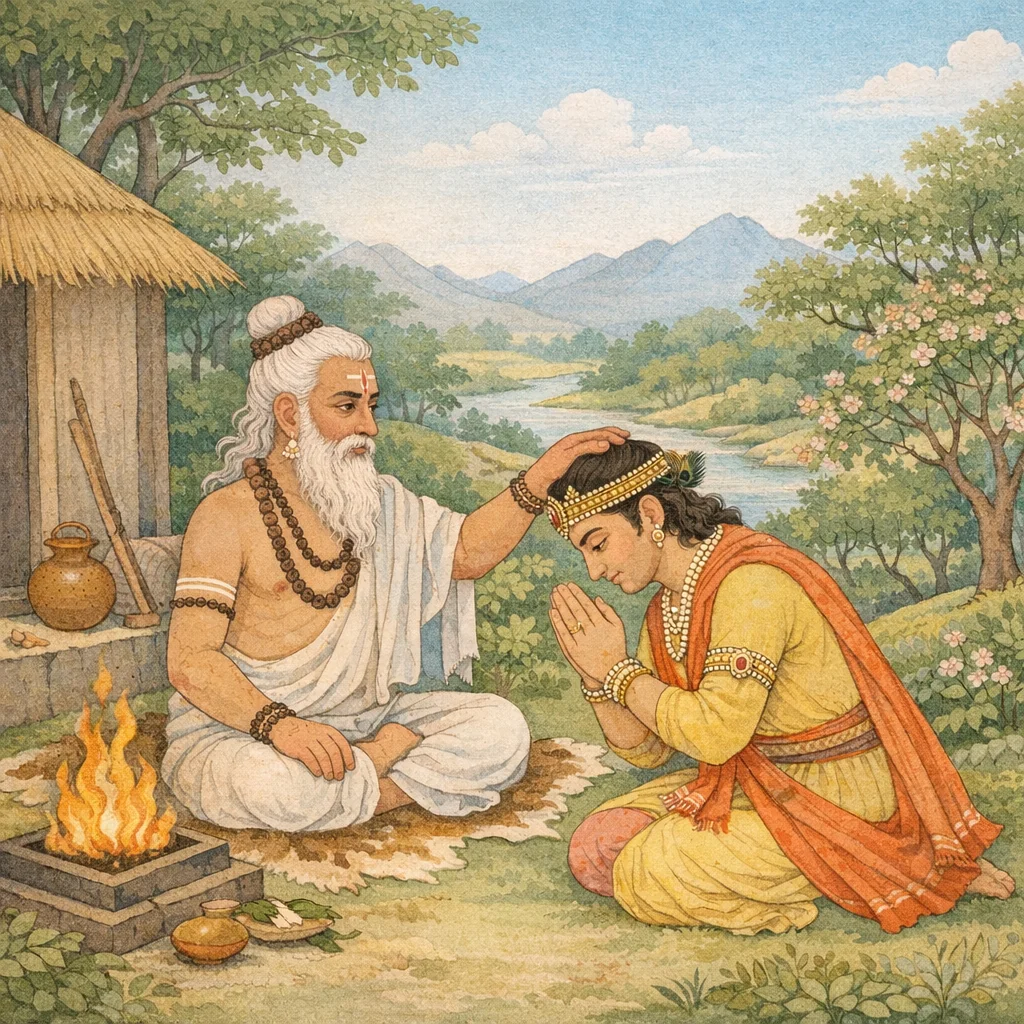
शुक्राचार्यने कहा--नहुषनन्दन! तुम भक्तिभावसे मेरा चिन्तन करके अपनी वृद्धावस्थाका इच्छानुसार दूसरेके शरीरमें संचार कर सकोगे। उस दशामें तुम्हें पाप भी नहीं लगेगा। जो पुत्र तुम्हें (प्रसन्नतापूर्वक) अपनी युवावस्था देगा, वही राजा होगा, साथ ही दीर्घायु, यशस्वी तथा अनेक संतानोंसे युक्त होगा
Śukra said: “O descendant of Nahuṣa! If you contemplate me with devotion, you will be able, as you wish, to transfer your own old age into another’s body. In that condition no sin will attach to you. The son who gladly gives you his youth will become king; he will also be long-lived, renowned, and blessed with many children.”
Verse 42
वयो दास्यति ते पुत्रो यः स राजा भविष्यति । आयुष्मान् कीर्तिमांश्वैव बह्वपत्यस्तथैव च,शुक्राचार्यने कहा--नहुषनन्दन! तुम भक्तिभावसे मेरा चिन्तन करके अपनी वृद्धावस्थाका इच्छानुसार दूसरेके शरीरमें संचार कर सकोगे। उस दशामें तुम्हें पाप भी नहीं लगेगा। जो पुत्र तुम्हें (प्रसन्नतापूर्वक) अपनी युवावस्था देगा, वही राजा होगा, साथ ही दीर्घायु, यशस्वी तथा अनेक संतानोंसे युक्त होगा
Śukra said: “The son who will give you his youth shall become king. He will also be long-lived, renowned, and blessed with many children.” In context, this serves as a moral incentive: voluntary filial sacrifice is rewarded with legitimate sovereignty and prosperity, while the father’s extraordinary act (transferring into another body) is framed as free from sin when done under devotional contemplation and proper sanction.
Verse 83
इति श्रीमहाभारते आदिपर्वणि सम्भवपर्वणि ययात्युपाख्याने -यशीतितमो< ध्याय:,इस प्रकार श्रीमहाभारत आदिपर्वके अन्तर्गत सम्भवपर्वें ययात्युपाख्यानविषयक तिरासीवाँ अध्याय पूरा हुआ
Thus, in the Śrī Mahābhārata, within the Ādi Parva and specifically the Sambhava Parva, the Yayāti episode concludes: the eighty-third chapter ends here. This closing colophon signals the completion of a narrative unit, marking a pause for reflection on the lineage-origins theme and the ethical consequences highlighted in the Yayāti story.
Frequently Asked Questions
The dilemma concerns legitimate grounds for deference and authority: whether social honor should follow biological seniority (age) or moral-intellectual excellence (knowledge, tapas). It is framed within Yayāti’s ethical self-assessment after his fall, linking social conduct (respect/disrespect) to karmic consequence.
The chapter teaches disciplined equanimity: since pleasure and pain are unstable and conditioned by dispensation (diṣṭa/daiva), one should avoid both despair and elation, acting with steadiness and ethical discrimination rather than reactive imitation of the unethical.
No explicit phalaśruti formula appears in the provided passage. The implicit meta-lesson is interpretive: understanding the instability of celestial attainments and the depletion of merit situates the episode as a cautionary frame for mokṣa-oriented reflection beyond merely ‘earned’ pleasures.